Best Stargazing Binoculars for Beginners Who Do Not Want a Telescope Yet
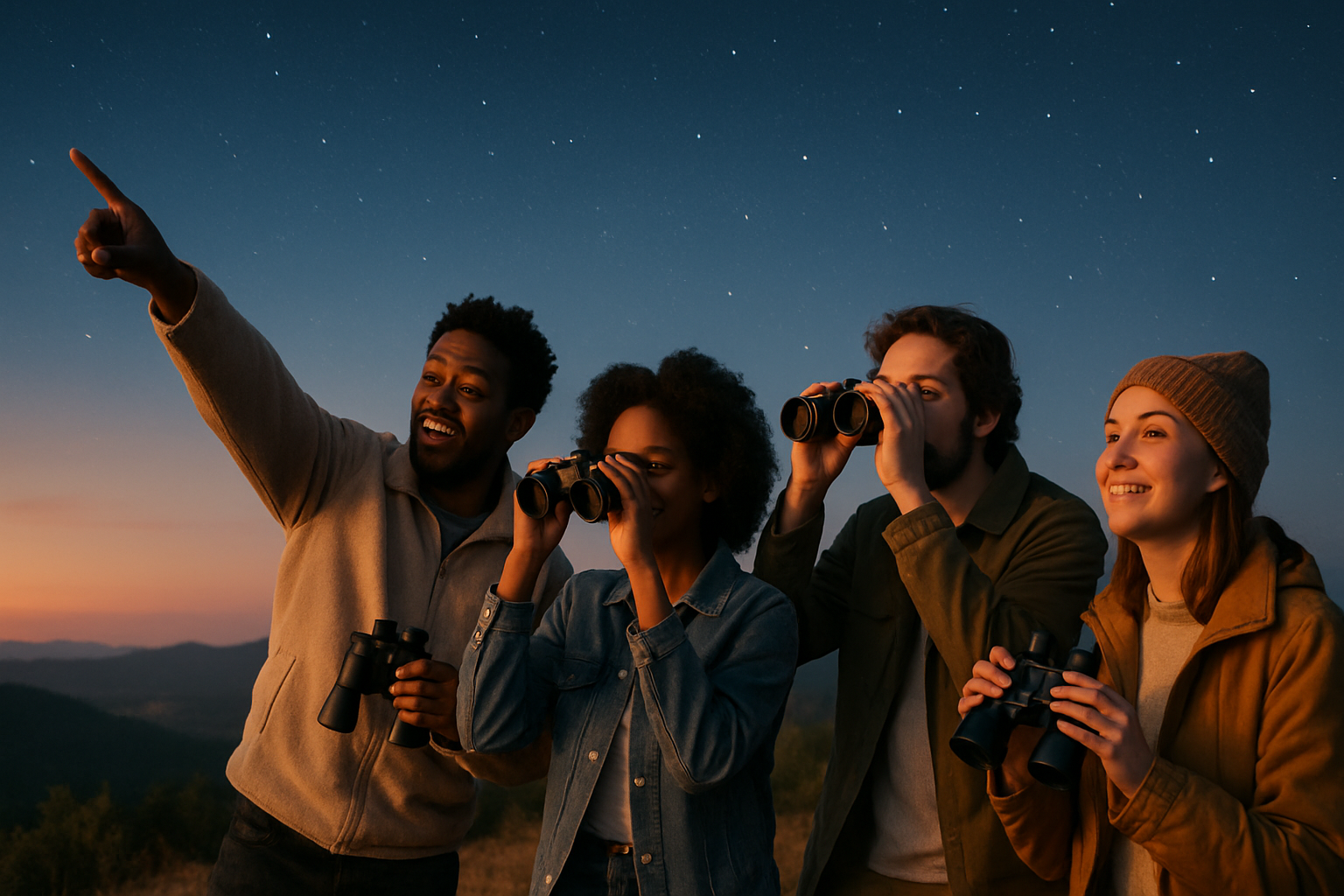
If you keep hovering over telescope starter guides and then closing the tab, this is the cleaner move: start with binoculars.
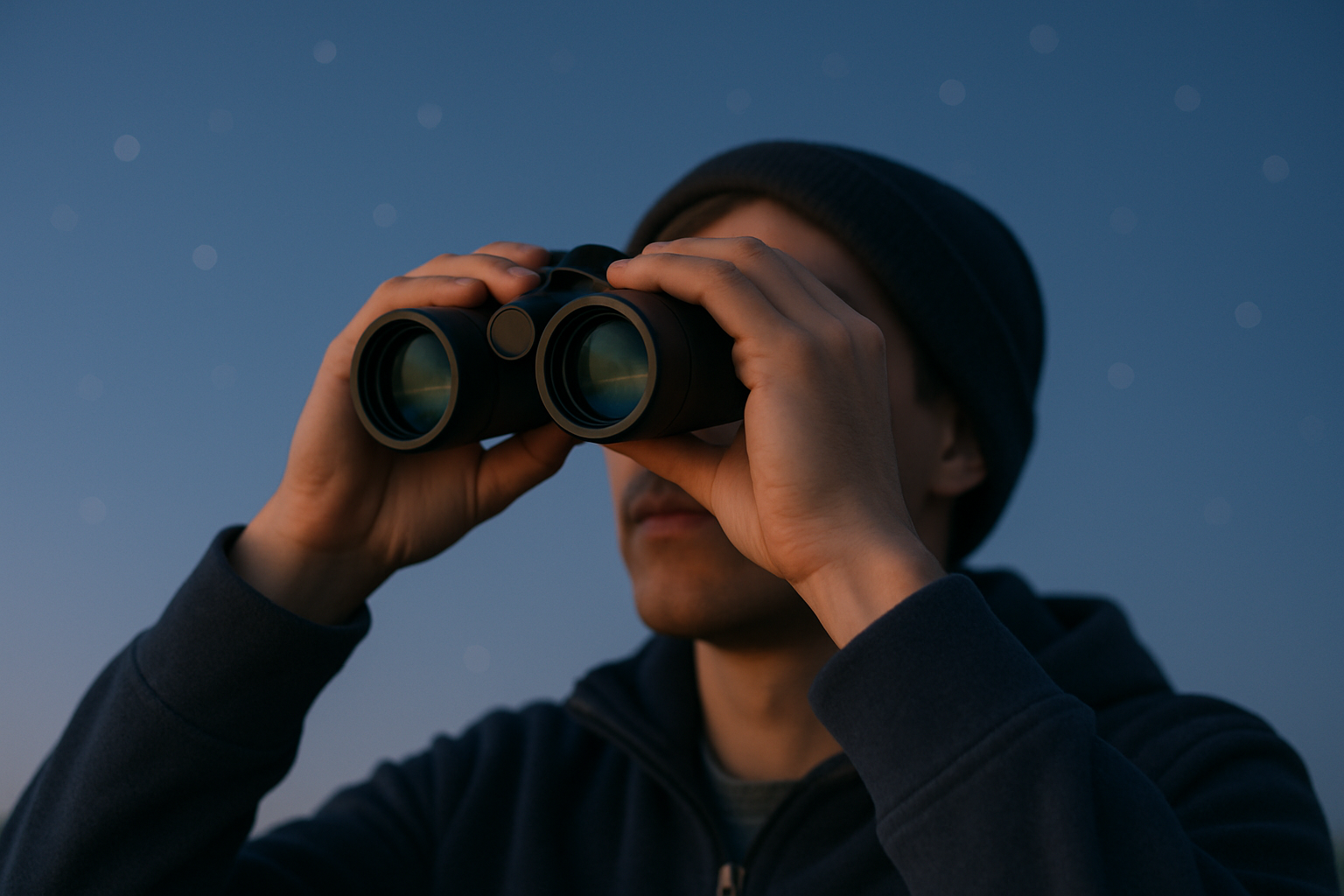
For most beginners, the best stargazing binoculars are not the biggest pair you can afford. They are the pair you will actually carry outside, hold steady for ten minutes, and use often enough to learn the sky. That usually means 8x42 first, 10x50 if the night sky is your main priority, and 15x70 only after you already know you want a bulkier setup or a tripod.
NASA's beginner skywatching guidance treats binoculars as a strong first instrument for exactly this reason: they are simpler, wider, and more forgiving than a telescope when you are still learning where everything is. If you are new enough that "field of view" still sounds abstract, that is good news. The learning curve here is lighter.
Quick Answer: What Should a Beginner Actually Buy?
| If this sounds like you | Best binocular class | Good current examples | Why it works |
|---|---|---|---|
| "I want the safest all-around first buy." | 8x42 roof prism | Nikon PROSTAFF P3 8x42, Celestron Nature DX 8x42 | Wide view, easier to hold steady, weather-sealed, light enough to travel |
| "I know I'll use them a lot and want nicer features." | Better 8x42 roof prism | Nikon PROSTAFF P7 8x42 | Similar easy handling, but with stronger feature set and more premium finish |
| "I mostly care about the night sky, not birding or hiking." | 10x50 Porro prism | Celestron UpClose G2 10x50 | More reach and more light, but bulkier and less forgiving in the hands |
| "I want the biggest view possible right away." | Not my first recommendation | Celestron SkyMaster 15x70 | Bright and capable, but much heavier, narrower, and happier on a tripod |
If you want the shortest possible recommendation, buy an 8x42 first. That is the class most likely to turn into a habit instead of a shelf ornament.
Why Binoculars Beat a Telescope at the Beginning
A beginner does not usually fail because the sky is too boring. A beginner fails because the setup feels like homework.
Binoculars win the first few months because they solve the most annoying beginner problems at once:
- You see a wider patch of sky, so finding targets is easier.
- You use both eyes, which feels more natural and less fatiguing.
- You can start in seconds, not after an alignment routine.
- They travel well, whether you are going to a backyard, a dark-sky turnout, or a public event.
That matters even more in Cosmic Match's live markets. If you head to one of the public observing options in our guide to where to stargaze this week in Austin, Houston, and Los Angeles, binoculars are the easiest thing to bring without turning the night into a gear project.
What the Numbers Mean Without the Optics Lecture
The first number is magnification. The second is the objective lens diameter in millimeters.
So:
- 8x42 means 8-times magnification with 42 mm front lenses.
- 10x50 means 10-times magnification with 50 mm front lenses.
- 15x70 means 15-times magnification with 70 mm front lenses.
Here is the practical translation:
8x42
This is the easiest class for most people to love. The view is wide, the shake is manageable, and the body size usually stays comfortable enough for a long session. If you want one pair that can handle a star party, a moon session, a hike, and a road trip, this is the sweet spot.
10x50
This is more astronomy-biased. You get more magnification and more light than an 8x42, which can make brighter deep-sky objects feel more rewarding. The tradeoff is hand shake, weight, and bulk. A 10x50 rewards a seated observer more than a casual walker.
15x70
This is where many beginners accidentally talk themselves into the wrong first purchase. On paper it looks thrilling. In practice it is heavier, narrower, and much harder to hold still. Bigger is not automatically better if the experience becomes awkward.
The Specs That Actually Matter
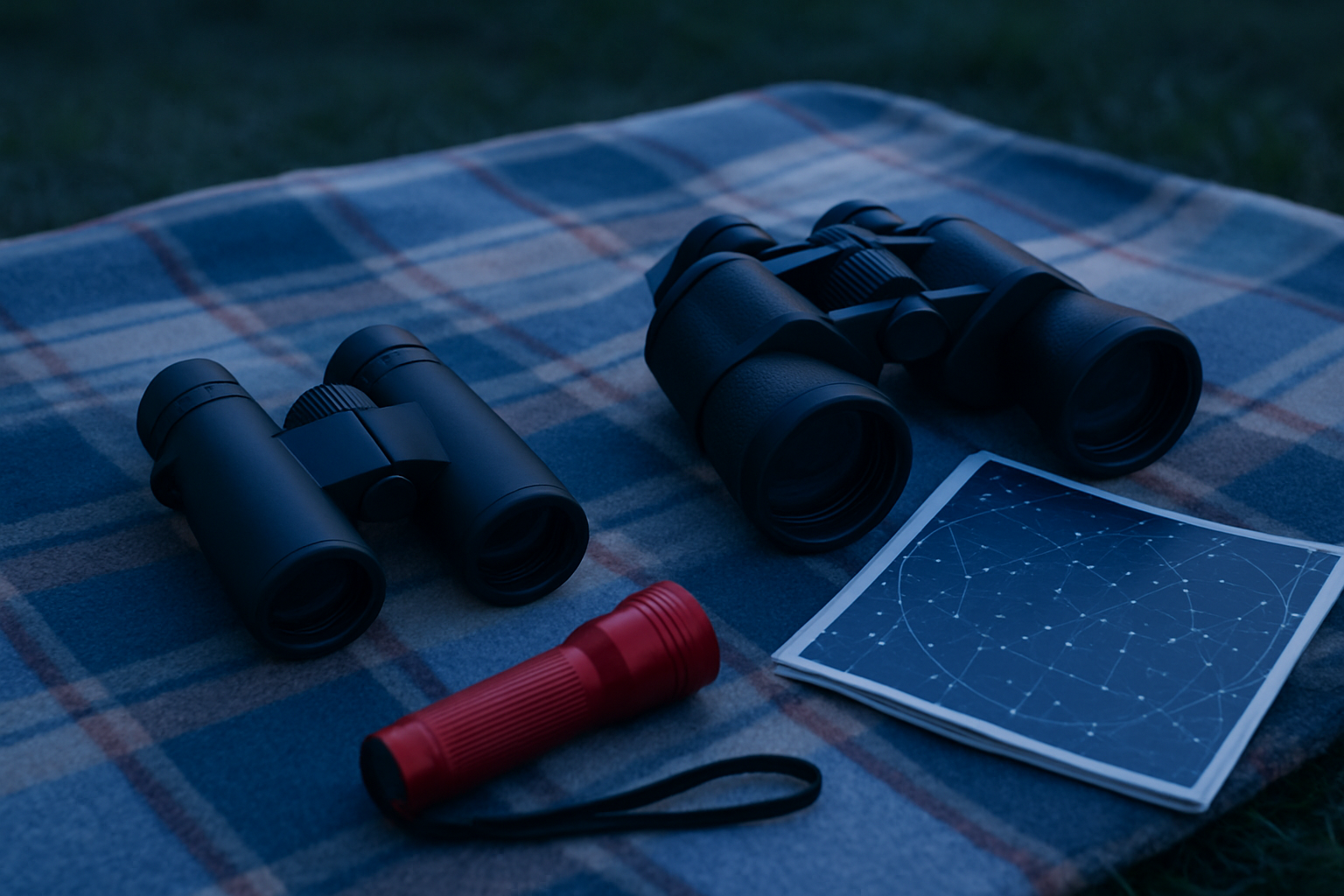
When I say "best," I mean best for repeated beginner use, not best for bragging rights.
Field of view
A wider view is beginner-friendly because it is easier to find stars, clusters, and constellations. That is one reason 8x42 pairs are so forgiving.
Weight
This matters more than many first-time buyers expect. A binocular you can hold steady for ten relaxed minutes will usually outperform a technically stronger pair that starts wobbling after sixty seconds.
Weather protection
If you live somewhere humid or you want a pair you can bring on trips without babying it, waterproof and fogproof construction is a real quality-of-life feature.
Eye relief
If you wear glasses, longer eye relief makes the whole experience less annoying. It is not the flashiest spec, but it changes whether a pair feels easy or fussy.
Prism style
Roof-prism binoculars tend to be more compact and portable. Porro-prism binoculars tend to be chunkier and more traditional. Neither is automatically superior. For a beginner, comfort and steadiness matter more than ideology.
My Actual Recommendations
Best for most beginners: Nikon PROSTAFF P3 8x42 or Celestron Nature DX 8x42
These two land in the most sensible starting zone.
The Nikon PROSTAFF P3 8x42 gives you 8x magnification, a 42 mm objective, a wide field of view, and waterproof/fogproof protection in a body Nikon lists at about 20.3 oz. The Celestron Nature DX 8x42 matches the same general class, adds tripod adaptability, and Celestron lists it at 22.2 oz with waterproof, nitrogen-filled construction.
Why I like this class so much for beginners:
- it is stable enough to use handheld
- it is bright enough for the Moon, star fields, and big open clusters
- it is portable enough that you will bring it outside more often
- it still works for daylight use, which makes it easier to justify as your first optic
If you want the no-regrets answer, this is it.
Best step-up 8x42: Nikon PROSTAFF P7 8x42
The Nikon PROSTAFF P7 8x42 stays in the same beginner-friendly size but adds more premium touches. Nikon's current specs and product material emphasize waterproof/fogproof construction, a 377 ft field of view at 1,000 yards, long eye relief, a locking diopter, and oil- and water-repellent coatings.
This is the pair I would point to if you already know two things about yourself:
- you are going to use binoculars often
- you would rather buy once than upgrade quickly
It is still an 8x42, which is exactly the point. A step-up beginner recommendation should improve comfort and usability, not shove you into a harder class too soon.
Best if your use is mostly the night sky: Celestron UpClose G2 10x50
A 10x50 can be a smart first buy if your main goal is astronomy from a backyard, park, or dark-sky turnout and you are less concerned about all-day portability.
The Celestron UpClose G2 10x50 gives you the classic 10x50 formula with tripod adaptability and a larger 50 mm objective. That can make brighter star fields, the Moon, and easy deep-sky targets feel more dramatic than they do in smaller glasses.
But this is where I want to be strict: Celestron's own current specs also show the tradeoffs. It is 27 oz, only water resistant rather than waterproof, not nitrogen filled, and it uses BK7 prism glass. None of that makes it bad. It just makes it a more conditional recommendation.
Choose 10x50 first only if you are happy to observe seated, supported, and mostly at night.
What I would not buy first: Celestron SkyMaster 15x70
The SkyMaster 15x70 is not useless. It is just not the beginner slam dunk that big numbers suggest.
Celestron lists it as 15x magnification with 70 mm objectives, a 231 ft field of view at 1,000 yards, and included tripod adaptability. That tells you most of what you need to know. This is a more specialized instrument.
What changes in real use:
- it is harder to hold still
- the narrower view makes target-finding slower
- the size changes the whole vibe from casual to gear-driven
- you are more likely to want a mount, recliner, or tripod plan
If you already love the sky and want a second pair for deeper sessions, giant binoculars make sense. If this is your first pair, they are more likely to overwhelm than convert.
When Binoculars Are Better Than a Telescope
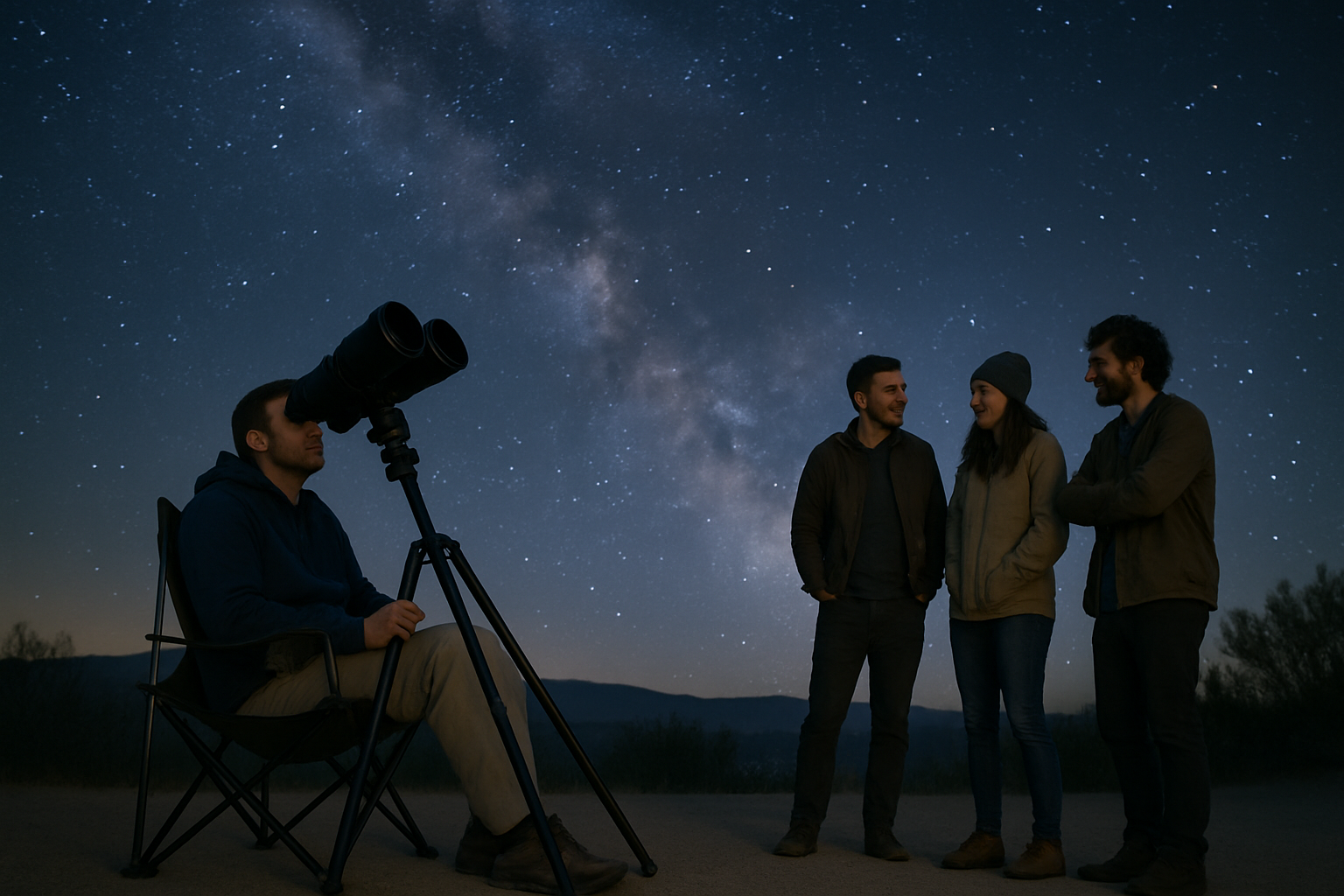
A telescope wins when you know exactly what you want to observe and you are willing to pay for magnification, setup time, and storage. Binoculars win when you want astronomy to fit real life.
They are better when:
- you want a fast weeknight session
- you are still learning constellations and bright landmarks
- you plan to go to public star parties
- you travel often or live in an apartment
- you want one optic that can do both day and night jobs
They are also an excellent bridge instrument. If you use binoculars first, you learn the sky faster. That makes every future telescope decision better.
And if you want beginner-friendly targets to use with your new pair, our guide to the best deep-sky targets in the June dark-moon window is full of objects that make sense with modest optics.
Bottom Line
If you want the clean recommendation: buy an 8x42 first.
If you know your observing will be mostly from a chair, mostly at night, and mostly about the sky, a 10x50 can be worth it.
If you are eyeing a 15x70 because it sounds more serious, slow down. That is usually a second-pair decision, not a first-pair one.
The best beginner binoculars are the ones that get you outside often enough to build confidence. If you want people to compare views with, plan a local star-party night, or meet members who care about the Moon, rockets, and summer sky targets as much as you do, you can connect in Austin, Houston, Los Angeles, or join free at cosmicmatch.io.