Starship Flight 13 Abort: What Happened and When SpaceX May Try Again

Starship Flight 13 Abort: What Happened and When SpaceX May Try Again
Update — July 18, 2026: Starship Flight 13’s automated launch sequence stopped about one second before liftoff from Starbase. Four engines did not fire, and the system immediately shut down the other 29. That is a pad abort—a safety system stopping a launch before the vehicle left the ground—not an in-flight failure. SpaceX plans to replace two engines before another attempt. As of this update, Next Spaceflight lists a provisional July 20 window opening at 22:45 UTC (17:45 CDT / 15:45 PDT); use the official SpaceX mission page for final status and the livestream.
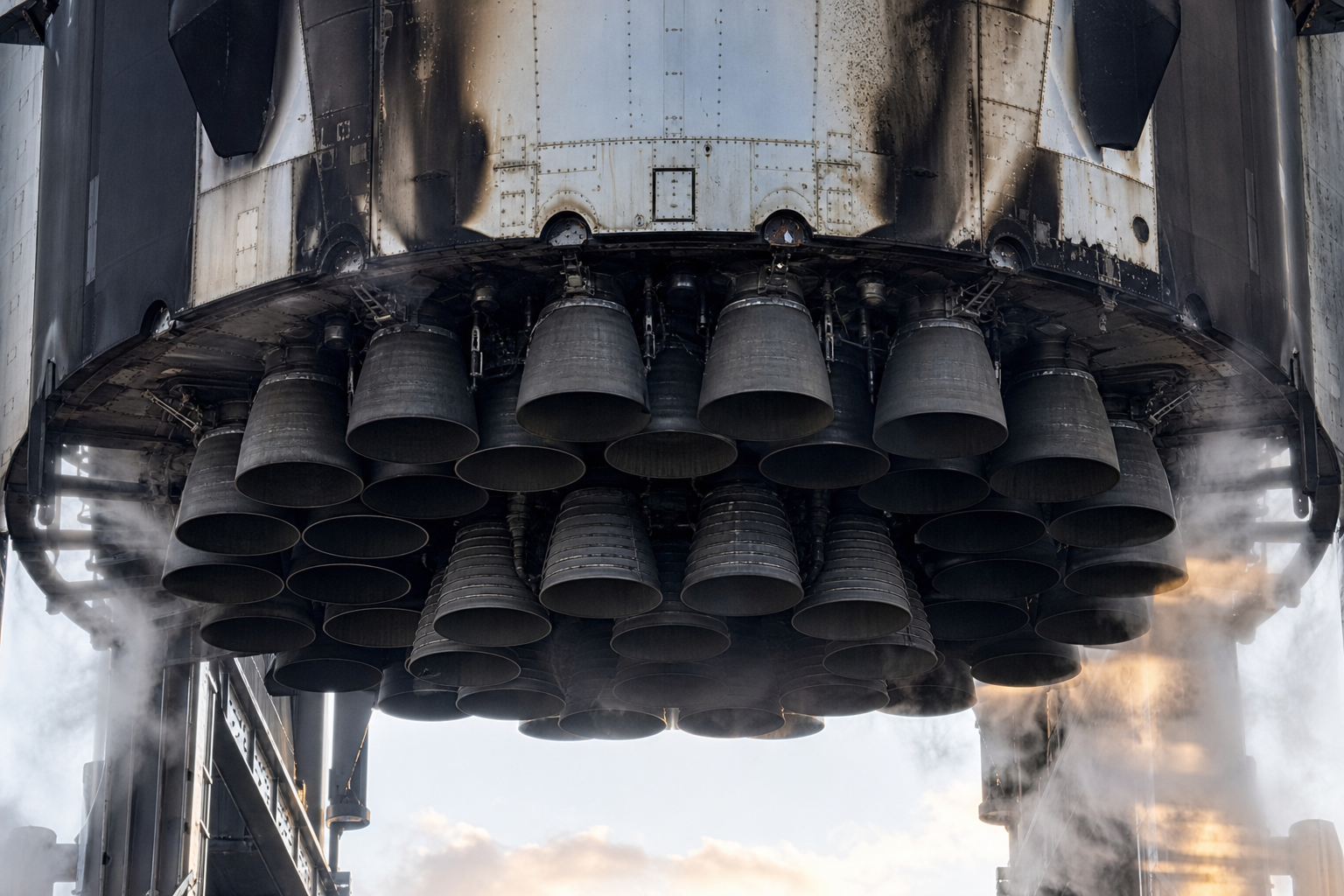
A launch can be dramatic even when the rocket never moves. Flight 13’s countdown ended automatically roughly one second before liftoff after four of Super Heavy’s engines did not ignite. The important part of the story is what followed: the remaining 29 engines shut down immediately, keeping the vehicle on the pad. For a developmental launch vehicle, that is the launch-abort logic doing exactly what it is meant to do—detecting a condition outside its rules and stopping before flight.
This is a revised version of our Flight 13 coverage. The earlier July 16 target is no longer current. Associated Press reported that SpaceX expects to replace two engines, while the mission’s broader goals remain unchanged: a Starship/Super Heavy test flight with 20 Starlink V3 satellites planned as payload.
What happened at the pad
Super Heavy uses 33 Raptor engines. At Flight 13’s attempted liftoff, four did not fire. Automated launch systems are designed to compare real-time engine data against strict criteria; if enough engines are unavailable or their startup does not meet those criteria, the vehicle does not attempt to climb away on an uncertain configuration.
That distinction matters. This was not a failure after ascent, stage separation, or a maneuver over the Gulf. It was an automated abort before liftoff. The other 29 engines were shut down right away, and the rocket remained at Starbase. Launch teams now have a bounded problem to inspect: why those starts were unacceptable, plus the planned replacement of two engines.
It is also why the next attempt should not be treated as guaranteed simply because a tracker shows a date. Hardware work, checks, weather, range availability, and SpaceX’s own readiness call can all move a test-flight schedule. The July 20 time below is useful for setting a tentative reminder, not for declaring a confirmed launch time.
The currently listed retarget: July 20, provisionally
As checked on July 18, Next Spaceflight’s Flight 13 tracker lists a July 20, 2026 window opening at 22:45 UTC. That converts to 17:45 CDT in South Texas and 15:45 PDT in Los Angeles. The listing should be described as a tracker-listed, provisional retarget until SpaceX’s official Flight 13 page posts or confirms an attempt.
For launch-watchers in Austin, Houston, and Los Angeles, this is a livestream-first event. Do not plan on naked-eye viewing from those cities. Instead, check SpaceX shortly before the listed window, then join the webcast when the company begins coverage. It is a great excuse to compare notes with people who enjoy the engineering as much as the countdown—join the Cosmic Match space community or start a conversation through the Cosmic Match homepage.
What Flight 13 is still meant to test
The abort changes the immediate schedule, not the fundamental purpose of the flight. Flight 13 is designed to test changes after Flight 12, including Super Heavy’s stage-separation behavior and multi-engine relight reliability. The planned booster sequence includes ascent, separation, boostback, and an offshore Gulf landing-burn test; it is not a promise of a tower catch.
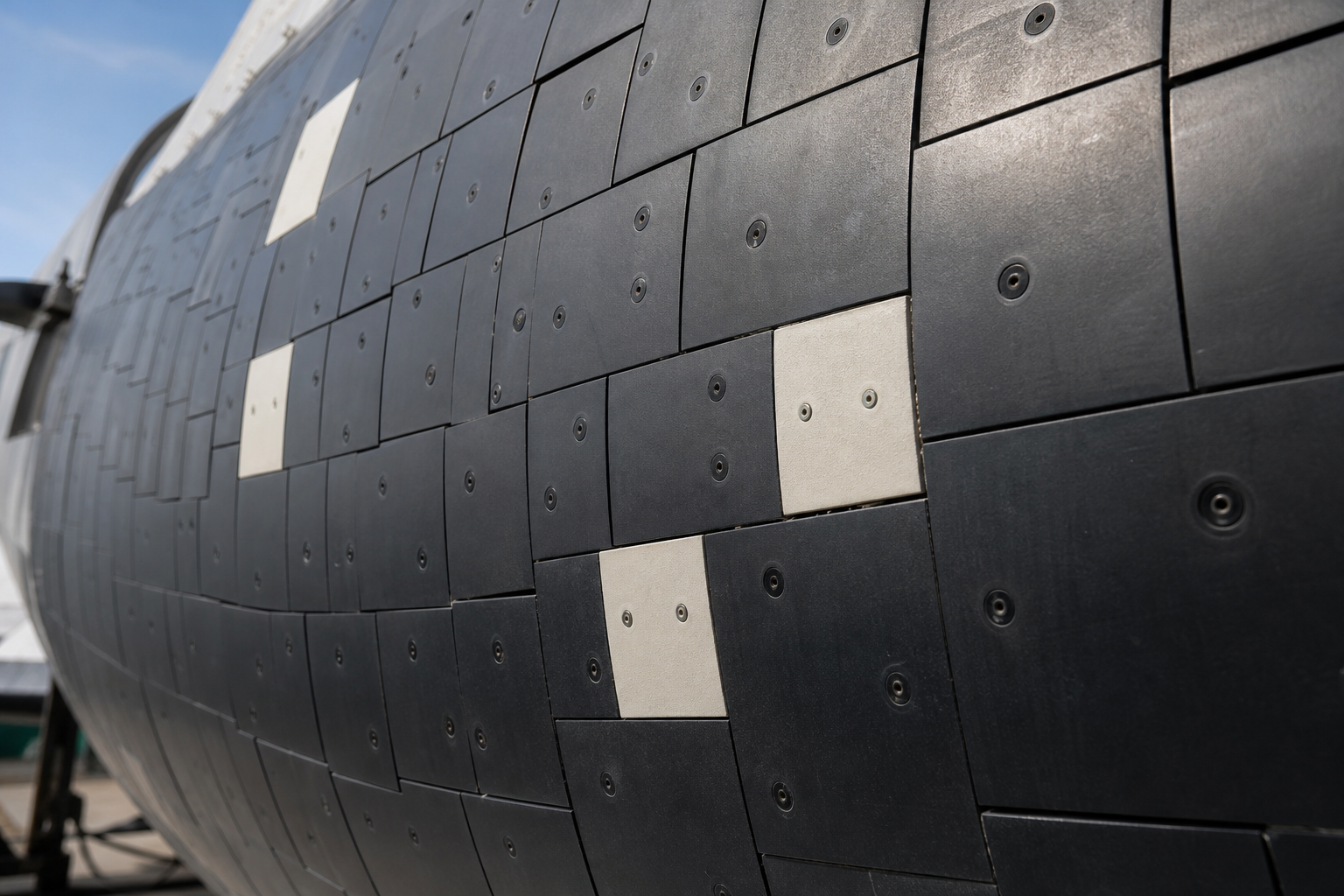
The Starship upper stage is also slated to deploy 20 Starlink V3 satellites, relight a Raptor engine in space, and conduct a controlled entry and splashdown in the Indian Ocean. Six of the satellites are intended to carry cameras for heat-shield imaging tests. Those are ambitious objectives, and each depends on a clean liftoff and ascent.
A pre-liftoff abort is therefore not the same kind of data point as an engine outage after separation. It prevents the team from collecting the flight data planned for this attempt, but it avoids carrying an engine-start issue into a high-energy ascent. Developmental programs learn through both flight and ground operations; here, the safety system made the conservative call before the vehicle left the pad.
A simple checklist for the next countdown
When SpaceX names its next attempt, watch for three things:
- Official status first. Use the SpaceX mission page, not a tracker alone, for the final countdown and webcast.
- Engine-start confirmation. The central question from the aborted attempt is whether all required engines meet startup criteria before release.
- The early-flight milestones. If Flight 13 launches, stage separation, the booster flip and relight sequence, satellite deployment, an in-space Raptor relight, and heat-shield observations will again be the key engineering moments.

Why the terminology matters
Calling every stopped countdown a “failure” erases a useful engineering distinction. A launch system has many layers of checks precisely so that an unacceptable condition can halt the sequence before the rocket commits to flight. Flight 13’s four non-firing engines and immediate shutdown of the other 29 are the facts to keep in view: the system detected a problem, did not lift off, and the vehicle stayed on the ground.
SpaceX’s planned replacement of two engines gives the next countdown a concrete hardware step to follow. But until the company confirms the next attempt, July 20 remains provisional. Keep the official livestream page open, bring your questions, and find people who will happily debate what a pad abort teaches us after the webcast.
This article was updated July 18, 2026. The abort details and planned engine replacements are attributed to Associated Press. The schedule is dynamic; SpaceX is the final authority for launch status.