BOHR Reaches Orbit. What the First Commercial Nuclear-Powered Satellite Actually Proves
BOHR Reaches Orbit. What the First Commercial Nuclear-Powered Satellite Actually Proves
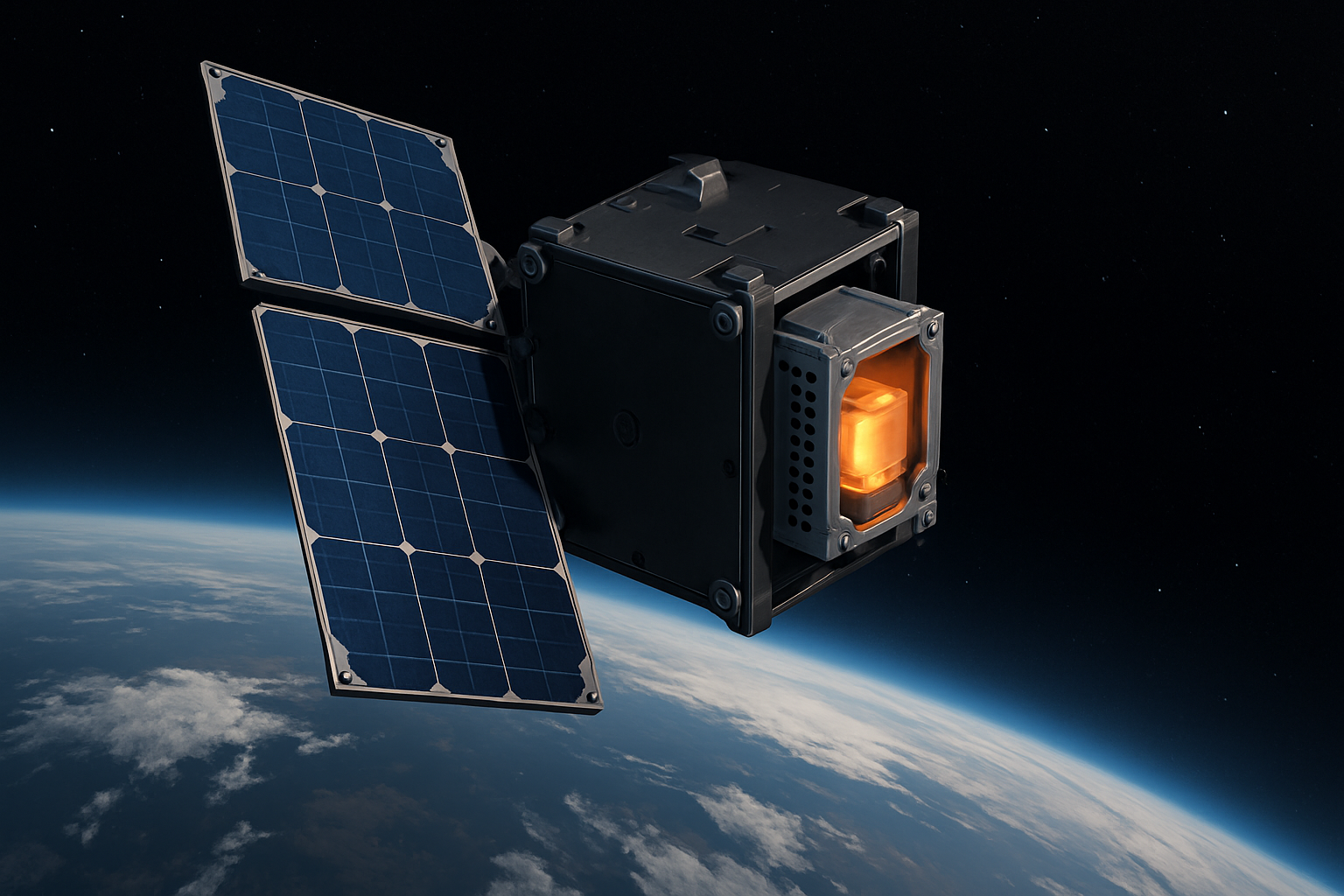
If you saw headlines about the first commercial nuclear-powered satellite reaching orbit this week, the easy takeaway is the wrong one. BOHR is not a solar-killer, not a moon-base reactor, and not a sudden jump into Cold War-style space power. What actually launched on Tuesday, July 7, 2026 aboard SpaceX Transporter-17 is much more specific, and arguably more interesting: a CubeSat demonstration meant to prove that a compact tritium betavoltaic power source can keep a payload running continuously in orbit even when sunlight is not the whole answer.
That distinction matters. According to City Labs, BOHR is the world's first commercial nuclear-powered satellite and the first nuclear CubeSat. But the company also says the spacecraft still uses conventional solar power for satellite bus operations. The nuclear piece is the NanoTritium payload-power demonstration. Independent reporting from Space.com backs that up, and that is the framing space enthusiasts should keep in mind before turning this into a much bigger claim than the mission supports.
What Launched, and When
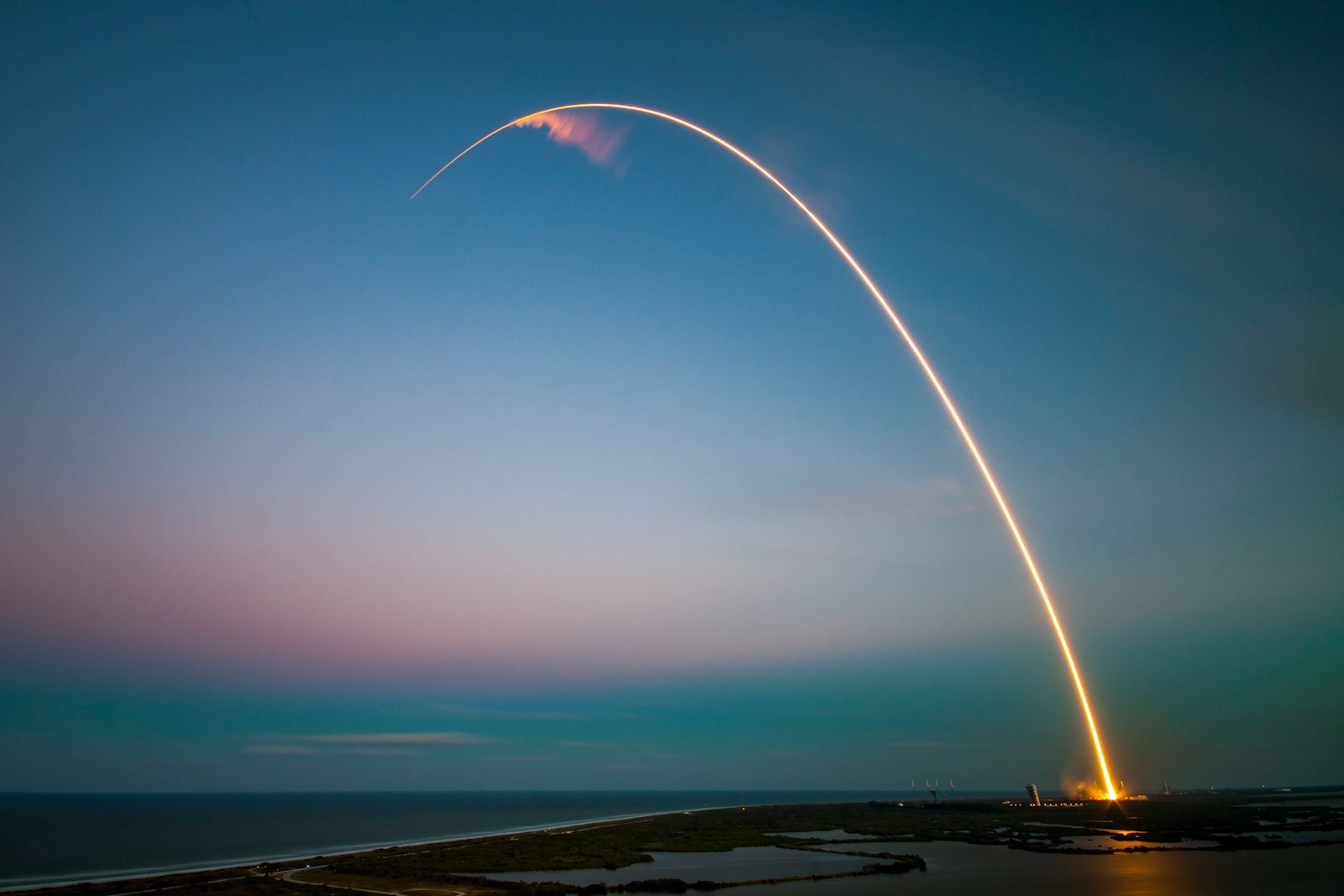
Space.com reports that SpaceX's Falcon 9 lifted off on July 7, 2026, at 3:12 a.m. EDT (0712 UTC / 12:12 a.m. PDT) from Vandenberg Space Force Base on the Transporter-17 rideshare mission. The rocket carried 81 payloads, with deployment beginning about 50.5 minutes after liftoff.
BOHR, which stands for Betavoltaic Orbital High-Reliability, was one of those payloads. City Labs describes it as a pathfinder mission designed to validate its micropower system in orbit for the first time. So yes, this is a real launch milestone. But it is not proof that entire future spacecraft will suddenly abandon solar arrays.
For readers who follow commercial spaceflight closely, that is still a meaningful development. Rideshare missions like Transporter-17 are becoming the practical route for small, high-concept demonstrations to reach orbit without waiting for a dedicated launch of their own.
What Makes BOHR Different
The key technology here is not a reactor. It is a betavoltaic power source using tritium. In plain English, City Labs says the system captures beta particles from tritium decay and converts them into electricity through a semiconductor. The goal is a small, steady, long-duration source of power for mission layers that need to stay on continuously.
That is why the better mental model is not "nuclear spacecraft replaces solar panels." It is "a spacecraft gains a second power lane for a specific payload."
Space.com's reporting is useful here because it makes the boundary explicit: BOHR still depends on solar power for general spacecraft operations. The NanoTritium unit is being validated as the dedicated power source for the demonstration payload. That nuance is the whole story. If you strip it out, you end up with a much louder headline and a much less accurate article.
Why Space People Should Care Anyway
Even with that limit, the mission points at a real problem in space operations: there are environments where sunlight is weak, intermittent, or operationally awkward. City Labs specifically ties the technology to deep-space missions, long-duration autonomous sensor networks, and permanently shadowed lunar regions.
That last one is the most practical hook for Cosmic Match readers. NASA's Artemis planning keeps pulling attention toward the Moon's south polar region, where access to water ice and long-term infrastructure questions matter at the same time. If you read our earlier Artemis III crew update, you already know why the lunar south pole keeps showing up in mission strategy. BOHR does not solve that power problem on its own, but it does test one narrow, commercially handled way to keep select hardware alive when sunlight is not enough.
That is also why Houston is a natural audience for this story. It sits at the intersection of exploration architecture, mission operations, and future lunar logistics. If those are the conversations you want more of, the Houston space community on Cosmic Match is where people are already trading notes on the missions that matter after launch day fades.
The Regulatory Milestone May Be Bigger Than the Hardware
One of the most important claims in the City Labs release has less to do with power output and more to do with process. The company says BOHR is the first commercial nuclear mission to use the FAA nuclear-launch approval pathway laid out under National Security Presidential Memorandum-20, and that the FAA issued affirmative payload authorization on September 30, 2025.
That is a big deal because commercial space does not advance only on engineering. It advances when hardware, safety review, licensing, and launch integration can all happen inside a repeatable process. If that FAA pathway holds up, BOHR may end up remembered not just as a technology demonstration but as a regulatory precedent for a category of missions that used to feel too difficult for ordinary commercial launch workflows.
This is part of why the story fits alongside our Swift rescue mission update. They are very different missions, but both show the same broader trend: commercial operators are taking on more technically specific roles in orbit instead of serving only as launch passengers or generic hardware suppliers.
What BOHR Does Not Prove Yet
It does not prove that tritium betavoltaics are ready to power an entire spacecraft.
It does not prove that lunar surface systems can now run indefinitely on this architecture.
And it does not mean solar power suddenly became secondary in orbital design.
What it does prove, if the demonstration performs as intended, is that a commercial nuclear-powered satellite can fly under an established regulatory pathway and test a persistent, specialized power source in orbit without pretending to solve every spacecraft energy problem at once.
That is a more modest claim than the viral version, but it is also the one worth respecting. Space progress is often built on narrow demonstrations that remove one constraint at a time. BOHR looks like one of those missions.
Bottom Line
BOHR's real achievement is precision, not spectacle. A commercial nuclear-powered satellite reached orbit on July 7, 2026, but the genuine milestone is narrower than the headline suggests: City Labs is testing whether a tritium betavoltaic payload-power system can add reliable, always-on capability to spacecraft that still rely on solar power for the rest of their jobs.
If that works, the long-term value is not replacing every solar panel in space. It is giving future spacecraft, lunar instruments, and shadow-bound sensor packages a new option where sunlight is unreliable. That is a quieter breakthrough, but it may be the more useful one.
If you want more people around you who care about the mechanics behind missions like this, not just the splashiest headline, join the spaceflight community on Cosmic Match.
Sources
- City Labs press release: "City Labs Launches World's First Commercial Nuclear-Powered Satellite Aboard SpaceX Transporter-17"
- Space.com: "SpaceX just launched the 1st-ever nuclear-powered commercial satellite"
- Space.com: "SpaceX launches 81 satellites to orbit from California, lands rocket on ship at sea"