Best Deep-Sky Targets in the June 2026 Dark-Moon Window
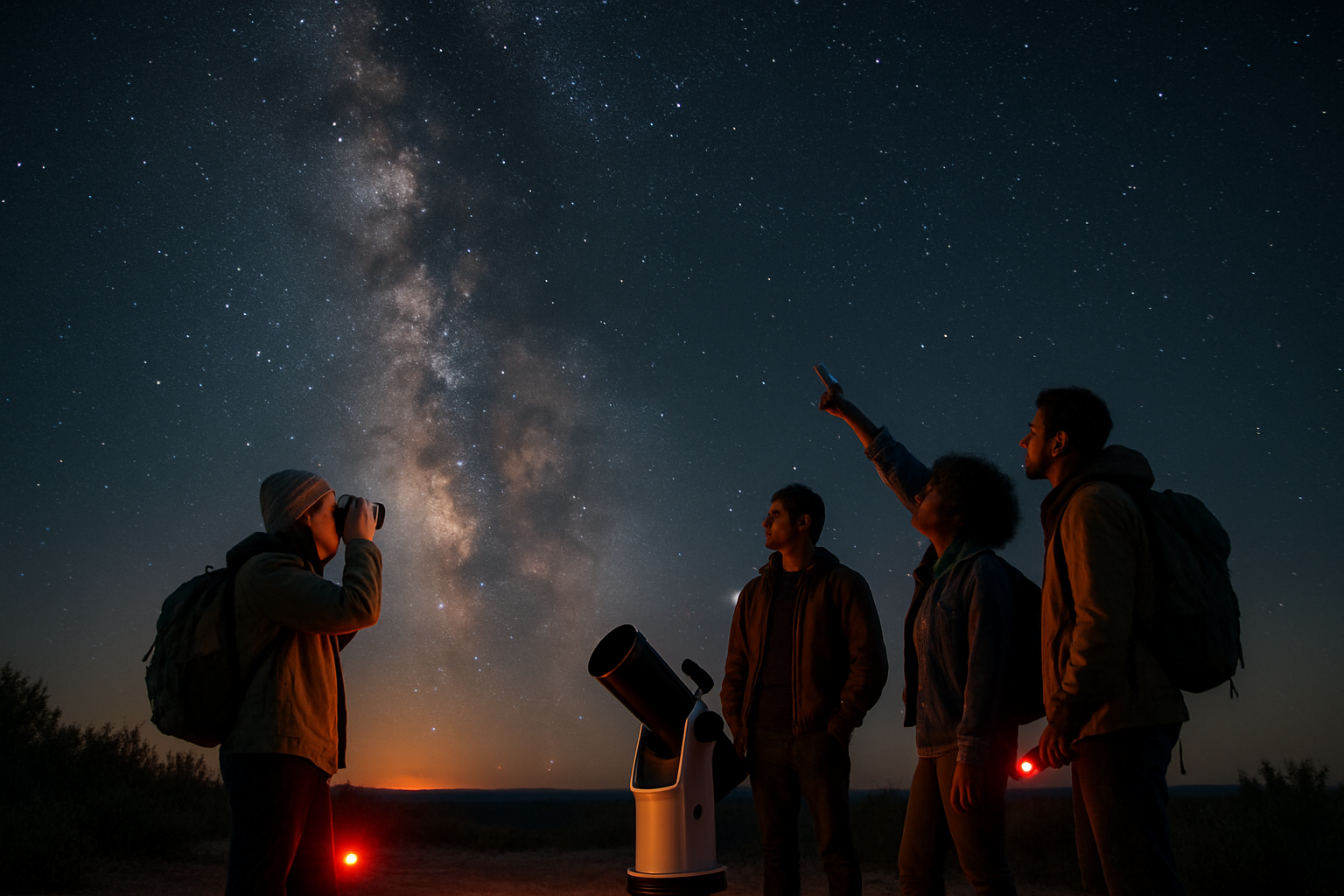
If you learned the Summer Triangle earlier this week, this is the payoff. The cleanest moonless stretch of June 2026 landed right after New Moon on June 14, but this guide is still timely on Friday, June 19 because the Moon does not own the whole night. In Austin, Houston, and Los Angeles, the waxing crescent stays up through the evening, then sets shortly after midnight on the June 19/20 overnight. That leaves a genuinely dark late-night block for deeper targets, which is the part a lot of generic “dark moon” roundups skip.
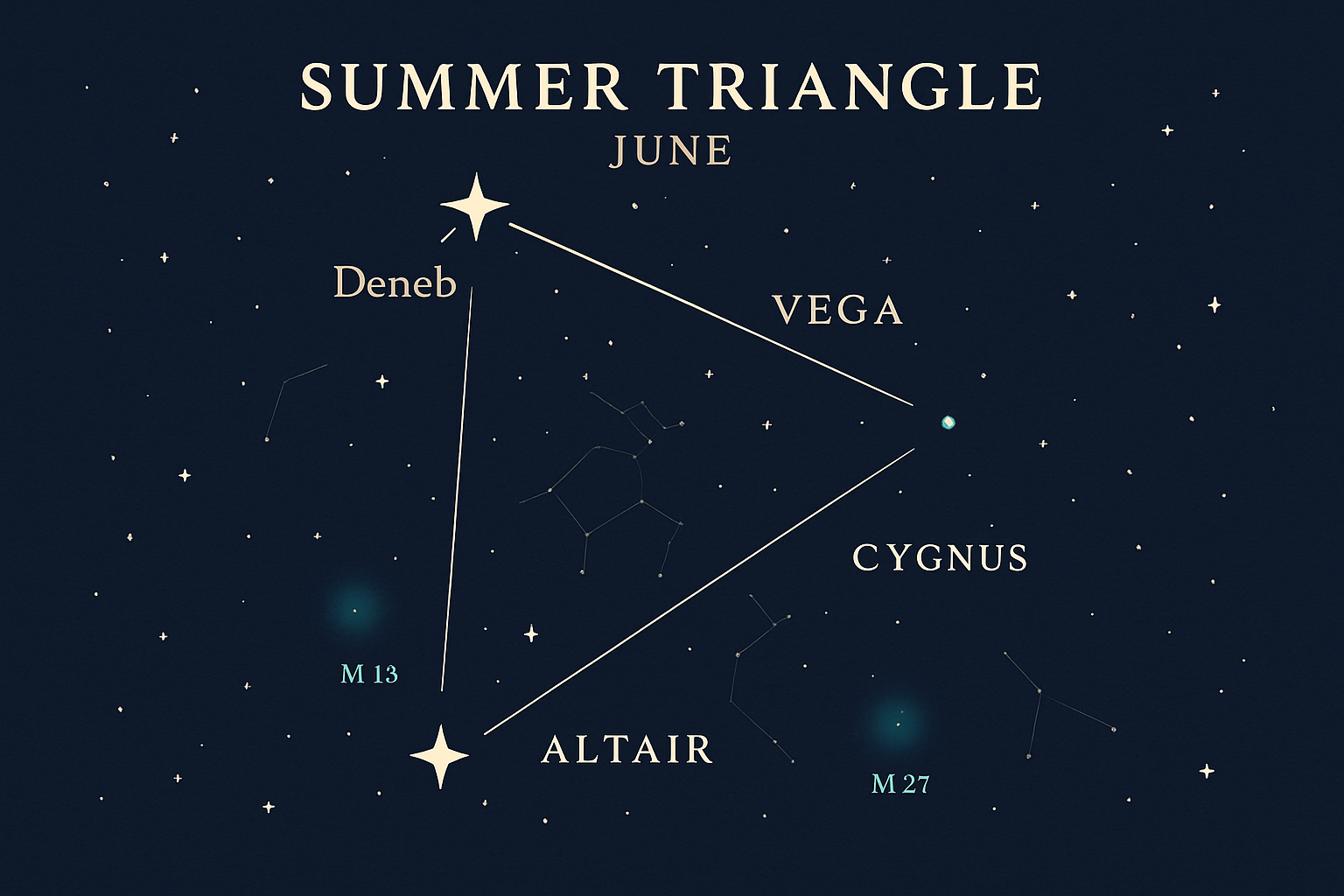
That timing actually works well for beginners. You do not need to sprint through ten objects at 9:45 p.m. You can spend the first part of the night getting comfortable, let the Moon get out of the way, and then focus on a short list that rewards binoculars and small telescopes. NASA's June 2026 skywatching guide specifically says that deep-sky treasures are rising into view around the Summer Triangle this month, so this is a natural follow-up to our Summer Triangle guide. Once you know Vega, Deneb, and Altair, the rest of the session gets much easier.
First, Know When the Sky Actually Gets Darker
The headline dates matter. NASA lists New Moon on June 14 and First Quarter on June 21, which means the best dark-sky stretch sits between those two phases, not across the entire second half of the month. By the scheduled publish overnight, timeanddate shows the Moon setting at 12:34 a.m. in Austin, 12:24 a.m. in Houston, and 12:01 a.m. in Los Angeles on the June 19/20 overnight.
Translation: if you go out on June 19, use the evening for setup, snacks, and easy naked-eye orientation. Do your real deep-sky work after midnight.
If your schedule is flexible, June 15 through June 18 is cleaner because the Moon is thinner and out of the way earlier. But if June 19 is the first realistic night you have, do not write it off. Just shift your expectations later. That is especially useful if you are meeting friends, trying binoculars for the first time, or working with a small backyard telescope instead of chasing an all-night marathon.
If you want a broader map of the month before you pick a night, our June 2026 stargazing calendar gives the bigger sequence. And if you want a nearby fallback spot before you commit to a longer drive, our Austin stargazing guide is a practical starting point.
1. M13, the Great Hercules Cluster
If you only hit one true deep-sky target this week, make it M13. NASA describes it as one of the brightest globular clusters visible from the Northern Hemisphere, and that is exactly why it belongs first in a beginner guide. It is bright enough to survive imperfect conditions better than many nebulae, and it sits high enough in the sky to avoid some of the horizon murk that ruins lower targets.
In 10x50 binoculars, M13 looks like a soft round glow. In a small telescope, the outer edges begin to look grainy, and with a bit more aperture it starts to feel like a dense spray of stars instead of a smudge. It is not the flashiest object in astrophotography terms, but it is one of the most satisfying “I actually found it” targets for a first late-night session.
M13 is also a good reminder that altitude beats hype. A high, bright globular cluster often gives a better real-world experience than a more famous object sitting low in haze. If you are introducing someone to deep-sky observing for the first time, start with the target most likely to deliver.
2. M27, the Dumbbell Nebula
Once you know the Summer Triangle, M27 becomes much less intimidating. NASA highlights the Dumbbell Nebula in its June 2026 skywatching guide as one of the deep-sky objects rising into view around that part of the sky, and it is a smart second target because it feels different from M13. Instead of a concentrated star cluster, you are looking at the glowing remains of a dying star.
From a darker suburban site, binoculars may show M27 as a tiny out-of-place patch of light. In a small telescope it becomes more convincing, especially once your eyes settle and you stop expecting a bright Hubble-style color show. The win here is not dramatic color. The win is recognizing that you are looking at structure, not just a random blur.
This is also where the earlier Summer Triangle piece pays off. If you are already comfortable with that star pattern, you are no longer wandering blind. You are using one bright, easy asterism to unlock a more serious observing session.
3. M11, the Wild Duck Cluster
M11 is one of the most beginner-friendly cluster targets for this stretch because it gives binoculars and small telescopes something rich to chew on without demanding expert star-hopping skills. NASA notes that the Wild Duck Cluster appears as a triangular patch of light through a pair of binoculars, which is a nice description because that is exactly the kind of feature a newer observer can latch onto.
The cluster sits in Scutum, right in the broader Milky Way neighborhood that starts feeling more dramatic once the Moon is gone. If your sky is reasonably transparent, M11 has that “suddenly there are way more stars here than everywhere else” quality that makes people stick at the eyepiece longer than they planned.
This is a strong pick for Austin, Houston, and Los Angeles readers because it does not require premium gear to feel worthwhile. If your goal is a social observing night instead of a solo technical exercise, M11 is the kind of target that keeps momentum up.
4. M8, the Lagoon Nebula
The Lagoon Nebula, or M8, is the lowest-risk nebula choice for this specific June window. NASA says it is faintly visible to the unaided eye in dark skies and easily seen with binoculars or small telescopes, which is exactly the threshold you want for a beginner-focused guide.
The catch is altitude. M8 sits lower in the southern sky than M13 or M27, so a messy horizon, heavy humidity, or city glow can flatten it fast. That is why it belongs later in your session and why it is worth pairing with an open southern view. On a clear night, though, it rewards even modest gear with a brighter, mistier look than many first-time observers expect.
This is one place where the Austin, Houston, and Los Angeles audience has an advantage over readers farther north. Sagittarius and the southern Milky Way still sit low, but they are not scraping the horizon the way they do from colder northern cities. If you have been waiting for one nebula that feels approachable before buying fancier gear, M8 is a good candidate.
A No-Regrets Plan for the June 19 Overnight
Do not turn this into a six-hour object chase. A better plan is a compact session with a little patience built in.
Start outside before moonset and use the brighter part of the evening to settle in. Confirm the Summer Triangle first. Check focus. Let everyone in the group take a relaxed look at an easy bright object. Then, once the Moon drops out, run this order:
- M13 first, because it is the most forgiving.
- M27 second, while the Summer Triangle area is easy to work.
- M11 once you are ready to move deeper into the Milky Way.
- M8 last, when the southern sky is darker and your eyes are fully adapted.
If energy is still high after that, the Ring Nebula (M57) is a strong bonus target because NASA also flags it in the same June deep-sky neighborhood. But the smarter beginner move is usually to end with four satisfying wins instead of ten rushed attempts.
Make the Late Night Worth Sharing
The practical barrier for deep-sky observing is not always equipment. Sometimes it is just finding people who will still be enthusiastic after midnight. If you want more local skywatchers who understand why “wait until moonset” is useful advice, you can meet members in Austin, Houston, and Los Angeles, or join free at cosmicmatch.io.
June's dark-moon window is not about seeing everything. It is about picking a few targets that reward patience, learning one part of the sky well, and turning a clear night into a session you actually want to repeat.