How to Find the Summer Triangle in Mid-June Before the Solstice

If you want one easy win in the night sky this weekend, skip the gear spiral and learn one pattern that keeps paying you back all summer. On Friday, June 13, 2026 and Saturday, June 14, 2026, the Summer Triangle is climbing into the evening sky just as the Moon is thinning toward New Moon on June 14, which makes this a friendly moment to spot it before the June 21 solstice.
NASA's June 2026 skywatching guide specifically highlights the Summer Triangle and the deep-sky targets around it, and that is what makes this more than a star-pattern scavenger hunt. Once you learn Vega, Deneb, and Altair, you unlock an entire neighborhood of summer observing targets.
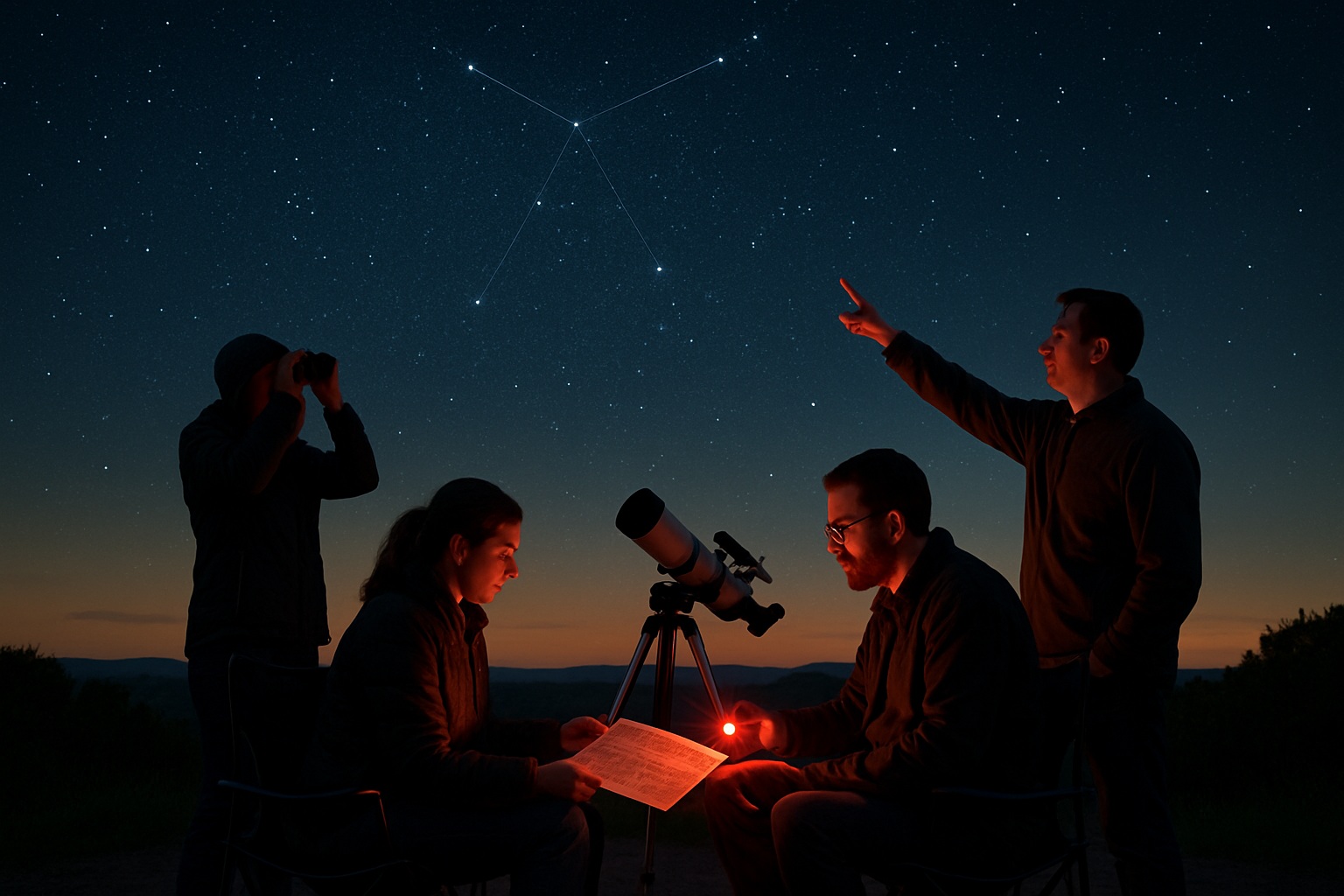 Community-first stargazing scene for this guide: a small group learning the Summer Triangle together from a dark overlook.
Why This Weekend Works So Well
The timing is unusually cooperative. June's Third Quarter Moon fell on June 8, and the New Moon arrives on June 14, so the evening sky on June 13 is darker than it was earlier in the week. That matters because the Summer Triangle itself is bright enough to show through urban light pollution, but the darker the sky gets, the easier it becomes to notice the surrounding shapes and fainter nearby targets.
NASA also notes that the June solstice lands on June 21, 2026, marking the start of astronomical summer in the Northern Hemisphere. In other words, this is the perfect pre-solstice window to learn a pattern that will stay useful for months. If you want a broader plan for the month, our June 2026 stargazing calendar is the best companion read. If you want the city-by-city breakdown of what the approaching solstice changes in practice, see our June solstice night-sky guide. And if you want a second easy pattern lower in the southern sky later this week, our Antares and Scorpius guide gives you a Moon-assisted way to find it.
How To Find the Summer Triangle Tonight
1. Wait until twilight is mostly gone
Do not rush outside right at sunset and expect the full shape to jump out. Give the sky time to darken, then face east to east-northeast. The Triangle becomes easier once twilight fades and the bright western sky stops distracting your eyes.
2. Start with Vega
Vega is the cleanest starting point. It is usually the brightest and most obvious of the three stars, and NASA's asterism guide lists the Summer Triangle as one of the easiest patterns to recognize even in light-polluted urban skies. If you think you found Vega, pause and confirm it before you move on. Getting the first point right makes the rest easy.
3. Stretch outward to Deneb and Altair
From Vega, look for Deneb to one side and Altair to the other. The full Triangle is bigger than most first-time observers expect. Deneb belongs to Cygnus, the Swan, and Altair belongs to Aquila, the Eagle, so spotting the Triangle also gives you an on-ramp into the surrounding constellations.
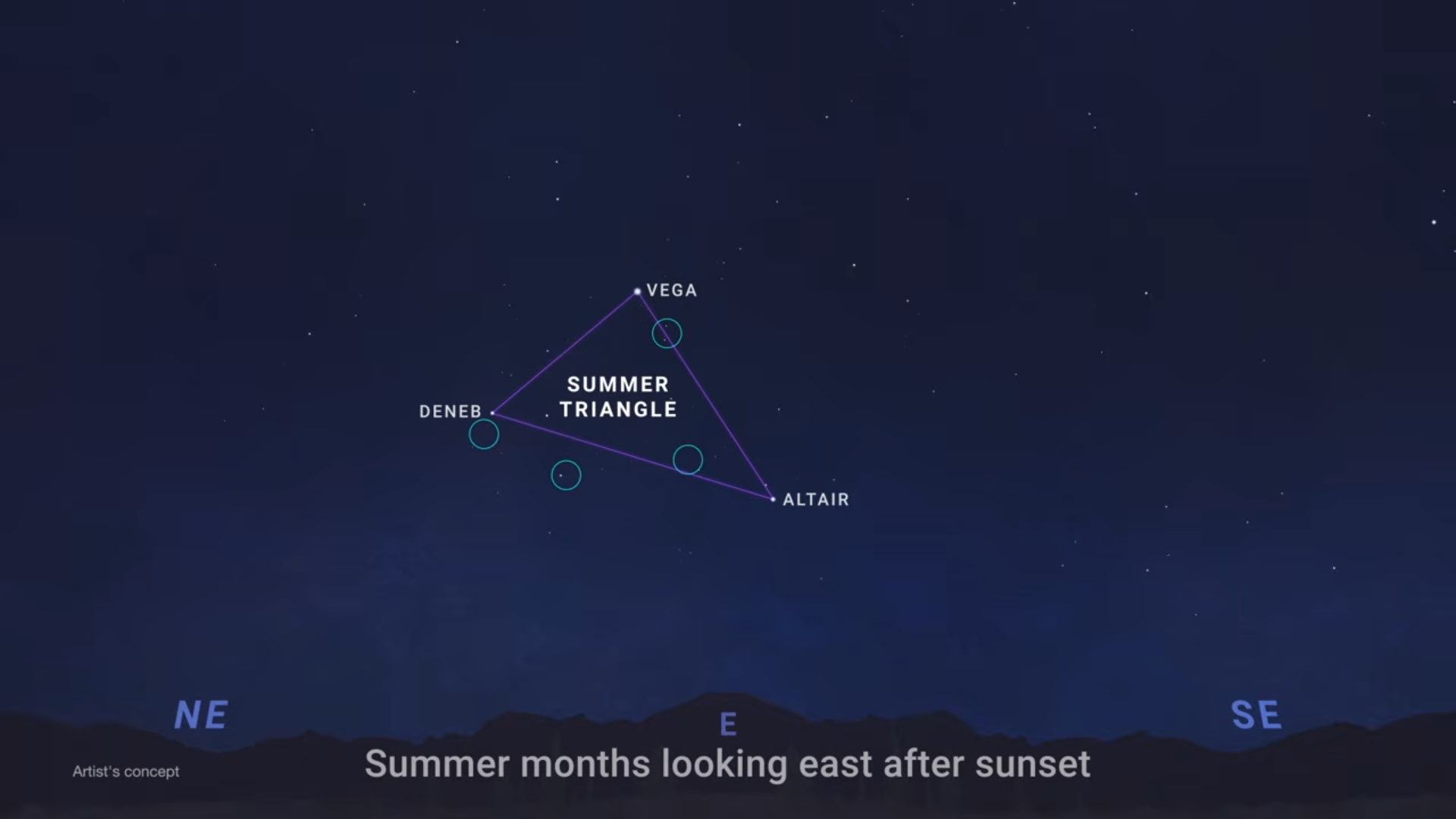 NASA's June 2026 sky chart places the Summer Triangle in the eastern evening sky. Image credit: NASA.
Why Beginners and City Observers Love It
The Summer Triangle is an asterism, not a constellation. That simply means it is a recognizable pattern made from stars that belong to different constellations. The practical value is huge: it gives you a dependable reference shape that works even when you are observing from a city or suburb.
That is especially useful if you are not driving hours into dark sky country. Our Austin stargazing guide has good low-friction options for local observing, and the Triangle is the kind of pattern you can learn from a backyard, a park edge, or a quick hill-country stop with friends. If your real observing spot is an apartment or condo, our newer Summer Triangle from a city balcony guide breaks the same pattern down for light-polluted urban skies.
This is also a good pattern for small-group observing because it is easy to point out in real time. One person can call out Vega, another can trace Deneb, and suddenly everyone is oriented without spending twenty minutes pretending they all see the same star.
What To Look For After You Find It
This is where the Summer Triangle becomes more than a beginner checkpoint. NASA's June 2026 guide points out that this region includes deep-sky favorites like the Dumbbell Nebula, Ring Nebula, North America Nebula, and Veil Nebula.
You will not see all of those equally well with the naked eye, binoculars, and a small telescope, but the region is worth revisiting because it scales with your gear. A binocular observer can start exploring star fields and brighter fuzzy targets. A telescope user can begin hunting for Messier objects. An astrophotographer can come back later for longer sessions once the pattern is second nature.
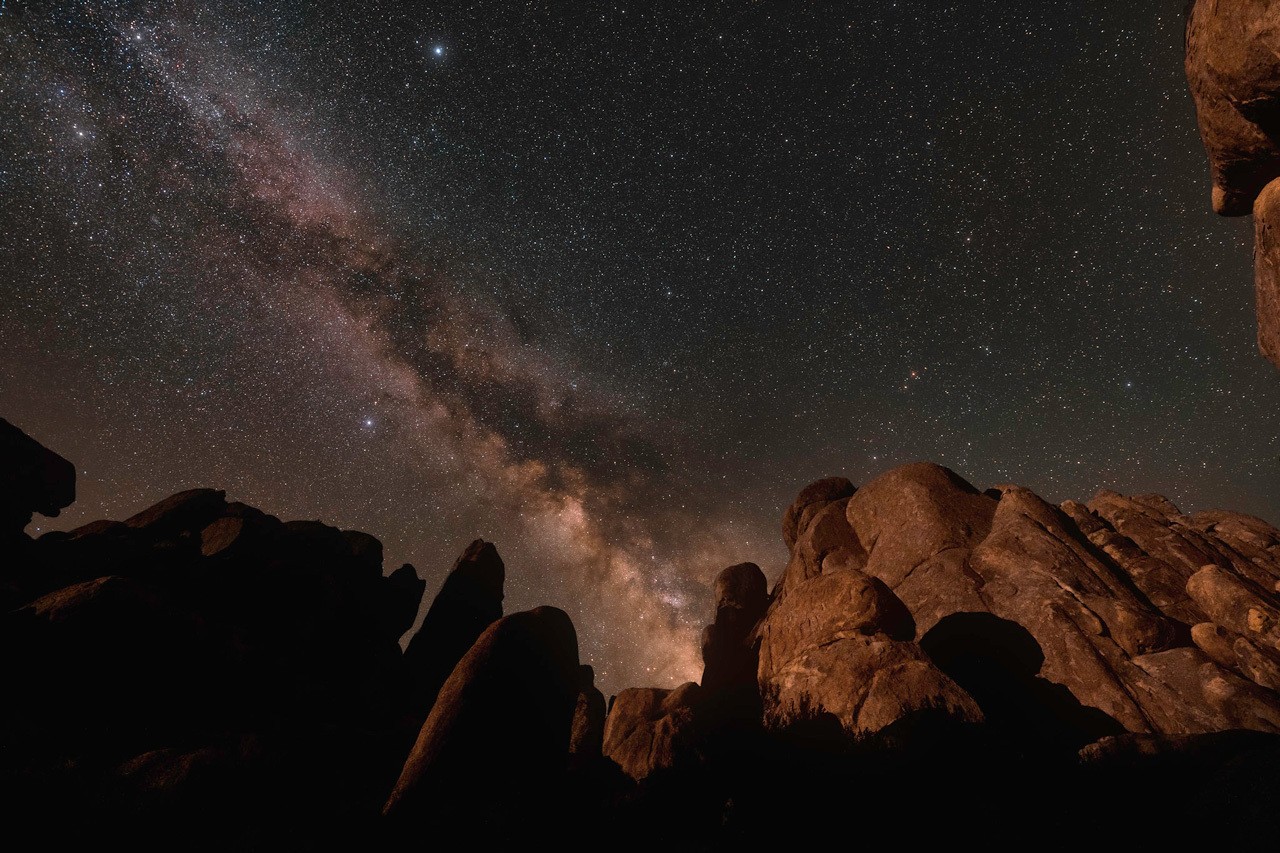 The Summer Triangle appears high in the Northern Hemisphere's summer sky and opens the door to a richer patch of Milky Way observing. Image credit: NASA.
For a practical follow-up session, spend 10 minutes locking in the three corner stars, 10 minutes tracing Cygnus and Aquila, and the rest of your time on one deeper target instead of chasing too many at once. If you also want a second warm-weather target for the same week, our Mercury in June 2026 evening visibility guide can help you plan a separate western-horizon look before Mercury drops lower.
A Better Way To Make Summer Stargazing Social
The best thing about the Summer Triangle is that once you know it, you can share it fast. It works for backyard hangouts, casual observing meetups, astronomy club nights, and last-minute "the sky is clear, want to go outside for twenty minutes?" plans.
If you want more people in your orbit who actually care about sky conditions, telescopes, launch windows, and the difference between a constellation and an asterism, join free at cosmicmatch.io. Cosmic Match is built for people who want a real community around astronomy, astrophotography, rockets, and night-sky adventures.
Learn these three stars now, and the rest of summer gets easier.
If you are ready to turn the Summer Triangle into a deeper late-night session, our June dark-moon deep-sky guide walks through beginner-friendly targets like M13, M27, M11, and the Lagoon Nebula.