Tonight Is Mercury's Best Evening View in June 2026. How to Spot It After Sunset
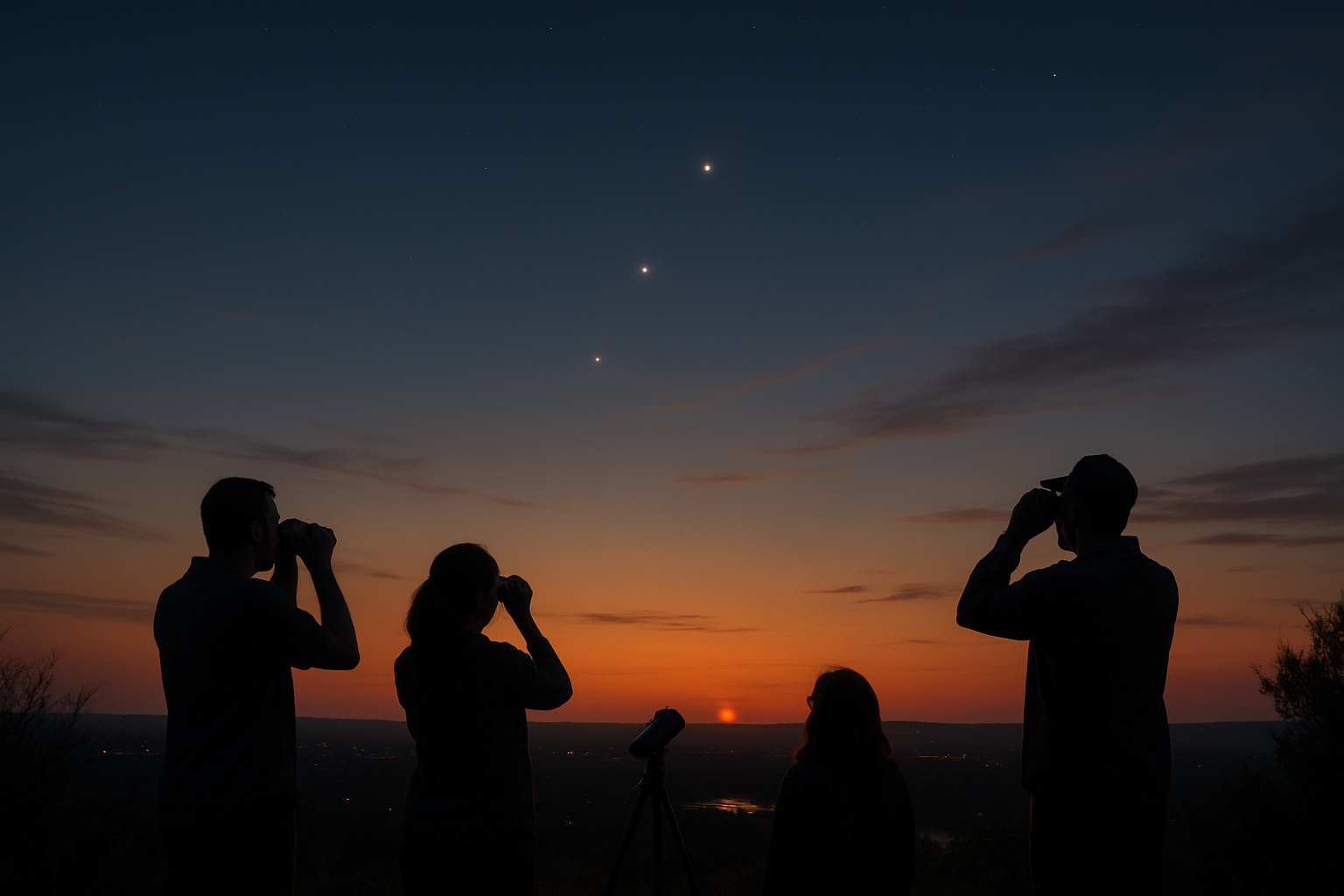
Mercury is in its exact live window now. Tonight, Monday, June 15, 2026, is the best evening in this June apparition to try for it because Mercury reaches greatest elongation east. In practical terms, that means Mercury appears at its farthest apparent separation from the Sun in the evening sky, giving observers their clearest same-day chance before it slips back toward the glare.
That still does not make Mercury automatic. It remains a low-west challenge object, and a clear western horizon matters more than almost anything else. NASA's official June 2026 skywatching guide says June 11 through June 15 is the stretch when Mercury joins Venus and Jupiter after sunset, and tonight is the last evening in that mini parade. The two brighter planets are your locator beacons for the hardest one to spot.
If you want the full month map first, our June 2026 stargazing calendar lays out the Mercury window, the earlier Venus-Jupiter conjunction, and the later Moon-plus-planets lineup in one place.
If you want the plain-language orbital-science follow-up after the viewing window passes, our Mercury at aphelion explainer breaks down why Mercury's July 1 aphelion matters without turning it into another observing guide.
Why Tonight Is the Best Evening to Try
Mercury is always difficult because it hugs the Sun. The useful viewing window is short: the Sun has to be down, but Mercury cannot be allowed to sink too far into the western haze. That is why the strongest hook is no longer preview framing. It is tonight itself.
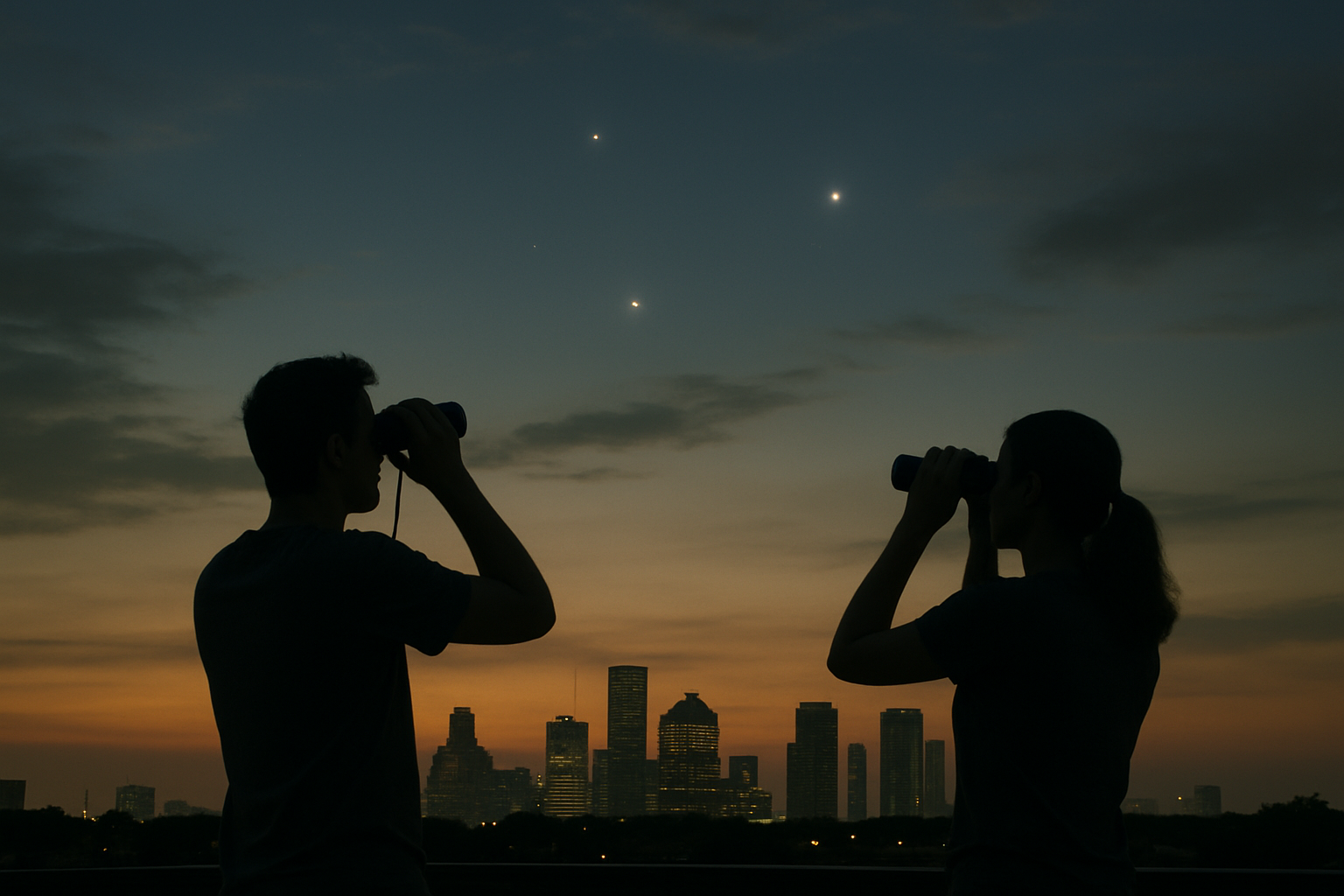
On the source side, the picture is clear. EarthSky says Mercury reaches greatest elongation at 20:00 UTC on June 15, 2026, when it stands 25 degrees from the Sun. NASA adds the practical observing layer: June 11-15 is the active stretch when Mercury joins Venus and Jupiter after sunset. Space.com adds that Mercury sits less than 20 degrees above the western horizon tonight, with Venus and Jupiter forming a line to its upper left.
Put those together and the message becomes simpler than the preview version of this article: if you want Mercury's easiest evening showing of this apparition, June 15 is the night to prioritize, but you still need to move quickly after sunset and work from a clean western horizon.
Where To Look From Austin, Houston, and Los Angeles
Start outside about 30 to 40 minutes after local sunset and face west to west-northwest. Do not wait for full darkness. Mercury can disappear into the horizon haze if you wait too long.
For Austin, sunset on June 15 is 8:34 p.m. CDT. That puts the practical Mercury window shortly after 9:00 p.m. CDT. Horizon quality matters more than a longer drive. If a hilltop, overlook, or open field gives you a cleaner west view, it is usually the better Mercury choice. Our local Austin stargazing guide still fits the same rule: for low-altitude targets, a clean horizon beats marginally darker skies.
For Houston, sunset on June 15 is 8:23 p.m. CDT. Plan for the useful window to open in the 8:50s p.m. CDT. Humidity and haze are often the real problem here, so the best site is the one with the least skyline clutter and the clearest shot to the western horizon.
For Los Angeles, sunset on June 15 is 8:06 p.m. PDT. The best window begins around 8:35 to 8:45 p.m. PDT. Marine haze can flatten the low western sky, so a glare-free overlook or a spot with a little elevation often helps more than people expect.
How To Find Mercury Without Guessing
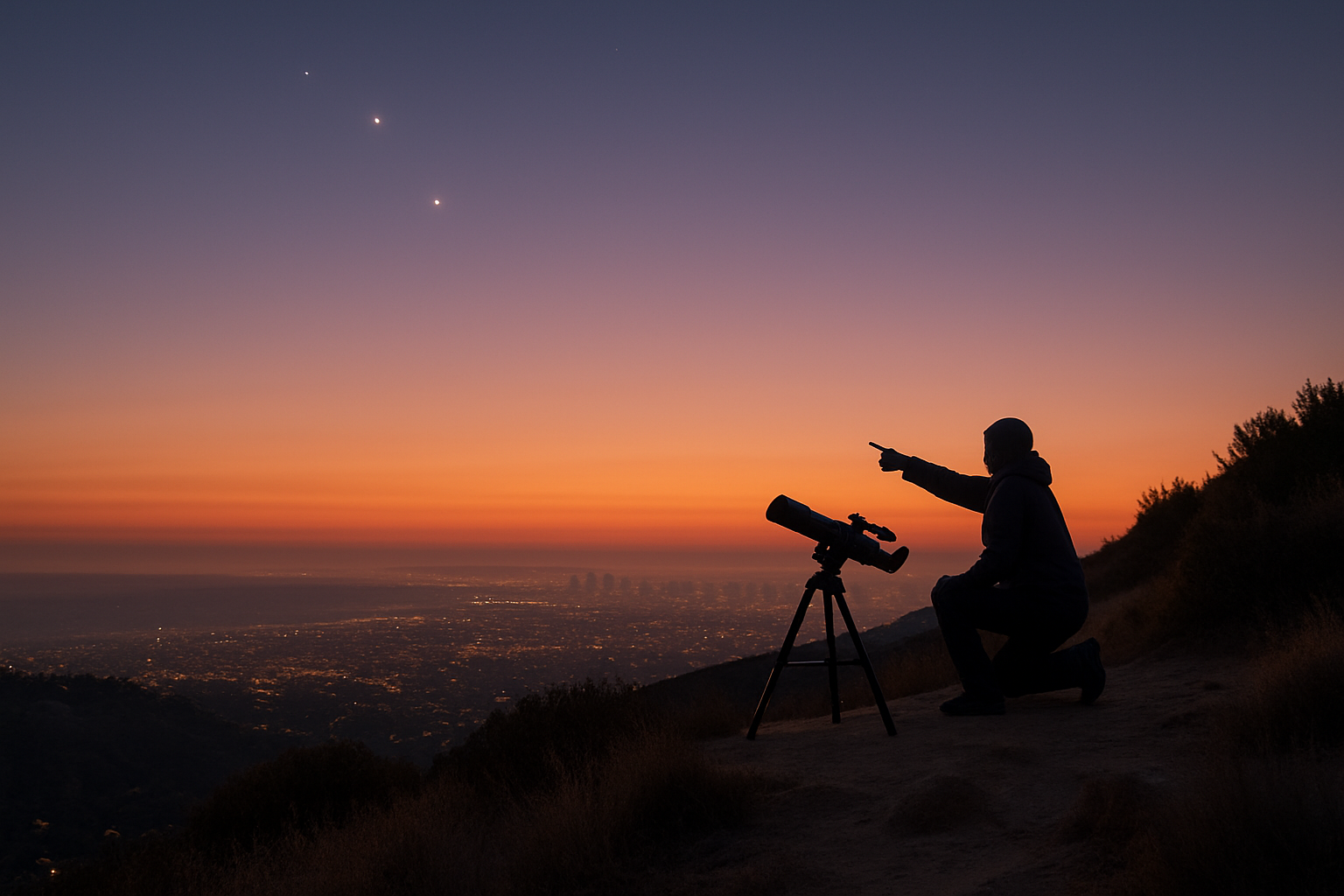
The wrong way to find Mercury is to sweep the horizon randomly and hope a bright point appears. The better method is to build downward from the easier planets.
- Find Venus first. It should still be the brightest object in the western sky after sunset.
- Pick out Jupiter nearby as twilight deepens.
- Trace your gaze downward toward the brighter horizon glow.
- Sweep slowly with the naked eye, then use binoculars if you have them.
- Check again 5 to 10 minutes later if Mercury does not pop immediately.
That last step matters. Mercury can shift from nearly invisible to fairly obvious in a short interval because twilight changes fast near the horizon.
What You Should Expect To See
With the naked eye, Mercury will not look dramatic. Venus is still the attention-grabber and Jupiter is easier too. Mercury is the satisfying one because you have to work for it.
With binoculars, the job gets easier quickly. They help separate Mercury from the background glow while the sky is still bright enough for the horizon to matter. The usual safety rule still applies: only use binoculars after the Sun is fully below the horizon, and never sweep near the Sun.
With a small telescope, the point is still the find itself, not fine detail. Mercury rewards patience, timing, and a good horizon more than magnification.
Best Game Plan for Tonight
Think of this as a short, same-evening mission rather than a broad weekend project.
- Be in place before the sky reaches peak twilight contrast.
- Lock onto Venus first and Jupiter second.
- Sweep below them while the western horizon is still bright but not glaring.
- Give yourself a second pass 5 to 10 minutes later if Mercury does not appear immediately.
- If haze ruins tonight's attempt, keep June 16 and June 17 in mind for a prettier follow-up lineup when the Moon joins the scene. Our new Moon-Venus occultation guide has the exact daytime disappearance and reappearance times for Austin, Houston, and Los Angeles.
That approach keeps the article useful for the exact June 15 live window instead of sending readers back to already-past practice nights.
Why This Works Well With a Group
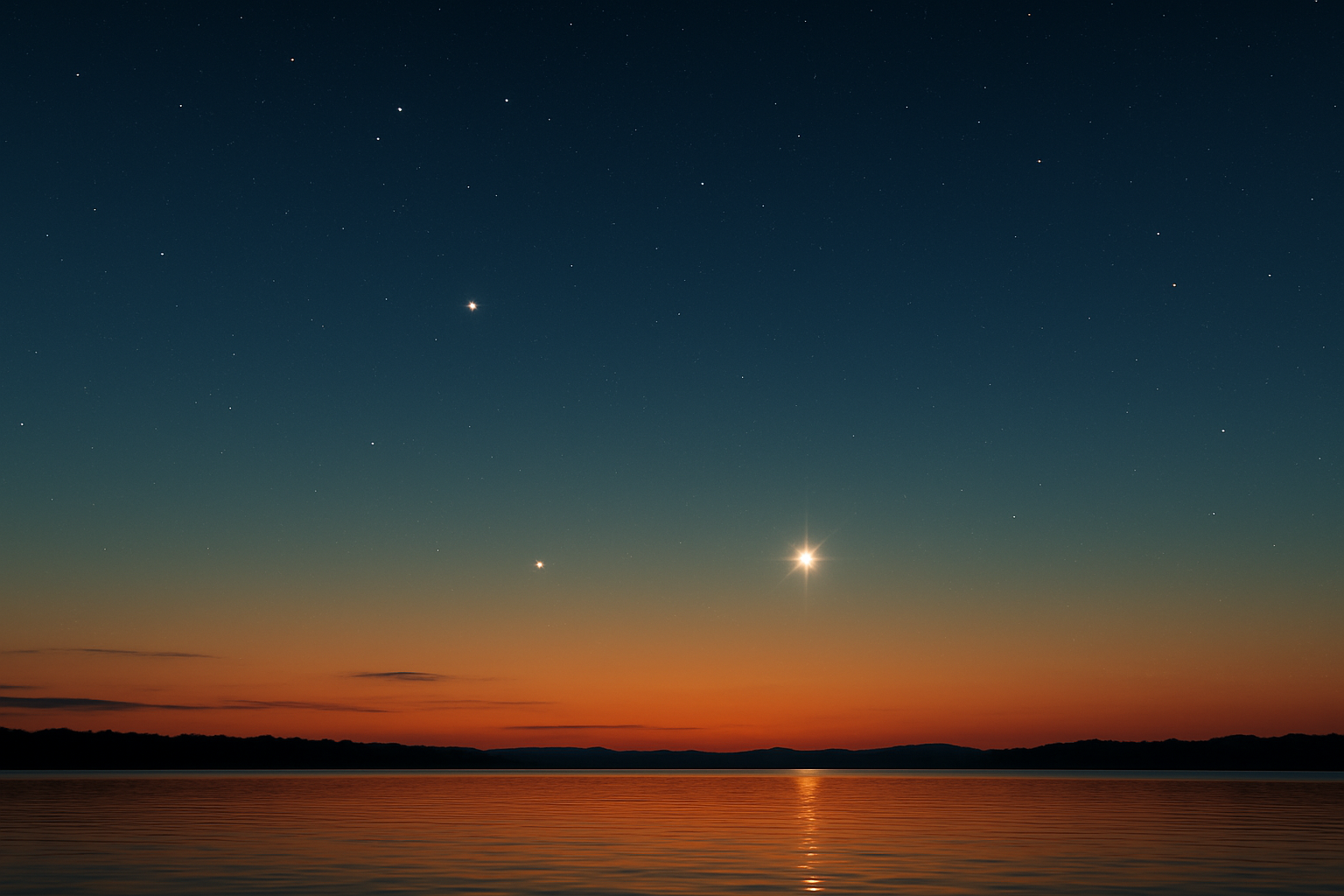
Mercury is a strong community target because it creates a shared little mission. One person finds Venus. Someone else locks onto Jupiter. Then the group narrows the search lower down until Mercury finally clicks into view. That is a better observing experience than waiting for an obvious object to do all the work for you.
If you want more nights like that with people who actually care about sky conditions, telescope choices, and those ten-minute windows when a tricky target suddenly becomes easy, join free on Cosmic Match. If you want the bigger community overview first, the Pioneer launch page is still the easiest place to start.
Bottom Line
Tonight, Monday, June 15, 2026, is Mercury's best evening view of this June apparition. It is still low in the west, still conditional, and still easy to lose in haze. But the setup is favorable now, and Venus plus Jupiter give you reliable guideposts.
Go outside shortly after sunset, face west, start with the brighter planets, and work your way down. Mercury is still the hardest target in the lineup, but tonight gives you the fairest shot before it slips back toward the Sun.