Starship Flight 15 Static Fires Are Complete—What That Does (and Does Not) Mean
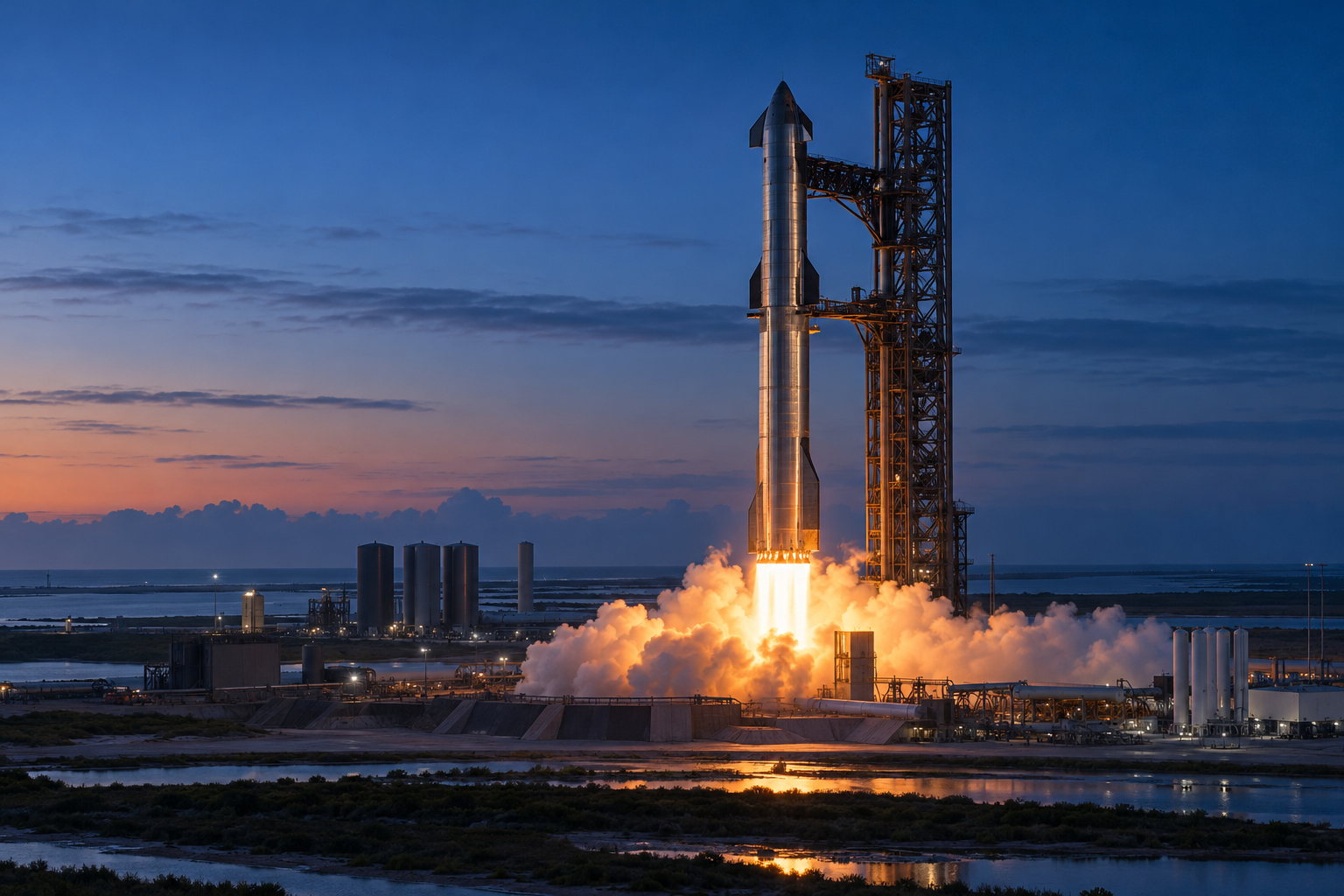
Starship Flight 15’s prelaunch firing campaign is complete: SpaceX says Ship 42 ran all six Raptor engines for a full-duration static fire and separately fired one engine to simulate a deorbit burn; Booster 22 previously completed a full-duration 33-engine static fire. That is meaningful hardware-readiness evidence. It is not an announced launch date, an FAA launch authorization, or proof that SpaceX will catch either vehicle on the next flight.
For anyone following the huge stainless-steel rocket from afar, this is the useful takeaway: engineers have now exercised the planned Flight 15 pair on the ground in the kinds of engine configurations that matter most before flight. The remaining steps still include final processing, integration, range and weather planning, and regulatory authorization.

What did the Starship Flight 15 static fires demonstrate?
A static fire is a rocket-engine test while the vehicle stays secured to the ground. It lets a team load propellant, start engines, gather data, and shut them down without committing to a launch. It is a demanding checkout of engines, plumbing, controls, ground equipment, and the test procedures themselves.
For the vehicle assigned to Flight 15, Ship 42, SpaceX reported two different checks:
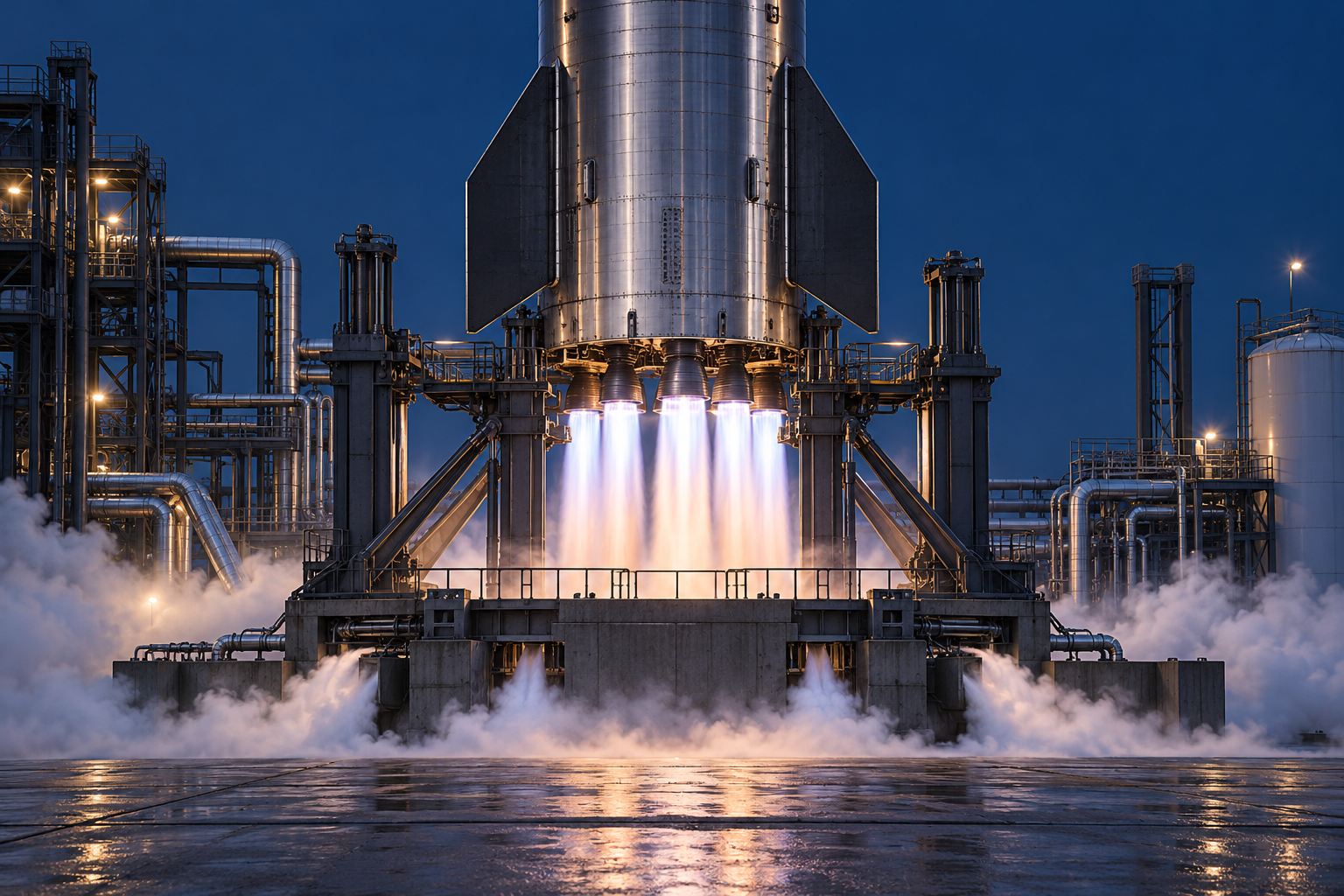
- A full-duration firing of all six Raptor engines—the upper-stage engine set that must work together during ascent.
- A single-engine firing that simulated a deorbit burn—a rehearsal of the kind of controlled engine operation an orbital Starship would use to leave orbit for reentry.
Booster 22, the Super Heavy first stage paired with Ship 42, completed a full-duration static fire of all 33 engines on October 25. That is an enormous ground-system and engine-coordination test: 33 engines need to start, run, and shut down within the expected limits while the booster remains anchored at the pad.
Why test one engine for a simulated deorbit burn?
The phrase sounds dramatic, but it does not mean Ship 42 went to space during the test. It means SpaceX used a ground firing to exercise an engine mode relevant to a future in-space maneuver.
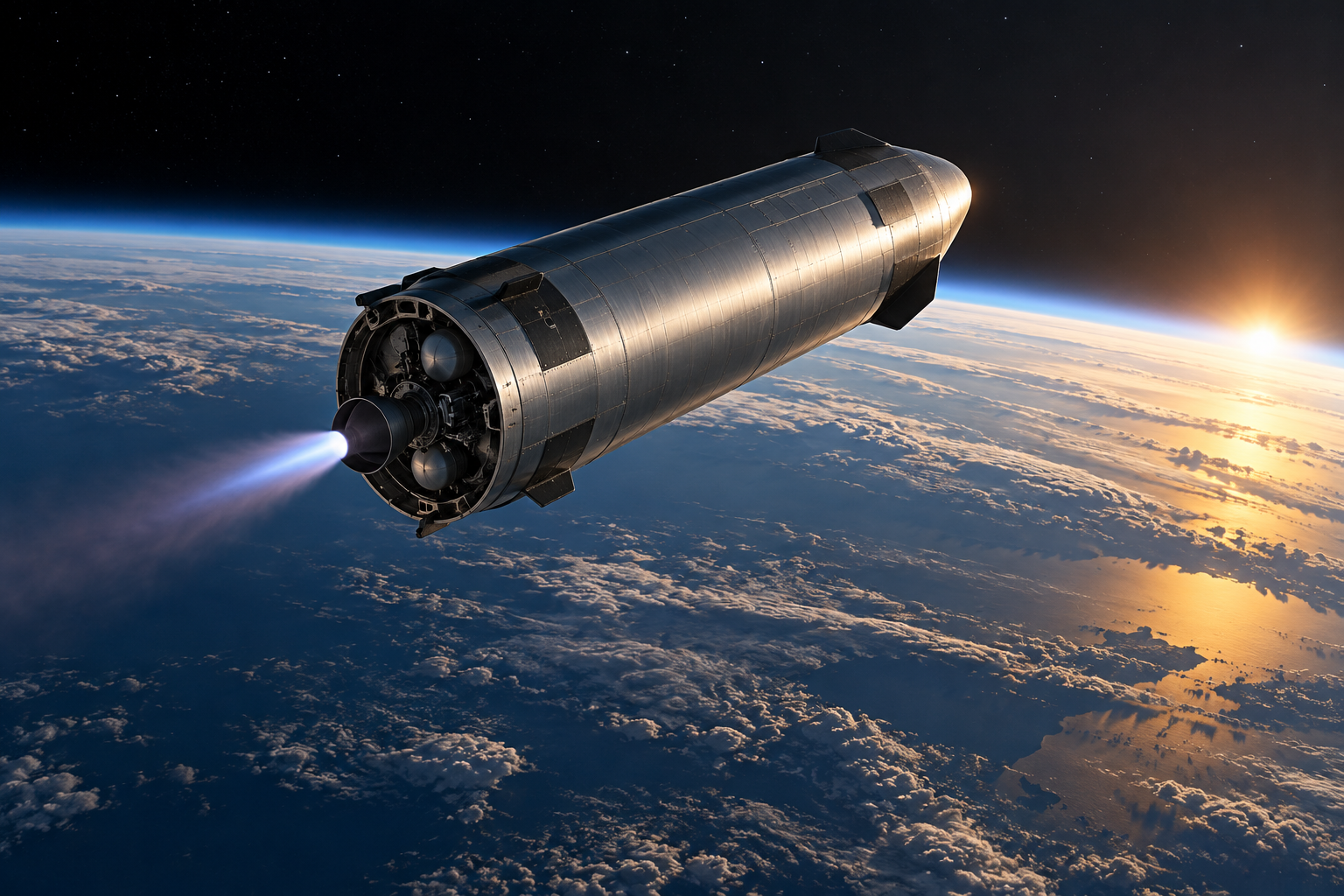
After an orbital mission, a spacecraft cannot simply drift into the atmosphere on a chosen path. A deorbit burn changes its orbit so that it intersects the atmosphere at the right time and place. Testing a single engine on the ground helps check the vehicle’s propulsion hardware and operating sequence for that role. It is one piece of evidence—not a complete demonstration of orbital reentry, heat shielding, guidance, or recovery.
That distinction matters after Flight 14’s orbital mission and early return: individual tests can reduce uncertainty, but they do not erase the unknowns of a new flight profile.
Does this mean Flight 15 has a launch date?
No. At publication, SpaceX has not announced an exact Flight 15 launch date, and no Flight 15 launch license has been publicly confirmed by the FAA. SpaceX has indicated a November target, but a target is not authorization or a scheduled liftoff.
The FAA licenses U.S. commercial launches and reentries to protect public safety, property, and national security. A completed static-fire campaign is a major operational milestone, yet it does not substitute for that regulatory process. It also does not settle routine launch-day constraints such as range availability, weather, vehicle integration, or any findings from final reviews.
What about the planned double catch?
SpaceX has described a Flight 15 objective that could include attempting to catch both Super Heavy and Starship with the launch tower’s mechanical arms. Treat that as an objective, not a promise. It depends on the eventual authorized mission plan, vehicle readiness, and real-time conditions—and, if the attempt happens, success is not guaranteed.
That is exactly why static fires are useful news: they reveal that the team has completed substantial ground work without asking us to pretend the rest of the campaign is already decided.
What should beginners watch for next?
Watch SpaceX and the FAA for primary-source updates, then look for practical milestones: stacking or mating of Ship 42 and Booster 22, any announced launch window, airspace or road notices, and confirmation that the vehicle is cleared to fly. South Texas is the geographic context for this campaign; it does not make Flight 15 a local skywatching event for Austin, Houston, or Los Angeles.
If you love unpacking spaceflight news with people who share the curiosity, join the Cosmic Match space community and bring your best question about what a test actually proves. For the broader lunar-program context, see our guide to NASA’s Starship and Artemis landing roadmap.
FAQ
What is a static fire test?
A static fire runs rocket engines while the vehicle is secured to the ground. Teams use it to check engine performance, propellant systems, controls, and ground support equipment before a flight.
Did Ship 42 launch during its deorbit-burn test?
No. The single-engine firing was a ground test intended to simulate an engine operation relevant to a future deorbit burn. It was not an orbital maneuver or a reentry test.
Does a 33-engine static fire guarantee a successful launch?
No. It is strong evidence that the booster completed that ground-test objective, but launch success still depends on many later steps and the flight itself.
Has the FAA approved Starship Flight 15?
No public Flight 15 authorization had been confirmed at publication. Readers should treat an official FAA or SpaceX announcement as the source for any change.