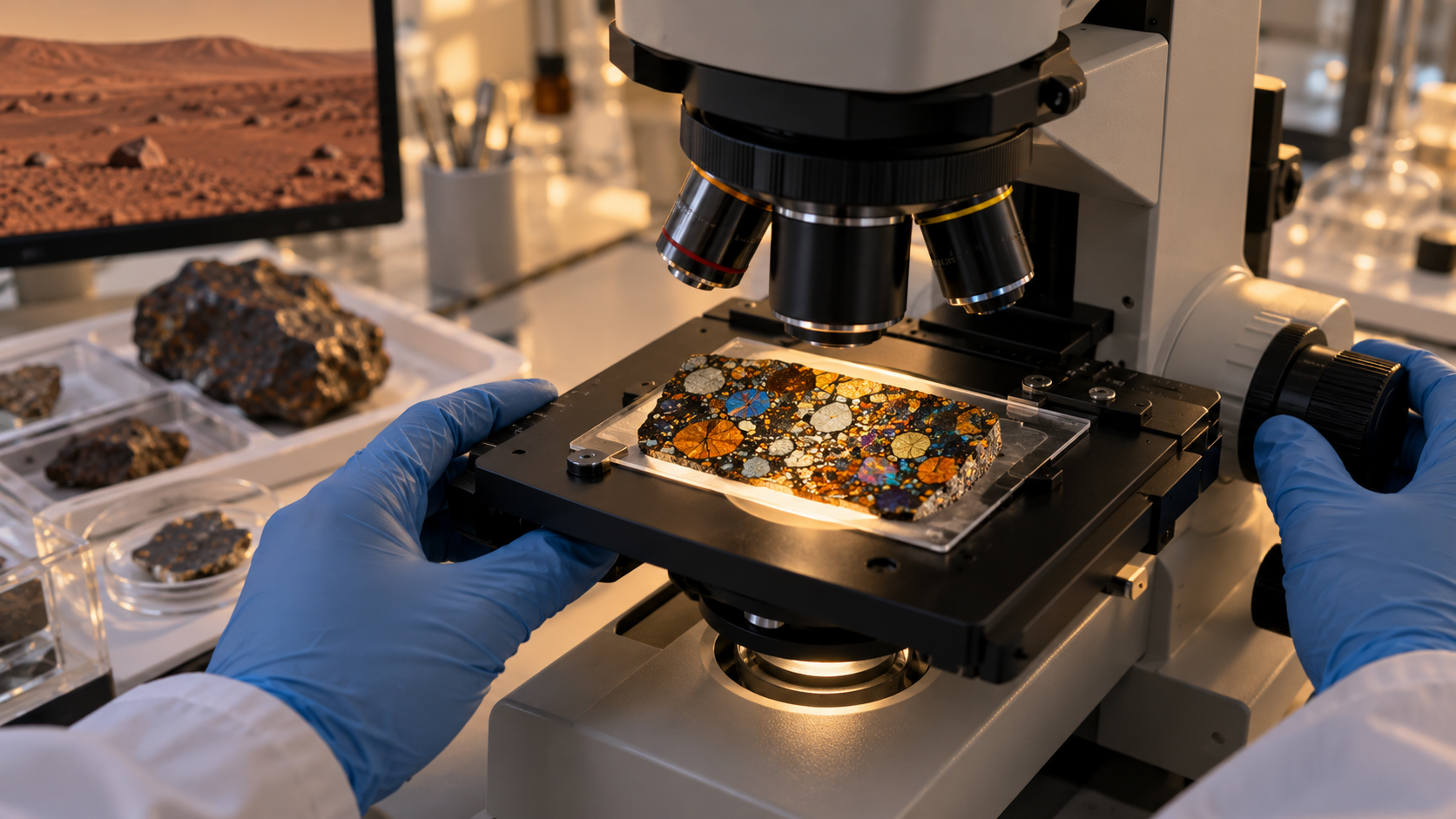
Teghaza 001: Why This 4.1-Billion-Year-Old Martian Meteorite Is Different
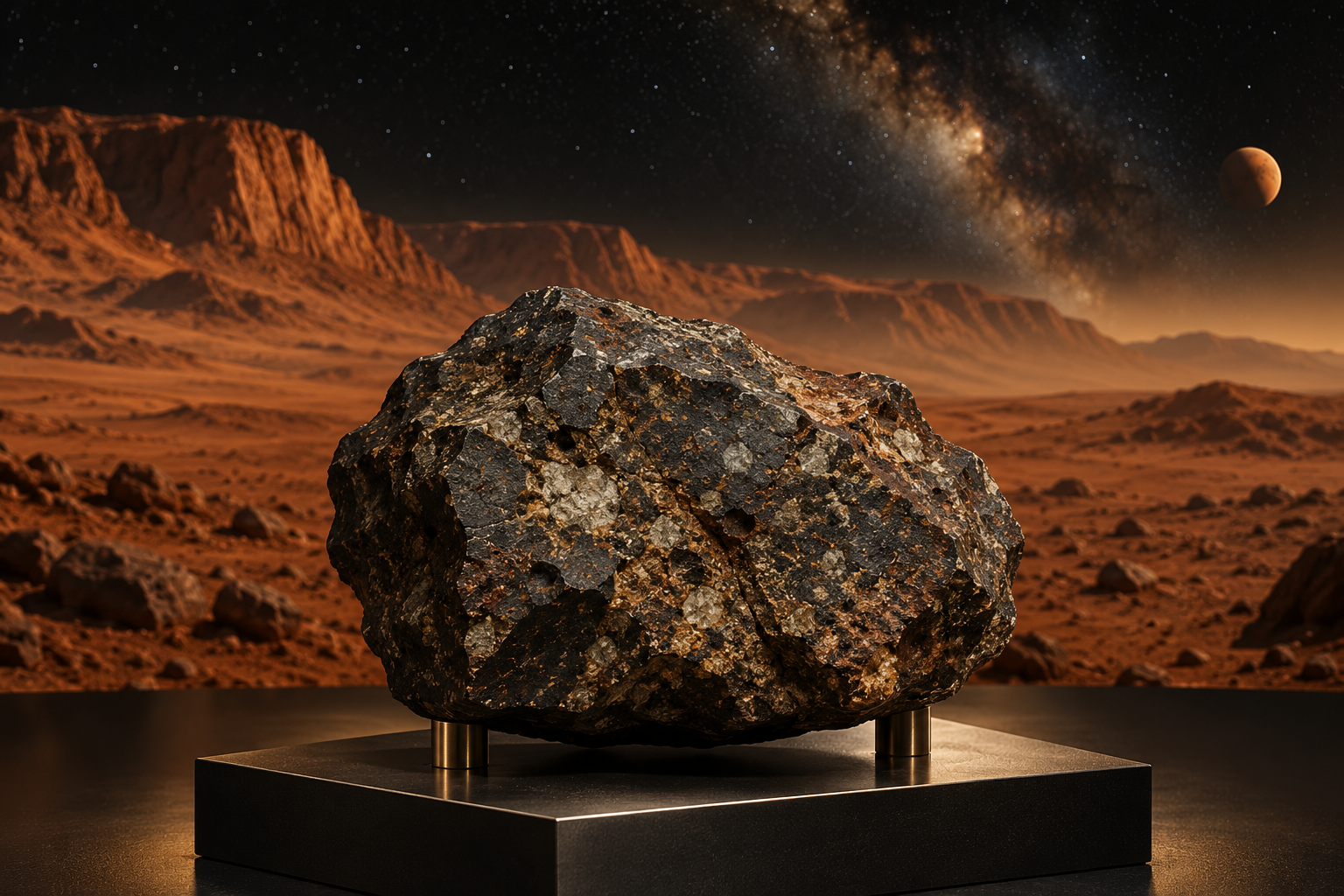
Teghaza 001 is a nearly 2-pound (800-gram) meteorite found in the Sahara in 2022, and new work places its origin in Mars’s very early crust. The headline age is striking—its parent rock formed more than 4.1 billion years ago—but the real payoff is what its mixed minerals can preserve: a fuller sequence of early Martian melting, cooling, and water-driven alteration than a one-mineral rock can hold. You do not need a telescope to appreciate this one; it is a tiny natural archive from a planet we are still trying to read.

NASA’s Jet Propulsion Laboratory describes Teghaza 001 as one of the oldest Mars meteorites ever studied. It is not a rock collected by a rover. Like the roughly 435 recognized Martian meteorites cited by JPL, it was blasted off Mars by an impact long ago, crossed space, and eventually landed on Earth. Researchers identify a Mars origin by matching meteorite chemistry and trapped gases to what missions have measured on the Red Planet.
What makes Teghaza 001 different from other Mars meteorites?
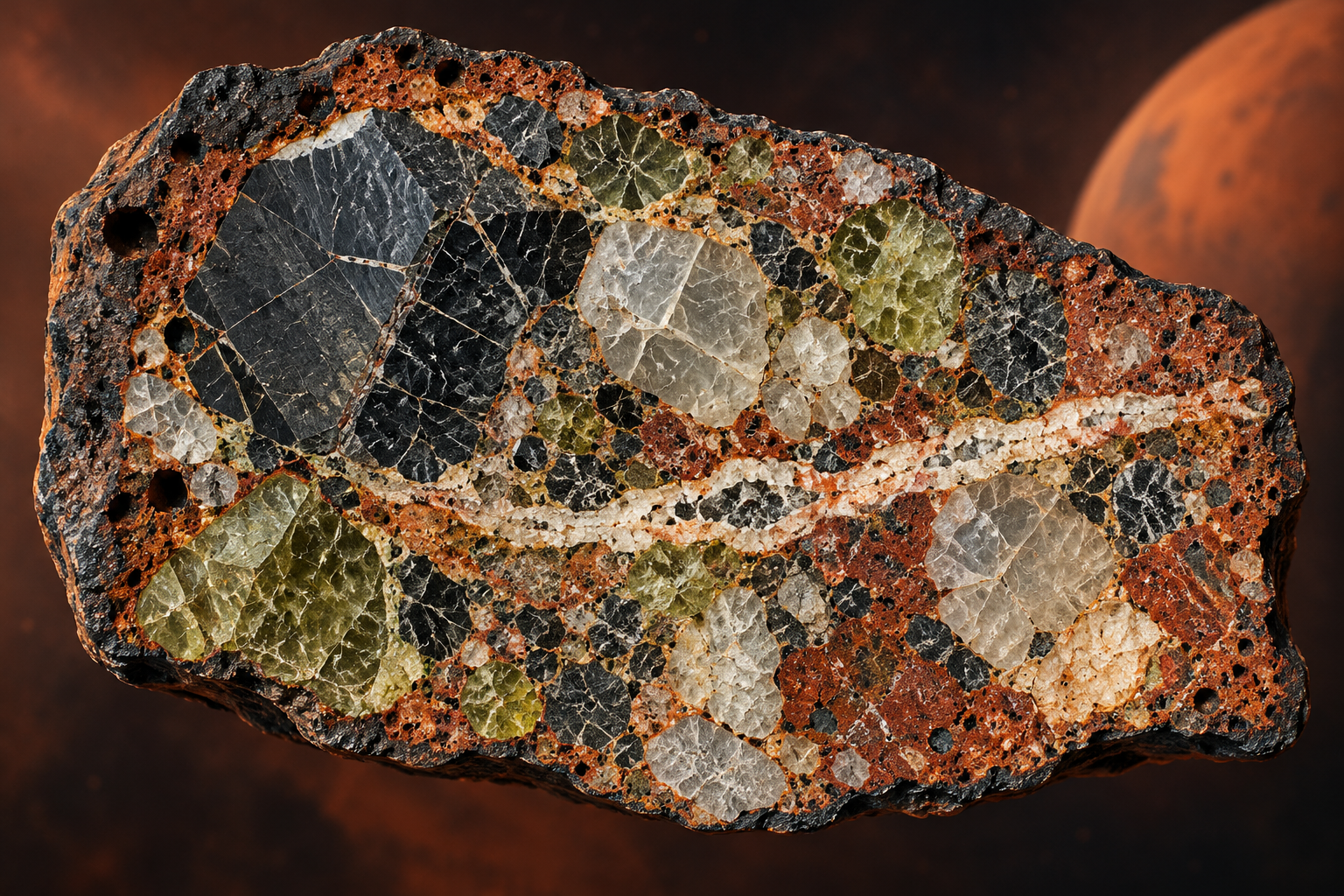
The key is variety. Teghaza 001 contains an assemblage of igneous minerals that formed at different points in a crustal history, then recorded later chemical changes. That gives scientists multiple “pages” in one stone: clues to molten rock cooling, subsequent water-rock interaction, and the evolution of a young planetary crust.
That is a useful contrast with the celebrated Mars meteorite ALH 84001. ALH 84001 is enormously important, but it is nearly monomineralic—dominated by one mineral—so it samples a narrower part of the story. Teghaza 001’s wider mineral mix gives researchers more independent ways to cross-check timing and conditions. In JPL’s account, a reviewer called it a “Rosetta Stone for Mars”; that is the reviewer’s metaphor, not an official designation, but it captures why a diverse rock can be unusually informative.
How old is the rock—and when did Martian water alter it?
These are related but different clocks. The research says Teghaza 001’s parent rock formed more than 4.1 billion years ago. Separately, it was altered by Martian water at around 4.1 billion years ago. It is tempting to flatten those statements into one date, but they describe different events: first, magma crystallized into crust; later, water interacted with that crust and changed some minerals.
That distinction matters because early Mars was not a static postcard. A chemical signature of water does not by itself tell us whether a lake persisted for millennia, whether fluids moved through fractures, or whether the setting was habitable. It tells researchers that water and rock interacted under conditions they can begin to constrain. The two companion studies in Science and Science Advances turn that mineral record into a more detailed sequence of events rather than a single dramatic claim.
What can one meteorite tell us about ancient Mars?
Quite a lot—within limits. A meteorite is a physical sample that can be remeasured with instruments that are not aboard a spacecraft. Researchers can examine mineral textures, isotope ratios, and tiny alteration products at resolutions that help test models of the Martian interior and surface environment.
But it is one sample, from one source region, delivered by a violent impact. It cannot stand in for every place or era on Mars. The strongest reading is not “Teghaza 001 explains Mars”; it is that this particular rock adds a rare, well-preserved chapter to the planet’s earliest known crustal record.
Why water-rock interaction is such a big deal
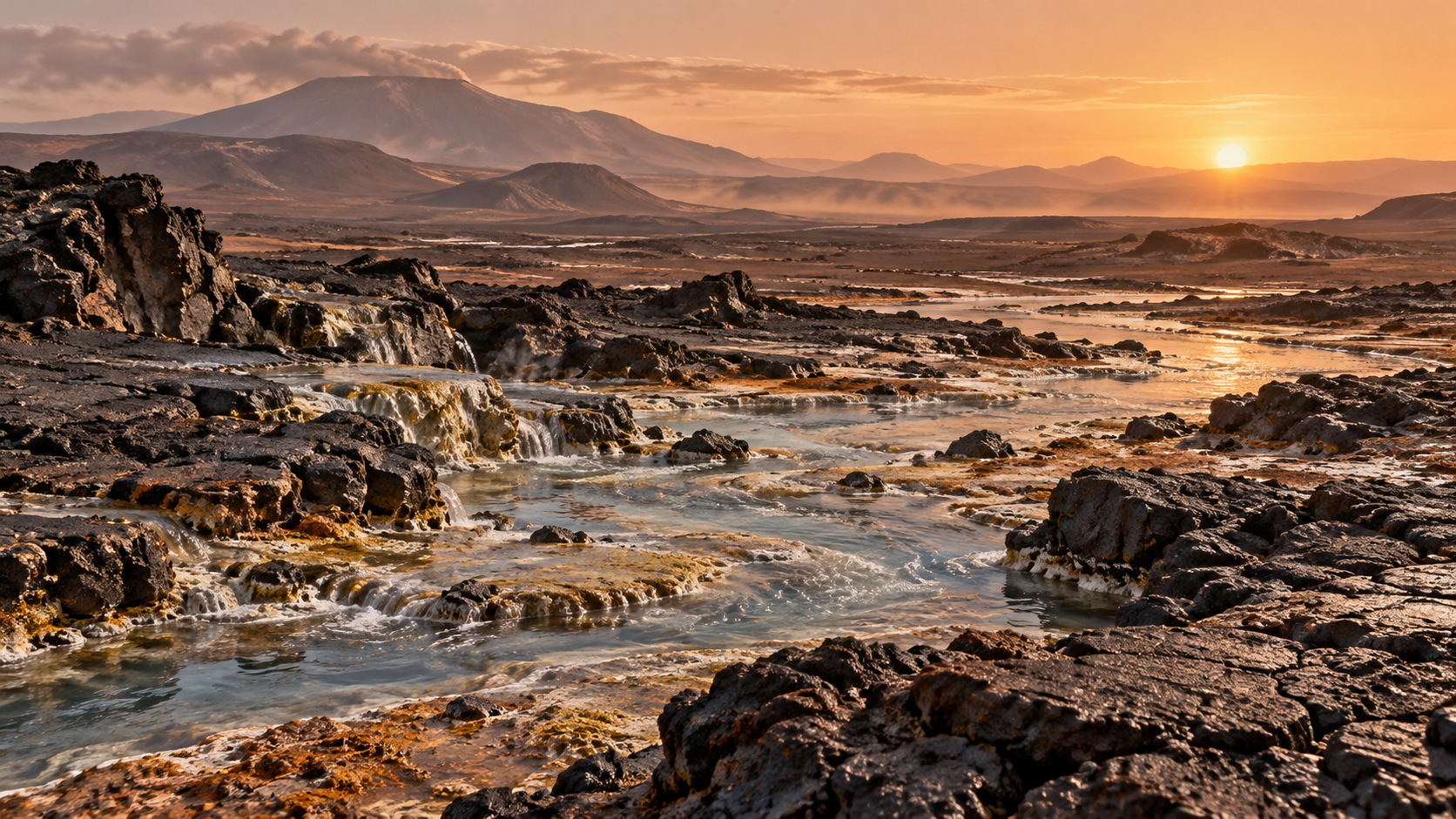
When water passes through rock, both change. Minerals can dissolve, new minerals can precipitate, and elements can move. On Earth, those reactions shape soils, hydrothermal systems, and the chemistry of oceans. On ancient Mars, their traces help scientists ask where liquid water went, how long it interacted with crust, and how the planet’s chemistry changed as it cooled.
That does not mean Teghaza 001 is evidence of life. It is evidence for a geological process that is central to understanding environments where life-friendly chemistry might be investigated. Careful language is part of the excitement here: a better timeline for rocks and water gives future missions sharper questions to ask.
What happens next for Teghaza 001 Mars meteorite research?
Expect the sample to become a reference point, not a final verdict. Independent laboratories can test the age interpretations, compare its chemistry with other Martian meteorites, and refine models as new rover observations arrive. A future returned Mars sample would add crucial geologic context—where it was collected, what sits beside it, and which layers surround it—but meteorites like Teghaza 001 are already an extraordinary free delivery from Mars.
For a companion look at how scientists make sense of samples from beyond Earth, see our guide to MMX and the Phobos sample-return mission. And if you enjoy following discoveries like this with people who are equally happy to stop mid-conversation for a good mineral timeline, join the Cosmic Match space community. You can also meet fellow sky and space enthusiasts on Cosmic Match and swap the question this story leaves us with: what would you want scientists to learn first from a returned Mars sample?