MMX Is on Its Way to Phobos—And Houston’s Sample Role Still Awaits
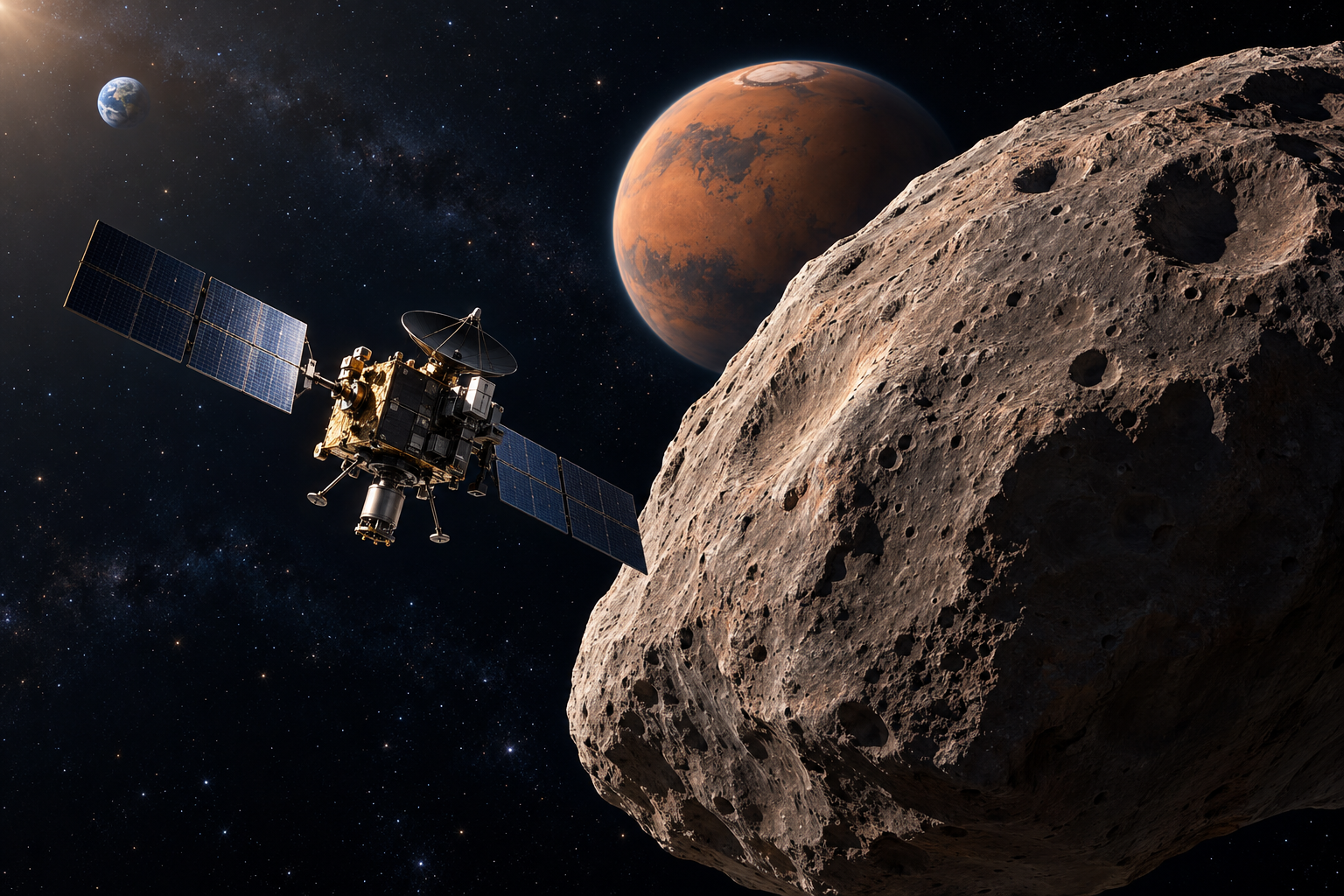
MMX is officially on its way. JAXA’s H3 Flight No. 10 lifted off from Tanegashima Space Center at 04:41:03 JST on Oct. 20, 2026 (19:41:03 UTC on Oct. 19). About 71 minutes 13 seconds later, JAXA confirmed separation of the Martian Moons eXploration spacecraft and its injection into the predetermined orbit.
The spacecraft is headed for Phobos, one of Mars’s moons, not Mars itself. And after its planned 2031 return, Houston is set to become one of the places where its tiny but consequential cargo is protected, curated, and shared with researchers. NASA says Johnson Space Center’s Astromaterials Lab is expected to obtain and curate about 15% of the material MMX returns—a hometown-sized connection to a huge international mission.

What is MMX bringing back — and is it a sample of Mars?
MMX is a JAXA-led sample-return mission designed to explore the Martian moons, especially Phobos. Its headline goal is to bring back more than 10 grams of regolith: the loose, rocky material at Phobos’s surface. That wording matters. MMX will sample Phobos, not Mars.
Why send a spacecraft all that way for a small amount of dusty material? Scientists are still weighing two major origin stories for Phobos and Deimos: they may be remnants of a giant impact involving Mars, or they may be captured ancient asteroids. Samples, together with MMX’s observations, could help distinguish between those histories and reveal more about the early solar system.
JAXA’s current mission outline has MMX reaching the Martian system in August 2027, collecting material from Phobos no earlier than December 2028, departing the Martian system in 2030, and returning its capsule to Earth in 2031. The launch phase is now complete: JAXA confirmed spacecraft separation and injection into the predetermined orbit. The long mission ahead still depends on many future operations.
For a little more cosmic context before the launch, explore Cosmic Match’s spaceflight and exploration stories or join the Cosmic Match community to compare notes with people who keep an eye on the solar system.
How will MMX collect material from Phobos?
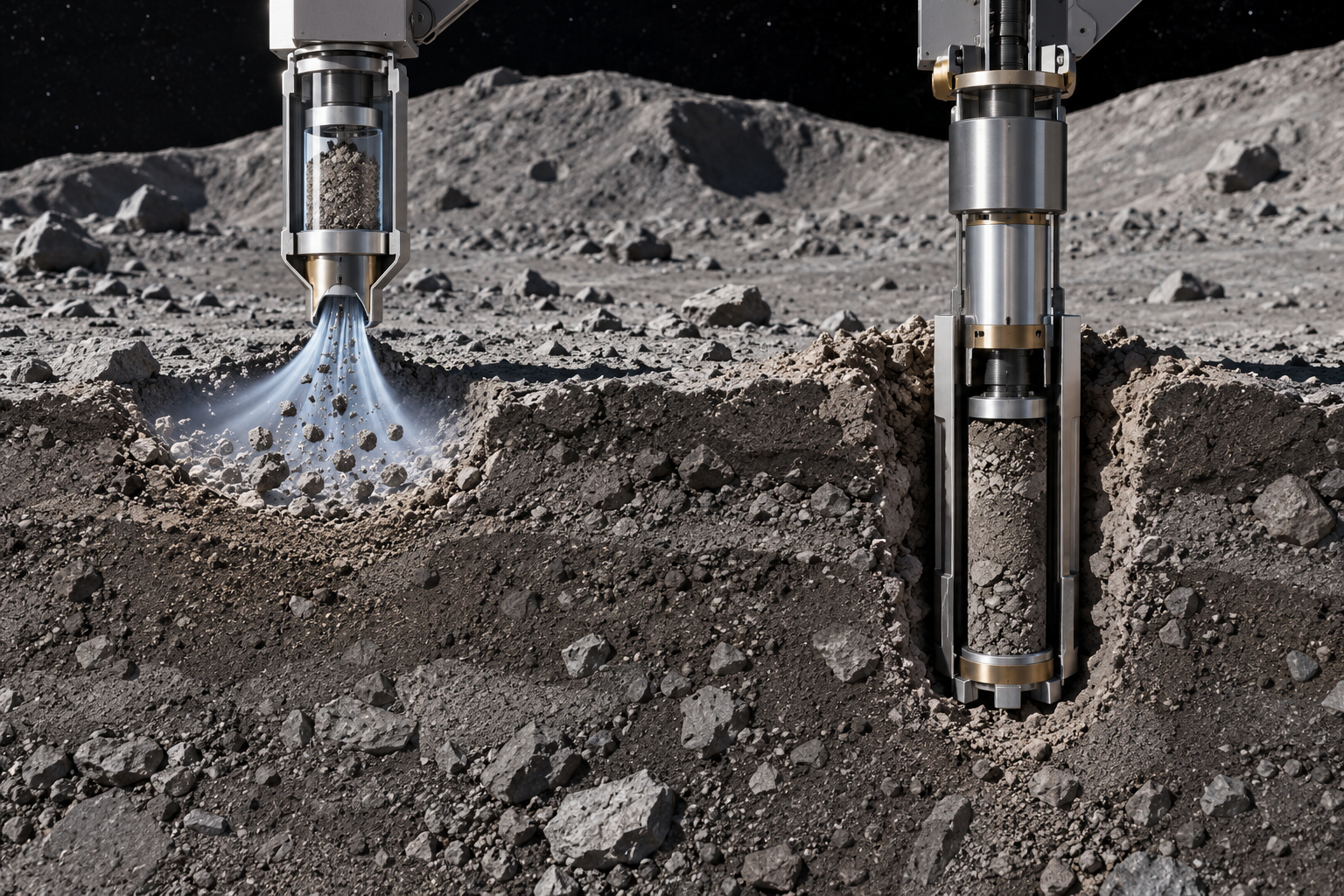
The mission carries two complementary approaches. JAXA’s C-Sampler is designed to extract core material from a few inches below the surface. NASA’s P-Sampler is a technology demonstration mounted on a landing leg; it uses bursts of high-pressure nitrogen gas to gather loose surface material.
That pairing is clever because a surface sample and a somewhat deeper core can preserve different clues. The uppermost grains have experienced the space environment directly. Material beneath may offer another window into the moon’s makeup. NASA also contributes the MEGANE gamma-ray and neutron spectrograph, which will help map Phobos’s elemental composition from orbit.
Why does Houston’s curation role matter?
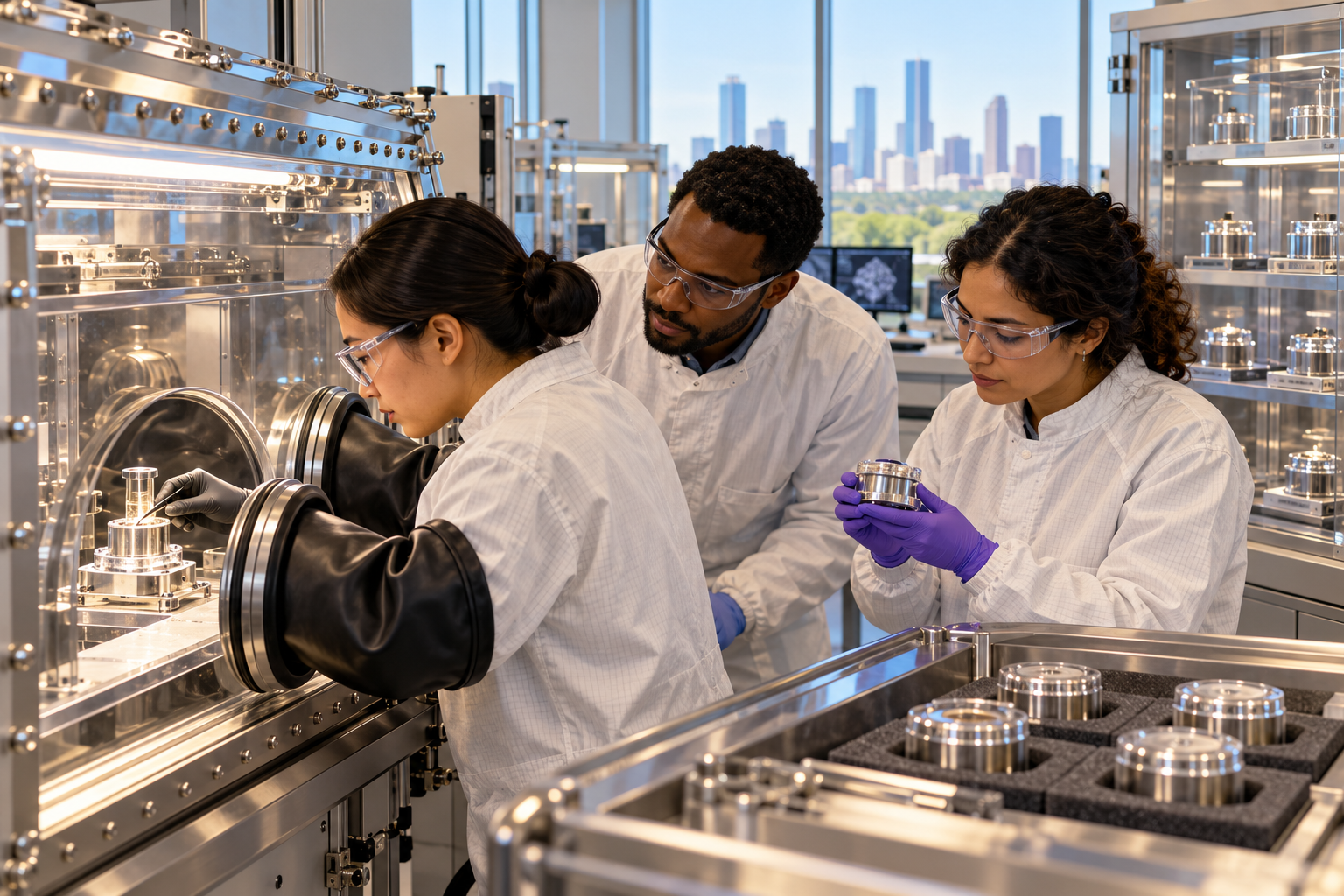
A sample return does not end when the capsule touches down. Curation is the careful long-term work of receiving, documenting, preserving, subdividing, and distributing scientifically precious material without compromising it. NASA says it plans to obtain and curate about 15% of MMX’s returned material at Johnson Space Center’s Astromaterials Lab in Houston, where it can be made available for research for decades.
That is a meaningful local connection, not a claim that Houston will host the landing or that the public will be able to see the samples right away. The value is stewardship: careful handling today gives future researchers — with better instruments and new questions — a chance to learn from the same material.
What did JAXA confirm after the MMX launch?
JAXA confirmed that H3 Flight No. 10 lifted off at 04:41:03 JST on Oct. 20, 2026 from Tanegashima Space Center—19:41:03 UTC on Oct. 19. The H3 flew as planned. Approximately 71 minutes 13 seconds after liftoff, MMX spacecraft separation was confirmed, and the spacecraft was injected into the predetermined orbit.
This was never a local skywatching event over Texas, but it remains a great remote community moment. Watch the official replay or mission updates through JAXA’s MMX mission page, then bring your biggest question about the journey ahead to the Cosmic Match space community.

A small sample with a long future
The most exciting part of MMX may be its patience. Launch day is just the opening scene. The spacecraft still has to travel to Mars, study Phobos, make delicate landing and sampling operations, and bring its capsule back safely. If that plan holds, Houston’s role begins in earnest in 2031 — helping turn a few grams from a Martian moon into decades of discovery.
For the primary details, read NASA’s Oct. 15 MMX briefing, JAXA’s official MMX overview, and ESA’s MMX factsheet.
FAQ
Is MMX bringing back a sample of Mars?
No. MMX is designed to return material from Phobos, one of Mars’s moons. The samples may still help scientists understand the broader Mars system.
Did MMX launch successfully?
Yes. JAXA confirms H3 Flight No. 10 lifted off at 04:41:03 JST on Oct. 20, 2026; about 71 minutes 13 seconds later, MMX separation was confirmed and the spacecraft was injected into the predetermined orbit.
What happens next for MMX?
MMX is planned to reach the Martian system in August 2027, collect Phobos material no earlier than December 2028, depart in 2030, and return its capsule to Earth in 2031.
Why will Johnson Space Center curate MMX material?
NASA expects Johnson Space Center’s Astromaterials Lab to obtain and curate about 15% of the returned sample, preserving and making it available for scientific research.
For another Houston-connected look at NASA’s next lunar steps, see our guide to the NASA Human Landing System roadmap.
For a newly published look at a natural Mars sample already on Earth, read Teghaza 001: why this 4.1-billion-year-old Martian meteorite is different.