NASA’s Moon-Lander Roadmap: Starship, Blue Moon, and the Tight Path to Artemis IV
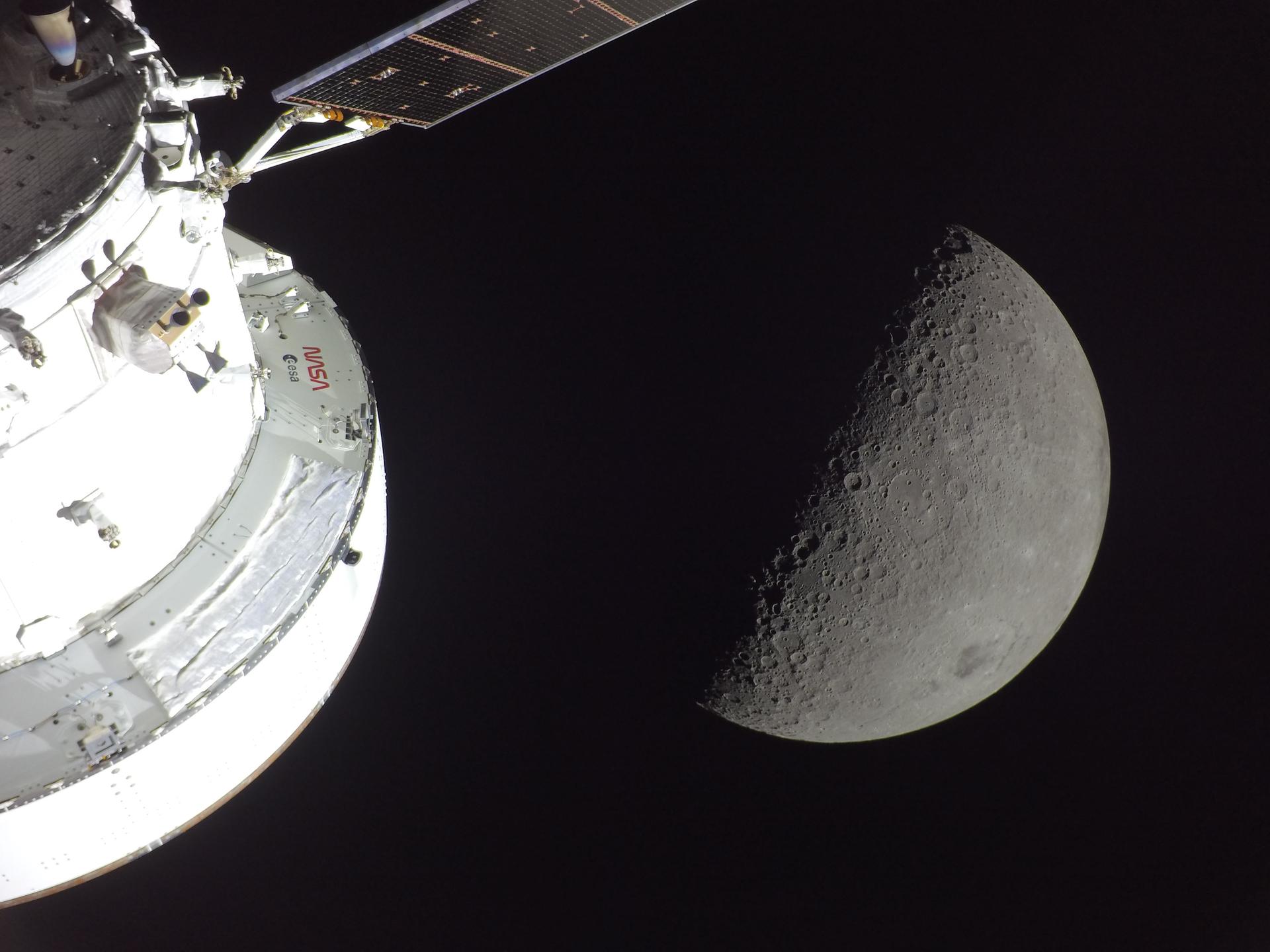
NASA’s latest Artemis plan is less a calendar than a dependency chain. Artemis III is now a 2027 low-Earth-orbit test of rendezvous and docking with test articles from both commercial lander providers, while NASA works toward a crewed lunar return in 2028. The clearest new hardware evidence arrived at Kennedy Space Center: the Artemis III SLS core stage has been joined to its twin boosters, completing the vehicle’s short-stack configuration. These are active planning and test milestones—not launch guarantees.
Update — Oct. 29, 2026: NASA’s Oct. 23 architecture update says Artemis III is a 2027 Earth-orbit test involving test versions of both providers’ landers. Under the revised contracts, neither provider is currently assigned to a specific Artemis lunar-landing mission. NASA is targeting a crewed return to the lunar surface in 2028, based on lander readiness.

What is NASA’s Human Landing System roadmap?
The HLS roadmap is NASA’s working map for getting astronauts from Orion to the lunar surface. It joins agency hardware—SLS, Orion, training and docking qualification—with commercial landers developed by SpaceX and Blue Origin. The important thing is the order: a surface mission cannot simply launch because a rocket is ready. The crew vehicle, lander, docking interfaces, propellant systems, ground infrastructure, flight software and a no-crew landing demonstration have to line up.
NASA’s current Artemis III mission update identifies a 2027 Earth-orbit test, while NASA is targeting a crewed lunar return in 2028. Both Blue Origin and SpaceX are participating in the Artemis III low-Earth-orbit mission; NASA says the contract realignment leaves neither provider assigned to a specific lunar-landing mission.
What happens on Artemis III in 2027?
Artemis III is currently described by NASA as a low-Earth-orbit interoperability mission, not the crewed landing people may remember from earlier Artemis plans. Four astronauts would fly in Orion and practice rendezvous and docking operations with test articles from both Starship HLS and Blue Moon. NASA’s material shows three launches expected from Cape Canaveral: SLS/Orion, a Starship HLS test article and a Blue Moon test article.
The purpose is to find interface and operations problems close to Earth, where the mission has more options, before committing a crew to a lunar landing. NASA’s roadmap also ties docking qualification and provider neutral-buoyancy runs to Johnson Space Center—one concrete Houston connection in a program spread across the country.

Update — Oct. 29, 2026: Artemis III completes its short stack
NASA says technicians integrated the 212-foot SLS core stage alongside Artemis III’s twin solid rocket boosters in Kennedy Space Center’s Vehicle Assembly Building, completing the rocket’s short-stack configuration. That physical join matters because the 2027 mission is no longer only an architecture diagram: its SLS flight hardware has moved into a testable configuration.
The next verification checkpoint is not a launch date. After checkouts, NASA plans to roll the core-stage-and-booster stack to Launch Pad 39B for a tanking test. Teams will load liquid hydrogen and liquid oxygen into the core stage, then practice countdown procedures and timelines. That rehearsal is a concrete way to test the vehicle and ground team before later mission decisions.
The four-person Artemis III crew—NASA astronauts Randy Bresnik, Frank Rubio and Andre Douglas, plus ESA astronaut Luca Parmitano—are assigned to fly Orion in low Earth orbit. There, NASA plans for them to test rendezvous and docking with commercial spacecraft from Blue Origin and SpaceX. In other words, this is a 2027 interoperability mission ahead of a later lunar landing, not the lunar-landing mission itself.
Why does Starship’s path have so many dependencies?
NASA says SpaceX is adding demonstrations of its Starship lander crew cabin as part of the updated development milestones, while the wider program continues to mature docking, operations and landing capabilities. Those steps matter because Artemis III is designed to validate how Orion and the commercial test articles work together before any crewed lunar landing attempt.
That is why it is misleading to read one date as a finish line. Hardware tests, operational demonstrations and ground readiness are evidence gates, not promises. Each result informs the next decision.
How does Blue Moon fit into NASA’s longer-term landing sequence?
Blue Origin’s Blue Moon work runs in parallel with SpaceX’s work, and NASA says both providers are participating in the Artemis III Earth-orbit mission. The revised contracts add human-in-the-loop testing and hardware-readiness milestones for Blue Origin to help streamline training, ground operations and flight operations.
NASA is asking both provider paths to generate real evidence before a crewed lunar mission depends on them. The healthy takeaway for newcomers is not “two landers mean twice the certainty”; it is that each path has its own sequence of technical gates.

Where is the schedule’s remaining margin?
The roadmap makes the pressure visible: the 2027 Earth-orbit test, lander-development milestones and a 2028 lunar-return target leave limited room for review, data analysis and fixes. That does not predict failure; it explains why NASA is using test articles and ground tests to reduce risk before flying a lunar mission.
Cosmic Match members who want to compare notes on the news can join the space community at Cosmic Match and follow the conversation with other mission-watchers. For another example of Houston’s connection to exploration, read our report on MMX’s Phobos sample-return role.
Source update: Rechecked Oct. 29, 2026 against NASA’s Oct. 23 Artemis III and lander-development updates and NASA’s Oct. 28 short-stack report. The prior future-tense Oct. 23 briefing CTA and now-superseded provider assignments have been removed.
FAQ
Is Artemis III the mission that lands astronauts on the Moon?
Not in NASA’s current roadmap. It is a 2027 low-Earth-orbit test of Orion rendezvous and docking with both lander test articles; NASA identifies Artemis IV, targeted for early 2028, as the crewed lunar-landing mission.
Which company will make the first 2028 lunar landing?
NASA has not currently assigned either provider to a specific Artemis lunar-landing mission. The agency says that selection will be based on lander readiness; both Blue Origin and SpaceX are participating in Artemis III’s low-Earth-orbit test.
Why is an uncrewed lunar demo necessary?
It tests the lander’s end-to-end ability to reach and land on the Moon before a crewed mission depends on it. NASA’s current roadmap shows uncrewed demonstrations from both providers.
What is the next Artemis III hardware checkpoint?
After testing and checkouts, NASA plans to roll the core-stage-and-booster stack to Launch Pad 39B. There, teams will load liquid hydrogen and liquid oxygen into the core stage and rehearse countdown procedures and timelines.
A Houston human-spaceflight moment to watch
Before crews take the next steps toward Mars, NASA is testing how teams live and work through long isolation on Earth. Watch CHAPEA Mission 2’s Houston egress after 378 days in a Mars habitat.