The Clearest Public Image of China’s Spaceplane Shows Hardware—Not Its Mission
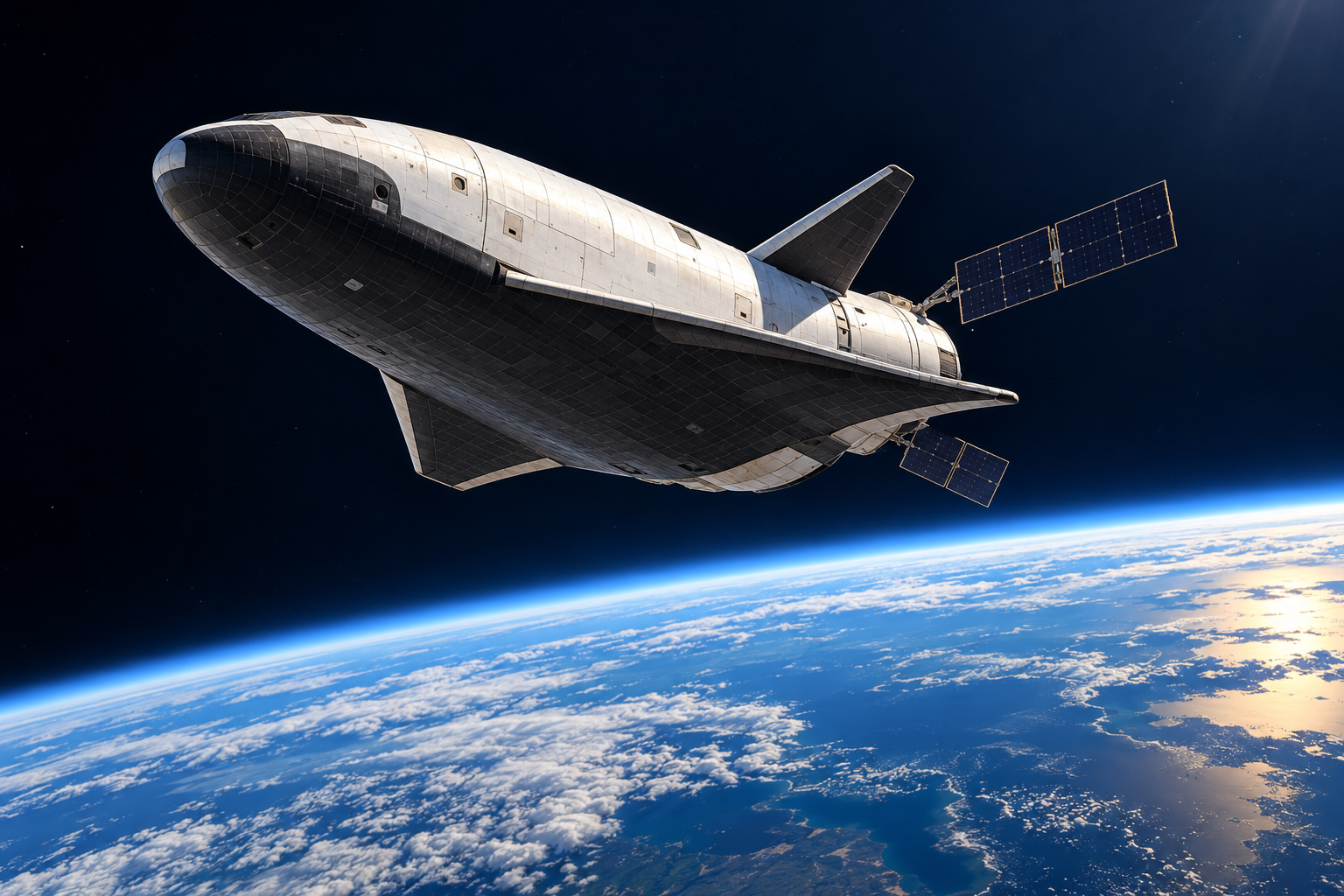
A newly public U.S. intelligence image gives us the clearest view yet of China’s reusable experimental spacecraft—but it does not reveal the vehicle’s classified mission. The crucial date detail is easy to miss: the image was captured in 2024 by Vantor, then known as Maxar, and released publicly in the Defense Intelligence Agency’s October 2026 assessment. What the image can support is a careful look at visible hardware. What it cannot support is a confident story about payload, dimensions, or purpose.
That distinction makes this a surprisingly good beginner lesson in reading space news. One sharp picture can reveal a vehicle’s general layout. It cannot, by itself, tell us why it is flying.

What does the newly public image actually show?
The image in the DIA assessment is a commercial orbital observation, not a close-up taken from a companion spacecraft. The DIA does not publicly provide the precise time, position, range, or imaging geometry of the 2024 pass. That matters: we are looking at a brief, unusually valuable glimpse—not a full technical briefing.
Independent technical reporting describes visible features including a winged, delta-like planform, dark underside consistent with thermal-protection material, open-looking payload-bay doors, and a rear service module with solar arrays. Those are source analyses of the image, not a public DIA confirmation of every component’s function.
A useful way to hold the evidence is in three layers:
- Directly visible: a compact uncrewed spacecraft with wings, a dark underside, and attached rear hardware.
- Reasonable interpretation: the rear module may supply power and propulsion; the dark underside may be heat-shield material; the doors may open to an internal bay.
- Still unknown: the vehicle’s exact dimensions, payload, mission objectives, inventory, and whether any particular capability is operational.
The last layer is the one that tends to disappear when a mysterious spacecraft meets a dramatic image. Keeping it visible is the whole point.
How can one satellite photograph another object in orbit?
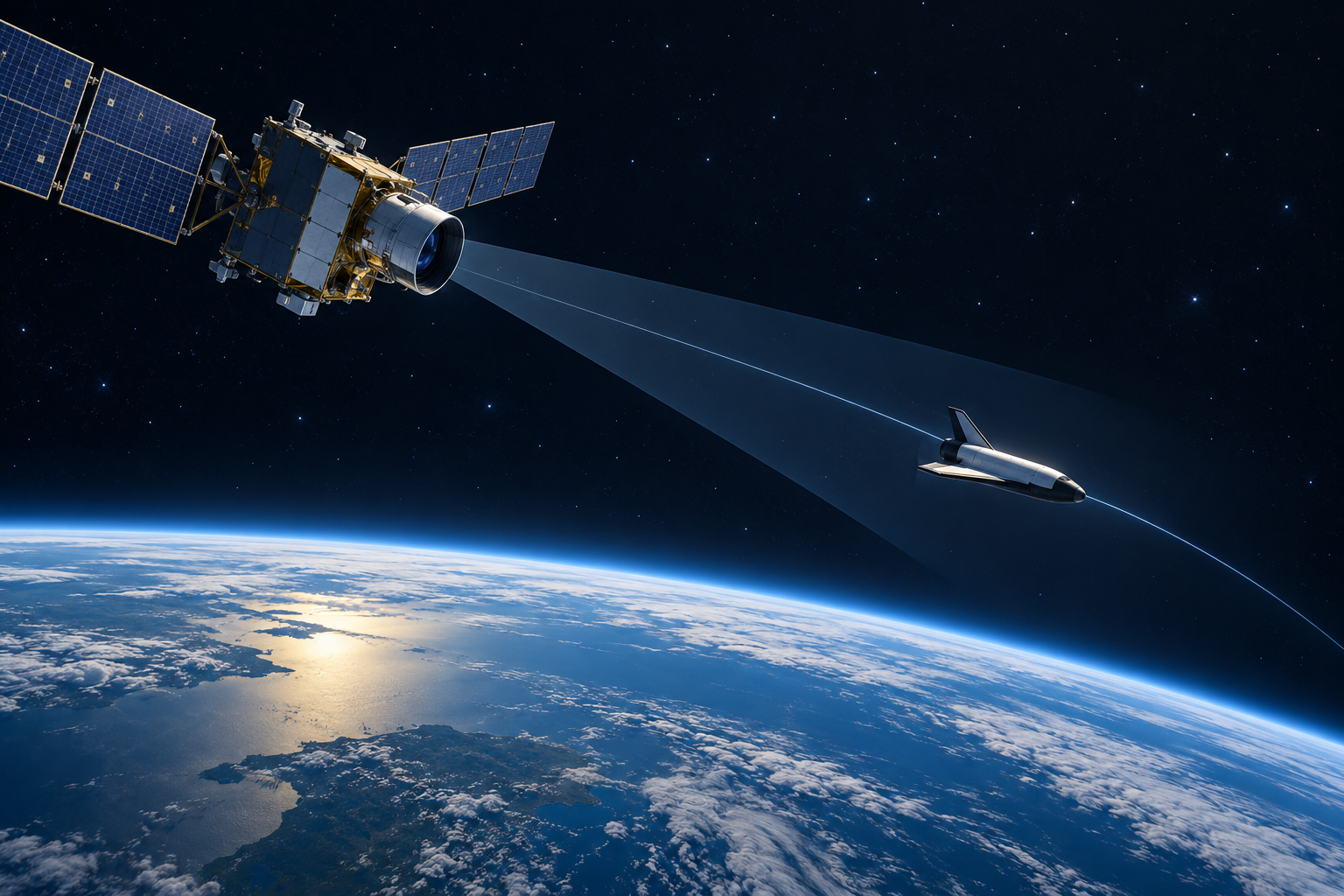
It sounds like science fiction, but commercial Earth-imaging satellites can sometimes turn their cameras toward another object as their orbital paths create a fast, favorable geometry. Analysts call this non-Earth imaging. It is difficult because both objects are moving extremely quickly and because the viewing opportunity is brief.
That context helps explain why the photograph is important without making it magical. It shows that commercial imaging can capture useful external detail from orbit. It does not turn a single frame into an instruction manual.
For a comparable example of how visible spacecraft hardware fits into a much larger mission story, see our guide to U.S. Spacewalk 100 and the ISS solar-array upgrade. Cameras can show arrays, panels, and moving parts; mission context still comes from the agencies and operators who publish it.
What do we know about China’s reusable spacecraft program?
China has launched four orbital missions of its reusable experimental spacecraft since 2020. Public reporting and the DIA assessment describe missions in 2020, 2022, and 2023, followed by a fourth mission that began in February 2026 and was still in orbit at the time of the late-October reporting. The publicly used English name Shenlong is common in outside coverage, but China’s official public descriptions have been limited; it is safer to call it China’s reusable experimental spacecraft than to treat an informal label as a settled official name.
The broad idea is familiar. A spaceplane launches atop a rocket, works in orbit like a satellite, then reenters and lands for reuse. That family resemblance is why comparisons with the U.S. X-37B appear so often. But resemblance is not identity, and neither vehicle’s full work in orbit is public.
China’s observed releases, rendezvous, and proximity operations are real reasons for analysts to watch the program closely. They are not public proof of a specific payload or a specific hostile mission. Those operations can be relevant to inspection, servicing, technology testing, or other activities. The right conclusion from public evidence is narrower than the loudest speculation.
If you want a wider picture of how programs are assessed before every detail is settled, our look at NASA’s human-landing-system roadmap is a useful contrast: it separates announced plans, tests, and milestones from things that have not happened yet.
Why the image does not reveal the mission
A photograph can be powerful evidence of form. It is much weaker evidence of function. A payload bay, for example, might carry instruments, small deployable objects, experiments, or something not publicly described. A service module can plausibly provide power and propulsion, but a frame alone does not publish a specification sheet.
That is why claims about an exact payload, a definitive anti-satellite role, or the vehicle’s precise dimensions go beyond the released image. The DIA assessment discusses China’s broader counterspace capabilities, but readers should not merge that broad strategic context with unverified claims about this particular spacecraft. The image does not establish the mission.

For space enthusiasts, this is also a reminder that interesting spaceflight does not always equal an observing opportunity. The craft operates in low Earth orbit, but this release does not create a reliable naked-eye or amateur-telescope target for Austin, Houston, Los Angeles, or elsewhere. It is a news story to follow through credible sources, not a planned backyard observation. For things you can actually share from the ground, explore Cosmic Match’s beginner-friendly stargazing guides and join the Cosmic Match community.
The best takeaway is modest and exciting at once: the DIA release gives the public a rare, sharper look at a real orbital vehicle. It is enough to study its visible design. It is not enough to fill in the classified blanks. That is not a disappointment—it is exactly what careful space reporting looks like.
Sources: Read the DIA’s Challenges to Security in Space assessment, then compare image-specific reporting from Ars Technica and The Aviationist.