U.S. Spacewalk 100 Outcome: Seventh ISS Solar Array Deployed
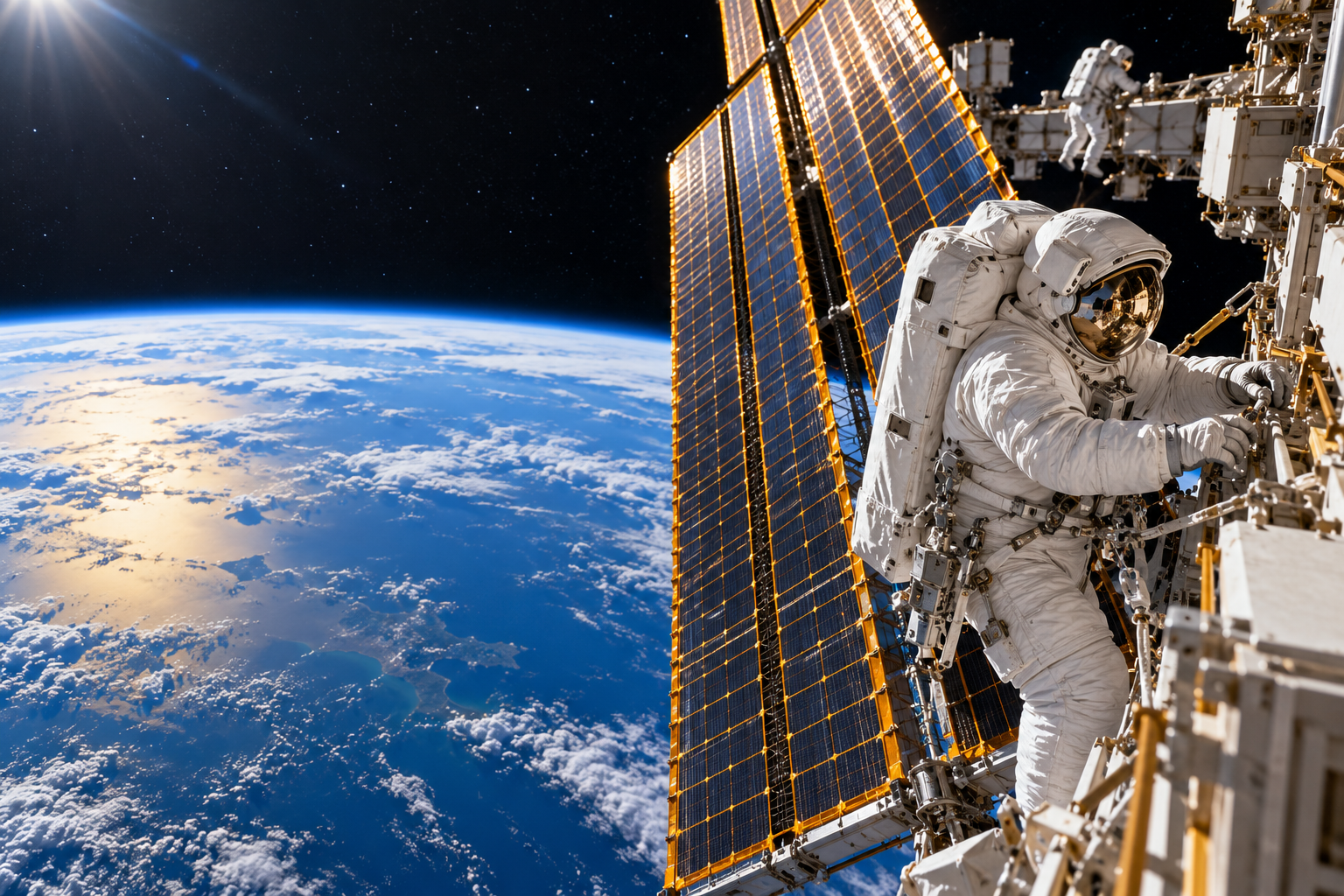
NASA astronaut Anil Menon and Canadian Space Agency astronaut Joshua Kutryk completed U.S. Spacewalk 100 on Oct. 29, installing and deploying the seventh International Space Station Roll-Out Solar Array (iROSA). The EVA ended at 3:08 p.m. EDT after 7 hours and 11 minutes outside the station. The outcome matters beyond a round-number milestone: the new array on the 2A power channel moves the ISS one installation closer to a major power upgrade.
NASA’s completion update is the authoritative record of the work. It confirms that the planned operation became a completed deployment—not simply a successful start—and that the next step is already on the calendar.

What was the U.S. Spacewalk 100 outcome?
Menon and Kutryk installed and deployed an iROSA on the station’s port-side truss, serving the 2A electrical power channel. It is the seventh roll-out array now installed on the ISS. The work took the crew through a long, deliberate EVA: translating along the structure, handling hardware and tethers, securing the array, and verifying deployment while the station passed over Earth.
The milestone also has a useful human scale. This was Menon’s fourth spacewalk and Kutryk’s first. It was the 285th spacewalk supporting ISS assembly, maintenance, and upgrades. Those numbers put a first-time spacewalker and a veteran EVA astronaut in the same carefully choreographed operation.
Why does the seventh iROSA deployment matter?
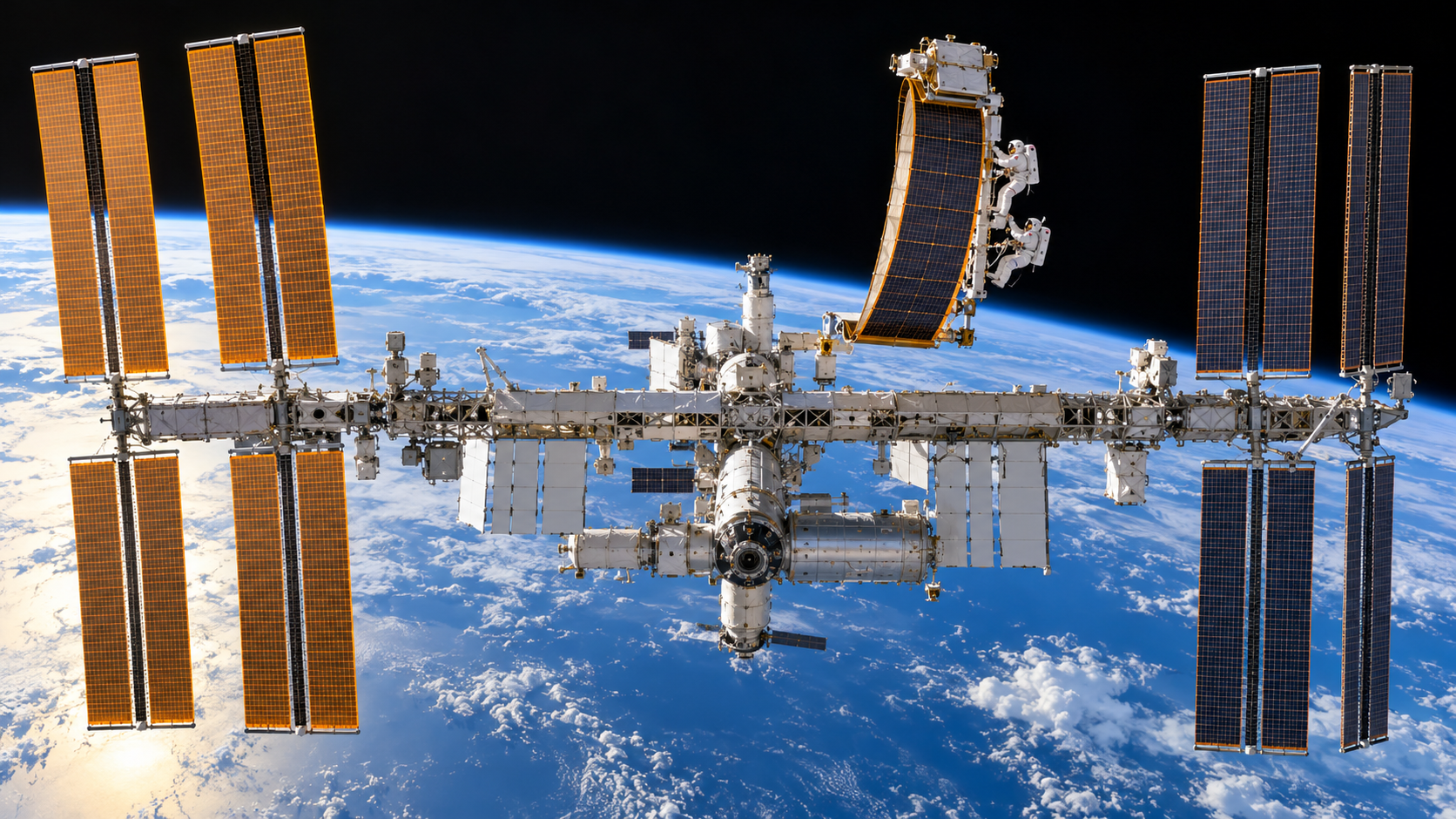
The arrays are a practical upgrade to the orbiting laboratory. NASA says the complete set of eight is expected to increase available station power by up to 30%, raising generation capacity from 160 kilowatts to about 215 kilowatts. That added margin supports the station’s critical operations, including a safe and controlled deorbit when that future phase of the program arrives.
“More power” can sound abstract from the ground, but it is the everyday infrastructure behind a working space station: systems that keep the crew safe, communications running, experiments operating, and the ISS able to continue its mission. The iROSAs augment the station’s aging original solar arrays rather than replacing the whole power system at once—a tidy example of long-term maintenance in orbit.
What happens on the Nov. 5 ISS spacewalk?
NASA plans another spacewalk for Thursday, Nov. 5, when Menon and Kutryk are scheduled to install the eighth and final iROSA on the 3B power channel. During Spacewalk 100, the pair also completed get-ahead work for that outing. NASA says live coverage is set to begin at 6:45 a.m. EDT; check NASA Live close to the event for the operational schedule.
The planned final installation is worth watching as the conclusion of a multi-EVA project, not merely another orbital photo opportunity. The goal is a fully installed set of roll-out arrays and a completed augmentation of the ISS power system.
Who supported this first-time-and-fourth-time EVA?
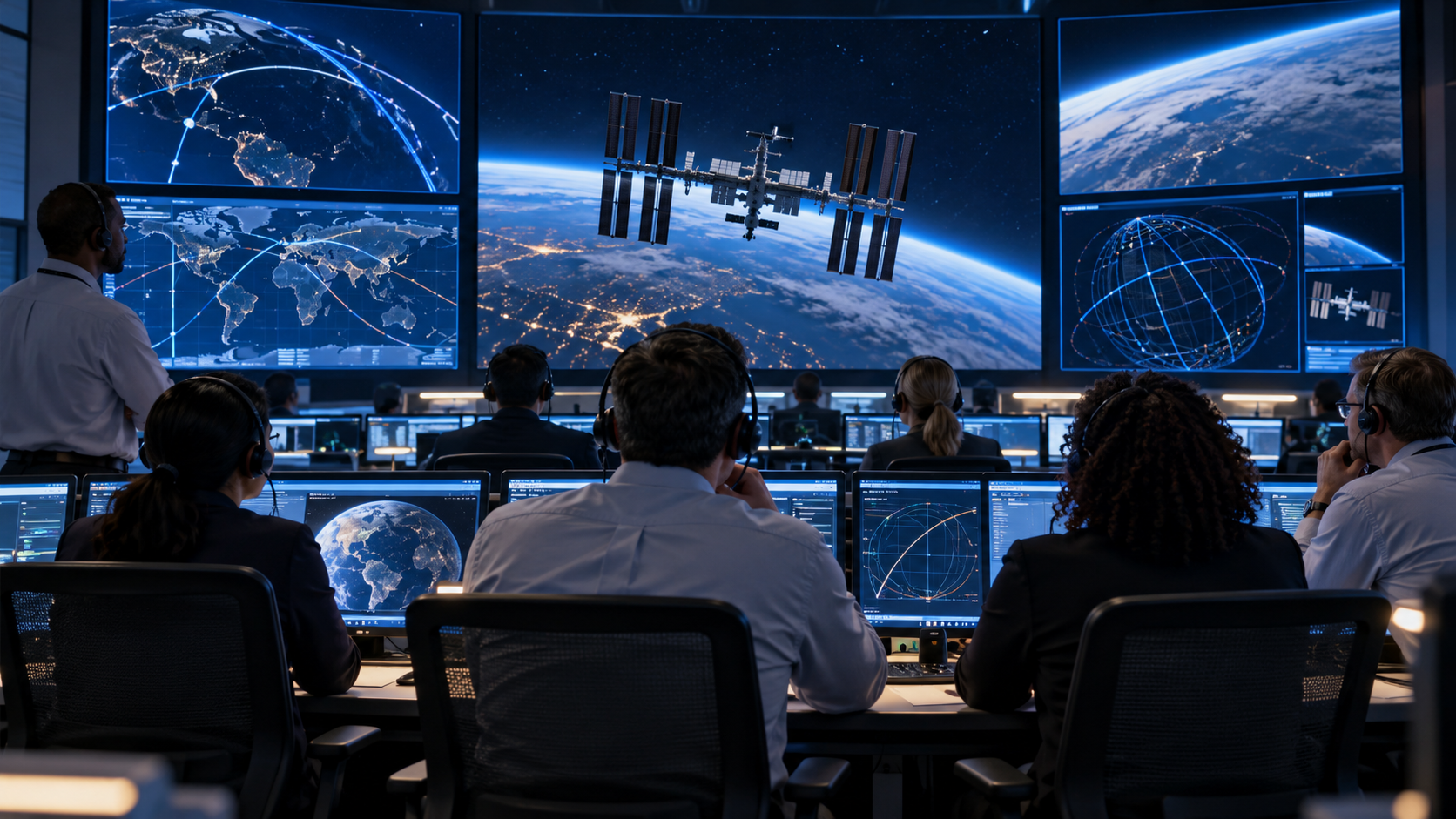
An EVA is never just the two people outside. The Canadian Space Agency’s pre-spacewalk briefing described support from NASA’s Mission Control Center in Houston and CSA’s Robotics Mission Control Centre in Longueuil. On board, NASA astronauts Jessica Watkins and Luke Delaney were scheduled to operate Canadarm2; CSA astronaut Jenni Gibbons served as capcom, the voice relaying ground guidance to the station crew.
That distributed team is a great reminder that major spaceflight moments have room for more than one kind of fascination. Maybe you followed the robotics calls, caught the first-EVA milestone, or simply found yourself staring at the curve of Earth behind the truss. Those are all excellent conversation starters.
For people who love talking through missions with others who actually get it, join the Cosmic Match space community and bring your Spacewalk 100 takeaway to a local conversation. You can also explore another evidence-led spaceflight story in our guide to what a public image of China’s reusable spacecraft does—and does not—show.
The milestone is operational—and it is not finished yet
Spacewalk 100 is now a completed mission outcome: 7 hours, 11 minutes, a seventh deployed iROSA, and a new 2A power channel contribution for the ISS. The remaining milestone is Nov. 5, when the planned 3B installation would complete all eight arrays. Until then, NASA’s station coverage remains the right place to confirm any schedule or status change.
Were you following the EVA live, catching up from the recap, or saving the final installation for a watch-along? Share the detail that made this operation click for you, then sign up at cosmicmatch.io to find more people who are excited by the careful, complicated work of keeping a space station running.
FAQ
How long did U.S. Spacewalk 100 last?
NASA reported that the EVA ended at 3:08 p.m. EDT after 7 hours and 11 minutes.
Which solar array did the crew install?
Menon and Kutryk installed and deployed the seventh iROSA on the ISS 2A electrical power channel.
When is the final ISS roll-out solar array planned to be installed?
NASA plans a Nov. 5 spacewalk to install the eighth and final iROSA on the 3B power channel. Check NASA Live for the current coverage schedule.
How much additional power will all eight iROSAs provide?
NASA expects the full set to raise available ISS power by up to 30%, from 160 kilowatts to approximately 215 kilowatts.