The Moon Meets the Pleiades Oct. 27–28: A No-Telescope Guide for Austin, Houston, and Los Angeles
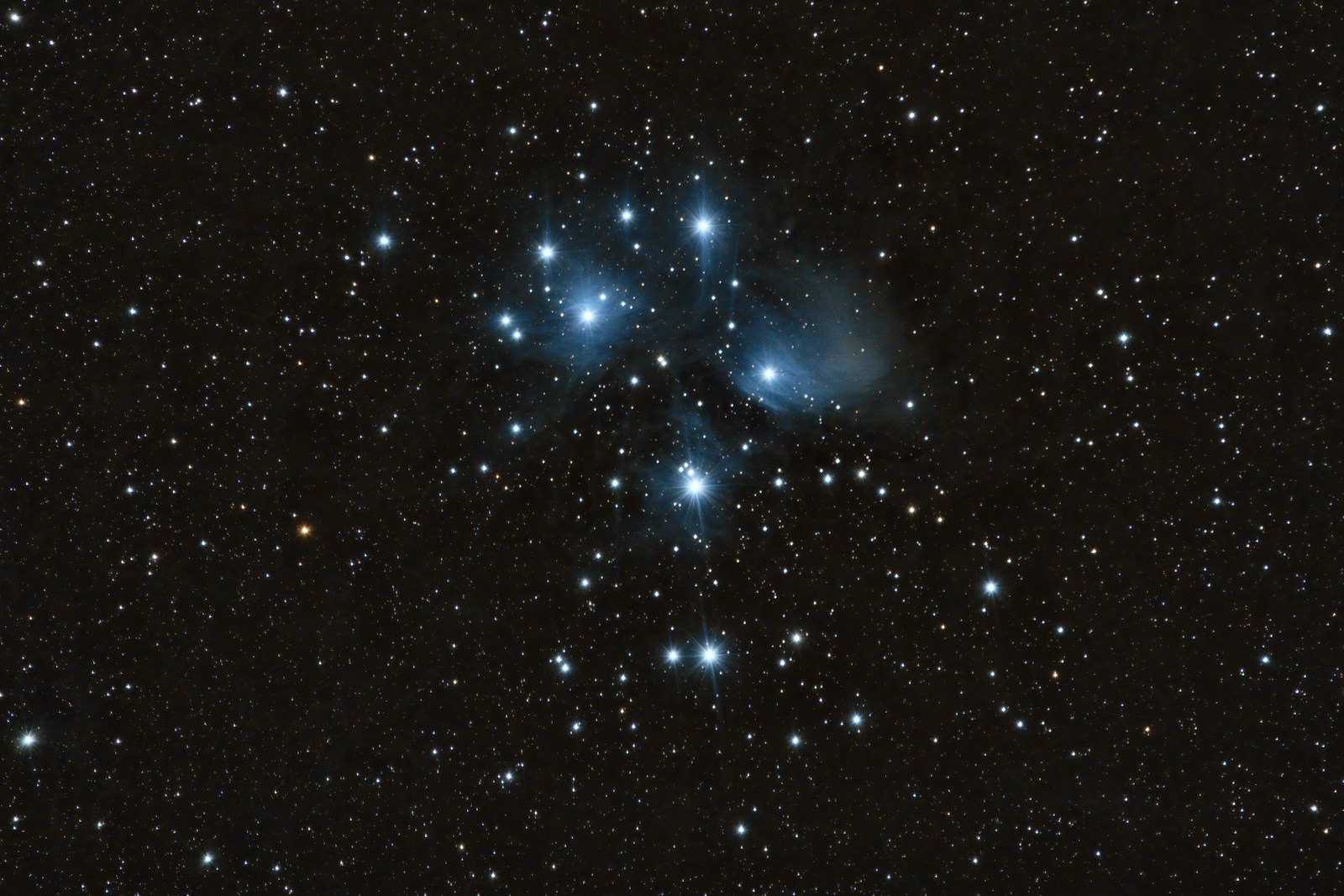
On the night of Tuesday, October 27 into Wednesday, October 28, the Moon will pass close to the Pleiades—the compact star cluster also called the Seven Sisters. From Austin, Houston, and Los Angeles, start by looking east in the evening and give the pair time to climb higher. You do not need a telescope: the Moon is your bright, unmistakable landmark, and the Pleiades can look like a tiny, slightly fuzzy handful of six or seven stars nearby. NASA’s October skywatching guide confirms the Oct. 27–28 encounter and uses an east-facing chart for about 11 p.m. as a reference.
It is a particularly friendly target for a first shared observing plan: pick an open view, bring a jacket and a little patience, and let the sky do the icebreaking. If you want fellow sky-curious people for a low-pressure outing, join the Cosmic Match community free.
What will I see when the Moon meets the Pleiades?
Think of it as a bright beacon next to a small, blue-white starry knot. The Moon will be obvious; the Pleiades will not fill the sky or look like a telescope photo. With unaided eyes, most people can spot several stars gathered tightly together. A dark, transparent sky helps, but you can still try from a city park, balcony, or backyard with a clear eastern horizon.
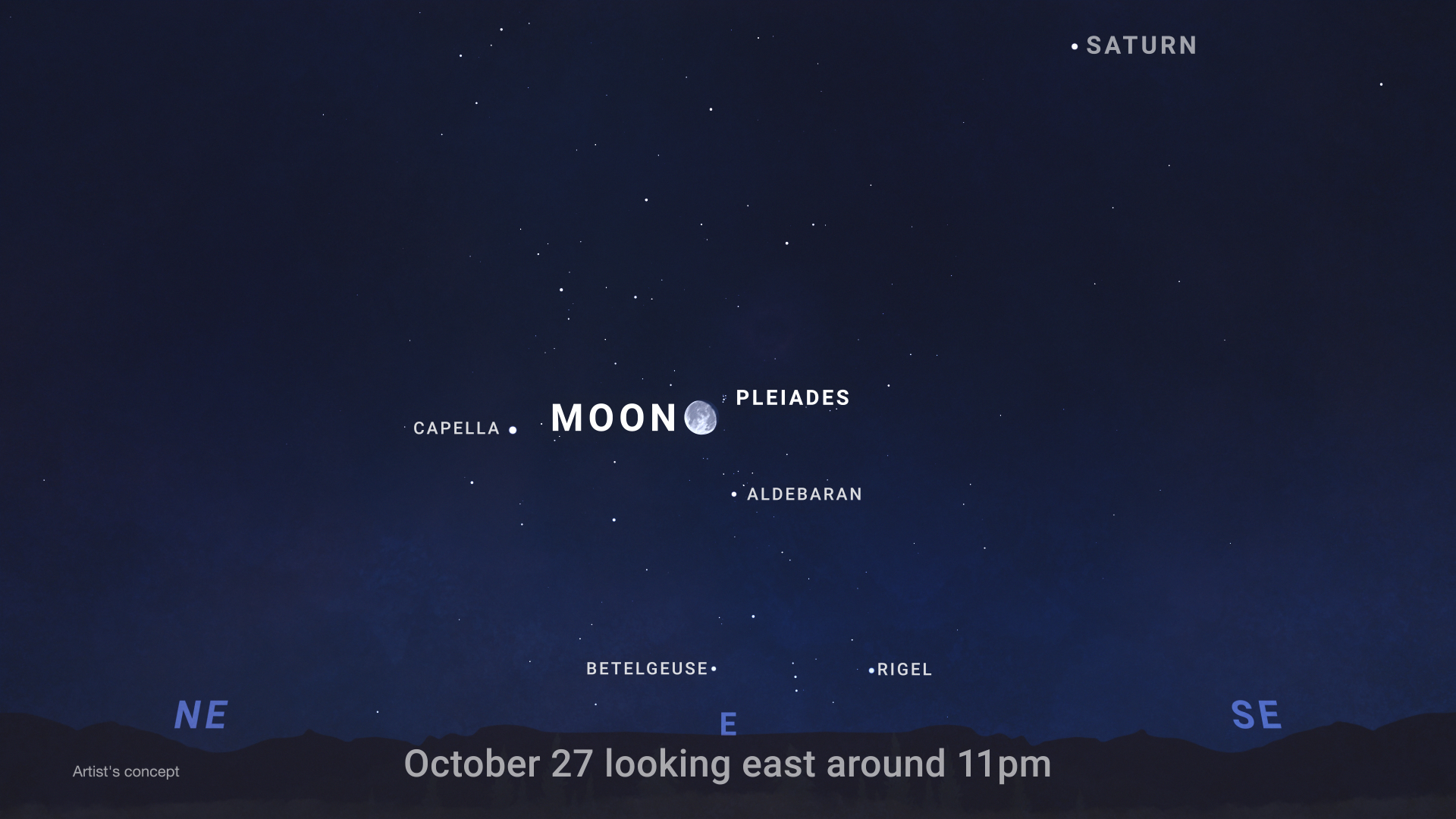
NASA/JPL-Caltech’s October 27 reference chart places the Moon next to the Pleiades when looking east around 11 p.m. Local clock time and the exact orientation shift as the sky turns, so use it as a find-the-neighborhood map, not a phone-screen replacement.
The Moon is bright enough that it will soften the faintest stars, which is exactly why this pairing is useful. Rather than hunting a barely visible target in a huge sky, use the Moon to get you to the right patch of it. Once you see the little cluster, look away for a moment and back again; that reset often makes the grouping easier to notice.
Where should you look from Austin, Houston, or Los Angeles?
The same simple instruction works across all three cities: face east in the evening, then look higher as the night goes on. Avoid predicting a single exact clock time from a generic chart—trees, buildings, hills, and a local horizon all change the practical view. NASA’s guidance is to watch the Moon and cluster climb higher through the evening.
- Austin: Choose a spot with an unobstructed east or northeast view. A neighborhood greenbelt, open patio, or hill-country overlook can work; preserve the moment by keeping screens dim.
- Houston: Flat horizons help, but haze and skyglow can make the cluster subtler. Give your eyes 10 to 15 minutes away from bright lights, then try again.
- Los Angeles: A rooftop, beach-facing open space, or overlook with a clear eastern gap can be enough. Don’t drive into a restricted area just for a darker view; a safe, legal viewpoint wins.
Want local company rather than solo sky-scrolling? Find astronomy-minded people in Austin, Houston, or Los Angeles and make a simple plan around a clear horizon.
Do I need a telescope to see the Pleiades?
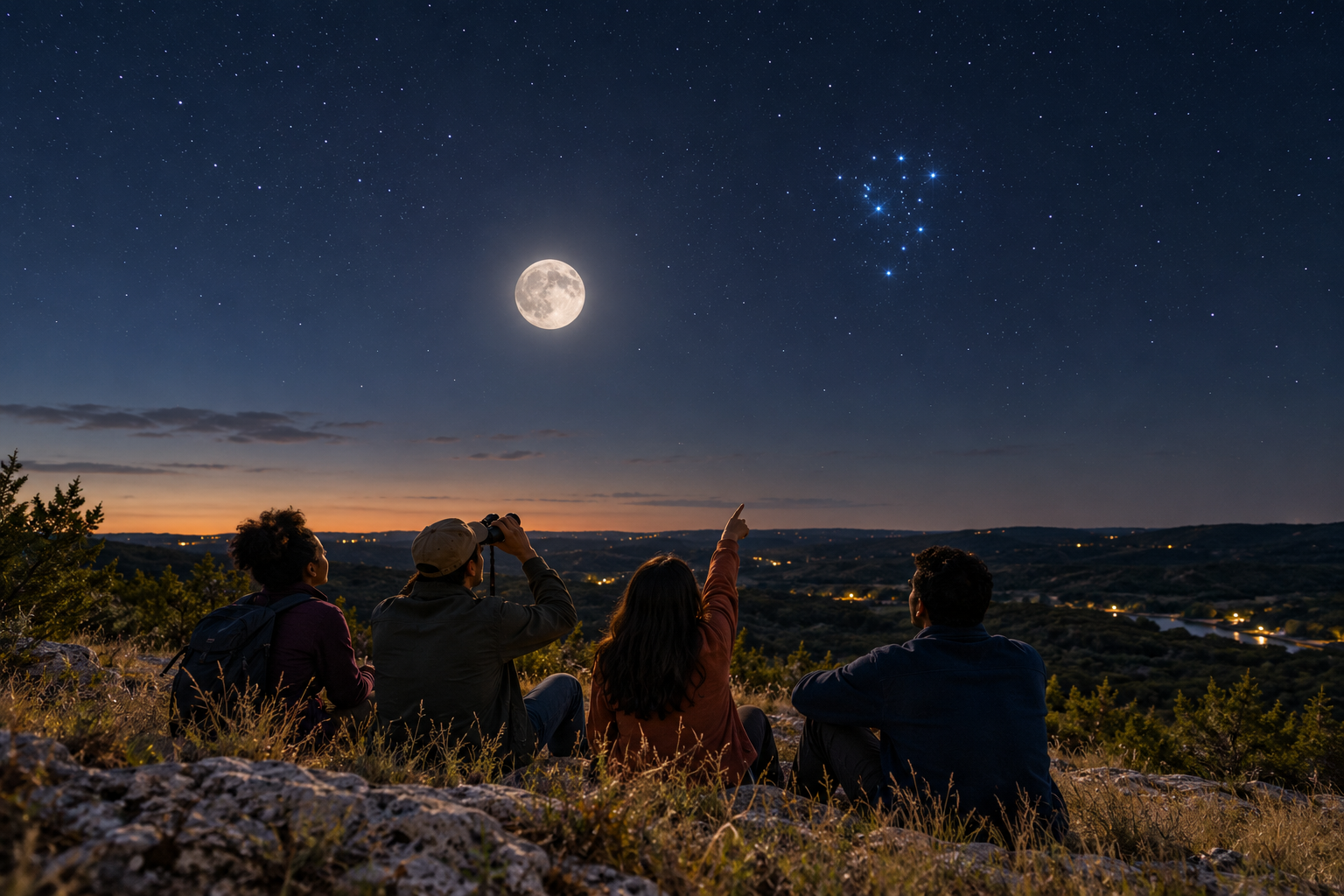
No. NASA specifically notes that the Pleiades are visible to the unaided eye, while binoculars or a telescope reveal more detail. For this event, binoculars are a nice optional upgrade—not homework.
If you already own binoculars, brace your elbows on a railing or lean against a car so the view stops wobbling. Scan gently just beside the Moon rather than holding the Moon in the center of the field for long. If you have no gear, keep the plan intentionally simple: eyes, a warm layer, water, and a red-light setting on your phone if you need to walk safely.
A practical heads-up: avoid staring at the Moon through a telescope or binoculars without first getting comfortable with the brightness. It is safe to observe, but a bright lunar view can feel dazzling and temporarily reduce your dark adaptation. For the Pleiades, look away from the Moon for a minute after using it as your marker.
A 20-minute no-telescope plan
- Check the clouds, not just the forecast icon. You want a break toward the eastern sky around your intended observing time.
- Pick a legal, familiar place with an open horizon. The best spot is the one you can enjoy without stress or trespassing.
- Arrive after dark and let your eyes adapt. Keep white phone light off; 10 minutes makes a noticeable difference.
- Find the Moon first. It is your built-in sky pointer on Oct. 27–28.
- Search close by for the tight star grouping. Don’t expect a giant pattern. The charm is recognizing a small, ancient cluster with your own eyes.
- Stay for one conversation. Ask what everyone noticed first, or share an observation photo in the community afterward. A short plan is much more likely to happen than an elaborate one.
Why the Seven Sisters are worth a look
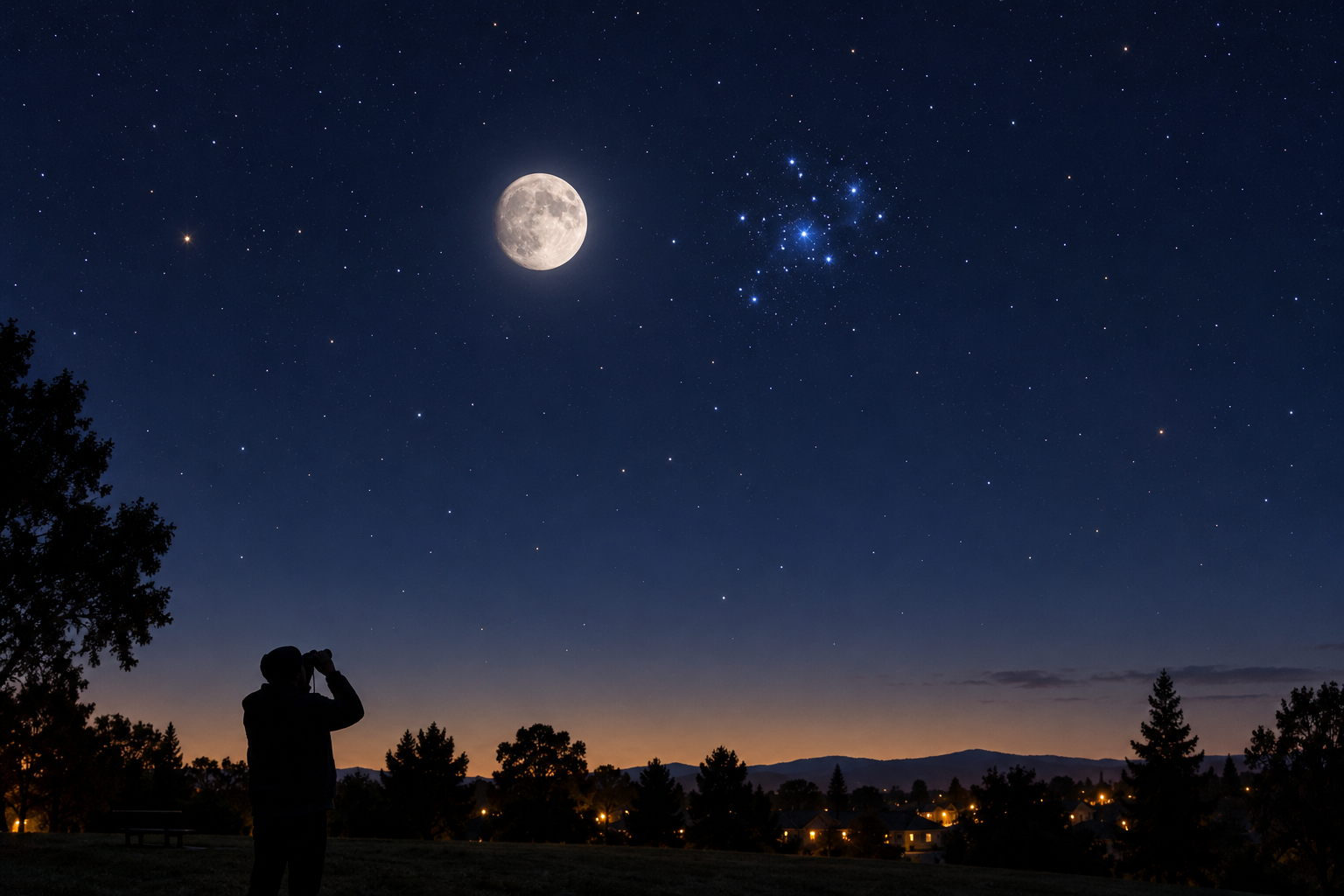
The Pleiades are an open star cluster in Taurus, and their compact look has made them recognizable to observers around the world. “Seven Sisters” is the familiar common name, though how many individual stars you see with your eyes depends on your vision and sky conditions. That makes the encounter a useful reminder: astronomy is not a pass/fail test. Seeing three stars, six stars, or a soft sparkle around the Moon is still a real evening under the sky.
For another easy city-sky event plan, see our Orionids 2026 moonset viewing guide. And if clouds win this round, keep the plan social: save the date, swap sky-app screenshots, and try the next clear evening together.
FAQ
What date is the Moon near the Pleiades in October 2026?
NASA lists the close pass on the night of October 27 into October 28, 2026. Start looking east in the evening and watch the pair climb higher.
Can I see the Pleiades without a telescope?
Yes. The Pleiades are visible to the unaided eye as a small, close grouping of stars. Binoculars can make the cluster easier and more detailed, but they are optional.
What direction should I look?
Look east in the evening from Austin, Houston, or Los Angeles. A clear horizon matters more than a perfectly dark site for getting started.
Will the Moon make the Pleiades impossible to see?
No, but its brightness can hide fainter surrounding stars. Use the Moon to locate the area, then let your eyes adapt and look for the compact bright grouping nearby.
Cover photo: Pleiades star cluster by Chris Klein via Unsplash. NASA sky-chart attribution: NASA/JPL-Caltech.