Orionids 2026: Best Moonset Viewing Times for Austin, Houston, and Los Angeles
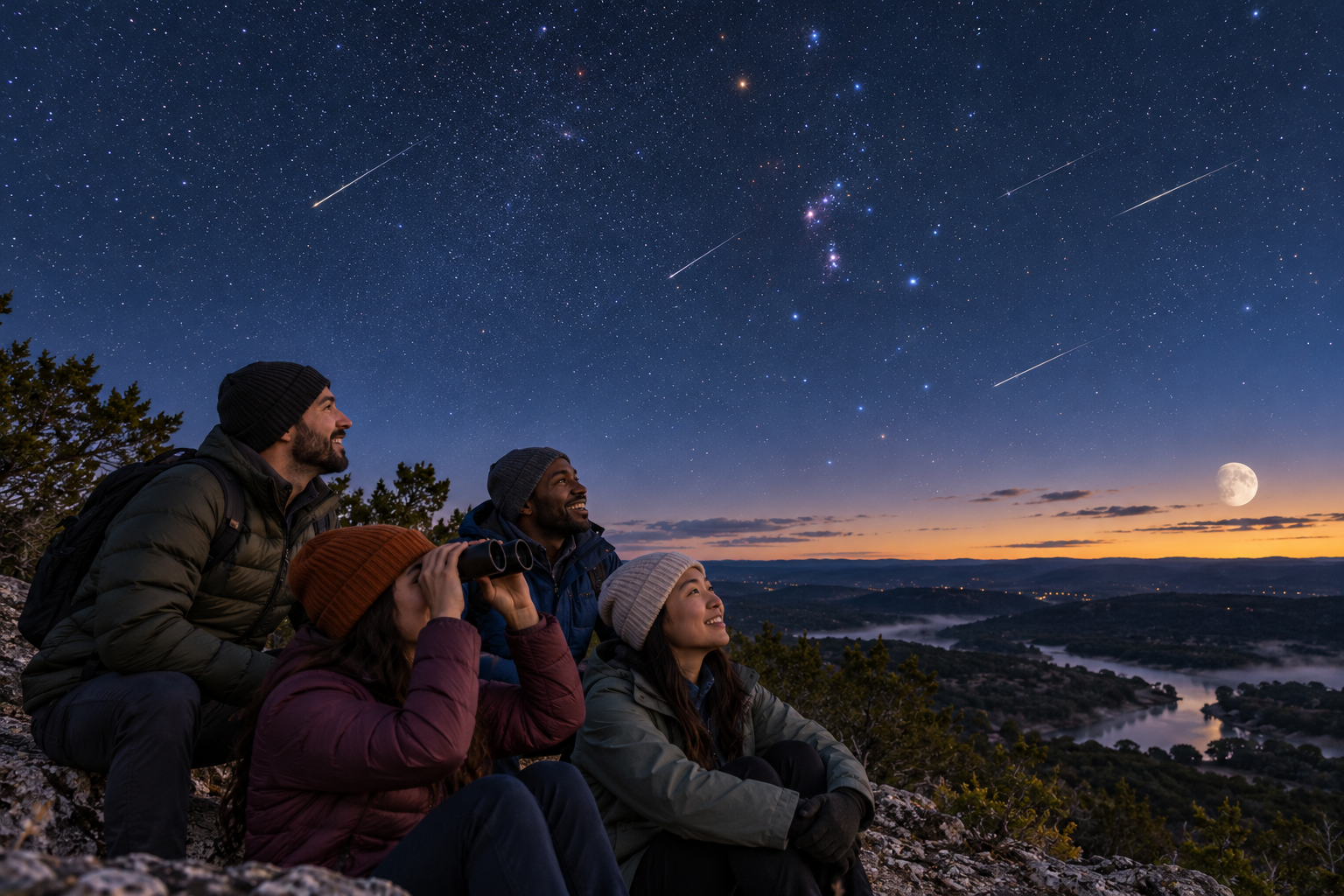
The Orionid meteor shower peaks overnight Wednesday, October 21 into Thursday, October 22, 2026—and the useful plan in Austin, Houston, and Los Angeles is simple: wait for the bright Moon to set, then give your eyes a chance to adjust before dawn. On October 22, moonset is 3:59 a.m. CDT in Austin, 3:49 a.m. CDT in Houston, and 3:22 a.m. PDT in Los Angeles. The late window is short, but it is much darker than the evening and it costs nothing more than a clear view of the sky.
NASA lists the Orionids as active from October 2 to November 7, with the Oct. 21–22 peak offering roughly 10–20 meteors an hour under truly dark skies. That is an ideal-rate estimate, not a promise from a city sidewalk—but a patient, social pre-dawn watch can still be a great night out.
What are the best Orionid viewing times in each city?
The Moon will be bright—about 89% illuminated on Oct. 22—so the post-moonset interval is the practical play. Times below are local and include the effect of atmospheric refraction.
| City | Moonset, Thu. Oct. 22 | Best practical window |
|---|---|---|
| Austin | 3:59 a.m. CDT | About 4:30 a.m. until first light |
| Houston | 3:49 a.m. CDT | About 4:20 a.m. until first light |
| Los Angeles | 3:22 a.m. PDT | About 3:50 a.m. until first light |
These are not alarms you need to obey to the minute. Arrive 20–30 minutes before your intended watch time, get comfortable, and let your eyes adapt. NASA’s guidance is wonderfully low-tech: recline with a blanket or chair and take in a wide piece of sky. You do not need to stare at Orion itself; meteors can appear anywhere, and looking 45–90 degrees away from the radiant often makes their tracks look longer.
Why does moonset matter for the Orionids?
Moonlight washes out the faintest meteors in the same way a porch light does. The 2026 peak has a waxing gibbous Moon high enough to be a real obstacle through much of the night. Once it drops below the horizon, your eyes have a fairer chance at the fast streaks from Halley’s Comet debris.
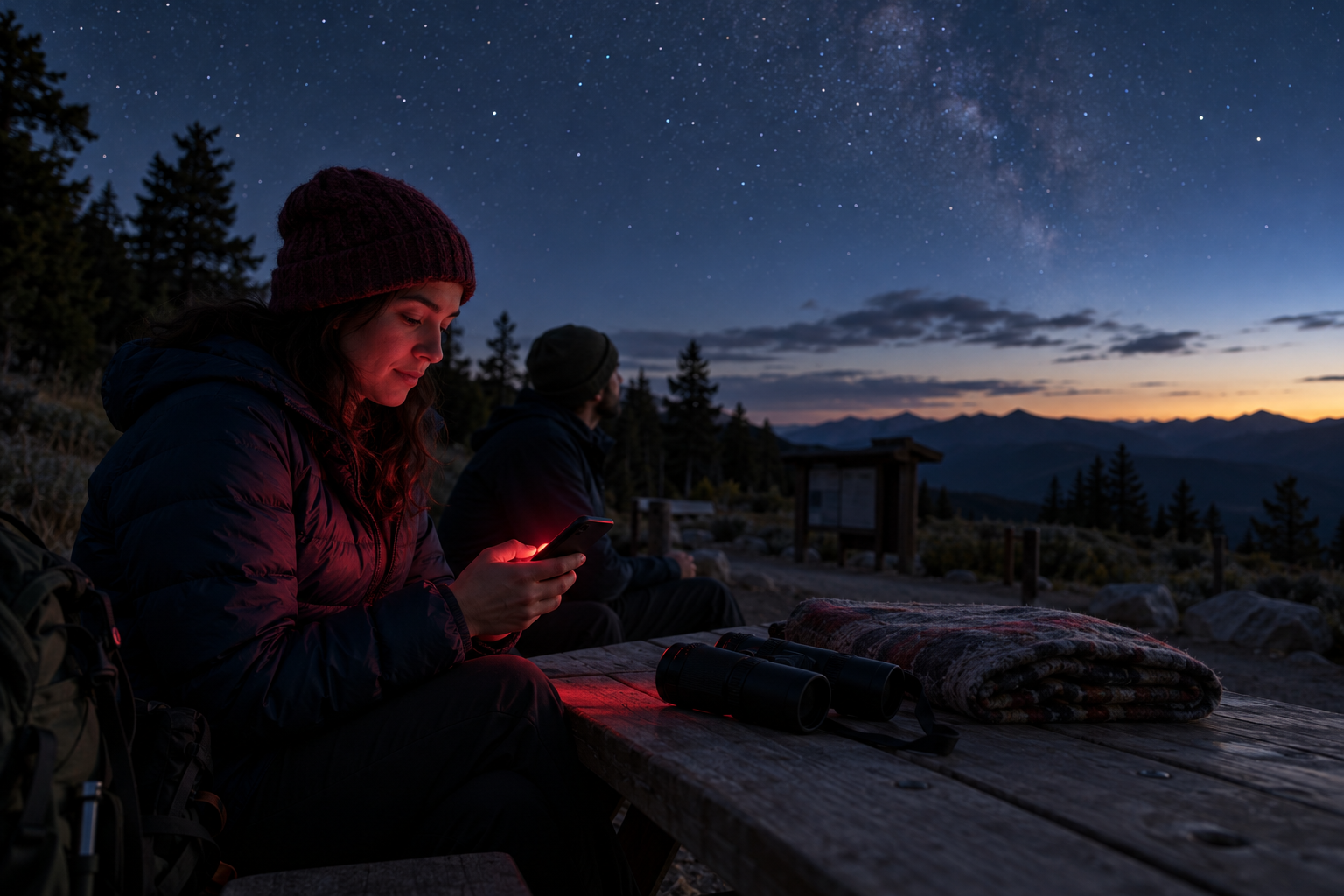
Give yourself 20–30 minutes without white light. Put your phone on its dimmest red setting if it has one, or leave it in a pocket. A quick weather check before you leave is sensible; a cloud-free forecast matters more than a fancy telescope here. If the forecast is not kind, the Orionids remain active before and after peak, so a nearby clear morning can be worthwhile too.
Do I need a telescope for the Orionids?
No—binoculars and telescopes narrow your view, while a meteor shower rewards a wide one. Bring a reclining chair, blanket, warm layer, water, and a friend who will not mind the early hour. For an easy no-equipment outing closer to town, borrow a few ideas from our no-telescope stargazing picnic near Houston: comfort, a good horizon, and unhurried conversation beat overpacking.
If you do bring a camera, treat it as a bonus rather than your main job. Set it on a tripod with a wide lens and keep your eyes up while it runs. The best meteor photo often comes from a long sequence, not a frantic attempt to chase one streak.
Where should Austin, Houston, and LA observers look?
Pick the darkest safe and permitted option you can reasonably reach; a huge road trip is not required.
- Austin: A backyard or park on the edge of town can work for brighter meteors, while a darker Hill Country horizon improves your odds. Check local conditions and gather a small crew through the Austin stargazing community.
- Houston: Humidity and city glow make realistic expectations especially important. Find an open, safe spot away from direct lights and use the Houston time as a reason to make a cozy, pre-dawn plan rather than an all-night mission.
- Los Angeles: The city is bright, but the 3:22 a.m. moonset gives you the earliest of the three dark windows. An unobstructed view and a friend with a thermos can turn the early wake-up into the whole point. Explore people planning local sky nights in the Los Angeles Cosmic Match community.
Wherever you watch, respect closing hours, posted rules, private property, and your own comfort. Share your plan with someone, park legally, and choose a place where leaving before sunrise feels straightforward.
What will the Orionids actually look like?
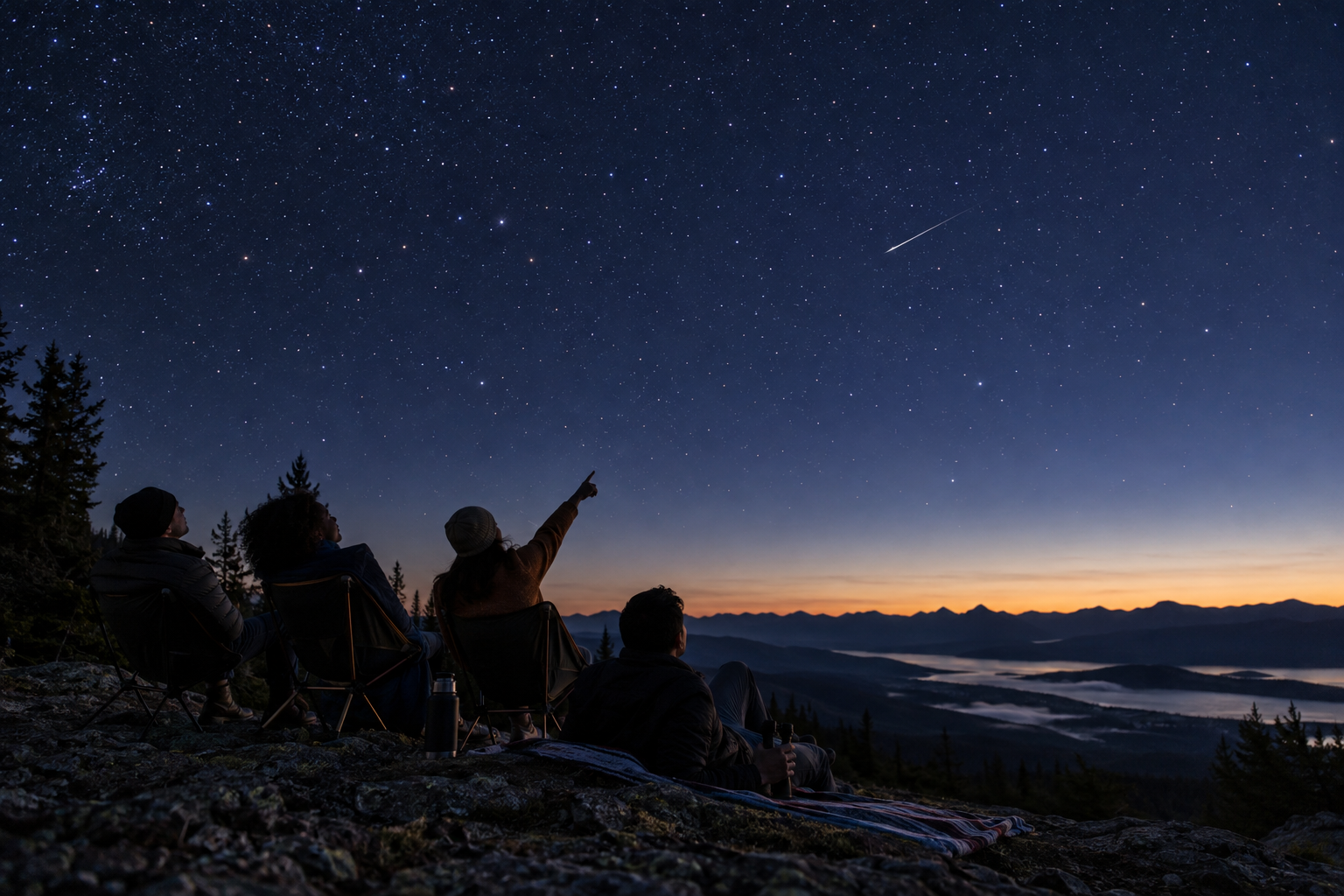
The Orionids are bits of material from comet 1P/Halley entering Earth’s atmosphere at about 41 miles (66 kilometers) per second. They are known for speed and can leave brief glowing trains. The radiant is near Orion, just north of Betelgeuse, but that is a perspective clue—not a target to fixate on.
A good outcome is not necessarily a constant fireworks show. It may be ten quiet minutes, one astonishing bright streak, a shared “did you see that?” and then another. If you want a refresher on planning an all-sky meteor watch, our Draconid three-city guide has more practical dark-sky and comfort ideas.
The Orionids are a lovely excuse to make an ordinary Wednesday night a little less ordinary. Invite a neighbor, trade your best meteor count in the morning, and join the Cosmic Match community to meet other people who think a 4 a.m. sky check is an entirely reasonable plan.
FAQ
When is the Orionid meteor shower peak in 2026?
The Orionids peak overnight October 21–22, 2026. NASA lists the shower as active from October 2 through November 7.
What time does the Moon set for the Orionids in Austin?
On Thursday, October 22, 2026, the Moon sets at 3:59 a.m. CDT in Austin. Plan to watch after your eyes have had 20–30 minutes to adapt.
Can I see the Orionids from Los Angeles?
Yes. City lights reduce the number of faint meteors you will see, but brighter Orionids can still be visible. The Moon sets at 3:22 a.m. PDT on Oct. 22, creating the city’s best darker window before dawn.
How many Orionids will I see?
NASA’s estimate is about 10–20 meteors per hour under dark skies. Local light pollution, cloud cover, moonlight, and how much sky you can see all lower the number you personally observe.