How to Plan a No-Telescope Stargazing Picnic Near Houston
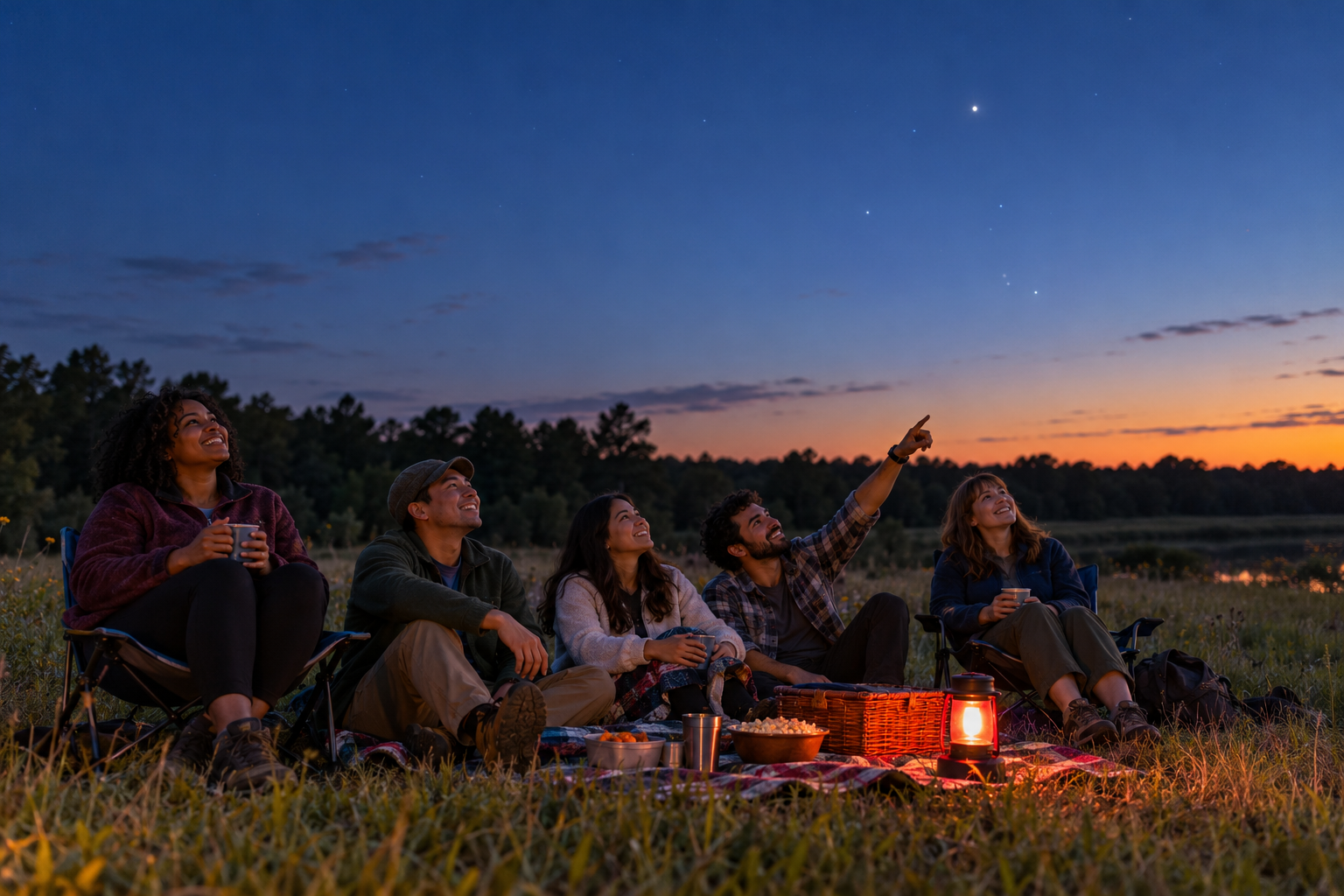
You do not need a telescope—or a flawless astronomy vocabulary—to make a genuinely good night of stargazing near Houston. Bring a few friends, pick a legal after-dark location, give your eyes time to adjust, and let the sky set the pace. For an easy first outing, Brazos Bend State Park is about 45 miles from downtown Houston and stays open until 10 p.m.; that leaves room for a picnic, a sunset walk, and an unhurried look up before closing. Texas Parks & Wildlife’s Brazos Bend page lists current access information, and it is worth checking again on the day you go.
This is a plan for a low-pressure group outing: friends, roommates, coworkers, or a few people from your local astronomy community. The point is not to “find” every constellation. It is to make enough space to notice what the night sky is already offering.
Why Brazos Bend works for a beginner night out
Brazos Bend State Park in Needville is a practical Houston-area option because it combines picnic areas, trails, restrooms, designated parking, and a setting farther from the city’s brightest glow. Texas Parks & Wildlife rates it Bortle 5—not deep-dark-sky country, but a real improvement over central Houston and plenty for the Moon, bright planets, the brightest stars, satellites, and easy constellation patterns. You can also make a future Saturday plan around the George Observatory, which is inside the park and operates separately.
Here is the practical snapshot for a day-use picnic:
- Address: 21901 FM 762, Needville, TX 77461.
- Drive: plan on roughly 45 miles from downtown Houston; travel time depends heavily on your starting point and traffic.
- Hours: open daily, 8 a.m.–10 p.m. Confirm same-day alerts and plan to be packed up and headed out by closing.
- Entry: $7 for visitors 13 and older; children 12 and under are free. A Texas State Parks Pass holder enters free.
- Reservations: day-use reservations are strongly recommended because the park can reach capacity. Reserve ahead to guarantee entry.
- Parking and access: use marked lots and picnic/day-use areas; the park map identifies parking, restrooms, picnic areas, and the paved, wheelchair-friendly Creekfield Lake Nature Trail.
Those details come from the official park page and entrance-fee page, not a stale listicle. Check the park’s active alerts and trail conditions before leaving—wet conditions can close trails.
What should you pack for a no-telescope stargazing picnic?
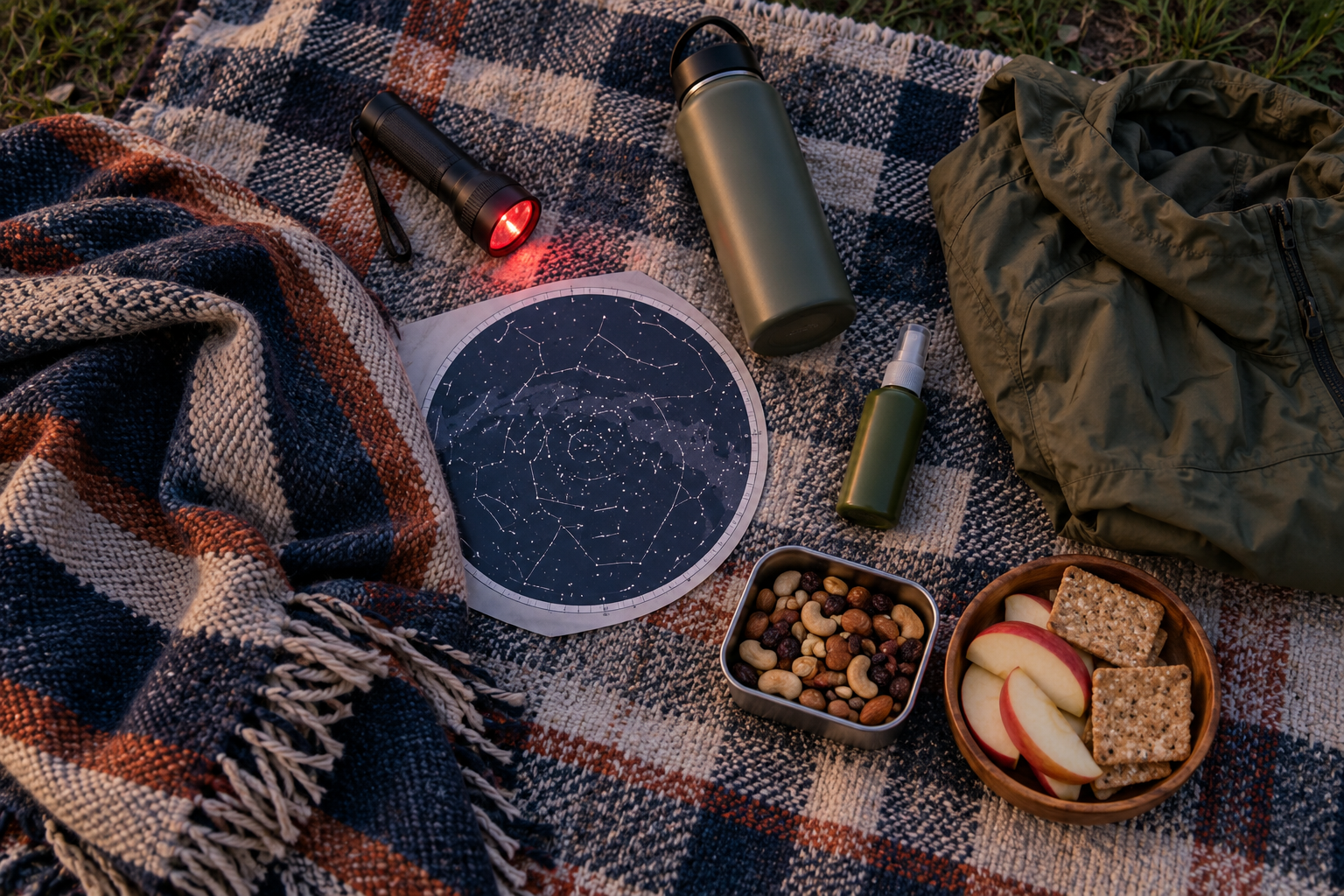
Think “comfortable outdoor dinner” first and “astronomy kit” second. A blanket or low chair, water, a light layer, snacks, bug spray, and a charged phone are the core of the evening. Add a red-light flashlight or red-screen setting so you can find your bag without blasting everyone’s night vision. If you use a star-map app, dim the screen before you arrive and avoid holding it up constantly.
A small paper map or planisphere is lovely but optional. The beginner planisphere guide for Austin, Houston, and LA explains the basic idea; you can also simply start with the brightest thing in view. Leave bulky gear at home on this first trip. A picnic is more social when nobody is fighting a tripod in the dark.
For Houston’s humidity, pack a towel and a resealable bag for anything that gets damp. If rain, thunder, or high winds are in the forecast, reschedule instead of trying to “tough it out.” The National Weather Service Houston forecast is the right final check; look at the hourly view and any alerts, not just the weather icon in a social app.
What can you see without a telescope near Houston?
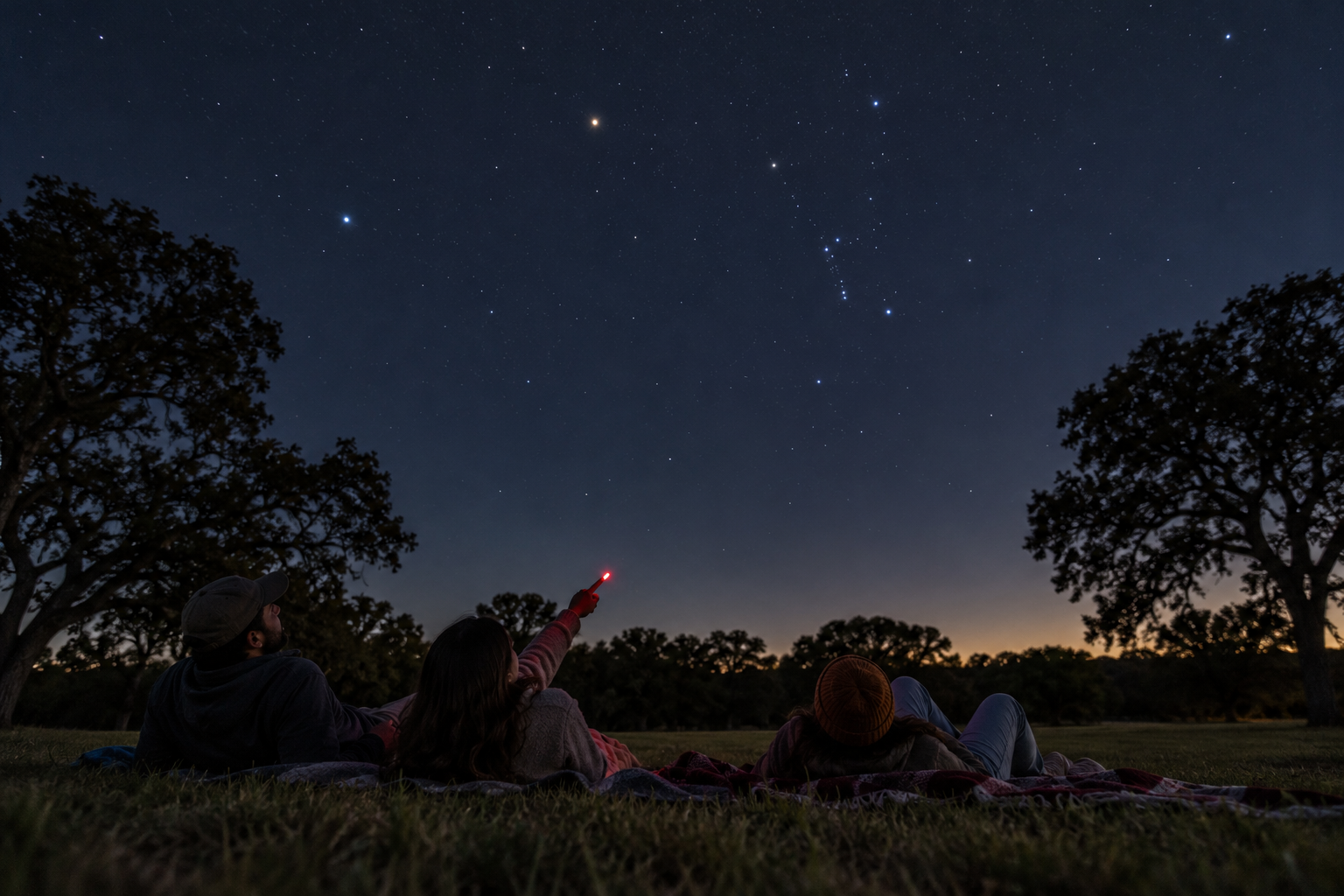
Plenty—and the most satisfying targets are the ones that do not require an event calendar. Start with a bright planet or the Moon when either is up, then look for a large pattern rather than a faint object. In warm months, the Summer Triangle gives beginners three bright anchor stars: Vega, Deneb, and Altair. In cooler months, Orion’s distinctive belt is an easy first win when it is in the evening sky.
You can also watch for satellites moving steadily across the sky, listen for night insects, and notice how much more appears after 20 minutes without white light. That adjustment time matters more than any app. Do not promise yourself a Milky Way spectacle from a Bortle 5 site; the realistic reward is a sky that feels wider, a handful of bright stars you can return to, and a group memory that does not depend on owning equipment.
How do you time the picnic so everyone enjoys it?
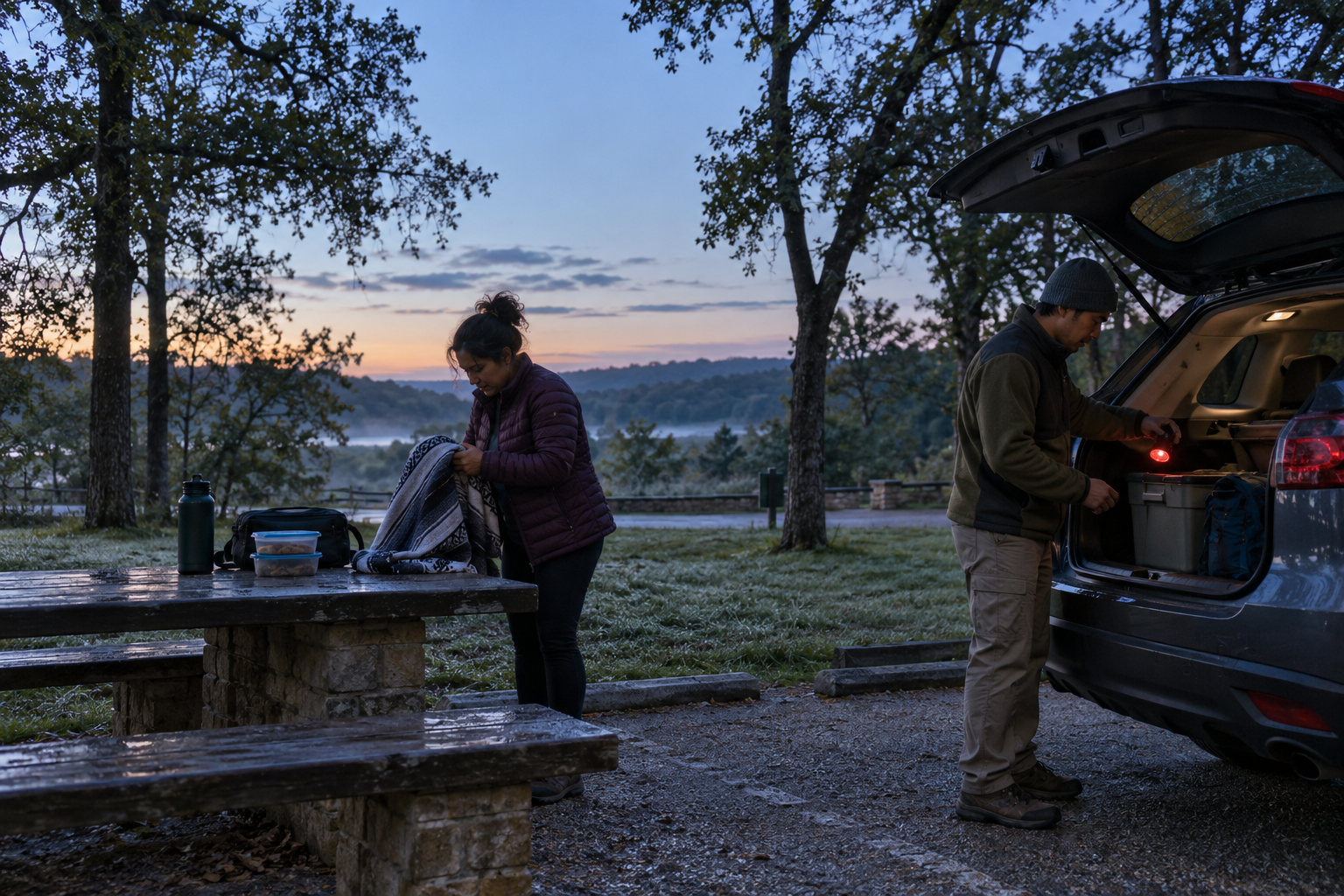
Aim to arrive 60–90 minutes before sunset. That gives everyone daylight to find the restroom, choose a picnic spot, review the route back to the car, and settle in without navigating unfamiliar terrain after dark. Eat around sunset, then take a slow walk or play a “first bright object” game as the sky deepens.
A useful group rhythm is simple:
- Meet at the entrance or a designated parking area; do not ask newcomers to hunt for a blanket in the dark.
- Picnic while there is still light.
- Put phones away for 20 minutes and let eyes adjust.
- Pick one shared target: the Moon, a planet, a constellation, or a satellite pass.
- Leave enough time to pack out before the park’s 10 p.m. closing time.
If you want company for the next one, meet Houston skywatchers on Cosmic Match or join free at Cosmic Match and post an outing idea with the date, park, entry cost, and a clear “beginner friendly” note. An open invitation works better than making it sound like a test of expertise.
Safety and park etiquette after sunset
At Brazos Bend, nighttime awareness is not optional. The park is known for wildlife, including alligators. Stay on designated routes and in approved public areas, keep a respectful distance from water and wildlife, follow posted signs, and never feed animals. Bring a buddy for any walk, use a dim light only when needed, and do not wander into closed or unlit areas just to find a darker view.
Respect other visitors too: keep music low, do not shine white headlights or phone flashlights across a group that is dark-adapting, and pack out every scrap. Check the TPWD trail information for access notes; it specifically emphasizes water and safe trail use. If the weather shifts or anyone is uneasy, the successful choice is heading home early.
Make the next outing a shared ritual
The best no-telescope picnic ends with a tiny plan for another one: “same group next month,” “let’s try a different Moon phase,” or “who wants to bring a constellation story?” Share one favorite moment afterward, even if it was simply seeing a bright star for the first time away from streetlights. That is how a one-off outing becomes a community habit.
For more local ideas, pair this plan with Houston George Observatory stargazing guide or browse Cosmic Match’s stargazing community. Bring curiosity, a picnic, and a little patience. The telescope can wait.
For a Houston human-spaceflight story beyond the observing field, see how CHAPEA Mission 2 spent 378 days in a simulated Mars habitat and how to watch the crew’s egress.
FAQ
Do I need a telescope for a stargazing picnic near Houston?
No. The Moon, bright planets, major constellations, bright stars, and satellites are all naked-eye targets. A relaxed plan and dim lighting will improve the experience more than buying gear.
Do I need a reservation for Brazos Bend State Park?
Texas Parks & Wildlife strongly recommends reserving a day pass because the park can reach capacity. Reserve ahead if you want guaranteed entry, and recheck official alerts before departure.
Is Brazos Bend dark enough to see the Milky Way?
It is rated Bortle 5, so it is darker than central Houston but not a reliably dramatic Milky Way site. Go for bright naked-eye targets and a more open view of the sky, not a deep-sky-photo expectation.
What time should we arrive?
Arrive 60–90 minutes before sunset so your group can orient itself in daylight, picnic, and start observing as the sky gets dark. Leave time to exit before the 10 p.m. closing time.