Draconid Meteor Shower 2026: An Early-Evening Watch Plan for Austin, Houston, and LA
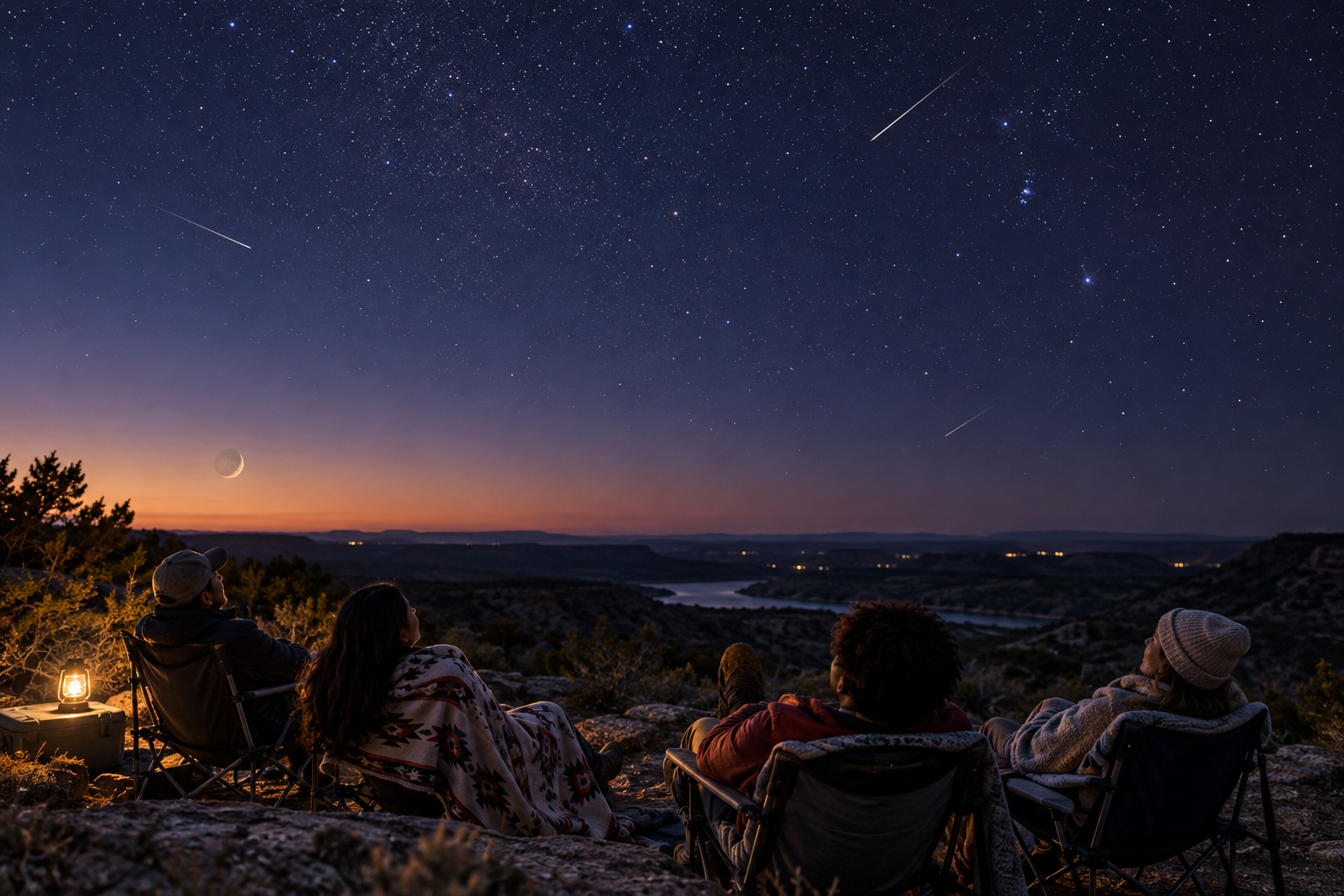
The Draconids are worth a look tonight, October 8—but set expectations for a calm skywatch, not a meteor storm. The International Meteor Organization models the shower’s maximum near 01:00 UTC on October 9: about 8:00 p.m. CDT in Austin and Houston, and 6:00 p.m. PDT in Los Angeles. A nearly new Moon keeps the sky darker, yet the forecast is modest: NASA says a few meteors per hour, while the IMO lists a nominal zenithal hourly rate of five. The reward is a low-effort evening outside with friends—no telescope required.

What makes the Draconids different this year?
This shower is tied to debris from comet 21P/Giacobini-Zinner, and its radiant sits in Draco, high in the northern sky during the evening. But you do not need to stare at Draco or hunt for a precise point overhead. Meteors can flash anywhere across the sky, so a broad, comfortable view is better than binoculars or a telescope.
The International Meteor Organization’s 2026 calendar lists activity from October 6–10 and the modeled maximum at 01:00 UTC. That model carries real uncertainty; it is not a promise of an outburst. NASA’s October sky guide likewise calls this an early-evening shower with only a few meteors per hour. Give it time, enjoy the quiet gaps, and count any bright streak as a bonus.
When should Austin and Houston look tonight?
For Austin and Houston, the modeled maximum lands around 8:00 p.m. CDT on Thursday, October 8. Start once your sky is properly dark, then settle in through the first part of the evening. A darker practical location is helpful, but no particular public site is required for this guide: use a safe place with an open northern view, minimal glare, and permission to be there after dark.
Bring a chair or blanket, a light layer, water, and a dim red flashlight if you need one. Let your eyes adapt for 20–30 minutes; bright phone screens reset that work. If city lights are unavoidable, face away from them and give the sky a generous hour rather than checking every few minutes.
What should Los Angeles observers do if the model peak is before darkness?
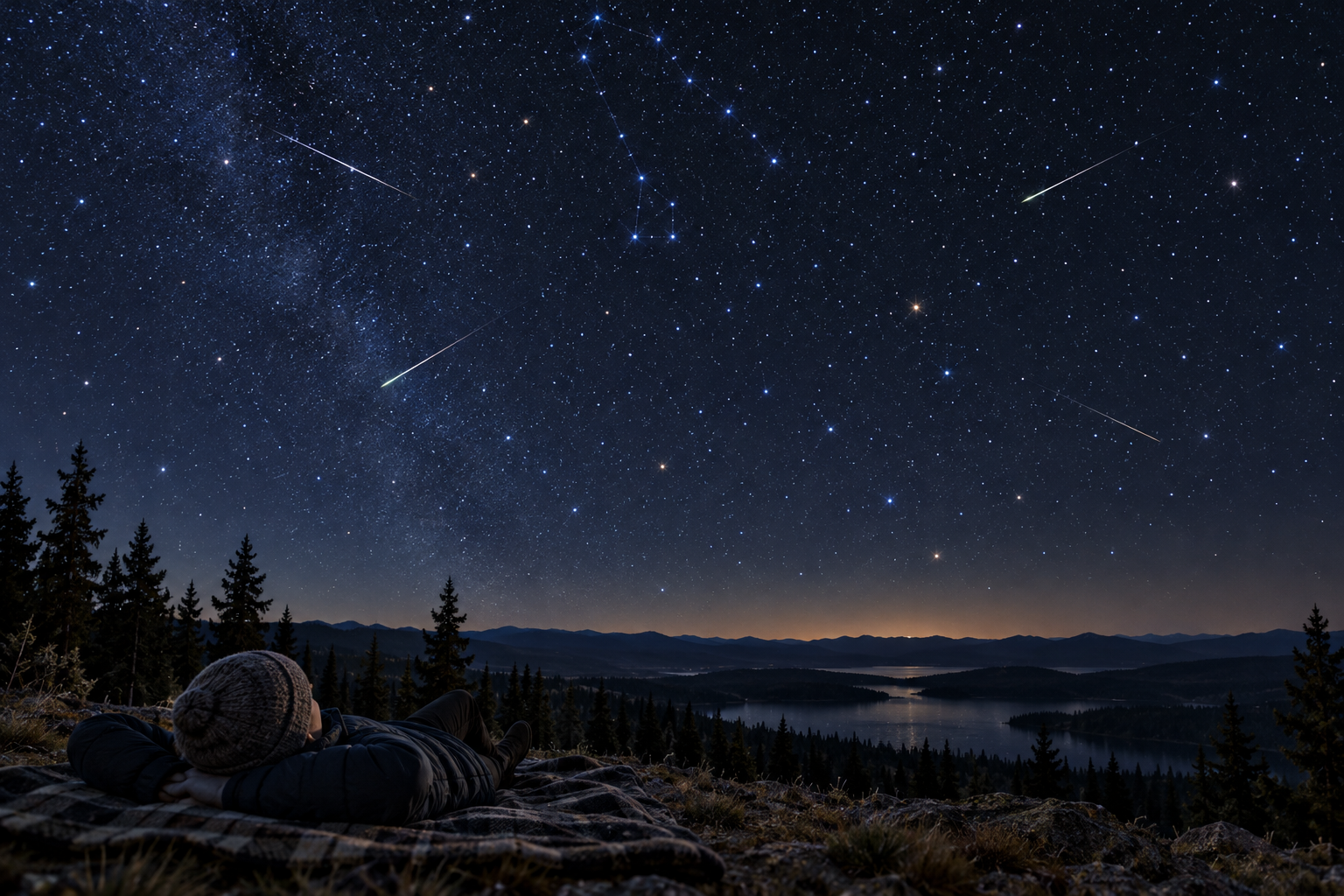
For Los Angeles, 01:00 UTC converts to about 6:00 p.m. PDT, before full darkness. That does not mean the evening is over—it means the modeled moment is less useful as a visual target. Start after darkness, keep watching through the early evening, and treat any Draconid you see as a welcome extra rather than evidence of a local “peak rate.”
The same basics apply from a balcony, backyard, or safe rooftop with an open patch of sky. If the glow of the city wins, make it a shared skywatch anyway: compare constellations, notice satellites, and keep the screen brightness down. Cosmic Match’s guide to seeing Saturn from Austin, Houston, and Los Angeles is another easy excuse to stay outside after the meteor watch.
Do I need a telescope for the Draconids?
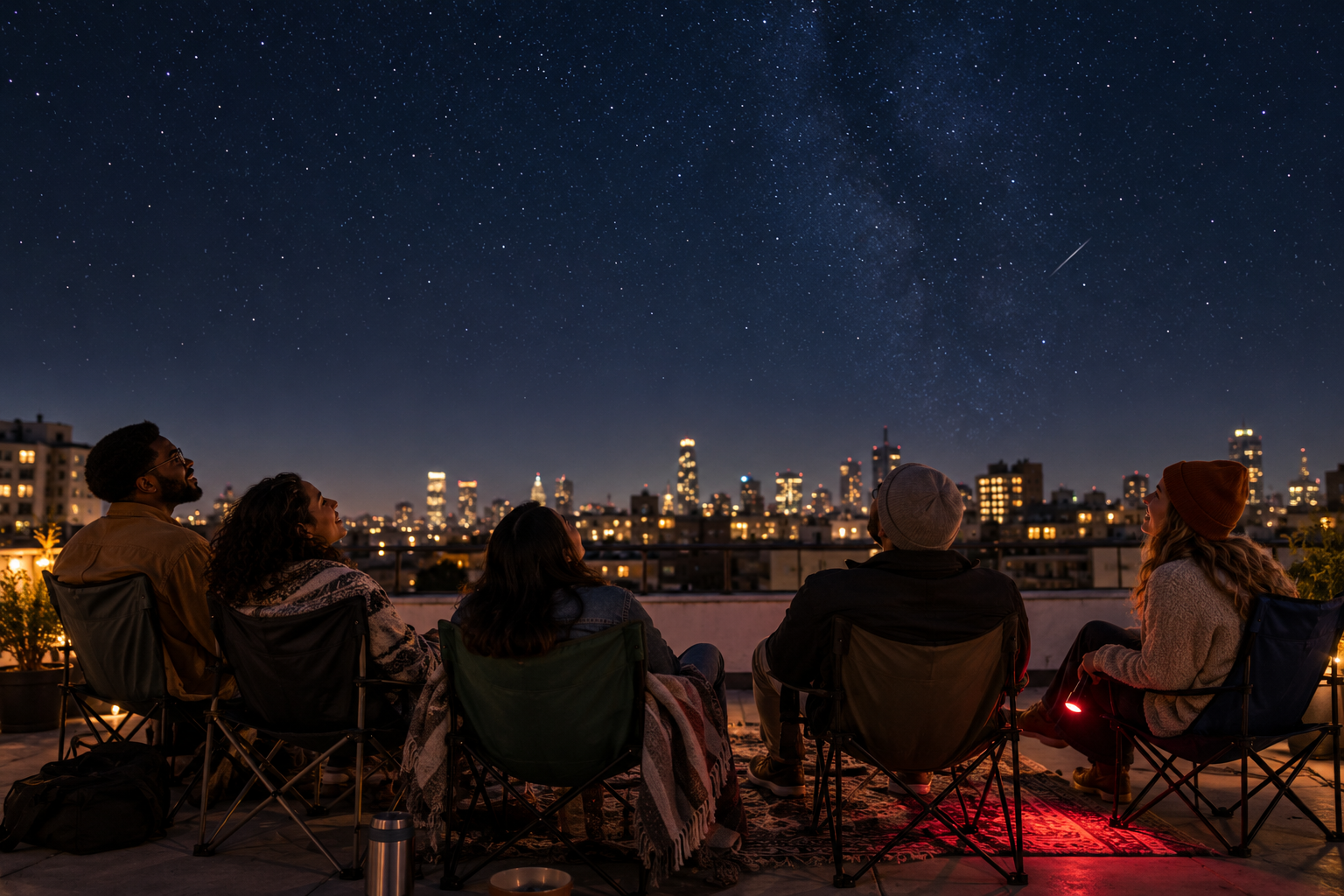
No. In fact, telescopes and binoculars show too narrow a slice of sky for meteor watching. Your best equipment is comfort, patience, and the widest possible view. Keep the group small enough to preserve night vision, but make it social: one person can watch the northern half of the sky while another watches higher overhead.
If you are heading out solo and would rather share the wait, join the Cosmic Match astronomy community to meet people who are also looking up. You can also sign up free at Cosmic Match before you head out and make a plan for the next clear night.
A simple three-city Draconid plan
- Pick a safe, legal spot with a broad view and low glare—no venue claim needed.
- Start after darkness. Austin/Houston can use 8:00 p.m. CDT as a rough reference; LA should begin after dark and keep expectations modest.
- Stay at least an hour. A nominal rate of five per hour does not mean one meteor every 12 minutes in your sky.
- Watch the whole sky, not just Draco. Lie back if you can.
- Share the moment. If you catch a streak—or simply enjoy the unusually dark Moon—tell us how your city’s sky looked.
FAQ
What time is the Draconid meteor shower peak in 2026?
The IMO models the maximum for 01:00 UTC on October 9, which is 8:00 p.m. CDT on October 8 in Austin and Houston and 6:00 p.m. PDT in Los Angeles. It is a modeled maximum, not a guaranteed local surge.
How many Draconid meteors will I see tonight?
The 2026 outlook is modest. The IMO lists a nominal ZHR of five, and NASA describes only a few meteors per hour; light pollution, weather, and the radiant’s position can lower what any one observer sees.
Can I watch the Draconids without a telescope?
Yes. Skip the telescope and give yourself a broad, dark view of the sky. A chair, warm layer, and 20–30 minutes for your eyes to adjust are more useful.
Where should I look for Draconids?
Draconids appear to radiate from Draco in the northern sky, but meteors can appear anywhere. Look broadly overhead and away from the brightest nearby lights.
Space-weather note (October 11, 2026): NOAA recorded an observed G3 geomagnetic storm on October 10. See our October 10 G3 outcome and October 11–12 watch update for the current, carefully scoped forecast context.