Oct. 10 G3 Storm: NOAA’s Oct. 12 Forecast Correction
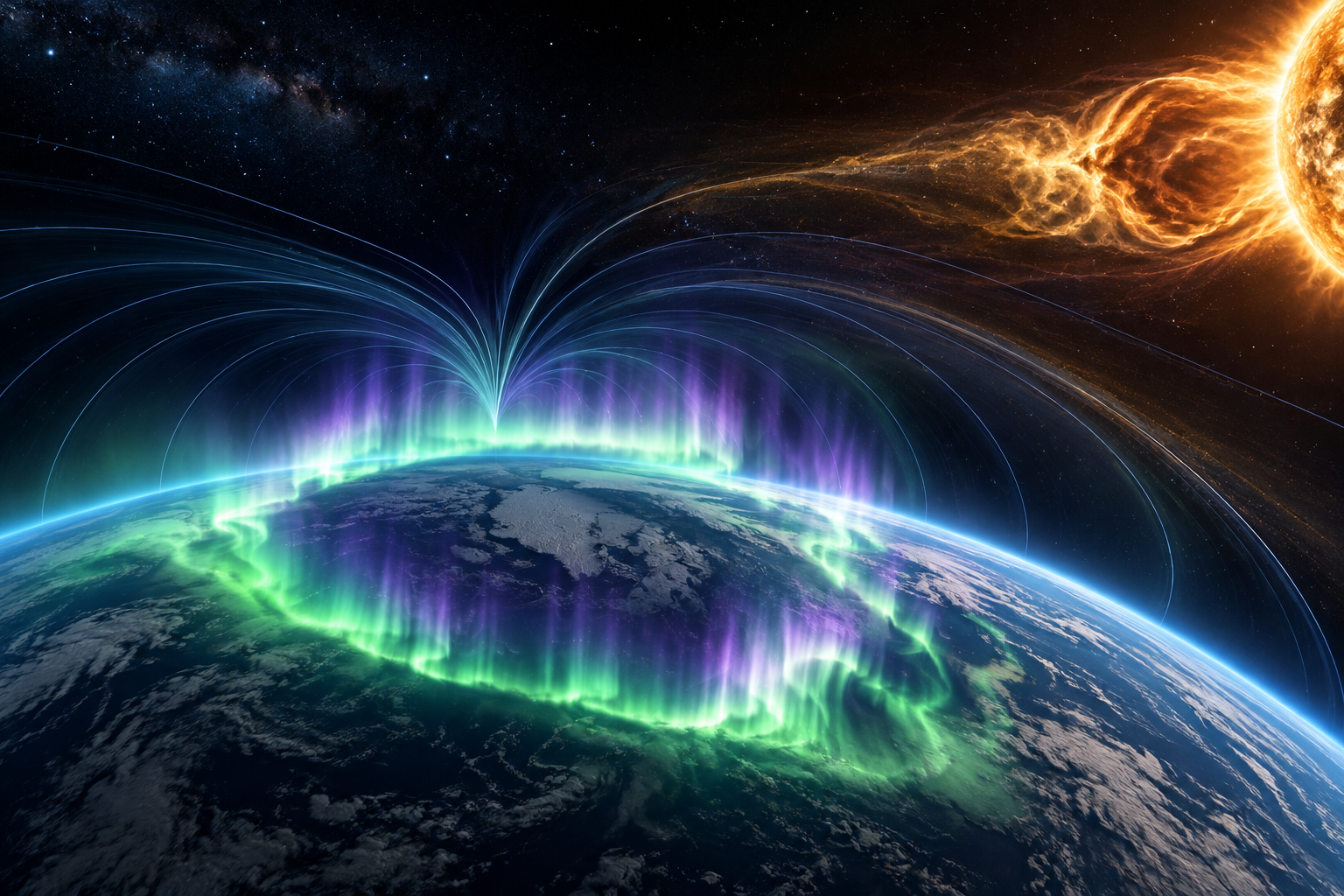
Forecast correction — October 12, 2026 (NOAA product issued 00:30 UTC): NOAA has removed the previously forecast October 12 G2 interval. Its current forecast has no G-scale storm interval on October 12 or 13, and peaks at G1/Kp 5.00 on October 14. The verified October 10 G3 outcome below is unchanged. Other operational centers retain lower-confidence possibilities, so this is a forecast update—not an all-clear.
NOAA’s Space Weather Prediction Center recorded a G3 (Strong) geomagnetic storm on October 10, 2026: the greatest observed three-hour Kp reached 7. That remains the verified outcome. But NOAA’s newest forecast, issued 00:30 UTC on October 12, now puts the highest expected Kp at 5.00 (G1) on October 14, not at G2 on October 11–12.
For stargazers in Austin, Houston, and Los Angeles, the practical takeaway remains straightforward: follow fresh official guidance if you are curious, but no current official product supports an aurora-visibility claim for any of those cities.

What happened on October 10?
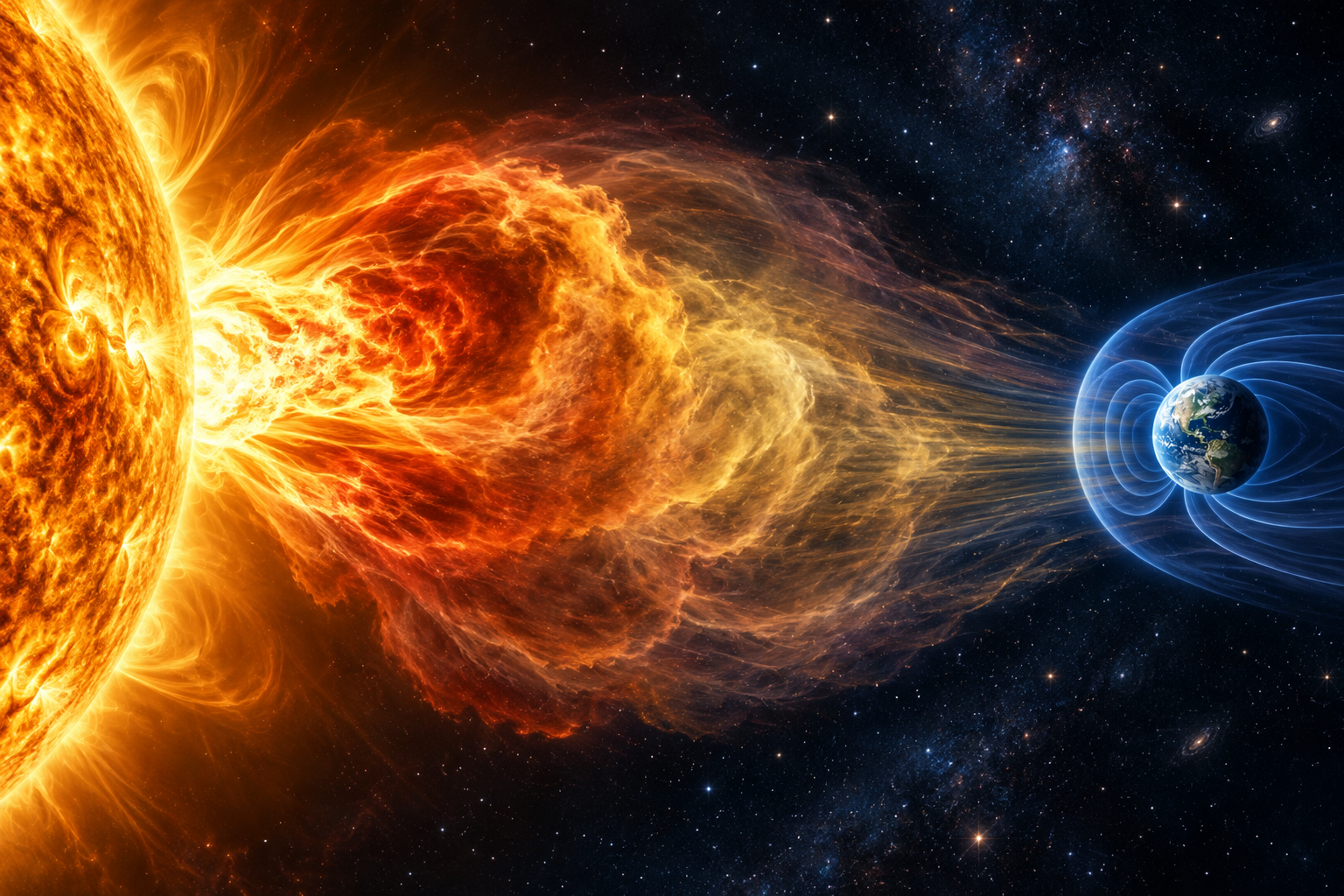
A coronal mass ejection (CME) associated with activity from the Sun arrived at Earth around 14:34 UTC on October 10, according to NOAA. Its arrival enhanced the solar-wind environment, and NOAA reported G3 levels beginning at 17:58 UTC. NOAA’s October 11 three-day product recorded the highest observed three-hour Kp during the preceding 24 hours as 7 (G3).
The UK Met Office’s October 11 analysis also reported two G3/Kp 7 intervals after 15:00 UTC October 10. That history should not be blended with the current outlook: a geomagnetic G storm is not the same thing as an S radiation storm or an R radio blackout.
What does NOAA’s October 12 update say?
NOAA’s latest three-day forecast, issued 00:30 UTC October 12, says the greatest observed three-hour Kp over the preceding 24 hours was 4, below NOAA G-scale thresholds. Its table has no G-scale interval on October 12 or October 13. The highest expected interval is G1/Kp 5.00 from 06:00–09:00 UTC on October 14, attributed to a geoeffective negative-polarity coronal-hole high-speed stream.
That supersedes the earlier forecast that listed an October 12 G2 period. Forecasts evolve as solar-wind conditions are measured; a previous outlook is not an observation.
Why do NOAA, BOM, and the Met Office differ?
They are separate operational products, not one combined forecast. NOAA currently shows no G-scale storm interval on October 12–13 and a G1 maximum on October 14. Australia’s Bureau of Meteorology product, last updated 23:30 UTC October 11, retains G0 with a chance of G1 on October 12 and G1 with a chance of G2 on October 13. The UK Met Office, issued 00:11 GMT October 12, retains a broader, lower-confidence chance of G1 throughout, with chances of G2 and an isolated G3 interval in its four-day narrative.
Those differences are operational uncertainty, not permission to promote the most dramatic possibility as a local prediction.
Can you see aurora from Austin, Houston, or Los Angeles tonight?
No current official product supports that claim. NOAA’s current outlook does not forecast a G-scale interval for October 12 or 13, while BOM and the Met Office describe possibilities at their own confidence levels. Lower-latitude aurora reports need unusually favorable geomagnetic conditions, a clear northern horizon, and fresh location-specific official guidance.
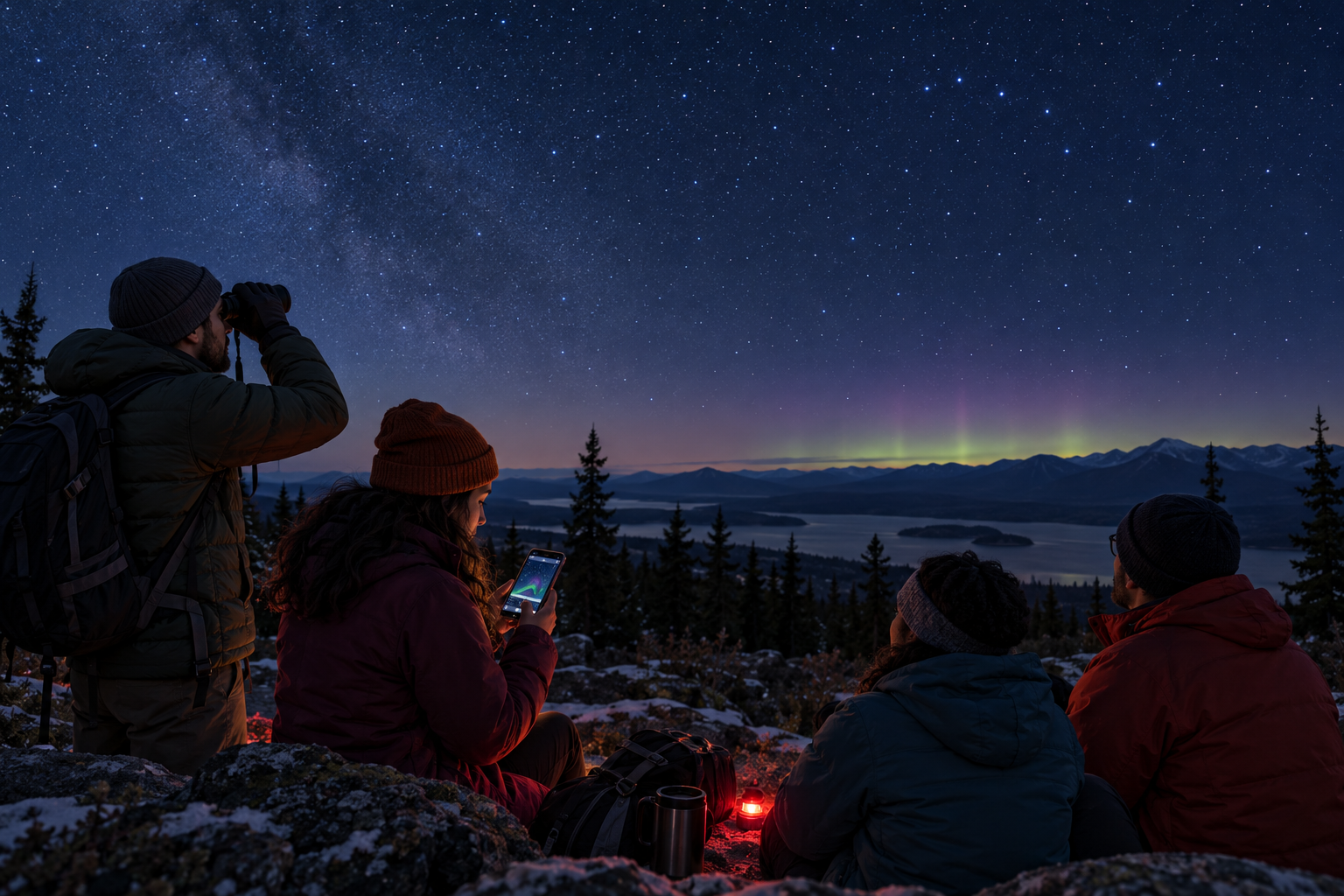
Make this a low-pressure science watch instead: keep an eye on NOAA’s three-day space-weather forecast, learn how Kp and the G scale work, and enjoy the ordinary sky if the numbers do not cooperate. If you are looking for a no-pressure plan with friends, our Draconid viewing guide for Austin, Houston, and LA is built around the same principle: go outside, give your eyes time, and let the sky surprise you.
How should beginners follow a geomagnetic-storm watch?
Start with timestamps and source labels. Keep an observed event—like October 10’s G3—separate from a forecast. Then read each operational provider on its own terms rather than merging its probabilities with another agency’s table. A striking aurora photo from far north does not automatically translate to Texas or Southern California.
Cosmic Match is a good place to turn a maybe into a shared learning moment. Join the Cosmic Match astronomy community to find people who enjoy comparing forecasts, trading sky reports, and planning the next clear-night outing. New here? You can also create your free Cosmic Match profile before the next sky event.
FAQ
Did the October 10, 2026 storm really reach G3?
Yes. NOAA’s October 11 product recorded a greatest observed three-hour Kp of 7, which corresponds to G3. That observed result has not changed.
Is NOAA forecasting G2 for October 12?
No. NOAA’s October 12 00:30 UTC forecast removed the earlier October 12 G2 interval. It shows no G-scale interval on October 12 or 13, with a G1/Kp 5.00 maximum on October 14.
Why might another space-weather service still mention storm chances?
BOM and the UK Met Office publish their own operational forecasts and still retain lower-confidence possibilities. Read each product’s timestamp and confidence language; they should not be combined into one forecast.
Should Austin, Houston, or Los Angeles expect aurora?
No current official product supports that claim. Follow official updates, but do not treat this forecast uncertainty as a local aurora guarantee.