Saturn After Opposition 2026: How to See It from Austin, Houston, and Los Angeles
Saturn After Opposition 2026: How to See It from Austin, Houston, and Los Angeles
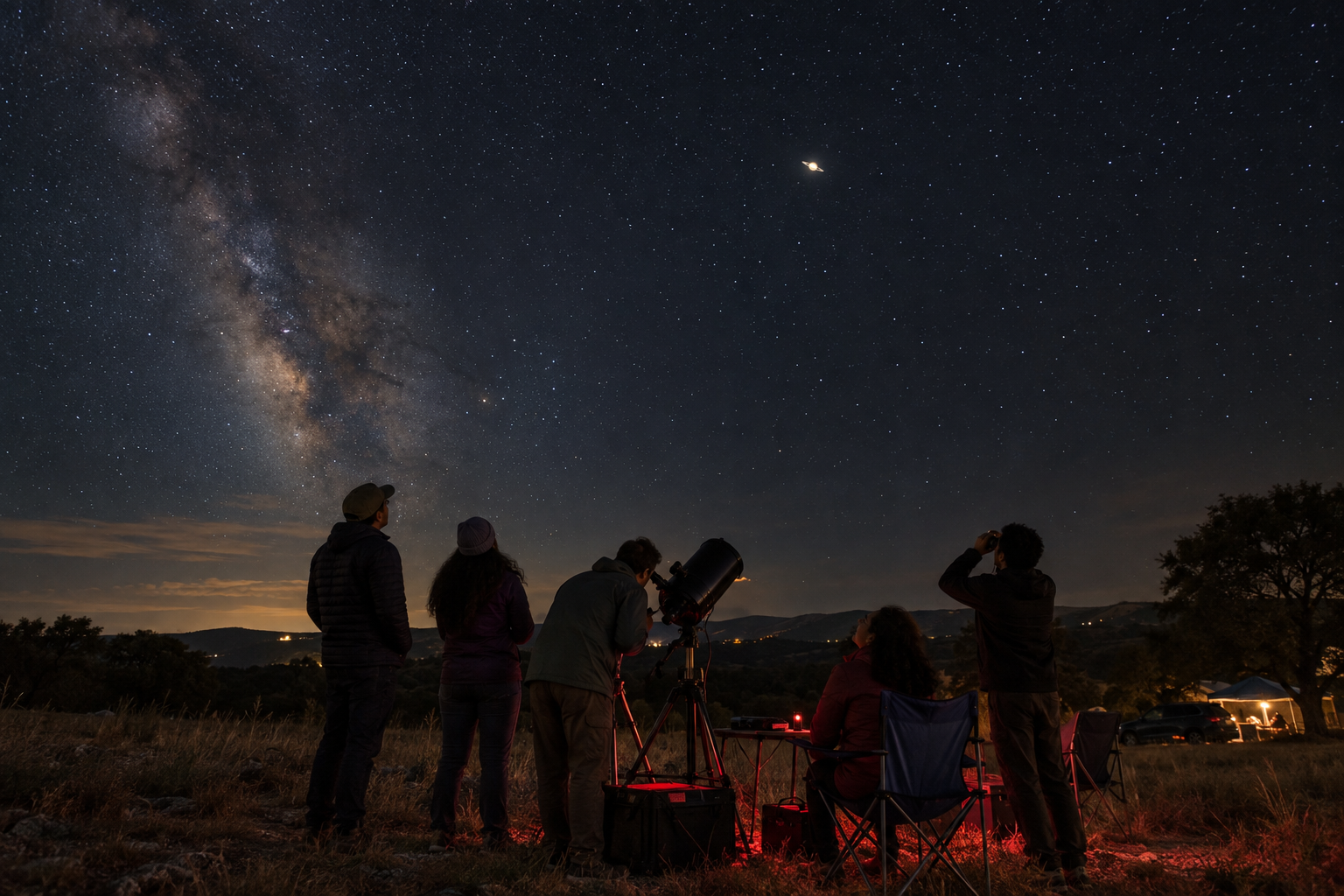
Saturn reached opposition on Sunday, October 4, 2026—but the useful observing window did not vanish that night. In the evenings just after opposition, Saturn still rises near sunset, stays available for most of the night, and remains an excellent beginner target from Austin, Houston, and Los Angeles. On a clear night, you can identify it as a steady pale-yellow point with unaided eyes; a telescope is needed to resolve its rings.
NASA’s 2026 sky calendar lists Saturn’s opposition on October 4. If clouds, work, or city light got in the way that weekend, choose the next clear evening instead of waiting for a “perfect” date. What matters most is a clear horizon, enough time for Saturn to climb above the low murk, and realistic expectations for the equipment you have.

What does Saturn at opposition mean?
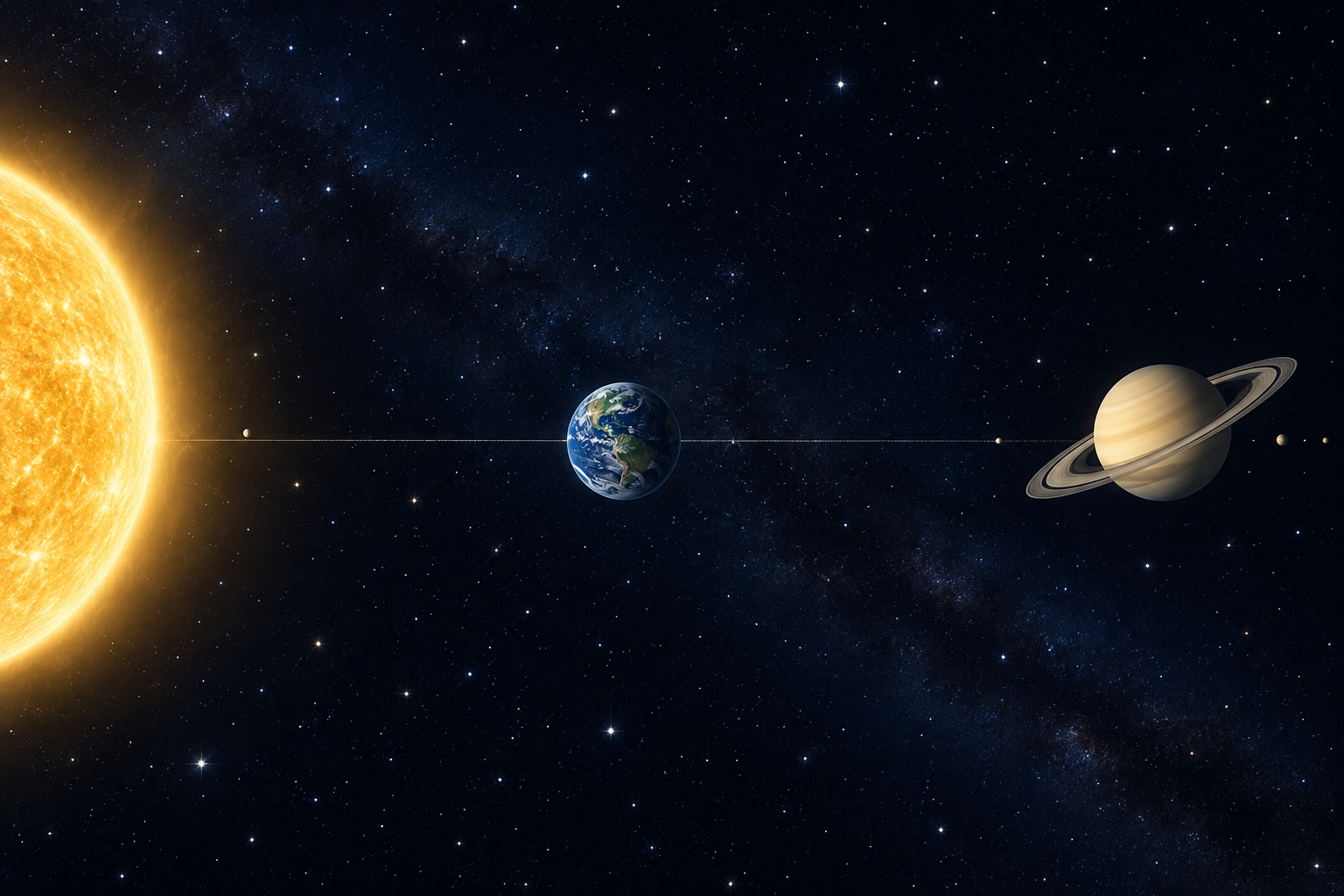
Opposition is the point when Earth is positioned between the Sun and Saturn. From our perspective, Saturn sits opposite the Sun in the sky, which is why it rises around sunset and is visible through the night. It is also near its brightest and largest apparent size of the year.
That geometry makes the weeks around opposition much friendlier than a rushed pre-dawn search. You do not need one magic minute to observe it: the nearby clear nights are genuinely worthwhile. Weather, haze, local light pollution, and your horizon will have more effect on your view than a few days on the calendar.
NASA’s 2026 astronomical-events roundup and its Sky Calendar identify October 4 as the opposition date.
Can you see Saturn without a telescope?
Yes—usually. From a reasonably clear suburban or city sky, Saturn appears as a calm cream-to-yellowish point that typically twinkles less aggressively than nearby stars. A sky-map app can help confirm the location, but once you find it, dim the screen and let your eyes adapt.
Unaided eyes will not reveal the famous ring system. Binoculars make Saturn easier to identify and may show that it is not quite a pinpoint, but they are not the dependable tool for a separated planet-and-rings view. A small telescope around 50× to 100× is a better first target. For a practical equipment primer, read our beginner guide to seeing Saturn’s rings.
Your city-by-city Saturn observing plan
All three cities share the same opposition season, not the same cloud cover, humidity, horizon, or light pollution. Check an hourly forecast and cloud map on the afternoon you plan to go out. If it is cloudy, move to the nearest clear night; Saturn remains well placed in the evening after opposition.
Austin: where and when should you look?
Start about 45–60 minutes after local sunset with an unobstructed eastern view, then give Saturn time to climb. In central Austin, tall buildings and bright horizons can hide low objects, so a permitted rooftop, hilltop, or open park edge is often more useful than a dark but blocked yard. The telescope view is usually steadier later in the evening.
If you are new to the local scene, Cosmic Match’s Austin community is a good place to find fellow observers who want to compare views or share an eyepiece. Our Austin star-party guide also has beginner-friendly etiquette for a shared observing night.
Houston: how can you improve a low-horizon view?
Houston observers should prioritize a wide-open eastern horizon and patience. Humidity and haze can soften a low planet, so skip the first few minutes after rise if the sky looks milky; Saturn will reward you later as it gains altitude. A balcony can work when it faces east with no nearby towers, while a safe open viewpoint can be better still. Never set up along a roadway or in a closed park after hours.
Bring a chair, water, a red-light flashlight, and a second set of eyes. Find Houston skywatchers on Cosmic Match to turn a weather-dependent plan into a shared outing—someone may know the clearest local horizon.
Los Angeles: what should city observers expect?
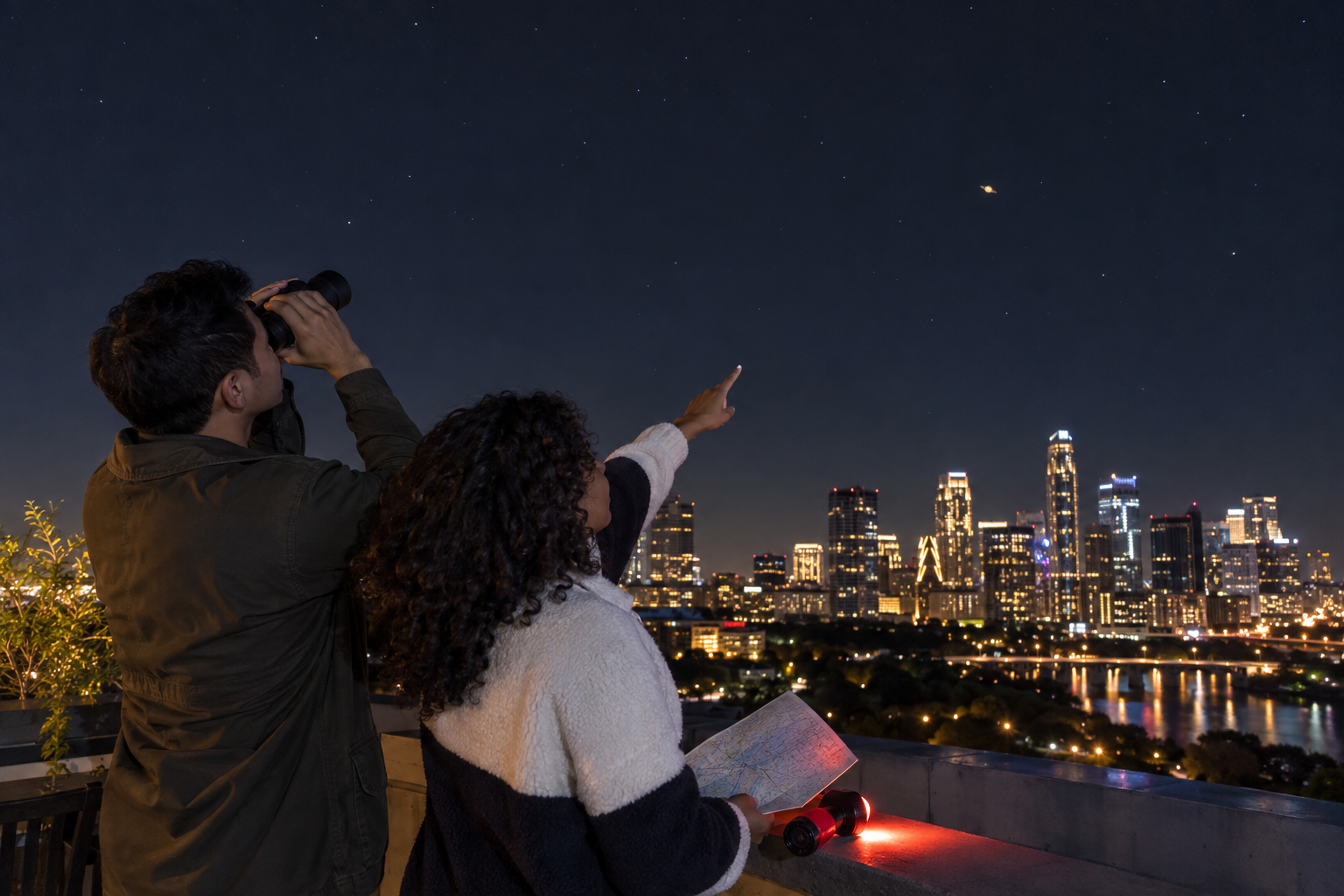
Los Angeles offers plenty of viewpoints, but the best one is safe, east-facing, and free of glare directly in your eyes. Coastal marine layer can decide the night, so check cloud cover rather than relying on an inland forecast. In transparent conditions, city observers can identify Saturn with no equipment; for the rings, observe later after it has climbed above the thickest air near the horizon.
A companion makes a first observing session much calmer: one person can handle a sky app while the other focuses the telescope. Meet Los Angeles night-sky enthusiasts on Cosmic Match and make an easy plan around a clear forecast.
What should you bring for a Saturn watch?
The no-equipment version is short: a warm layer, water, a chair, and dark-adapted eyes. Bring binoculars if you already own them, but do not buy them for this single target. With a telescope, start at low-to-medium magnification, center Saturn, focus carefully, and only increase power if the image remains crisp. A high-power eyepiece cannot fix turbulent air.
Avoid white flashlights and bright phone screens around other observers. Give the telescope time to settle, let everyone take an unhurried turn at the eyepiece, and try again later if the rings look soft—atmospheric steadiness can change quickly.
Make it a shared sky night
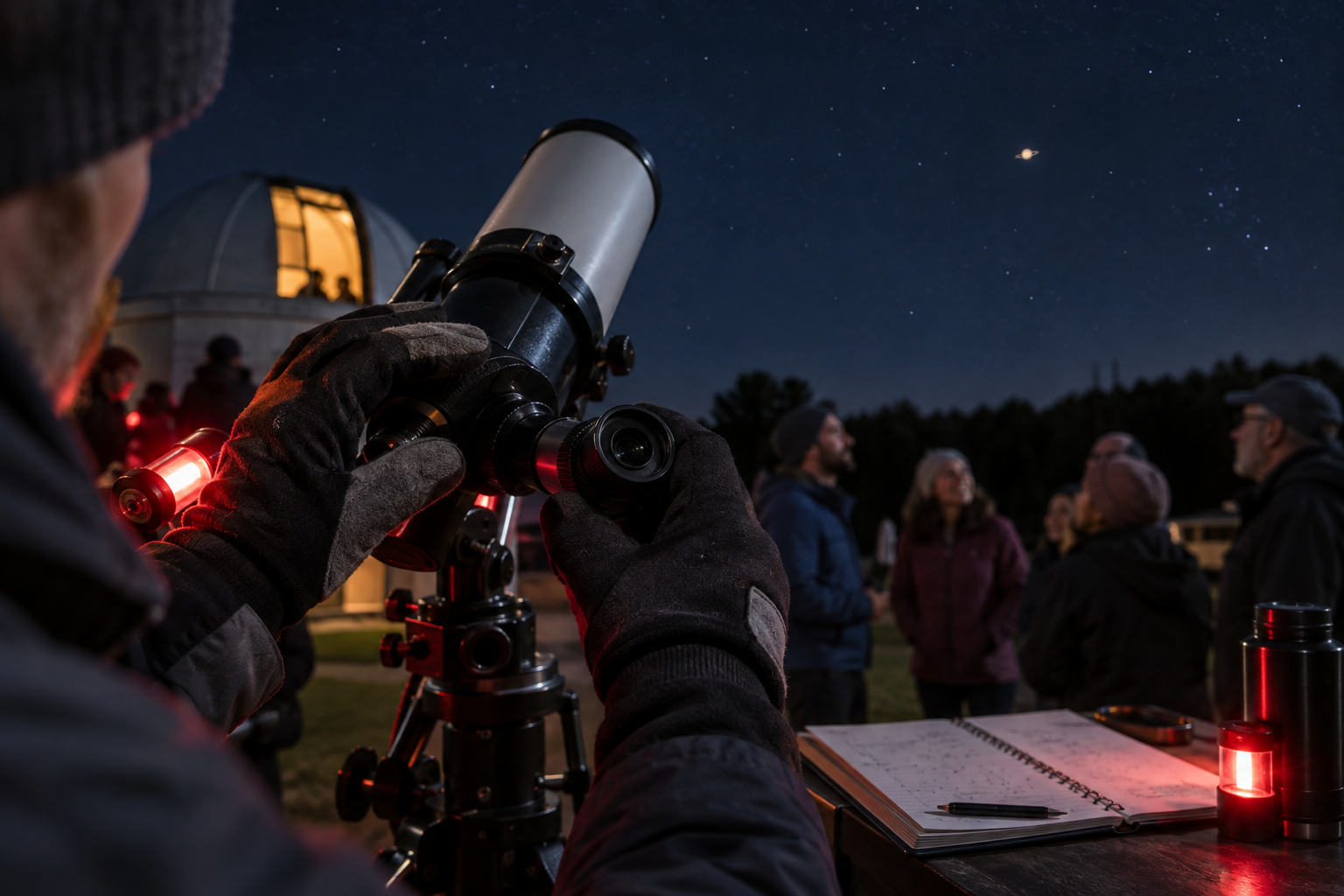
Saturn is an easy reason to step outside and an even easier conversation starter. Post a simple plan—city, approximate time, and whether you have binoculars or a telescope—and invite a few equally curious people. A public star party, a science-center event, or a low-key backyard observation all count. The goal is not a perfect astrophotography result; it is looking up together.
Join Cosmic Match free to meet people who share your night-sky curiosity and make an observing plan in Austin, Houston, or Los Angeles.
FAQ
Is Saturn still worth seeing after its October 4, 2026 opposition?
Yes. The nights after opposition still offer a long evening-to-morning observing window, and Saturn remains a strong telescope target. Pick the next clear night rather than treating opposition as a one-night-only event.
What time does Saturn rise around opposition?
At opposition, Saturn rises near local sunset and sets near local sunrise. Exact times vary by city and horizon, so check a current sky app before you leave.
Can I see Saturn’s rings with binoculars?
Binoculars can help locate Saturn, but a telescope is the reliable tool for seeing the rings as a distinct feature. A small, well-focused telescope can give a memorable first view.
What matters more: a dark site or a clear horizon?
For a bright planet such as Saturn, a clear, safe horizon and steady air are often more valuable than the darkest possible site. Letting the planet climb higher will also improve the view.