Two Austin Star Parties This Weekend: Which One Fits Your First Visit?

Two Austin Star Parties This Weekend: Which One Fits Your First Visit?
Austin has two chances to look through a telescope with friendly locals this weekend: the Austin Astronomical Society lists a St. Elmo’s Brewing Co. star party on Friday, September 25, and a Yegua Knobbs Preserve star party on Saturday, September 26. Both are scheduled for 7:00–10:30 p.m. and both depend on the weather. If you have never been to a star party, choose the setting that makes it easiest to arrive curious, protect the dark, and stay flexible.
This is not a gear test. You do not need a telescope or a flawless knowledge of constellations. Austin Astronomical Society volunteers bring the observing setup; your job is to check the official listing before leaving, bring a red light or a red-light plan, and be kind to everyone’s night vision.
Quick comparison: Friday at St. Elmo’s or Saturday at Yegua Knobbs?
| If you want… | Pick… | Why |
|---|---|---|
| An easy social first step after work | St. Elmo’s Brewing Co., Friday Sep. 25 | A city venue makes this the natural choice for people who want an evening close to Austin. |
| A more field-oriented observing experience | Yegua Knobbs Preserve, Saturday Sep. 26 | A preserve setting is the better fit if you are comfortable planning for a dark outdoor site. |
| The best chance to make the weekend work | Either—keep the other as backup | Both events are weather-dependent, so check the AAS update on the day. |
The official AAS schedule publishes the dates, venues, and 7:00–10:30 p.m. hours, but it does not publish an admission price for either event. Do not assume either is paid or free; use the organizer’s current event information for that detail and any site-specific arrival instructions.
What happens at a public star party?
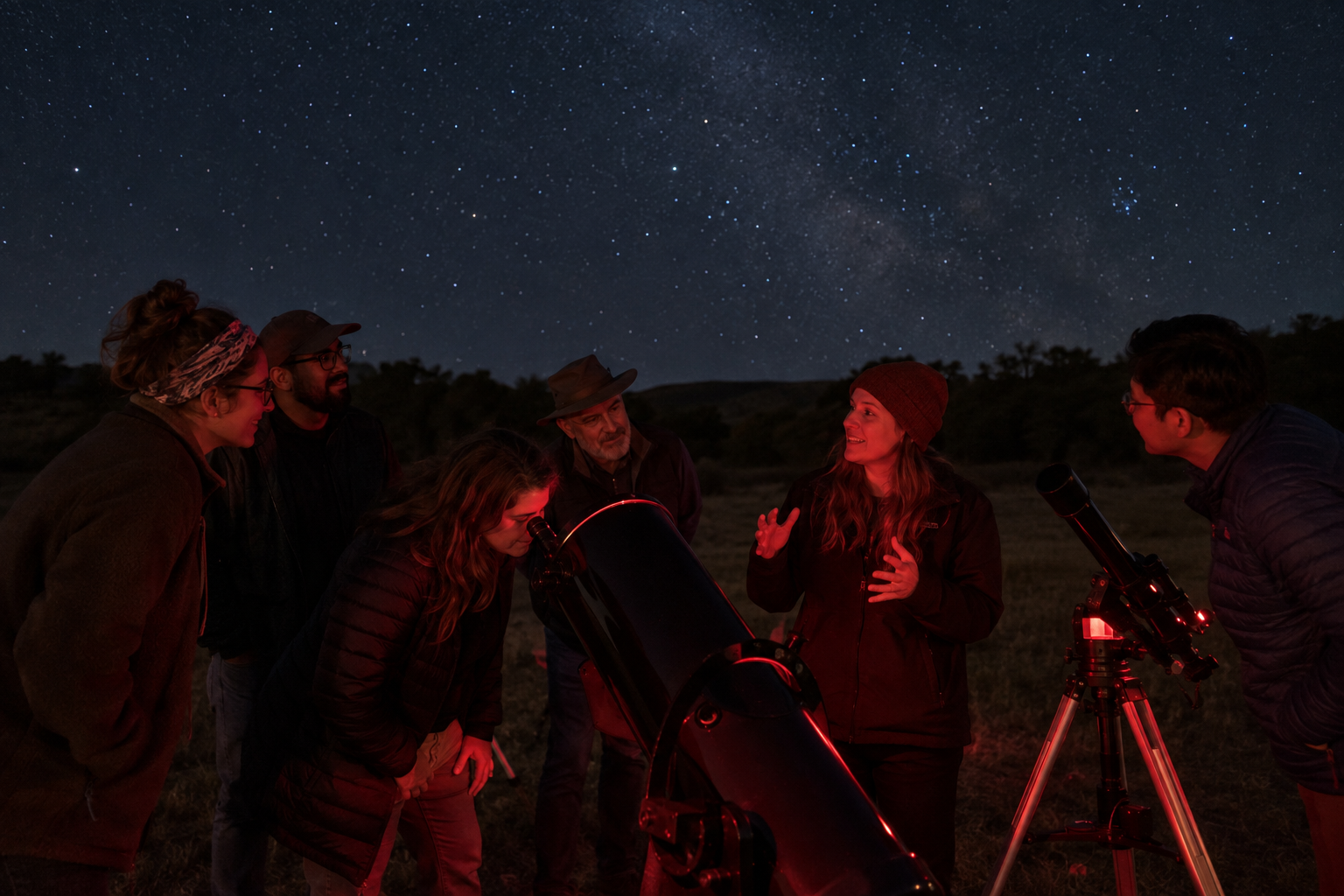
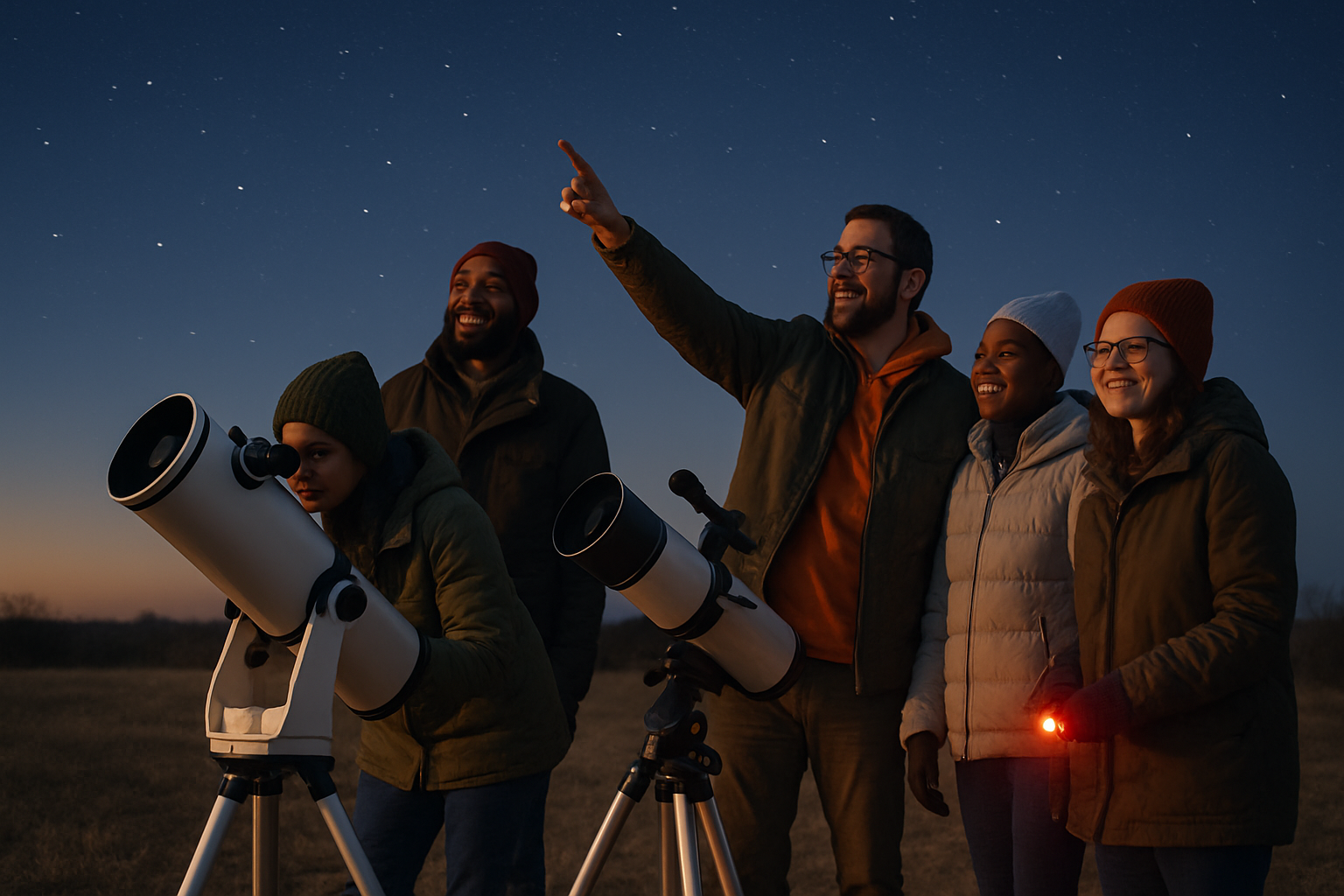
A public star party is the pleasant opposite of taking an astronomy exam. Volunteers set up telescopes and invite visitors to look at the sky’s best available targets. The exact list changes with clouds, haze, the horizon, and what is up at that hour, so a good first-night goal is simple: look through one telescope, ask what you are seeing, then let the next conversation happen naturally.
If Friday’s nearby setting feels less intimidating, start at St. Elmo’s. If you are drawn to the idea of a darker, outdoor preserve evening, make Saturday’s Yegua Knobbs plan—while giving yourself time to arrive before the field gets fully dark. Either way, leave room for the event’s actual conditions rather than trying to script the whole night.
For another beginner-friendly Texas event format, our Inks Lake star party first-timer guide covers the small habits that make a dark-field visit more comfortable. And if an urban telescope night suits you better later in the season, try UT Austin Painter Hall telescope nights.
Do I need a telescope for either Austin star party?
No. In fact, your first visit is usually better without one. Public observing is built around shared instruments, and bringing nothing beyond a water bottle, a layer, and a way to make red light lets you pay attention to the people running the scopes.
Bring binoculars only if you already enjoy them; do not buy anything for this weekend. A folding chair can be useful at a preserve-style event, and closed-toe shoes are sensible anywhere you may be walking in low light. Keep phone brightness down, turn off flash, and download directions before the sky gets dark.
The weather plan: treat it as part of the invitation
The AAS says its star parties are weather-dependent. Clouds can mean an alternative program may be available, while rain usually means cancellation. That makes Friday and Saturday a handy two-night strategy—but not a promise that one will be clear.
Check the AAS public star-party schedule on the day of your visit, then check the forecast and any current organizer notice before you drive. If the sky loses the argument, turn it into a future plan instead of a disappointment: find Austin stargazing neighbors who also want to try the next clear evening.
Dark-field etiquette that makes you welcome fast
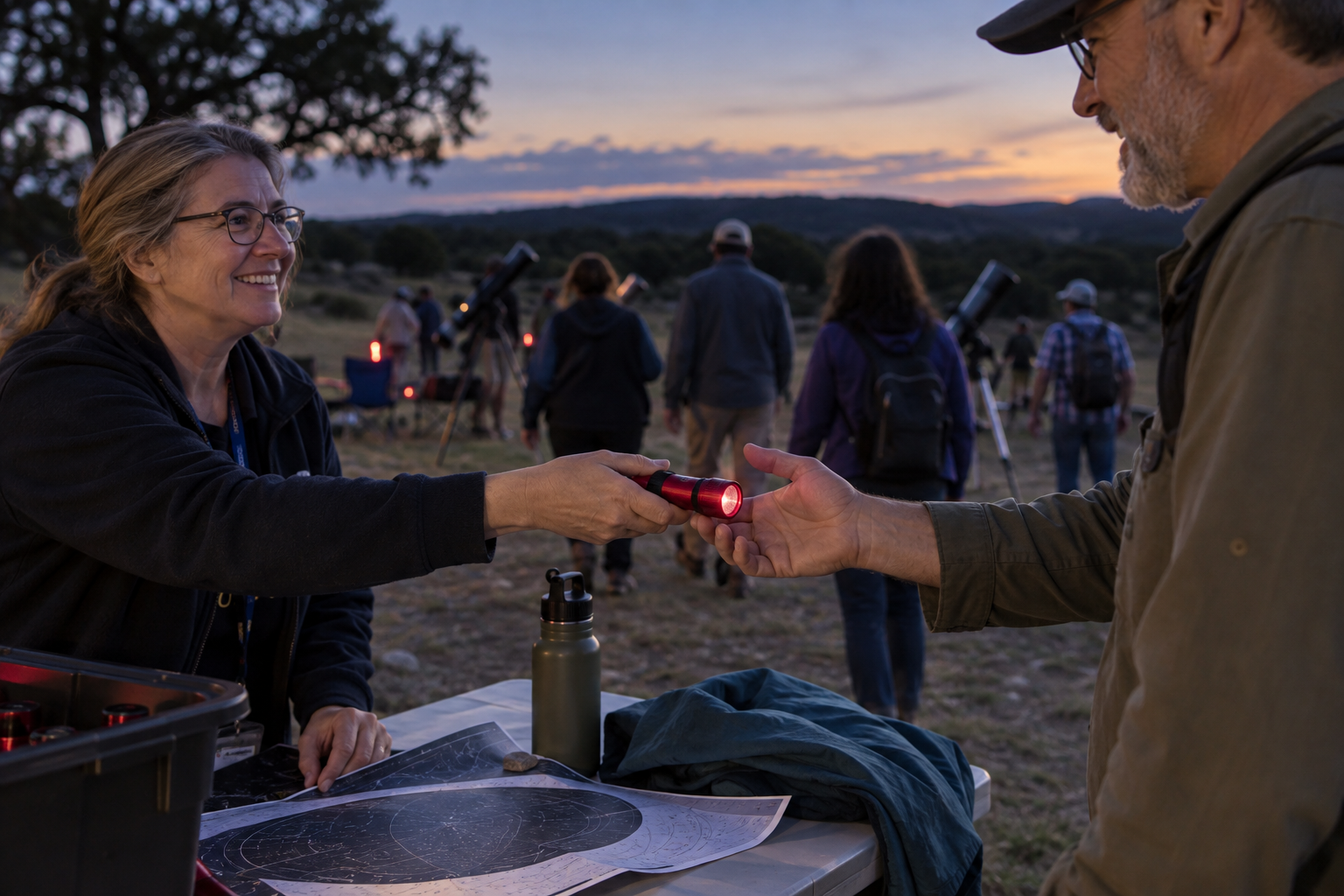
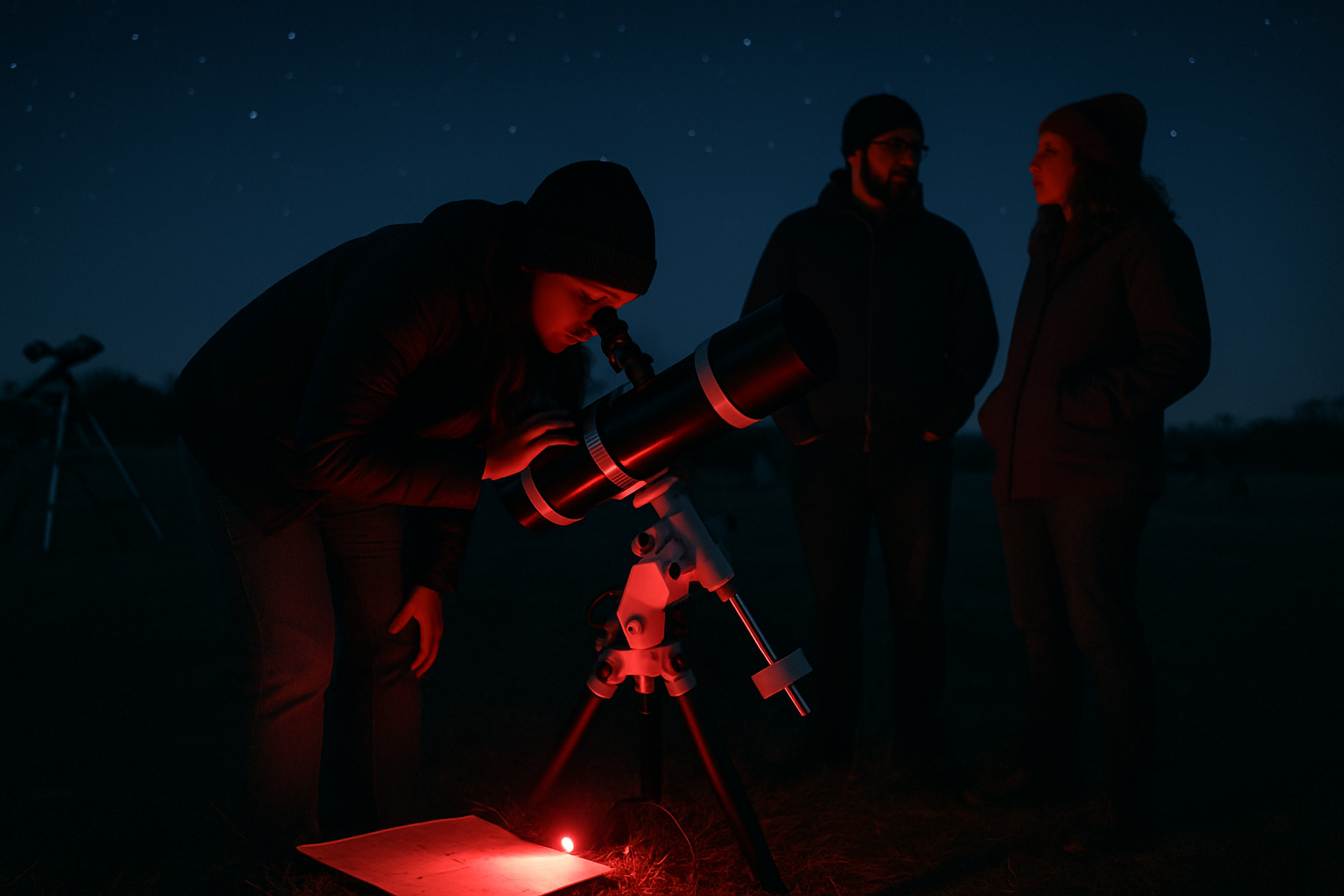
The most generous thing a first-timer can bring is respect for darkness. AAS notes that eyes need roughly 20–30 minutes to adapt, and a white flashlight, car headlight, or camera flash can undo that work for a whole group.
- Use a red flashlight and aim it toward the ground.
- Switch off phone flash, screen-brightness boosts, and bright smartwatch faces.
- Ask before touching a telescope, eyepiece, tripod, or focus knob.
- Keep your voice low near observers; questions are welcome.
- Leave aerosol sprays at home or apply a lotion or roll-on repellent before settling near the scopes.
- Do not use flash photography. AAS also asks visitors not to bring dogs onto the observing field except service dogs.
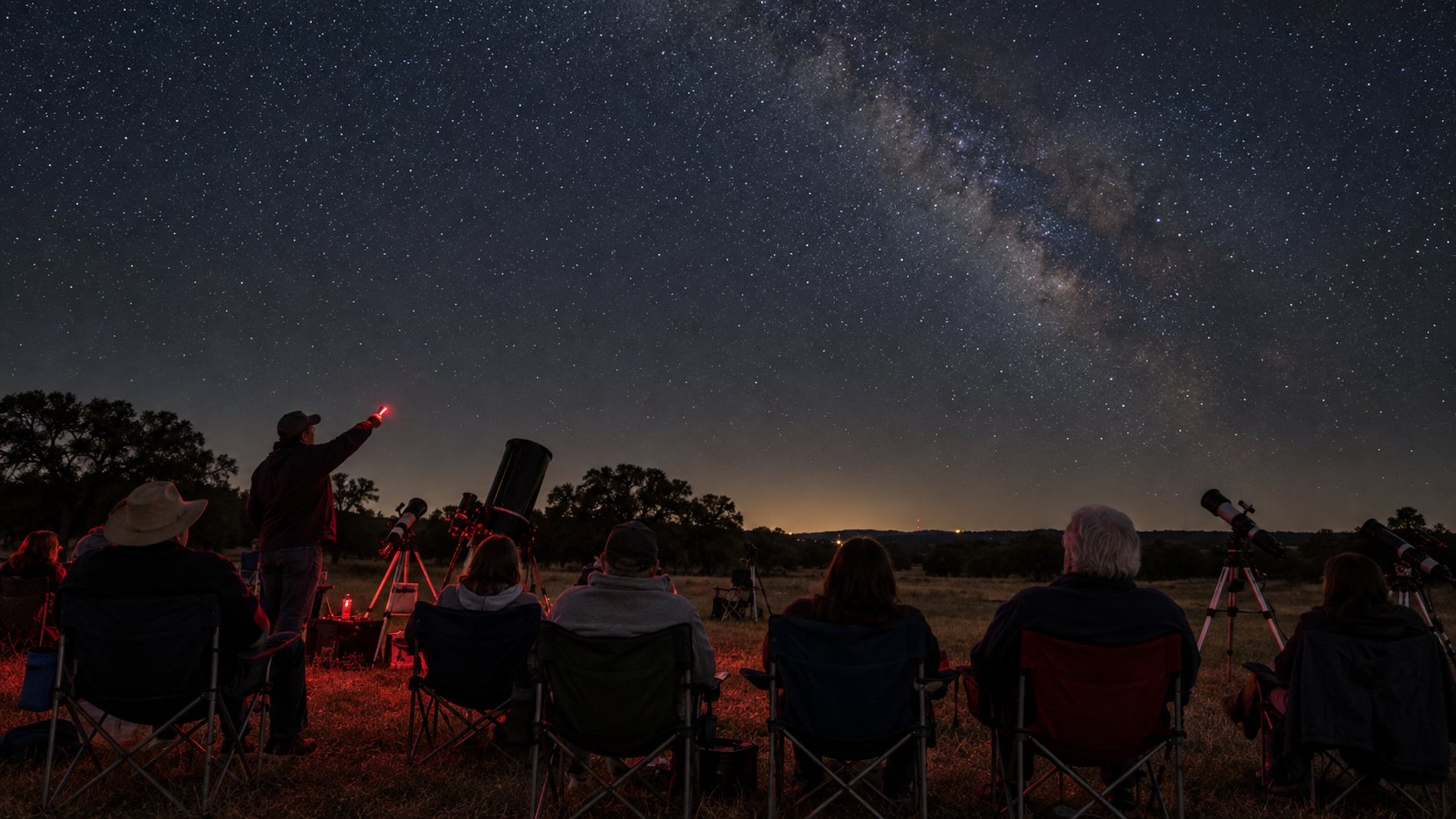
The etiquette is not a secret handshake. It is simply how a whole field gets to see fainter things together. That shared “wait, I can see it” moment is exactly why community astronomy nights are worth a spot on the calendar.
Make it an easy Austin weekend plan
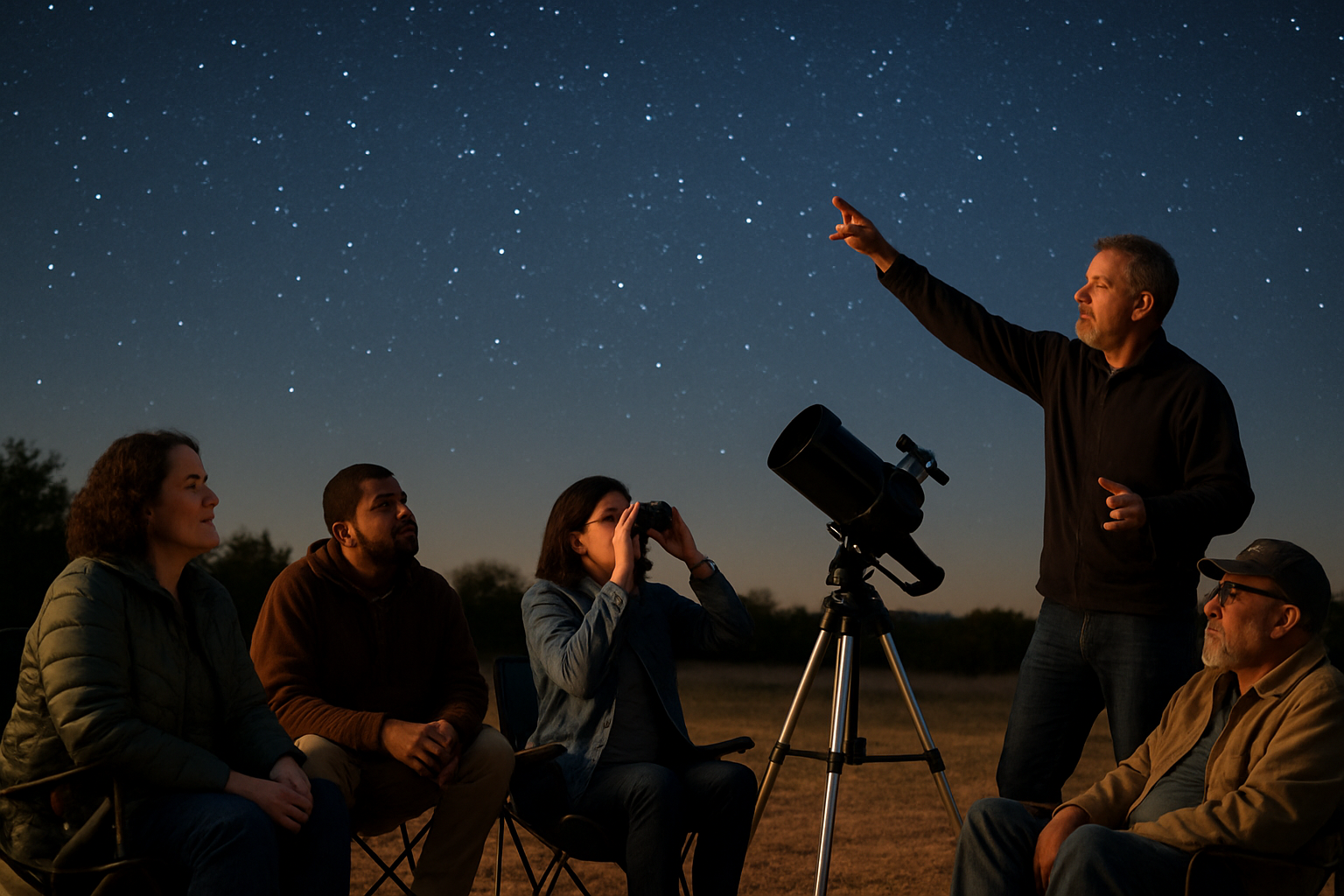
Choose Friday’s St. Elmo’s event if closeness and a lower-logistics evening will get you out the door. Choose Saturday’s Yegua Knobbs event if you are ready for a more outdoor-focused night and can arrive prepared for dark conditions. Keep the other date in your back pocket in case the weather changes.
For a different kind of no-pressure space outing, our Houston planetarium guide for September is a useful rainy-day inspiration. And when you want to turn a good observing night into the next one, join the Cosmic Match community free and make a clear-sky plan with people who are just as glad to look up.
FAQ
What time do the Austin star parties start this weekend?
The AAS schedule lists both the Friday, September 25 St. Elmo’s Brewing Co. event and the Saturday, September 26 Yegua Knobbs Preserve event for 7:00–10:30 p.m. Check the organizer’s listing again before leaving in case weather changes the plan.
Are the events free?
The public AAS schedule does not state an admission price for either event. Confirm current access and price details with the organizer rather than assuming.
What should I bring to my first star party?
Bring water, comfortable closed-toe shoes, a light layer, and a red flashlight or red-light solution. A telescope is optional; the best preparation is protecting everyone’s night vision.
What if it is cloudy or raining?
AAS describes its star parties as weather-dependent; clouds may allow an alternative program, while rain usually cancels the observing session. Check the official schedule and current updates on the day.