UT Austin Painter Hall Telescope Nights: A First-Timer Fall Guide
UT Austin Painter Hall Telescope Nights: A First-Timer Fall Guide
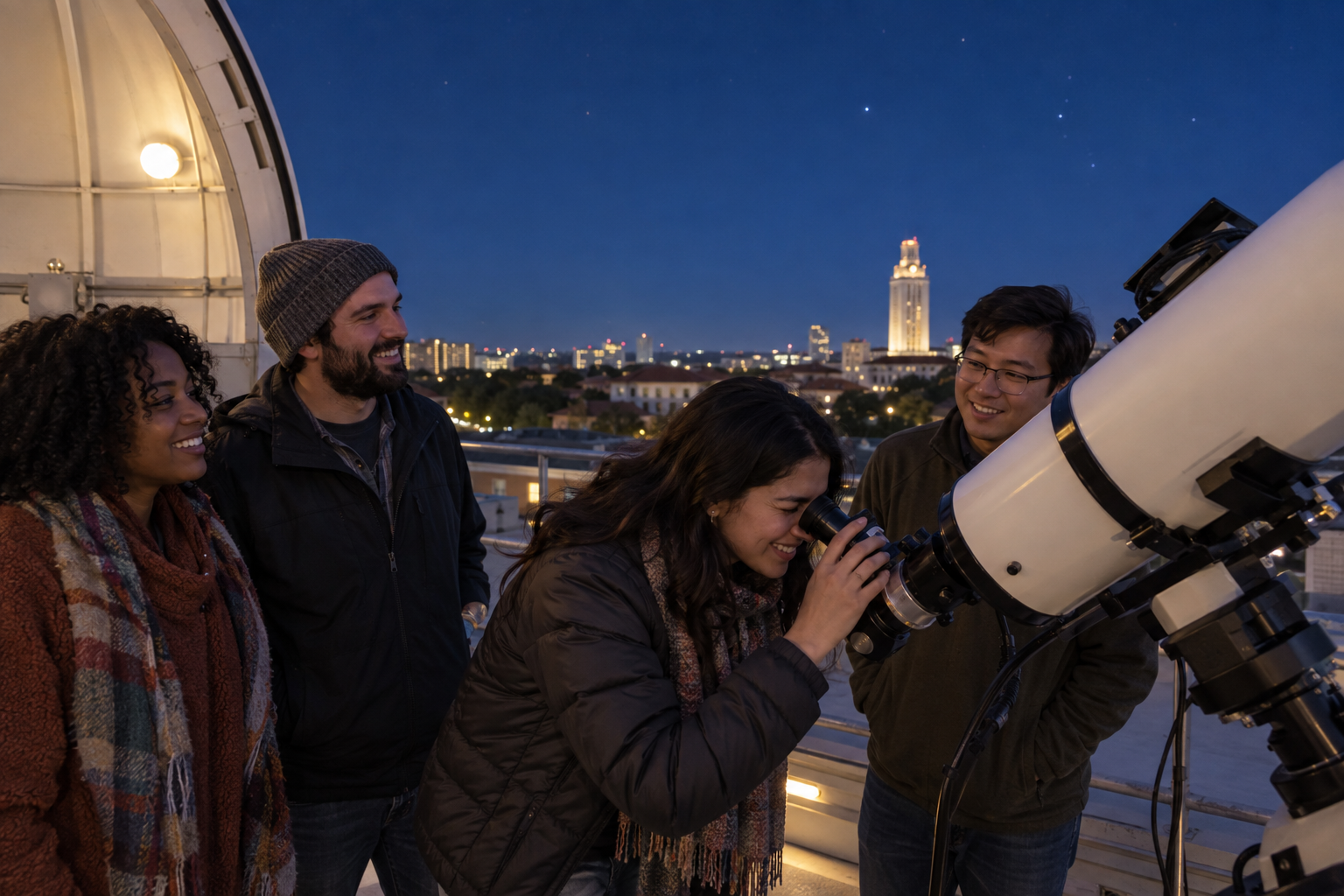
UT Austin’s Painter Hall Telescope public viewing is a remarkably easy first astronomy night: it is free, no reservation is required, and you do not need a telescope. For fall 2026, the University of Texas at Austin lists Friday and Saturday sessions from 8:00–10:00 p.m. through October 31, then 7:00–9:00 p.m. from November 6 through December 5. Before leaving, call the recorded status line at 512-232-4265 about 30–45 minutes before the scheduled start; clouds, weather, and some football Saturdays can change the plan.
The point is not to show up knowing the night sky. It is to give yourself a low-pressure first look through a telescope and a reason to talk with people who are just as delighted by a bright planet or a lunar crater.

What are UT Austin telescope viewing nights?
Every Friday and Saturday while UT is in session, the Department of Astronomy hosts free public viewing at the Painter Hall Telescope. The fall 2026 calendar is specific: September 4–October 31, 8:00–10:00 p.m.; November 6–December 5, 7:00–9:00 p.m. There is no viewing November 20–21 or November 27–28 for fall break. UT also warns that some Saturday sessions may be cancelled because of home football games.
This is a shared observing session, not a lecture you have to prepare for. What is available at the eyepiece depends on the clouds, haze, the season, and where objects sit in the sky. On a good night, staff and volunteers help visitors experience the sky through the telescope; on a marginal night, they make the weather call. That uncertainty is normal astronomy, not a failed outing.
UT’s own Painter Hall Telescope page is the source of truth for the current schedule. Check it again before you go—viewing times shift over the year.
How do I get to the Painter Hall Telescope?
Painter Hall sits at the corner of 24th Street and Inner Campus Drive, just north of the UT Tower. The telescope is not at street level, which is why a first visit can feel more intimidating on paper than it is in real life.
UT’s route is wonderfully concrete: enter Painter Hall from the east side at the “Celebrated Entrance,” take the elevator to the fifth floor, turn left, follow the hallway to its end, then take the staircase through the double doors on the left. On the sixth floor, turn right and follow the signs to the telescope.
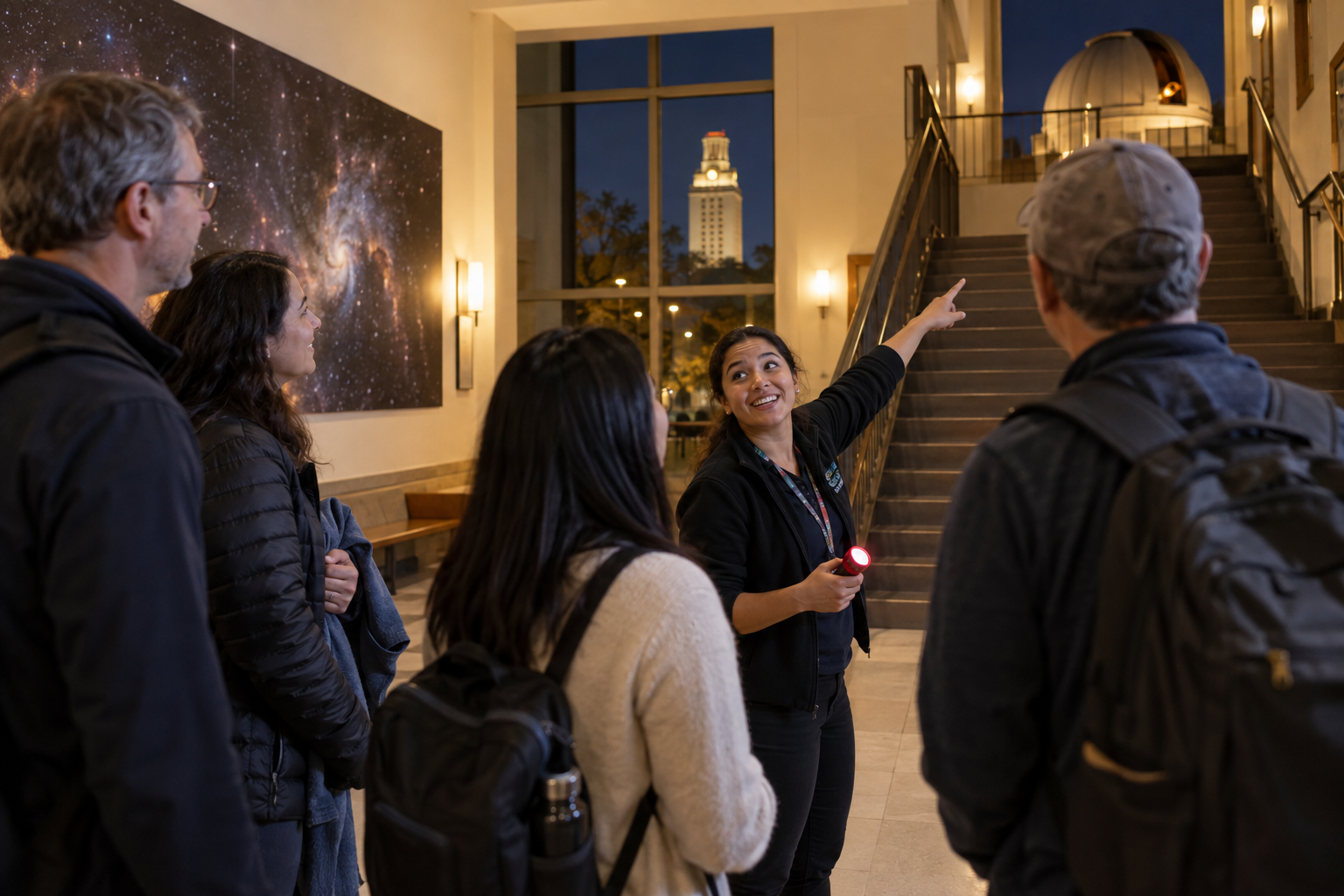
Give yourself time to find the entrance and settle in. UT links to a map and nearby garage information from its official telescope page; garage rates and campus conditions can change, so use the current sources rather than an old parking tip. If walking, transit, biking, or getting dropped off makes the evening smoother, that is a perfectly good plan too.
Do I need a reservation or my own telescope?
No. UT says no reservations are required, and visitors of all ages are welcome, with younger children under adult supervision. Small groups of 15 or fewer can attend a public viewing night without arranging anything in advance. For a group larger than 15, UT asks that you contact the department at least two weeks ahead; these are public nights, not private-event bookings.
You also do not need equipment. Let the on-site telescope be the whole reason for the visit. Bringing a telescope on a first visit usually adds logistics without adding joy; a curious question is more useful. A simple opener such as “What are we looking at tonight?” is enough.
That low barrier is part of why public observing is such a good way to meet people who share the hobby. You can also join the Cosmic Match community to find Austin neighbors for future sky plans—whether that means a museum afternoon, a balcony constellation check, or the next clear-sky outing.
What should I bring to a public observing night?
Pack for comfort and for keeping the shared space easy. Austin evenings can still be warm in early fall and surprisingly breezy later in the season.
- Water and a small snack for before or after the session.
- Comfortable shoes for campus walking and stairs.
- A light layer; rooftop or upper-floor spaces can feel cooler than the forecast suggests.
- Your phone charged, brightness turned down, with flash disabled.
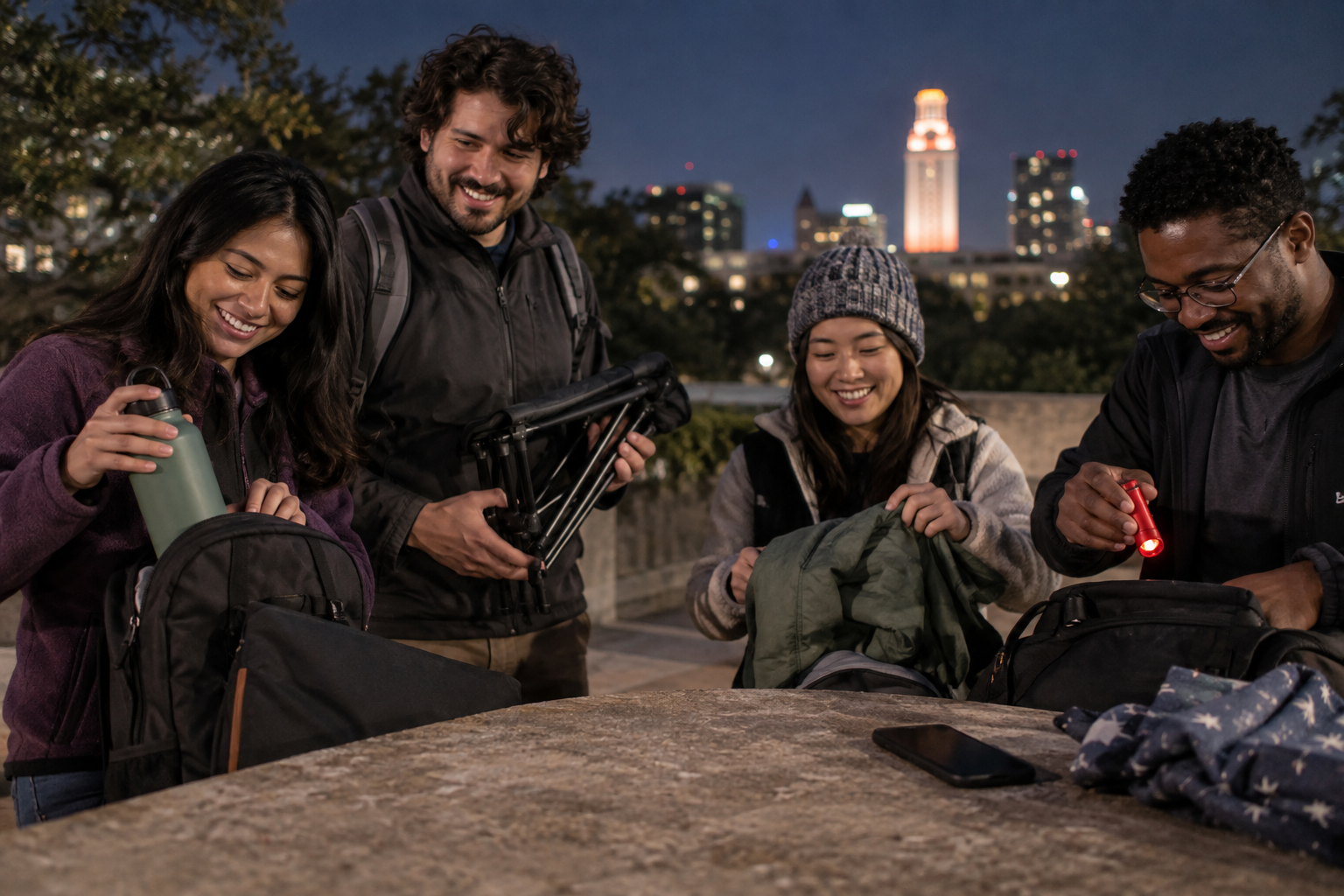
- A small red flashlight if you have one; use it pointed at the ground.
Leave the elaborate gear bag at home. White light and bright phone screens make it harder for everyone’s eyes to adjust to the dark. Take a moment to step back from the telescope line, listen to the host, and ask before touching any equipment. It is the fastest way to feel like a considerate regular rather than a visitor who has to know everything.
For another nearby first-timer experience, our Inks Lake Star Party guide explains red-light etiquette and what shared observing feels like outdoors. If you want a daytime companion stop, the Hobby-Eberly Telescope exhibit in Austin makes the science behind a big telescope feel much less abstract.
How do I check weather and same-night status?
Do not guess from a sunny afternoon. UT tells visitors to call 512-232-4265 for status updates. The recording is updated about 30–45 minutes before the scheduled start time on public viewing nights. If you hear an old message, UT notes that the line may not yet have been updated for the current date.
That call is the most useful final step in your plan. Check it after you have eaten and packed, before you commit to the trip across town. Also look at UT’s Painter Hall page for schedule updates, especially around football weekends and academic breaks.
What happens when I arrive?
Expect a relaxed, small-scale science experience rather than a polished show. Follow posted directions, be patient if there is a brief wait, and let the people running the session set the pace. The best first-time move is simple: watch how others approach the telescope, then ask what object is in view and how far away it is.
If the sky is cloudy or a session is cancelled, you have not done anything wrong by showing up curious. Turn the plan into a coffee, a campus walk, or a future observing date with people who also want a little more sky in their week. Cosmic Match is here for exactly those shared-passion connections; sign up free at cosmicmatch.io when you want to make the next plan easier.
A 10-minute first-timer plan
- On Friday or Saturday, check the official Painter Hall schedule and confirm the seasonal hours.
- About 30–45 minutes before the session, call 512-232-4265 for the current weather/status message.
- Head to Painter Hall at 24th Street and Inner Campus Drive with a little buffer for campus access and parking.
- Enter on the east side, take the elevator to the fifth floor, then follow UT’s directions and signs up to the telescope.
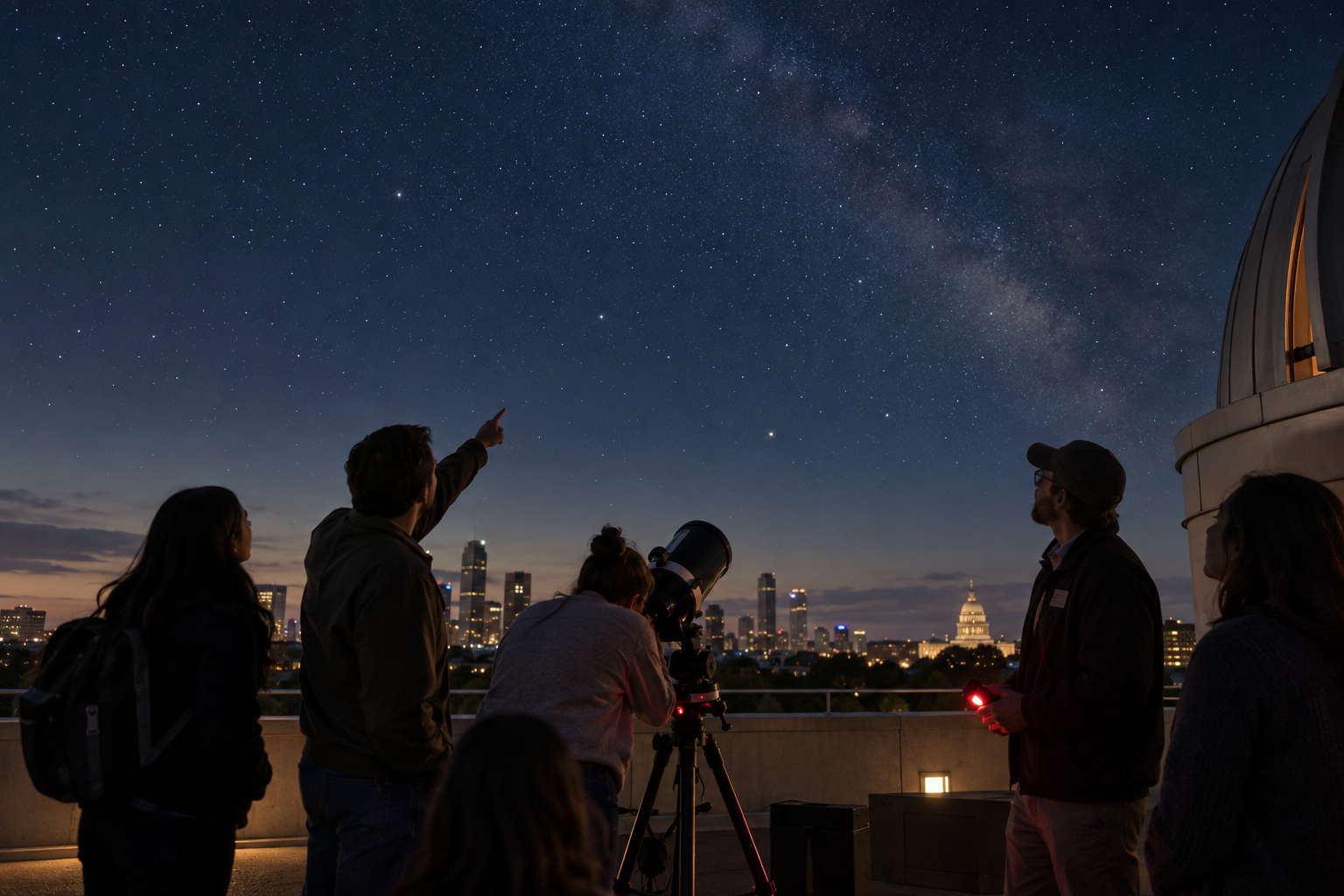
- Keep lights low, ask one good question, and enjoy the view without trying to turn your first visit into a gear exam.
FAQ
Is Painter Hall Telescope viewing free?
Yes. UT Austin describes its public Friday and Saturday viewing nights as free. No reservation is required for regular visitors.
What time are UT Austin telescope viewing nights in fall 2026?
UT lists 8:00–10:00 p.m. from September 4 through October 31, then 7:00–9:00 p.m. from November 6 through December 5. Check the official page before each visit because schedules can change.
Do I need a telescope or astronomy experience?
No. The public session is designed for visitors, and the Painter Hall Telescope is the equipment you are there to use. Curiosity is enough.
What number should I call if the weather looks questionable?
Call 512-232-4265 about 30–45 minutes before the scheduled start. UT updates that recording on public viewing nights.