September 8 Jupiter Occultation: A Safe City Guide for Austin, Houston, and LA
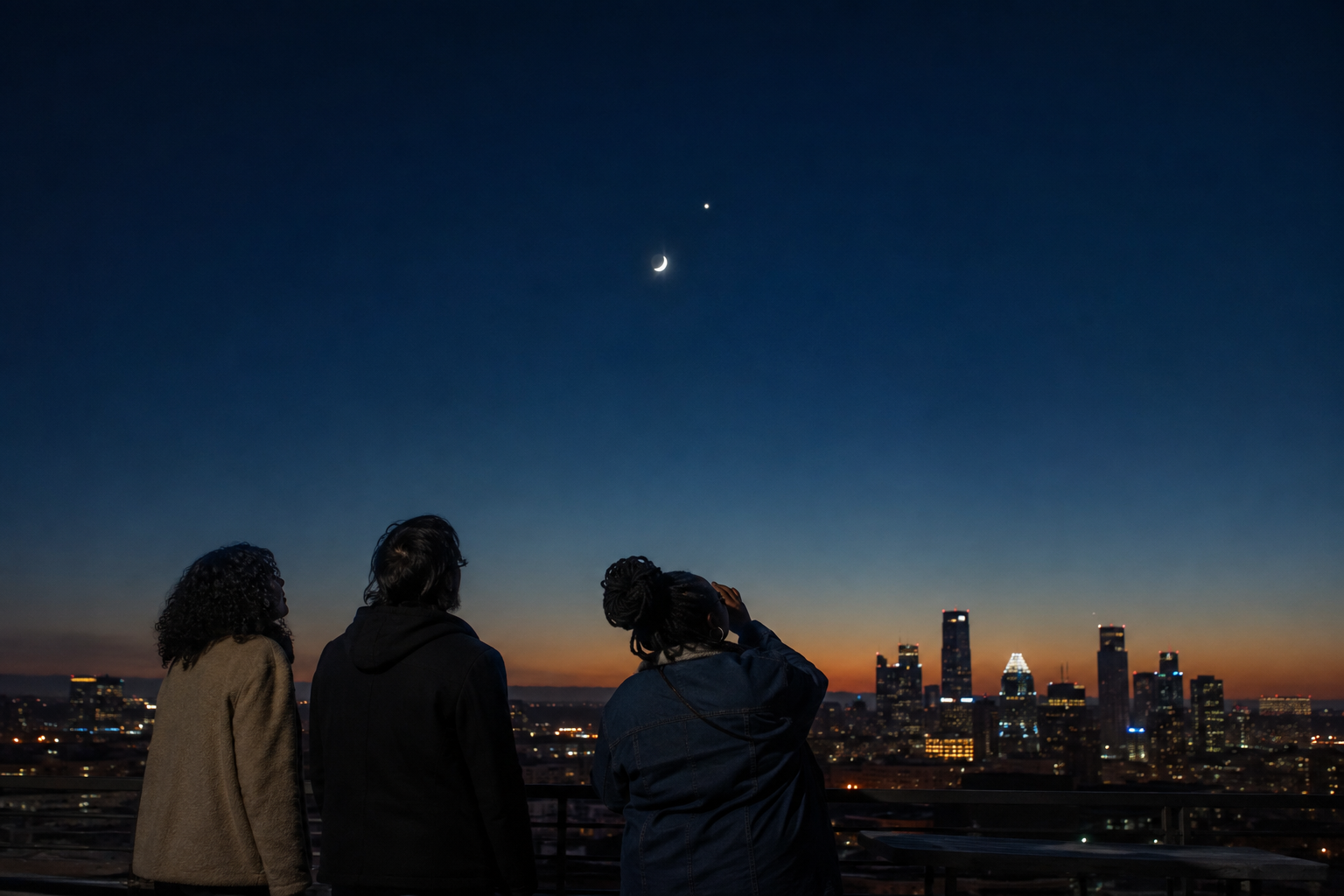
On Tuesday, September 8, Austin and Houston have a rare daytime lunar occultation of Jupiter—but the easy, community-friendly part happens before sunrise in all three launch cities: a thin waning crescent Moon, Jupiter, and the Beehive Cluster share the predawn sky. Los Angeles is outside the occultation path, yet it still gets that beautiful close pairing. For most of us, the best plan is simple: look up before dawn with friends, then keep all optics away from the Sun later in the day.

What is happening on September 8?
An occultation is when one celestial body passes in front of another. On September 8, the Moon passes in front of Jupiter along a daylight path that crosses much of the United States and Canada. Sky & Telescope’s observing preview independently confirms both the daytime circumstances and the limited path.
That headline can sound like an all-day, all-city show. It is not. The part anyone can enjoy without equipment is the predawn grouping: a 7%-illuminated waning crescent Moon near Jupiter, with the Beehive Cluster nearby. The later occultation is different: it occurs in daylight and is location-dependent.
For another no-gear plan to keep handy, see our September no-telescope skywatching field guide.
What can you see before sunrise in Austin, Houston, and LA?
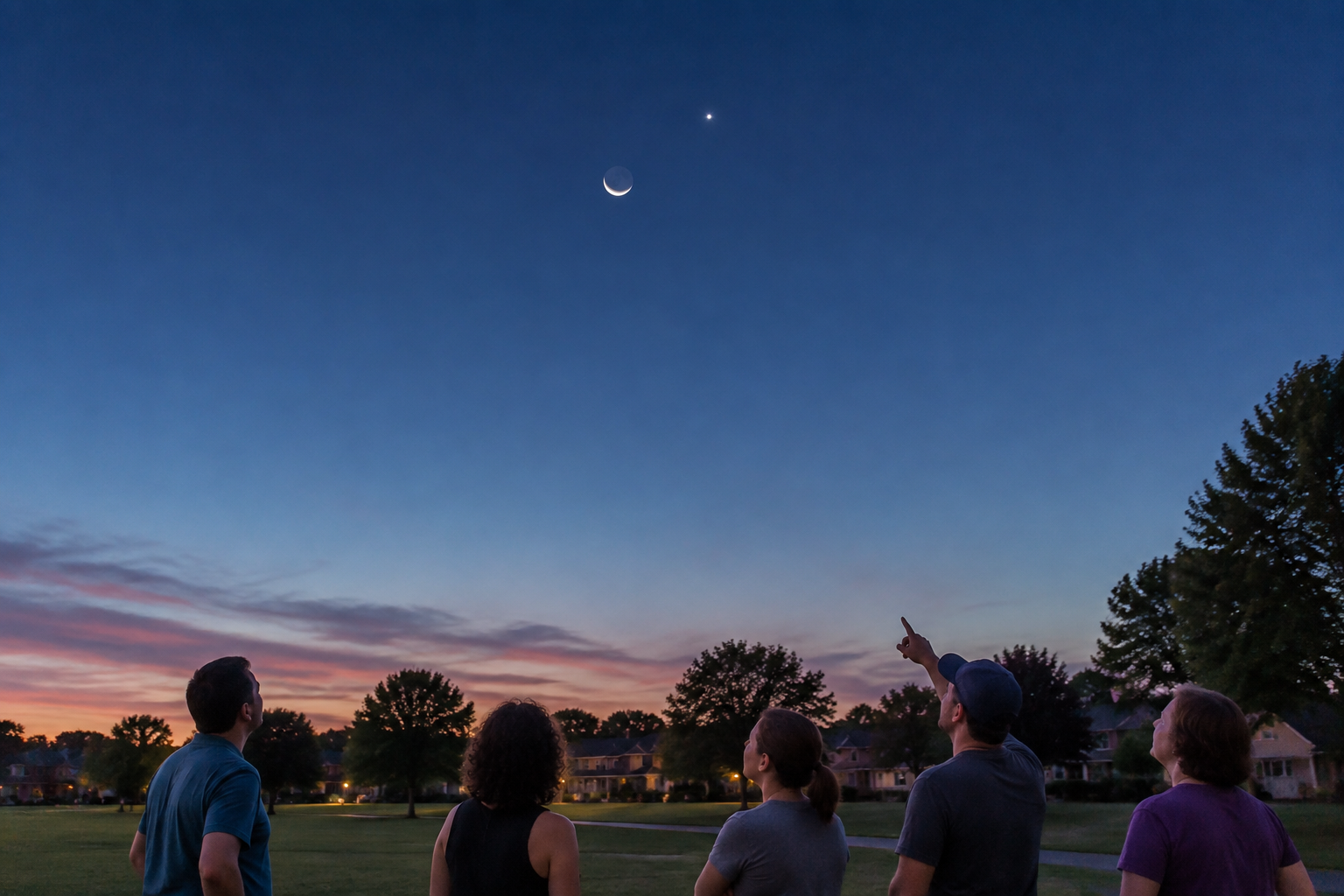
Start with the same goal in every city: find an open view of the pre-sunrise sky, give your eyes a few minutes away from bright screens, and look for the slim crescent Moon. Jupiter is the steady, bright point nearby. The Beehive Cluster is a bonus—not a requirement—and it may be tough from a bright neighborhood.
- Austin: The local forecast currently leans mostly sunny for September 8, but check the sky before you leave. A rooftop, park, or apartment balcony with a clear horizon works well for the predawn pairing. Meet other local skywatchers through Cosmic Match in Austin.
- Houston: Forecast guidance currently calls for scattered clouds, so make the pre-dawn look your priority and keep expectations flexible. If the Moon is visible, Jupiter should be the easier companion. Find an observing buddy via Cosmic Match in Houston.
- Los Angeles: LA is outside the September 8 occultation path. That is not a reason to skip the morning: the Moon–Jupiter–Beehive close pairing is still the city’s accessible event. Plan a low-pressure look with Los Angeles skywatchers on Cosmic Match.
No telescope is needed. Bring a warm drink, avoid blasting a white phone screen, and give the horizon a few minutes. This is exactly the kind of small shared sky moment that can turn a weekday morning into a story.
When does Jupiter disappear behind the Moon in Texas?
For people following an experienced astronomy club’s formal plan, the assigned local contact calculations from In-The-Sky.org put the event in broad daylight:
| City | Jupiter disappearance | Reappearance begins | What that means |
|---|---|---|---|
| Austin | 2:27 p.m. CDT | 2:47 p.m. CDT | Daylight occultation; not a casual visual target |
| Houston | 2:24 p.m. CDT | 2:54 p.m. CDT | Daylight occultation; not a casual visual target |
| Los Angeles | — | — | Outside the occultation path |
Those city times are useful for understanding the geometry, not a DIY invitation to hunt Jupiter in daylight. Conditions vary with an observer’s exact location, haze, and equipment. Check a current location-specific ephemeris before any specialist observing session.
Is it safe to use a telescope or binoculars for this occultation?
Not for casual observers. Do not sweep the daytime sky with binoculars, a telescope, a camera lens, or any other optical aid looking for Jupiter. The Sun is dangerous to eyes and equipment; accidental exposure through unfiltered optics can cause permanent eye injury.
If you are not already trained in daytime planetary observing with a safe, controlled setup, skip the afternoon optics entirely. Never point unfiltered optics at or near the Sun. Never let a child use daylight optics unsupervised. The satisfying, safe alternative is the predawn naked-eye pairing—no gear, no rushing, no risk.
Experienced club observers may have procedures for locating the Moon while keeping the Sun physically blocked by a fixed structure and using properly controlled equipment. That is a specialist activity, not a general how-to. The sky will offer plenty more Jupiter views after dark.
A better way to make the morning social
Choose an easy gathering point: a friend’s driveway, an apartment courtyard, a neighborhood overlook, or a quiet park where you can leave before the day starts. Make it a “Moon first, Jupiter second” challenge. Whoever spots the crescent calls it out; everyone else takes a turn. If clouds win, you still got an early coffee and a reason to plan the next skywatch.
Cosmic Match is built for those small moments—finding people who think a five-minute look at the sky is a perfectly good reason to get together. Join free at cosmicmatch.io and connect with people who want to keep looking up.
Your September 8 checklist
- Check clouds shortly before you head out; September forecasts can change.
- Set an alarm for before sunrise and choose an open view.
- Look for the crescent Moon first, then Jupiter.
- Enjoy the view with your eyes only.
- Treat the afternoon Texas occultation as a club-observer event—and keep all optics away from the Sun.
FAQ
Can I see the Jupiter occultation from Los Angeles?
No. Los Angeles is outside the September 8 occultation path. You can still see the predawn close pairing of the waning crescent Moon and Jupiter.
Do I need a telescope to see Jupiter on September 8?
No. The predawn Moon–Jupiter pairing is the recommended no-equipment experience. Avoid daylight optical searches unless you are an experienced observer operating within a trained club’s safety procedures.
What time is the occultation in Austin and Houston?
The current assigned city calculations list 2:27 p.m. to 2:47 p.m. CDT in Austin and 2:24 p.m. to 2:54 p.m. CDT in Houston. These are daylight contact times, not general viewing instructions.
What if it is cloudy?
Do not force it. Check again close to dawn, then make a backup plan for the next clear night with your local Cosmic Match community.