September 14–26: Your No-Telescope Skywatching Field Guide
September 14–26 offers a genuinely beginner-friendly run of sky moments: the Moon can lead you to Antares and Sagittarius, Venus reaches its brightest evening appearance on September 18, and the Harvest Moon rises close to Saturn on September 26. You need no telescope, no app, and no astronomy vocabulary—just a safe place with a clear view and a few unhurried minutes after sunset.
This is a two-week field guide for Austin, Houston, and Los Angeles. Start with the Moon, let the horizon set the schedule, and treat clouds as a reason to try again tomorrow rather than a failed observation.
What can you see without a telescope from September 14–26?
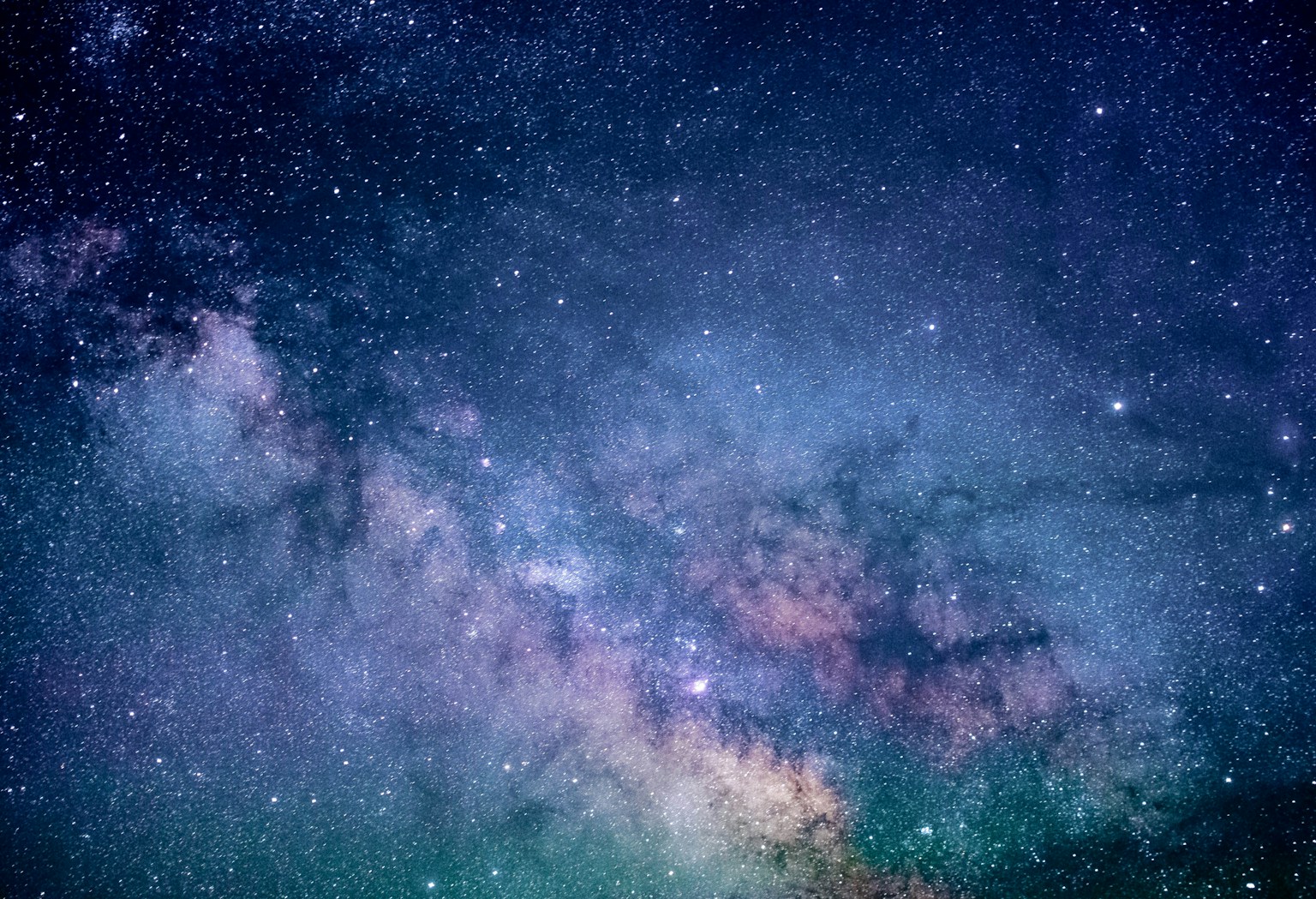
Quite a lot. From September 14 through 20, look south about an hour after sunset. The Moon moves night by night past Antares, the warm reddish star marking Scorpius’s heart, then through the familiar-looking Teapot asterism in Sagittarius. NASA notes that under an especially dark sky, the hazy “steam” above that Teapot points toward the dense center of the Milky Way.
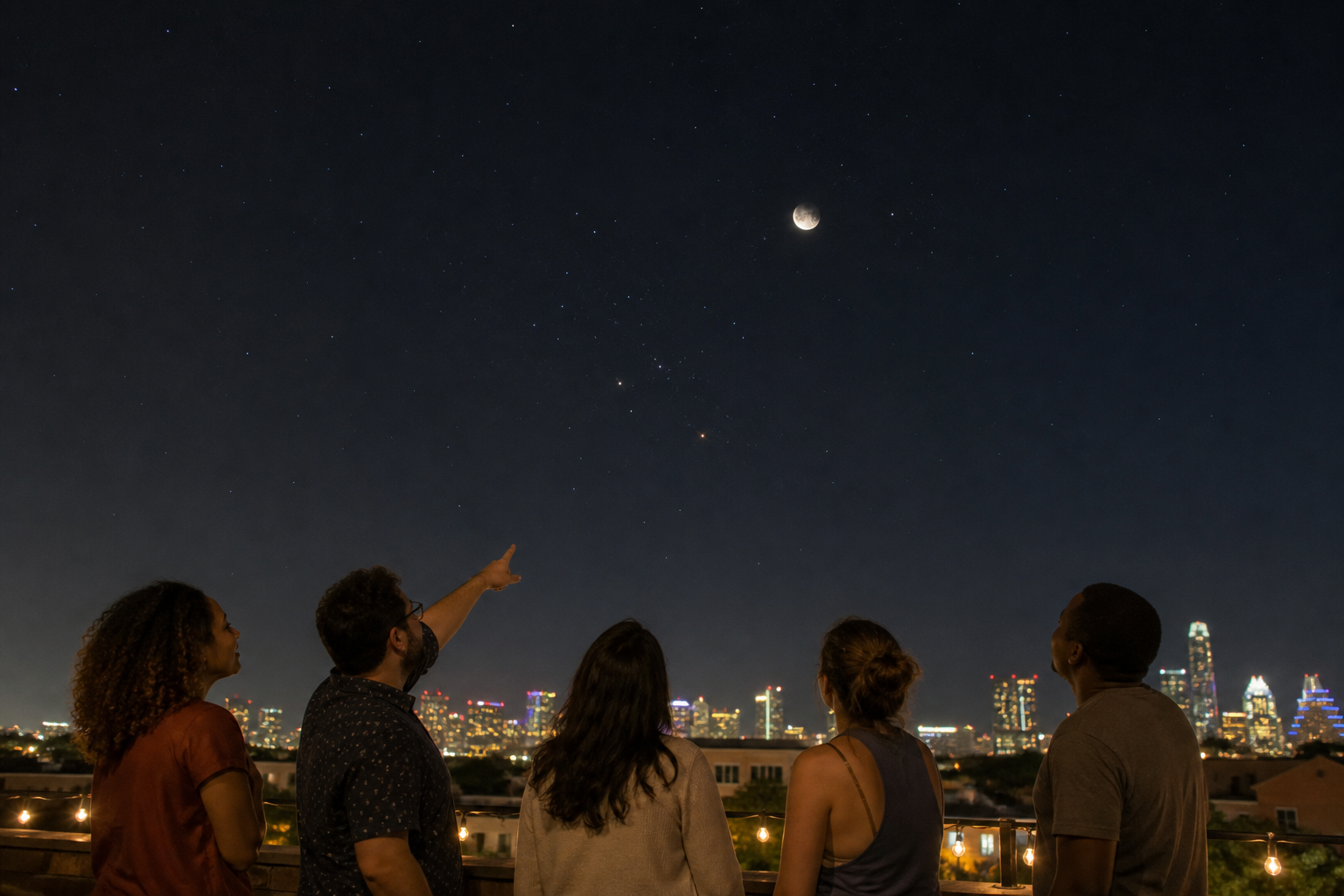
In a city, don’t make the Milky Way your pass/fail test; light pollution makes it difficult. The Moon, Antares, and the broader shape of the Teapot are the win. Begin by facing south, give your eyes a few minutes away from bright screens, and use the Moon as your moving landmark. A relaxed first outing is more useful than trying to identify every star.
For more low-pressure observing ideas, browse our beginner astronomy guides, or borrow the easy first-timer rhythm from this Burke Baker Planetarium guide in Houston.
How do I find Venus at its brightest on September 18?
On September 18, Venus reaches peak brilliance for this evening appearance. Shortly after sunset, look low in the west. It should be the point of light that seems almost unfairly brighter than the surrounding stars. A clear, unobstructed western horizon matters more than any piece of gear.
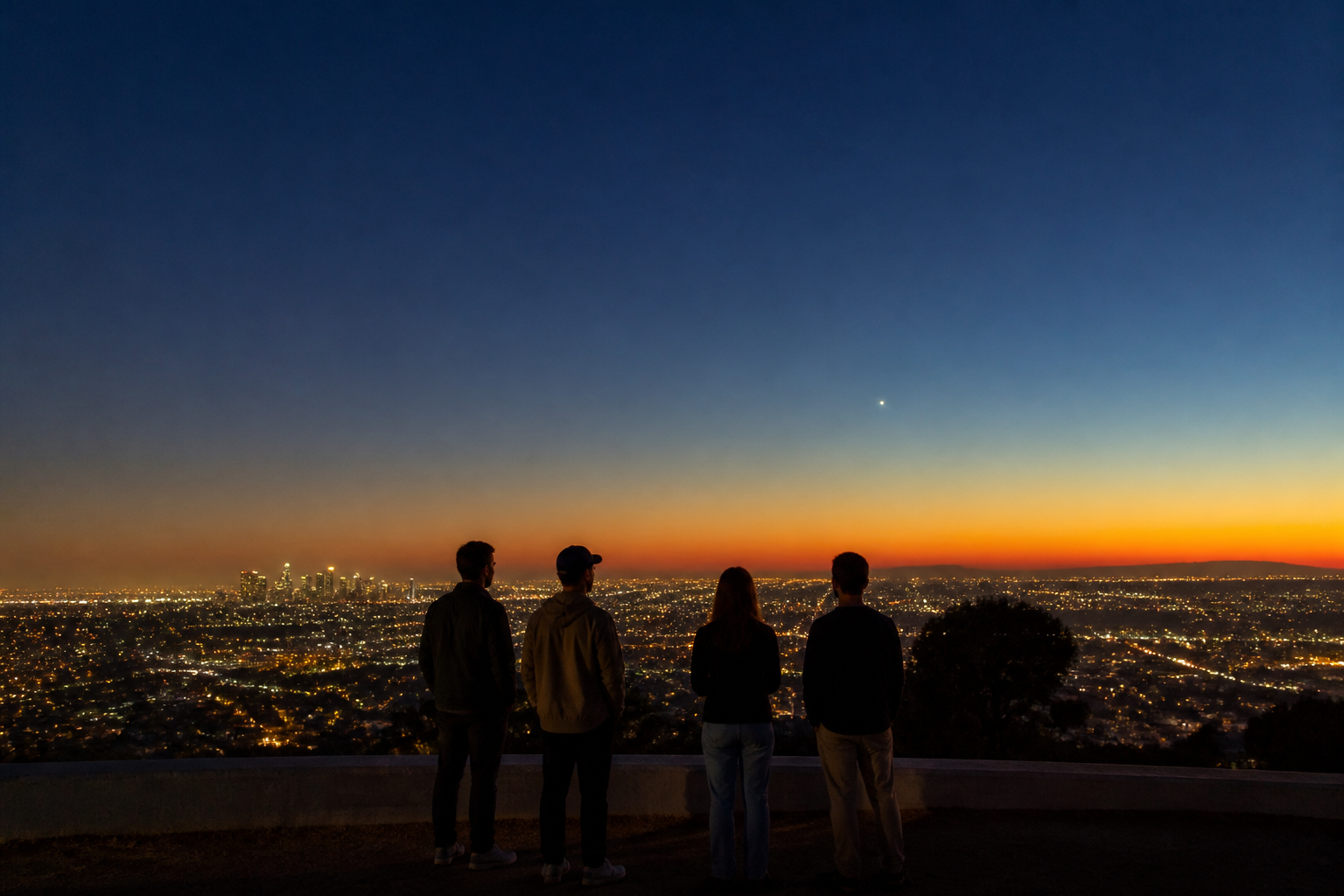
For Austin, that may mean a west-facing overlook or an open park edge; in Houston, seek a sightline not blocked by towers or tree canopy; in Los Angeles, choose a legal overlook or beach-facing vista with the ocean-side horizon open. Arrive before sunset, never use binoculars until the Sun is fully below the horizon, and keep your attention on footing and traffic. If Venus disappears behind a building before you spot it, the location—not your eyesight—is usually the culprit.
If you enjoyed the earlier pairing in the evening sky, our Venus and Spica city guide is a useful companion. Want someone local to share the “is that it?” moment? Join the Cosmic Match community free and find people who are excited to look up too.
What does the September equinox mean for skywatchers?
The September equinox lands on September 22. It is the moment when the Sun is directly above Earth’s equator; fall begins in the Northern Hemisphere and spring in the Southern Hemisphere. Day and night are close to equal in length around the world, though they are not exactly twelve hours everywhere because of atmospheric refraction and the way sunrise and sunset are defined.
For this field guide, the equinox is a gentle checkpoint, not a separate assignment: evenings are changing, and a short after-sunset sky habit is about to feel different. Bring a light layer, look up, and keep your next outing simple. If you want a built-in social start, use the format of a first rooftop astronomy night in Houston: choose a public, safe setting and agree on one object to find together.
How can I see the Harvest Moon and Saturn on September 26?
On September 26, the Harvest Moon rises in the east shortly after sunset with Saturn nearby. The Harvest Moon is the full Moon nearest the Northern Hemisphere’s autumnal equinox; timeanddate places the exact full-Moon moment at 16:49 UTC that day. You do not need to chase a precise minute—plan to be east-facing around sunset, then watch the horizon as the sky darkens.
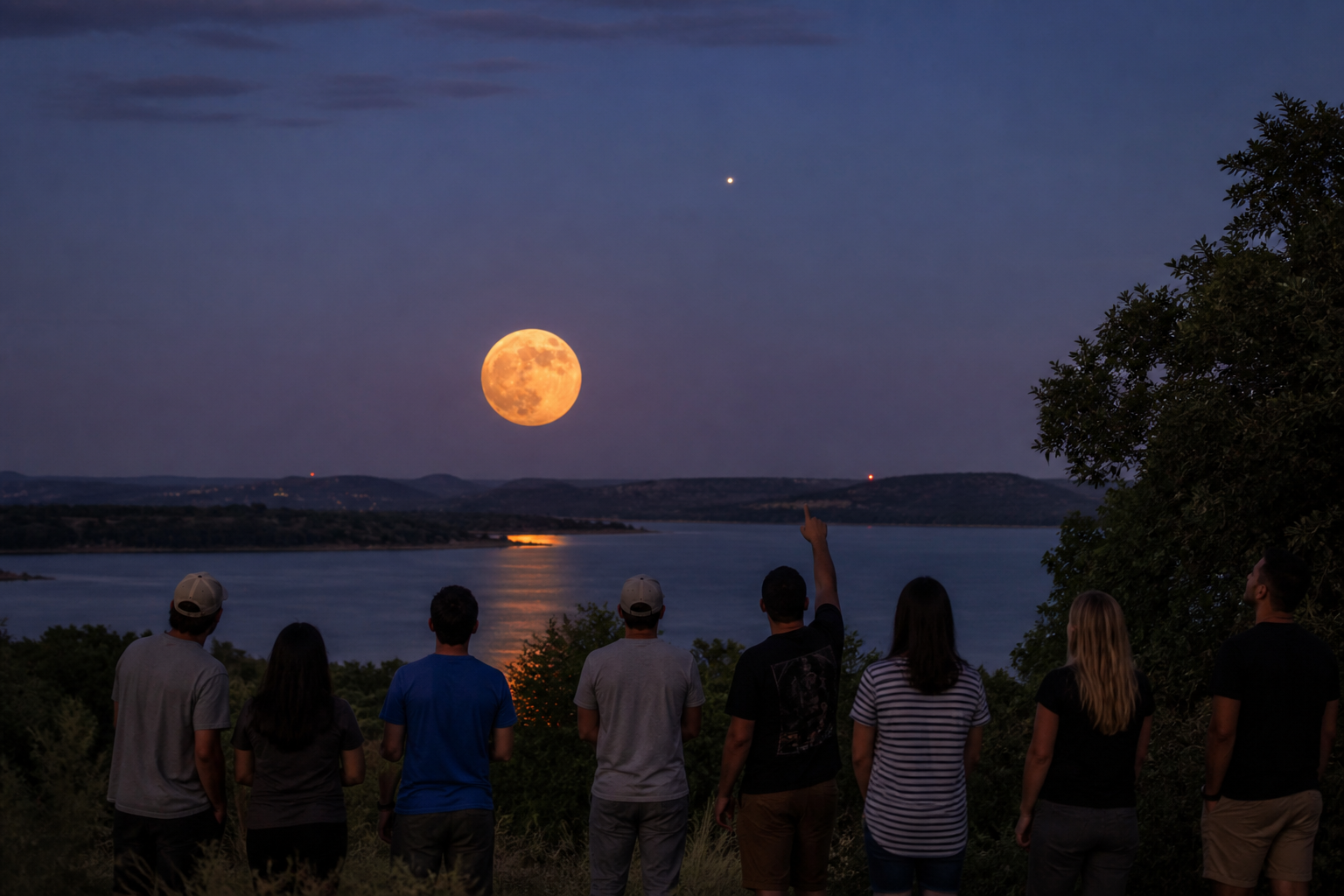
Saturn is the easy planetary companion: it is visible to the unaided eye as a steady, golden-looking point nearby. Its rings are only the beginning—Hubble has just revealed a developing 10-sided wave at Saturn’s south pole. Neptune is not a naked-eye target. At about magnitude 8, it needs binoculars or a telescope, plus favorable conditions; it is absolutely fine to leave it off a no-equipment checklist. The point is to notice the Moon’s changing color and scale near the horizon, then find Saturn beside it.
Austin observers can favor open eastern views around Lady Bird Lake or a hilltop with a legal public sightline. In Houston, water and flat horizons can help, but humidity and cloud cover can be decisive—make a backup plan. In Los Angeles, aim for an east-facing overlook away from the brightest direct lights. In every city, check the local forecast on the day; this guide intentionally avoids invented city-specific rise times.
Your zero-equipment checklist
- A clear horizon in the direction you need: south for September 14–20, west for Venus, east for the Harvest Moon.
- Ten to twenty minutes, with a little extra patience for haze or buildings.
- Comfortable shoes, water, and a layer for the post-sunset temperature change.
- A red-screen setting or phone kept dim and away while your eyes adjust.
- A friend or small group, plus a simple target for the night.
No gear can be a feature, not a limitation. It removes the pressure to “do astronomy correctly” and leaves room for noticing what is already overhead. Sign up at Cosmic Match to connect with other space-minded locals, swap clear-sky plans, and make the next look-up less solitary.
Sources
FAQ
Do I need a telescope for the September 2026 sky events?
No. The Moon, Antares, the Sagittarius Teapot, Venus, and Saturn are all visible without a telescope under suitable skies. Neptune is the exception in this guide: at roughly magnitude 8, it requires binoculars or a telescope.
What is the best night for Venus in September 2026?
September 18 is the featured date because Venus reaches peak brilliance for this evening appearance. Look low in the western sky shortly after sunset from a place with an open horizon.
Can I see the Milky Way from Austin, Houston, or Los Angeles?
It is difficult from bright urban neighborhoods, but the Moon, Antares, and the Teapot remain worthwhile city targets. A darker site outside the city gives you a better chance of seeing the Milky Way’s hazy core.
When should I look for the Harvest Moon and Saturn?
Face east shortly after sunset on September 26 and give the horizon time to darken. The full Moon will be the obvious target, with Saturn visible nearby as a steady point of light.