Venus and Spica at Dusk: A No-Telescope City Guide for Sept. 1
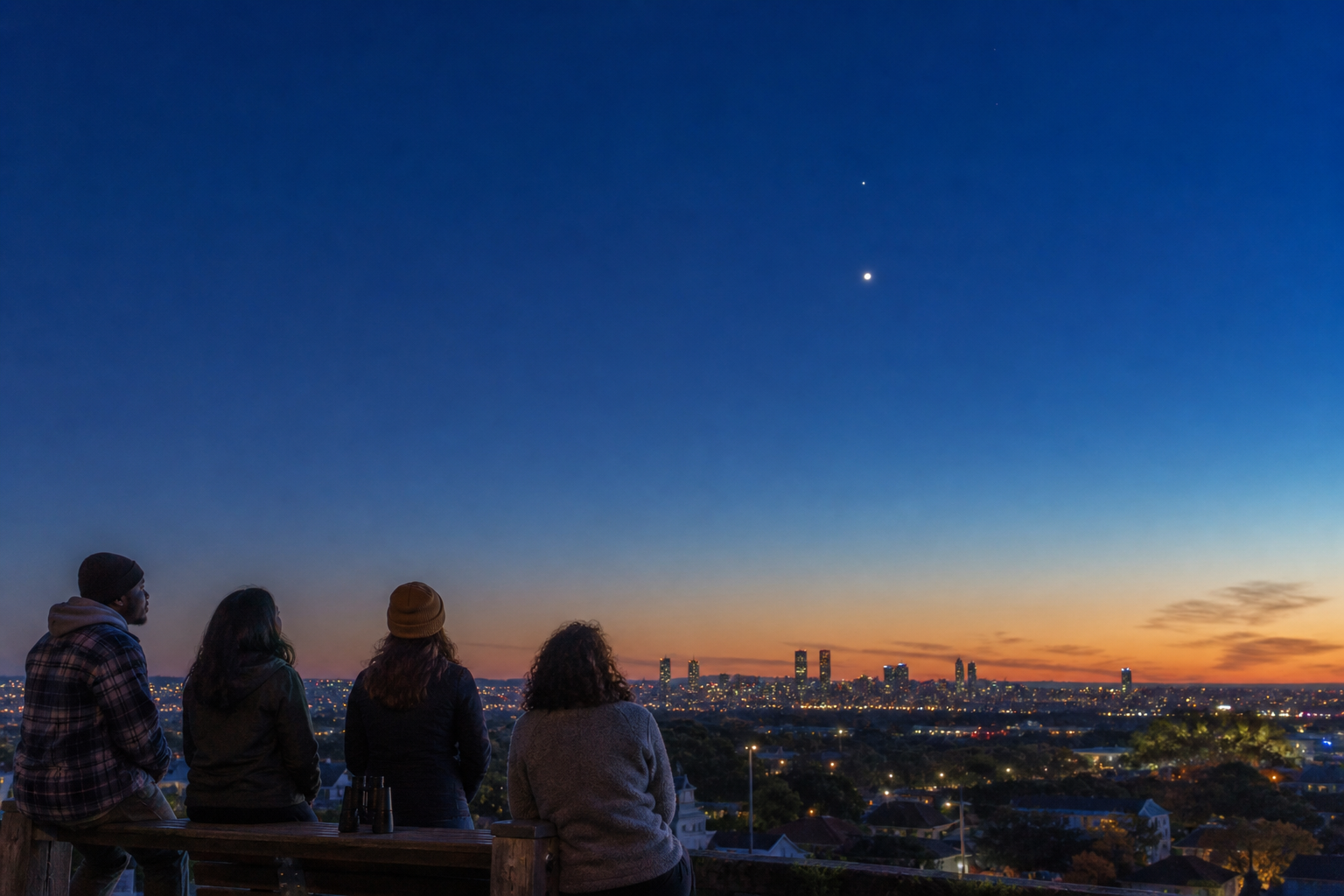
Venus and Spica will sit only about 1.5° apart low in the west-southwest on the evening of Tuesday, September 1, 2026. From Austin, Houston, and Los Angeles, you can see the pairing without a telescope—but you need a clear horizon, a short window after sunset, and realistic expectations: Venus will leap out first; Spica is much fainter in the twilight glow. Get outside about 25–40 minutes after your local sunset, find Venus, then look just above it for the star.
The close approach falls around the September 1–2 date boundary depending on the convention and time zone. What matters for city observers is the visible dusk pairing on September 1 and the nearby evenings. McDonald Observatory’s current skywatching calendar and Astronomy magazine’s weekly sky guide both flag the view as low in the west-southwest. Think quick sky walk, not an all-night event.
What is the Venus–Spica conjunction on September 1?
Venus, the brilliant Evening Star, passes close to Spica, Virgo’s brightest star. They are not close in space—Venus is a nearby planet and Spica is a distant stellar system—but they line up from our viewpoint. Their separation is about 1.5° to 1.7°, comfortably inside a typical binocular field of view. Venus is around magnitude –4.6 while Spica is near magnitude +1.0, so Venus is roughly 160 times brighter to the eye. That huge brightness difference is why finding the planet is easy and spotting the star is the challenge.
When and where should you look from Austin, Houston, and Los Angeles?
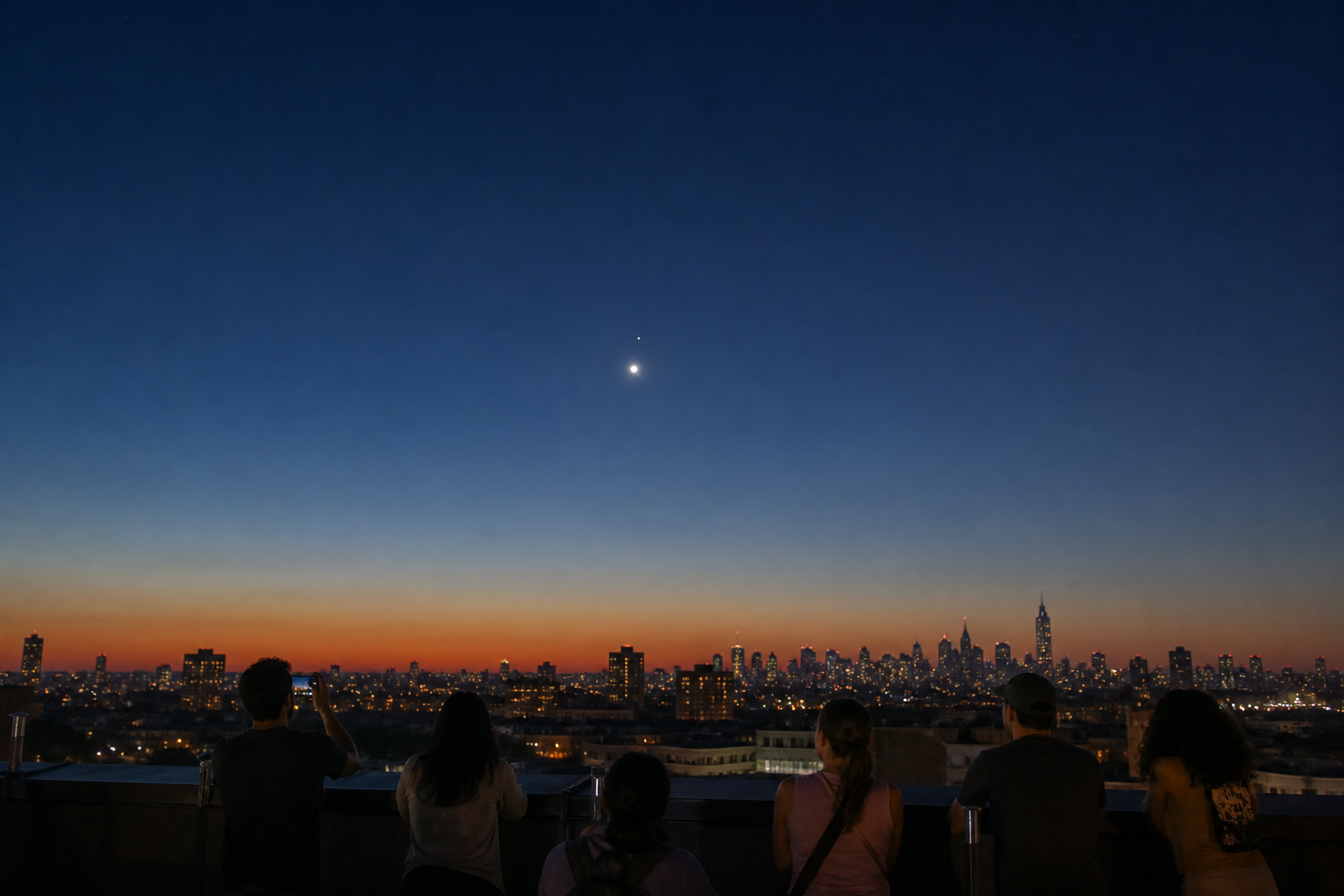
Start 25–40 minutes after sunset and face west-southwest. Do not wait for full darkness: the pair is dropping toward the horizon every minute. A rooftop, lakeside path, elevated parking area, or open park can work if it is safe, permitted, and has no trees or tall buildings in that direction.
- Austin: Plan to be in position around 8:10 p.m. CDT. A clear west-southwest view matters more than escaping every city light.
- Houston: Try about 8:05 p.m. CDT. Humidity and low haze can make Spica especially stubborn, so give yourself a few extra minutes.
- Los Angeles: Start around 7:45 p.m. PDT. The pair stands a little higher than it does from many northern cities, but a clean horizon is still essential.
Those are planning windows, not promises; actual visibility changes with your horizon and weather. On publication day, check a local sunset listing and cloud forecast before you leave. If clouds win, try again the following evening: Venus slides past Spica over several nights.
Do I need a telescope to see Venus and Spica?
No. Venus is an unmistakably bright point to the naked eye. First, locate it; then let your eyes adjust away from bright screens and look just above it for Spica. If you cannot see the star after a couple of minutes, it is probably twilight, haze, or an obstructed horizon—not a lack of enthusiasm.
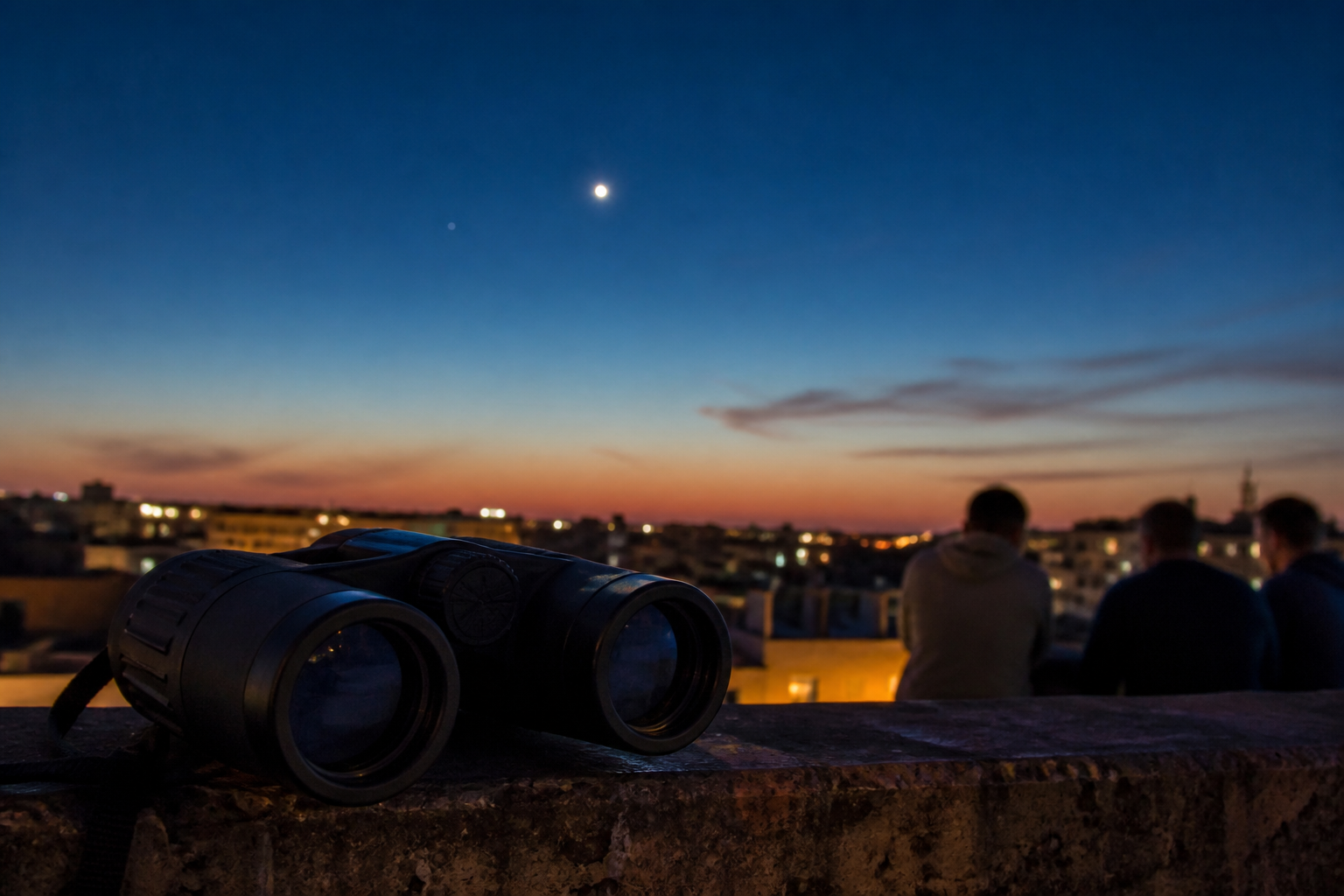
Binoculars can help you confirm the pair, but use them only after the Sun has fully set and only after you have located Venus naked-eye. Never sweep binoculars near the Sun. A 7×35, 8×42, or 10×50 pair held against a railing is plenty; both objects should fit together.
A five-minute no-telescope city plan
- Pick your location before sunset and make sure the west-southwest is genuinely open.
- At about 25 minutes after sunset, find the brightest point low above the horizon: Venus.
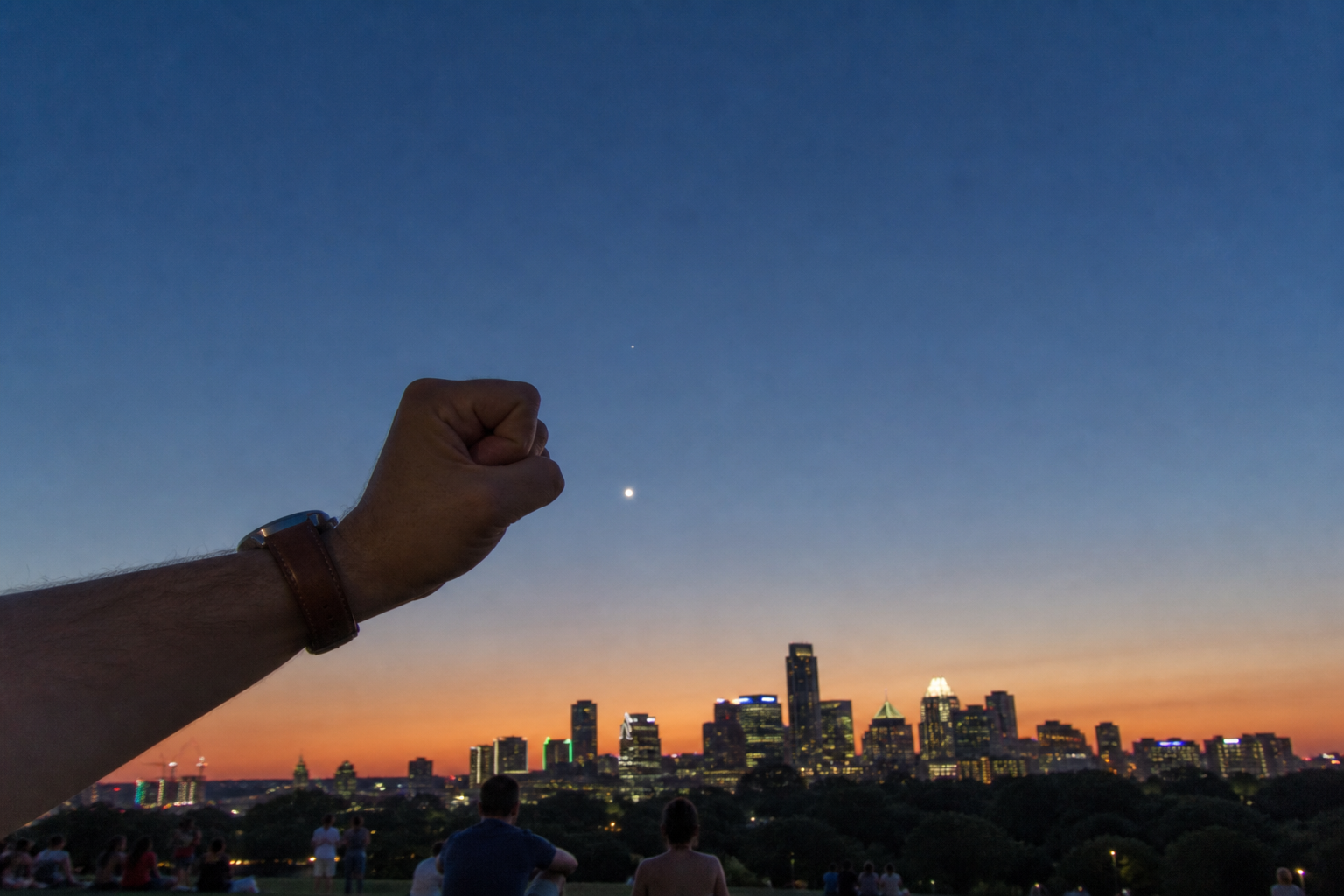
- Look about one and a half finger-widths above Venus for the smaller, blue-white point of Spica. It can appear a little higher on earlier evenings and shift position as Venus moves.
- Keep your phone dim or use a red screen. Bright screens erase the contrast you need for the faint star.
- Share the search. One person can keep Venus in view while another scans just above it. A short win feels much bigger with a fellow sky nerd.
If you are learning the sky from scratch, join Cosmic Match free and connect with people who enjoy a low-stakes horizon hunt as much as a big telescope night. The same beginner-friendly patience helps with subtler targets too, including V0488 Sge, the current nova in Sagitta.
Can you photograph Venus and Spica with a phone?
You can make a lovely twilight scene with Venus, skyline, and color, but Spica may not show in every phone exposure. Stabilize the phone on a mini tripod or railing, tap to focus on the bright sky near Venus, and make a few versions with the exposure lowered slightly. The brightest version may preserve the twilight but wash out Spica; a darker one may keep the star. Do not zoom digitally and expect a miracle—multiple steady frames are more useful.
For a simple social moment, take one wide scene that records the place and one tighter image that tries for the pair. Then compare results with friends. The joy is partly in noticing that a “two dots at dusk” challenge got a whole group outside.
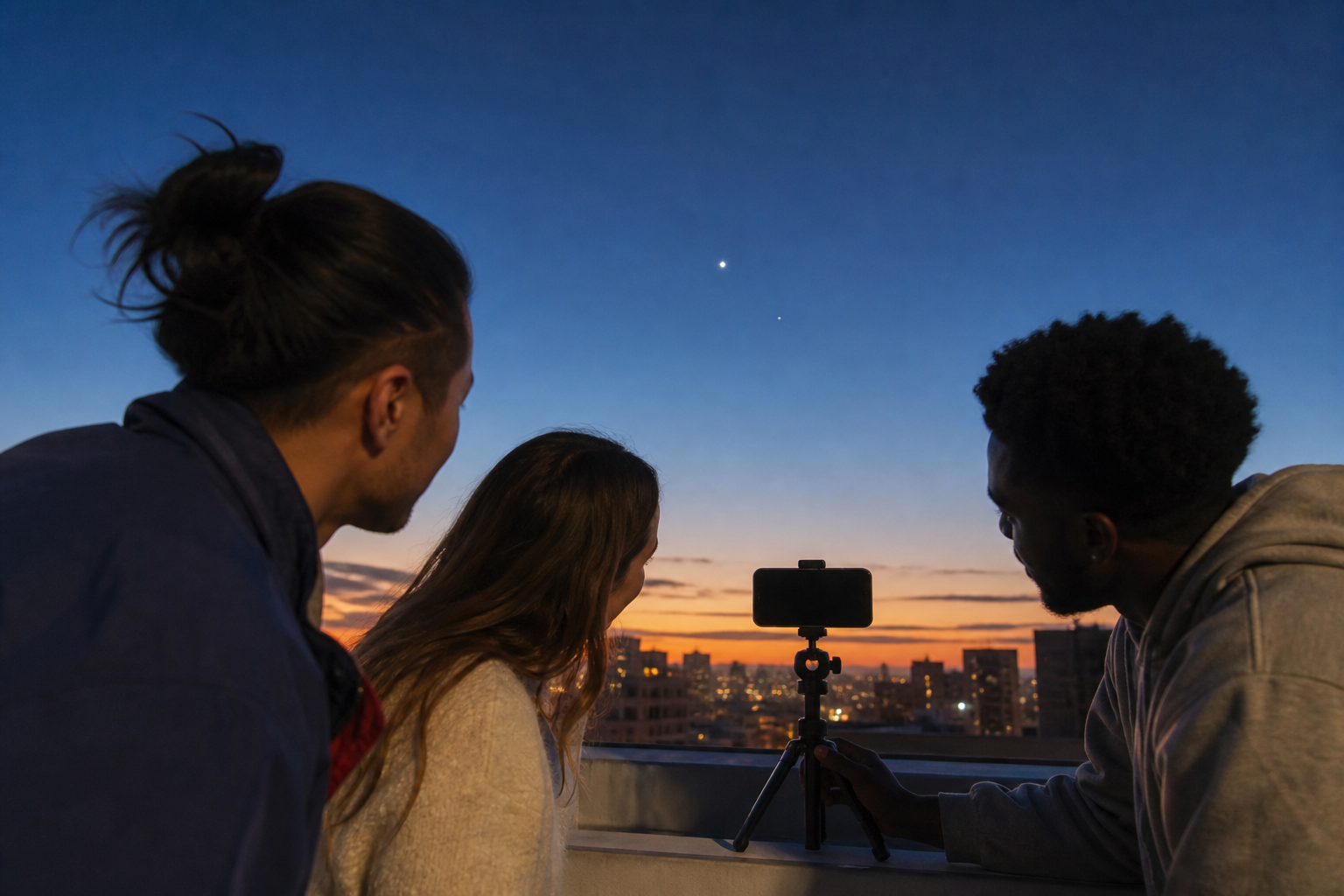
Make it a tiny city star party
This is a great excuse to invite one or two friends who have never used a telescope. Bring water, arrive before the rush, and agree that the only goal is to find Venus and make a serious attempt at Spica. A shared target makes an urban evening feel less like a workaround and more like a place to begin. Explore Cosmic Match to meet local astronomy-minded people for your next stargazing plan.
The important safety note is simple: choose a legal, well-lit route to your observing spot, stay aware of traffic and uneven ground, and never point optics toward the Sun. Otherwise, let the horizon do the hard part. Venus will be your beacon; Spica is the small reward just above it.
FAQ
What time is Venus closest to Spica in September 2026?
The geometric close approach is around September 1–2 depending on the source’s time zone and definition, but the practical U.S. city viewing opportunity is low in the west-southwest shortly after sunset on September 1 and nearby evenings.
Which one is Venus and which one is Spica?
Venus is the dramatically brighter object. Spica is the much fainter point close above it in the September 1 dusk view.
Will I see both from a city?
Venus, almost certainly if your horizon is open. Spica is possible but more sensitive to haze, clouds, building obstructions, and twilight brightness; binoculars give you a useful optional assist.
Is it safe to use binoculars for this conjunction?
Yes only once the Sun is fully below the horizon and you have first found Venus with your unaided eyes. Never point binoculars anywhere near the Sun.
Keep looking up
For a zero-equipment late-September plan, continue with our September 14–26 no-telescope skywatching field guide, covering Antares, brilliant Venus, and the Harvest Moon near Saturn.