Free Rooftop Astronomy in Houston: A First-Timer Plan for Aug. 18
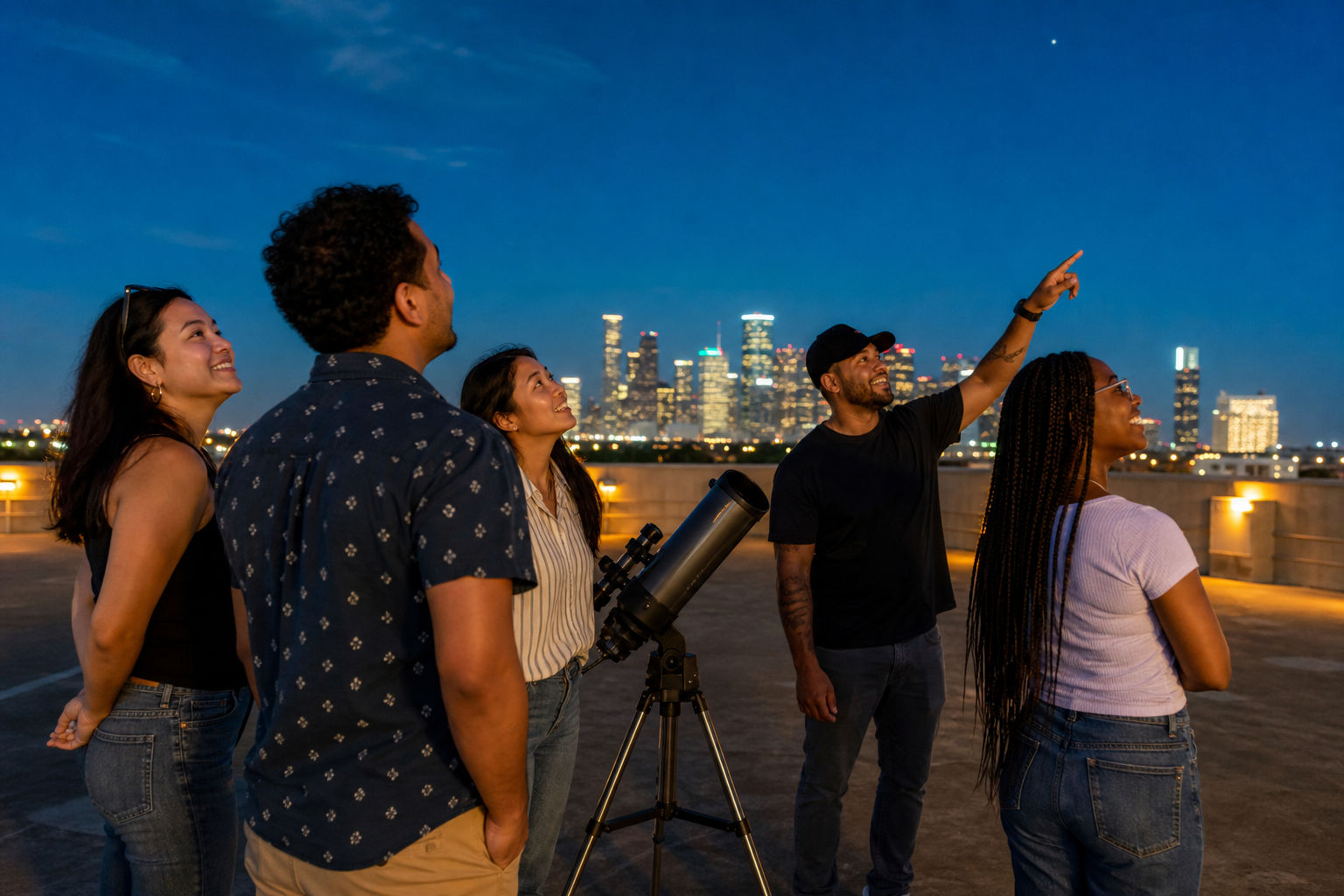
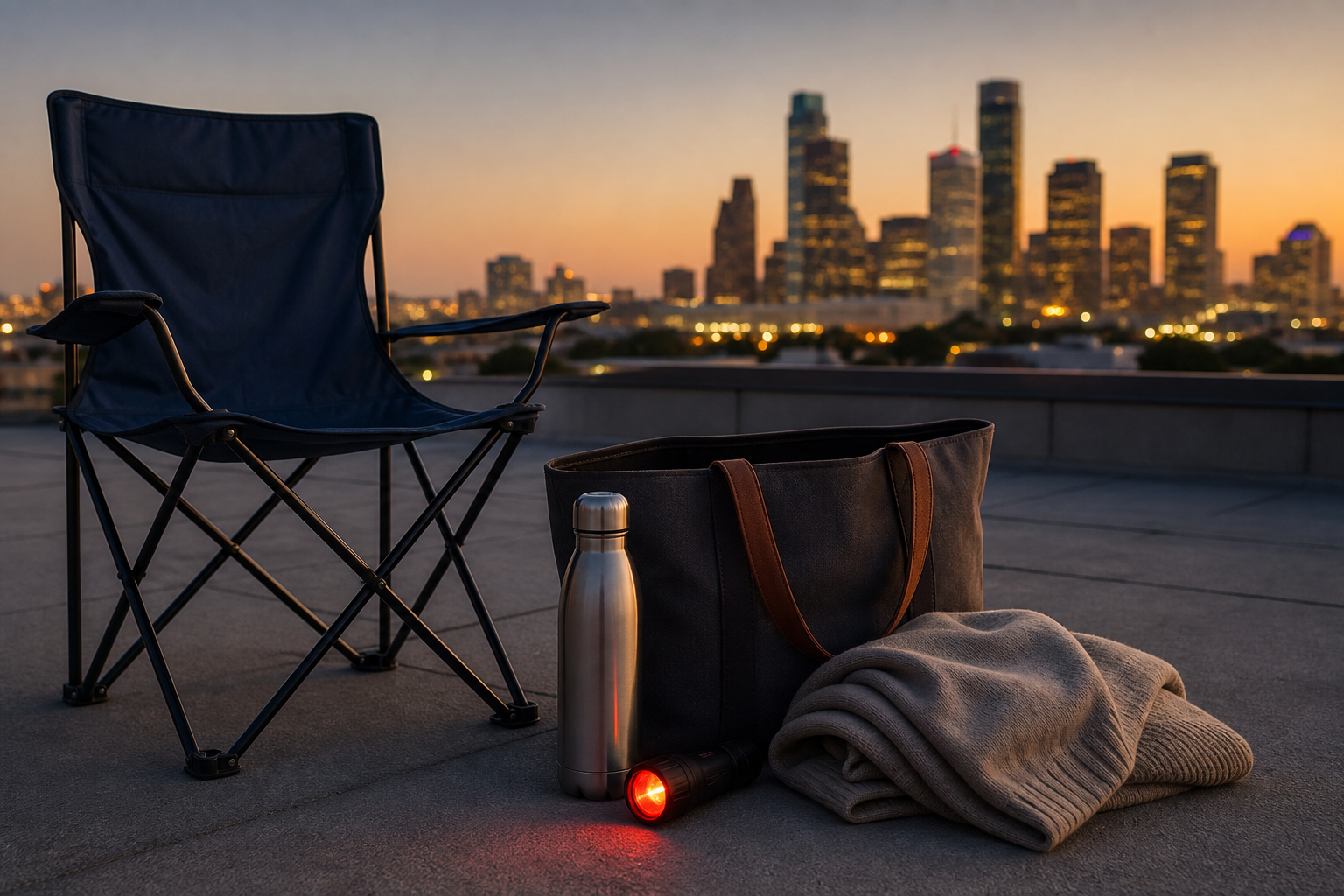
Houston’s next free rooftop astronomy session is Tuesday, August 18, 2026, from 7:00 to 9:00 p.m. on the seventh floor of the Houston Museum of Natural Science (HMNS) parking garage. It is open to the public, requires no ticket, and is built for people who are curious about the sky—not people who already own a telescope. HMNS lists the evening’s targets as the Sun, Moon, and Venus. The one non-negotiable: this is weather-dependent, so check the official HMNS astronomy-events page before you leave.\n\nIf you have ever thought, “I like space, but I would have no idea what to do at a telescope,” this is your low-pressure first night out. Here is a practical Houston plan.\n\n## What happens at a free rooftop astronomy session?\n\nHMNS astronomers lead a guided look at the night-sky highlights, with observing from the garage’s seventh floor. On August 18, the listed lineup includes the Sun, Moon, and Venus—objects that are great entry points because they are bright, approachable, and rewarding even in a city setting.\n\nThink of this as a hosted sky walk, not a test. You can arrive without knowing constellations, ask basic questions, and take your time at the eyepiece. If you have been following this summer’s sky, our no-telescope Perseids night plan is a useful refresher on letting your eyes adjust and keeping expectations realistic under city lights.\n\n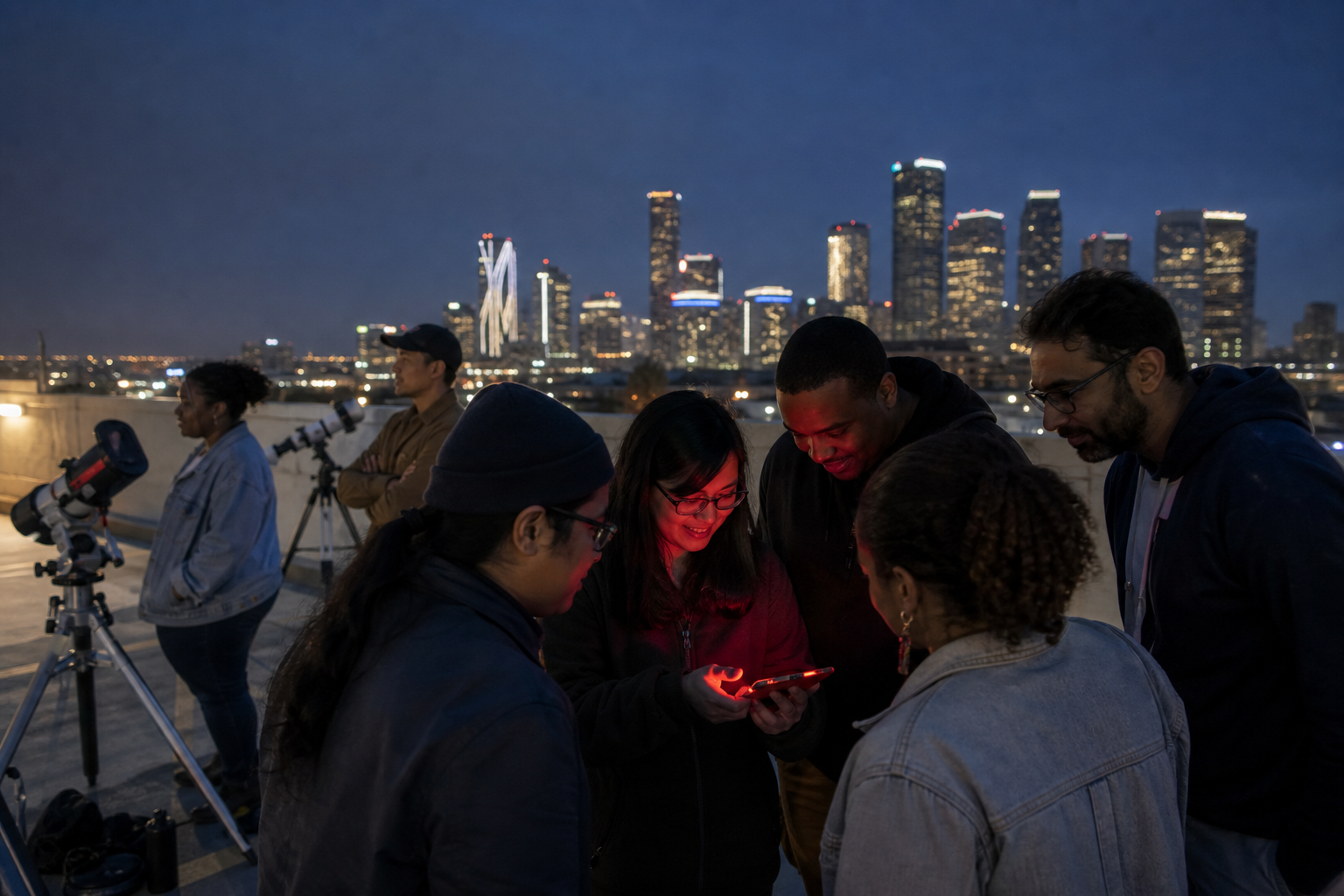 \n\n## Your first-timer timeline for August 18\n\n6:30 p.m. — Check conditions and head toward HMNS. Houston summer weather can turn quickly. Reopen the official event page before departing; HMNS says the session may be cancelled without notice for inclement weather or poor visibility. Since no ticket is required, there is no reservation to untangle if conditions do not cooperate.\n\n6:50 p.m. — Arrive with a little margin. Make your way to the seventh floor of the HMNS parking garage. A few extra minutes lets you find the group without feeling rushed, settle in, and look around before the observing starts.\n\n7:00–9:00 p.m. — Follow the astronomers’ lead. Start by listening for what is visible that evening and why. When a telescope is free, step up, look through it as instructed, then give the next person a turn. If you cannot immediately see the object, say so—eyepieces can take a moment, and that is normal.\n\nAfter 9:00 p.m. — Keep the conversation going. Your first observing session is more fun when you can compare what surprised you. Join Cosmic Match free to meet other Houston people who want to trade sky notes, plan an observing night, or simply have someone to message when Venus is shining after sunset.\n\n## Do I need a telescope, binoculars, or astronomy experience?\n\nNo. HMNS provides the guided experience; bringing your own gear is optional, not a prerequisite. A phone can be handy for directions and a quick weather check, but try not to use its bright screen near the telescopes. Lower the brightness or use a red-light setting if you have one.\n\nBring the things that make you comfortable rather than buying equipment for one evening: water, a light layer for indoor air-conditioning before or after, comfortable shoes, and bug protection if you use it. A compact chair is fine only if it is easy to carry and does not crowd the observing area. Leave a bulky tripod at home unless you already know you want to use it—and always follow the astronomers’ setup guidance.\n\n
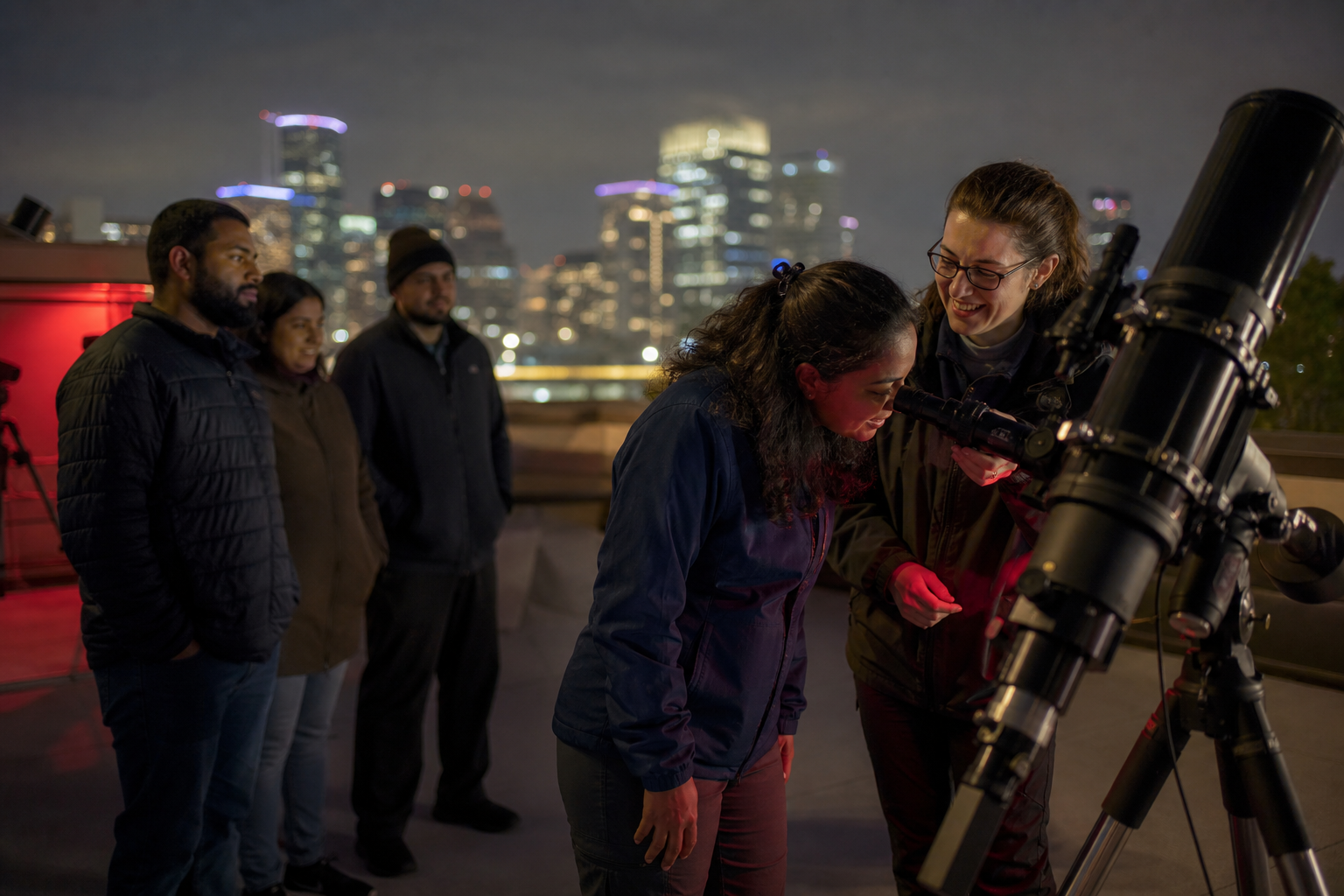 \n\n## How should I act at a public telescope?\n\nThe best etiquette is wonderfully simple: protect other people’s view, ask questions, and share the telescope. Avoid white flashlights and camera flashes. Keep phone screens dim. Do not touch the telescope unless the person operating it invites you to. At the eyepiece, take a brief look, step back, and let the line move; you can always circle around for another turn.\n\nYou do not need a clever astronomy question. “What am I looking at?” and “Why does it look different through the telescope?” are excellent places to start. Public observing works because experienced observers get to share their enthusiasm and beginners get a real, unfiltered look at the sky.\n\n## What if clouds cancel the rooftop session?\n\nTreat a weather cancellation as a rain check, not a failed night. HMNS explicitly notes that poor visibility or inclement weather can cancel the event without notice. Check its official listing before traveling, and do not rely on an old social post for the final call.\n\nA cloudy evening can still be a good prompt to connect with your local sky community. Swap the one-off plan for a future observing buddy, save the next HMNS date, or browse Cosmic Match for people in Houston who understand why a clear forecast can feel like winning a small lottery.\n\n
 \n\n## Make it a genuinely easy first astronomy night\n\nThe August 18 rooftop session has the best possible beginner ingredients: an actual astronomer to guide the way, no ticket, no gear requirement, and a bright trio of targets. Show up a little early, bring water, keep your screen low, and let yourself be new at this. Houston’s sky community is built one “wait, I can really see that?” moment at a time.\n\n## FAQ\n\n### Is the August 18 HMNS rooftop astronomy event free?\n\nYes. HMNS lists Tuesday Rooftop Astronomy as free, open to the public, and requiring no ticket. Confirm the listing before traveling in case the museum changes event details.\n\n### Where do I go for rooftop astronomy at HMNS?\n\nMeet on the seventh floor of the Houston Museum of Natural Science parking garage. The official HMNS event page is the best source for day-of directions and status.\n\n### What happens if the weather is bad?\n\nHMNS says the event is weather-dependent and may be cancelled without notice because of inclement weather or poor visibility. Check the official page shortly before you leave.\n\n### Can a total beginner attend without a telescope?\n\nAbsolutely. The guided event is designed around shared observing, so no telescope, binoculars, or prior astronomy experience is required.
Keep looking up
For a zero-equipment late-September plan, continue with our September 14–26 no-telescope skywatching field guide, covering Antares, brilliant Venus, and the Harvest Moon near Saturn.