Perseids 2026 Without a Telescope: An Austin, Houston, and Los Angeles Night Plan
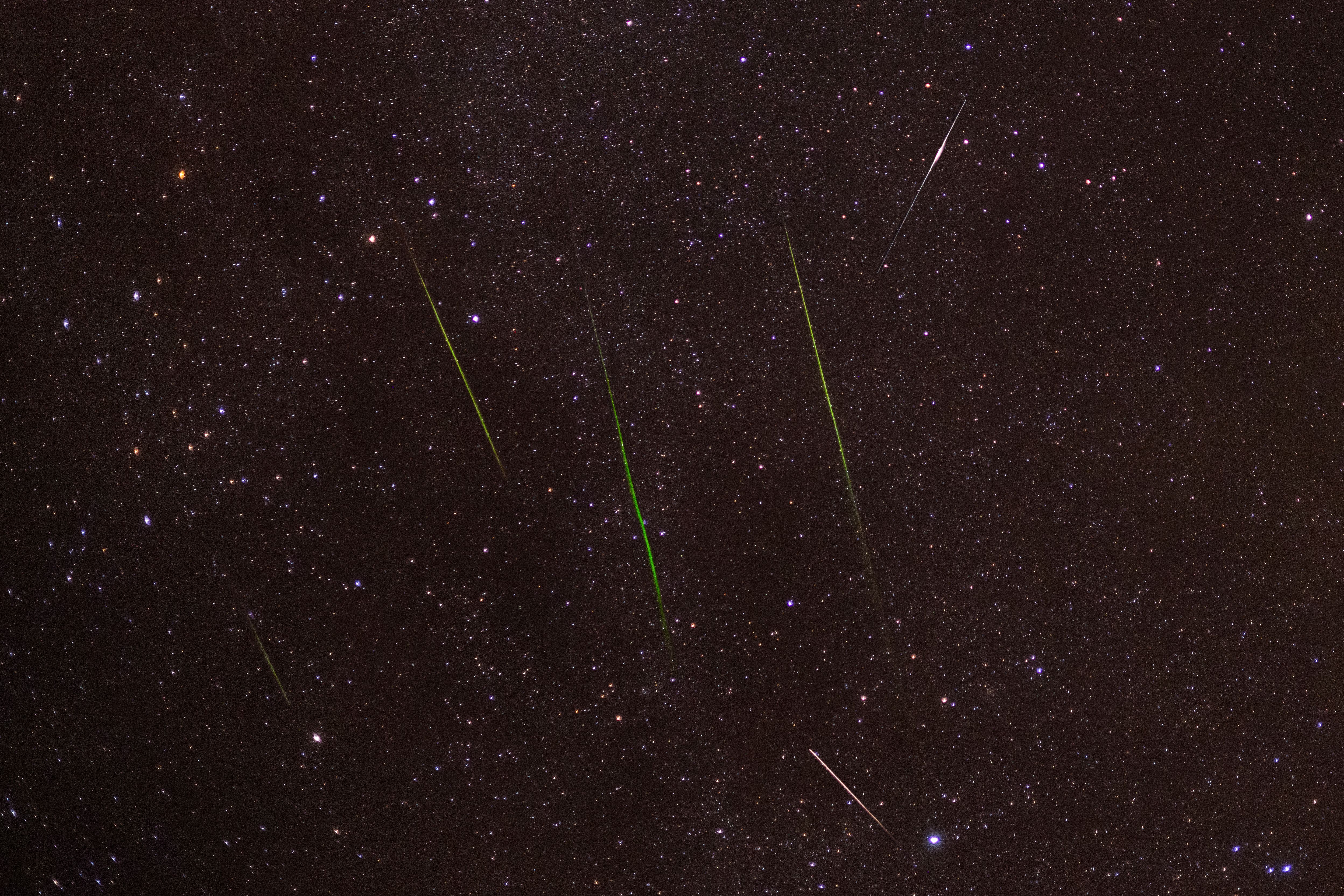
The best no-telescope Perseids plan for Austin, Houston, and Los Angeles is simple: reserve the late night of Wednesday, August 12 into Thursday, August 13, give your eyes 30 minutes without bright screens, and watch as much open sky as you can after 10 p.m. The International Meteor Organization's 2026 calendar places the Perseid maximum on August 13 and notes that the August 12 New Moon leaves the peak moon-free. That is excellent timing, but not a promise of a constant light show from a city backyard.
This is a sit-back event. You do not need a telescope, binoculars, or a perfect dark-sky road trip. You need a clear forecast, a comfortable place to recline, patience, and a plan that treats any meteor as a win.
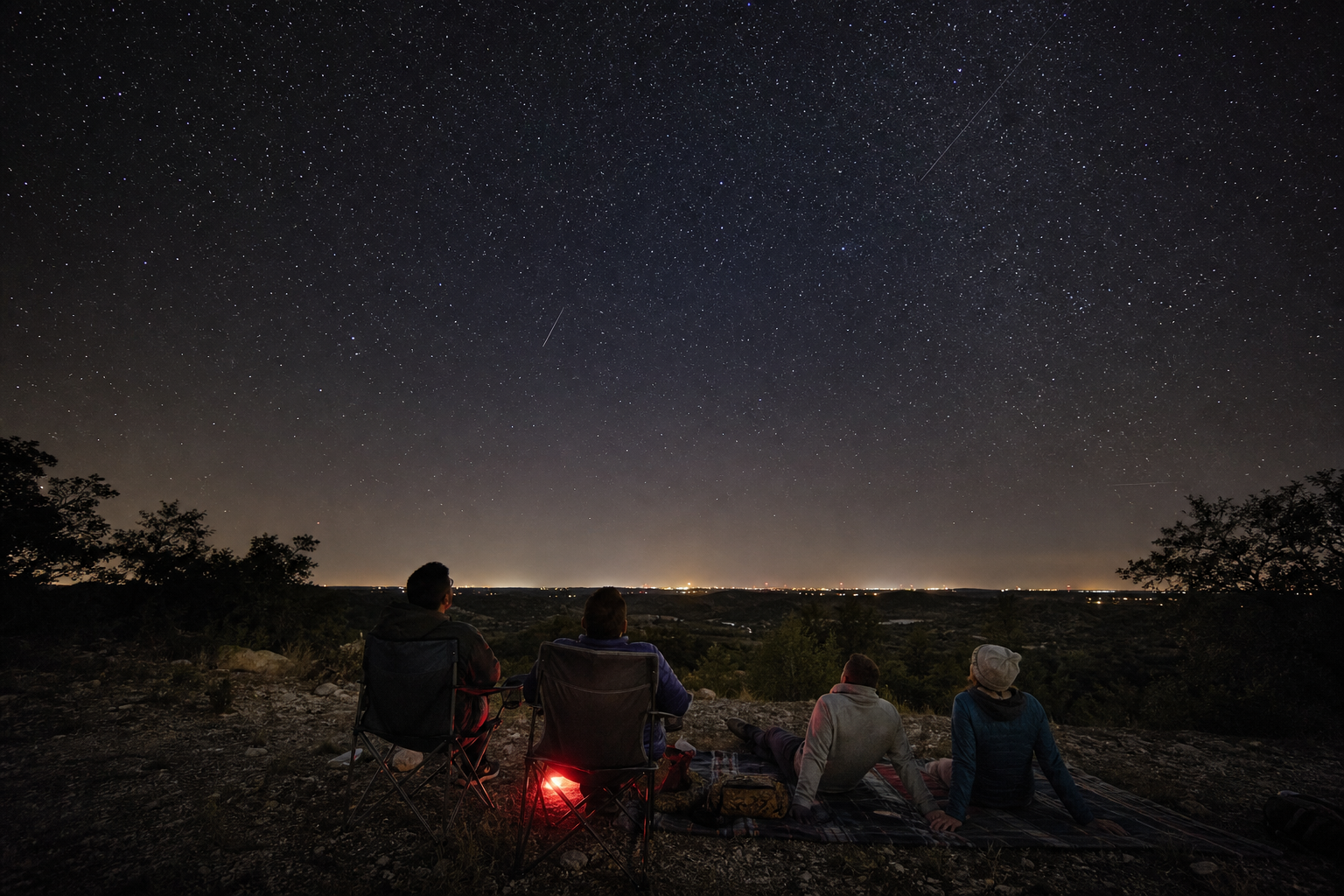
What is the realistic Perseids plan for Aug. 12-13?
Start outside around 10 p.m. local time, then make the midnight-to-pre-dawn stretch your bonus window. The radiant, the point in Perseus that the shower appears to stream from, rises higher as the night goes on. You do not need to stare at Perseus, though. Meteors can appear anywhere, and a view 45 to 90 degrees away from the radiant often gives you longer streaks.
The famous Perseids rate is usually stated as a zenithal hourly rate: a dark-sky, straight-up, ideal-condition estimate. City light, trees, clouds, short observing sessions, and a radiant lower in the sky all cut what any one person actually sees. Plan for quiet stretches. Watch for an hour or more, and let the occasional bright line be the reward rather than the benchmark.
The moonless peak is the meaningful advantage this year. The IMO specifically identifies moon-free conditions for the 2026 Perseids peak. Check the latest local forecast on the afternoon of August 12; a transparent sky matters more than a complicated gear list.
Your 15-minute setup before you leave the house
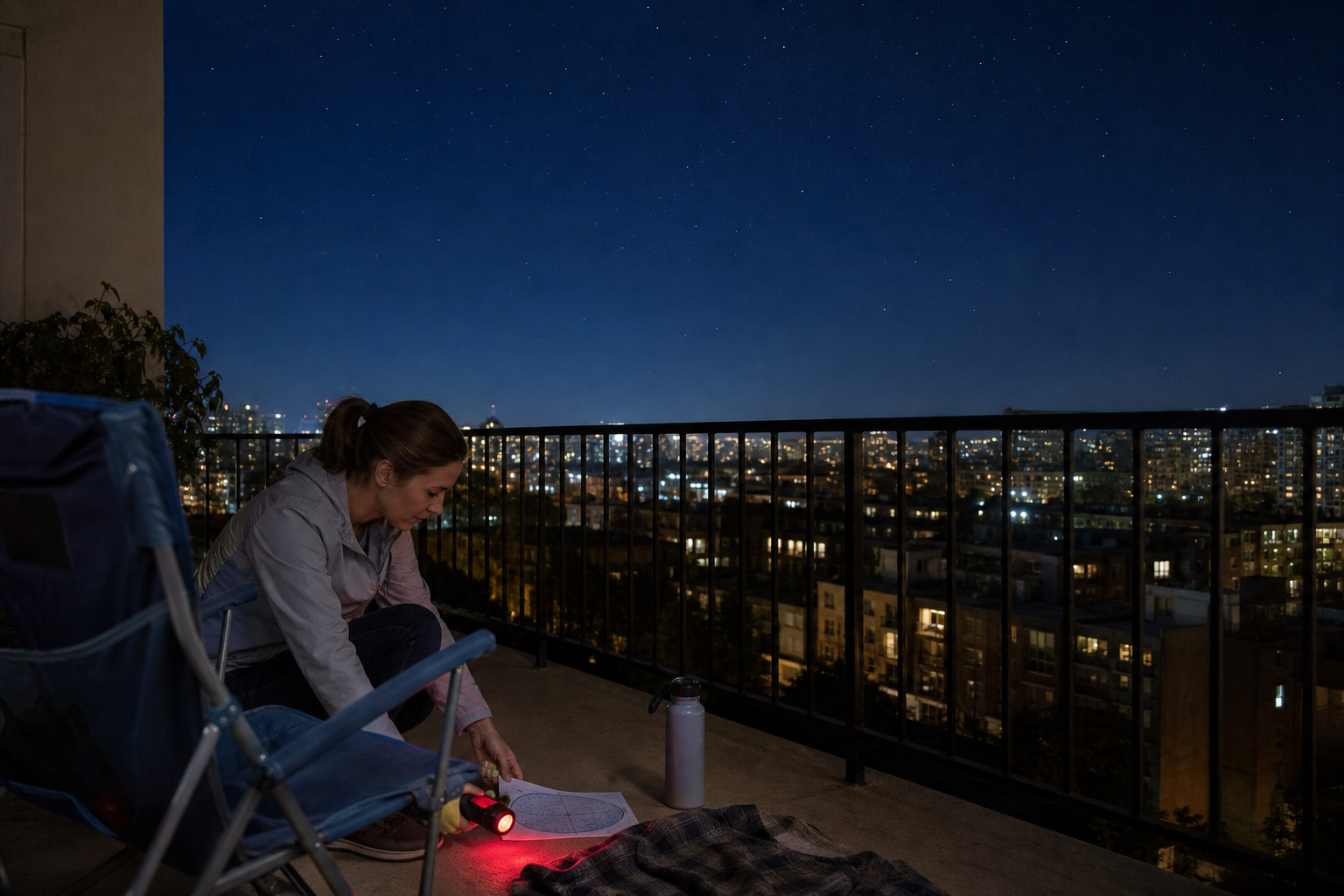
Bring a reclining chair or camping pad, water, a light layer, insect protection where appropriate, and a red flashlight or red screen setting for walking safely. Keep white light and phone scrolling off once you settle in. Dark adaptation is not an aesthetic rule: it helps your eyes pick out dimmer meteors and more stars.
Choose an unobstructed view rather than chasing a named dark-sky spot at the last minute. A safe yard, apartment rooftop with permission, neighborhood green space where nighttime access is allowed, or a friend's patio can be better than an unfamiliar roadside. Avoid looking across floodlights, parking lots, or a bright porch. Face the darkest broad patch of sky available and settle in.
Austin, Houston, and Los Angeles: pick the version that fits your night
Austin: Start with the closest safe, open view, especially if a long drive would turn a relaxed watch into a rushed one. If you can arrange a Hill Country outing, make the route and return plan before dark. Austin weather can change quickly in August, so compare cloud cover again after dinner. New to shared observing? Cosmic Match is a place to meet Austin stargazing partners who will appreciate the unglamorous parts of meteor watching: folding chairs, long pauses, and a thermos.
Houston: Humidity and haze can be the deciding factor. Check cloud cover, then pick an open, well-understood location with a clear horizon rather than driving into unfamiliar low-lying areas. Keep water close and allow time for your eyes to adjust after parking. Earlier this month, Space Center Houston brought local enthusiasts together for Space News and Brews; the same easygoing shared-curiosity energy works for a low-key meteor watch.
Los Angeles: The most useful upgrade is often a wider, darker-facing slice of sky, not a longer drive. Get away from direct light sources, let your eyes adapt, and look high above the brightest horizon glow. For another accessible entry point to the local sky, our Griffith Observatory first-timer guide covers a different kind of Los Angeles astronomy night.
Do I need to find Perseus to see the shower?
No. Knowing the radiant can be fun, but it is not required. Perseus rises in the northeast during the late evening for these cities, then climbs through the night. Aim your view high and broad, not at one constellation. A meteor seen far from the radiant may draw a longer line across your field of view.
If you are with friends, resist dividing the sky into assignments. Recline together, keep conversation low, and call out a meteor only after it happens. That leaves everyone free to watch instead of tracking a tiny patch. A notebook is optional, but a simple tally can make the quiet stretches feel like part of the experience.
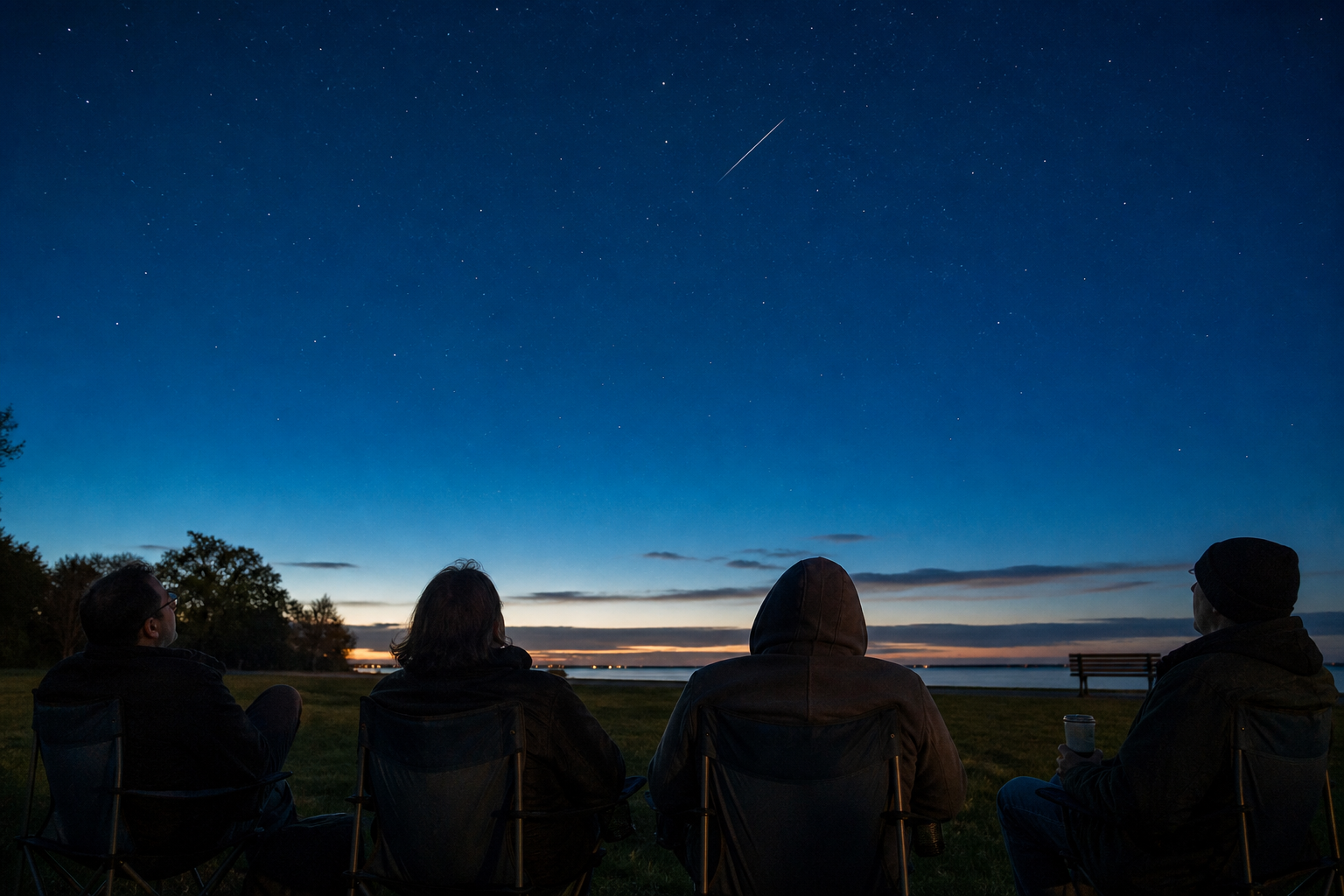
When should you call it a good night?
Set a humane stopping rule before you begin: one hour after dark adaptation, or a little longer if skies are clear and everyone is comfortable. You might see several meteors, one spectacular fireball, or fewer than hoped. That does not mean you did it wrong. Meteor showers reward time outside, not precision equipment.
If clouds win, keep the plan as a night-sky hangout. Trade a favorite space image, use a star map briefly with the screen dimmed, or schedule the next clear evening. The Perseids have an activity period, and the peak is the best bet, not the only chance.
For a beginner-friendly shared sky plan, join free at Cosmic Match and find people who are just as happy to wait for one bright streak as they are to talk constellations between them.
FAQ
When is the Perseid meteor shower peak in 2026?
The International Meteor Organization lists the Perseids' 2026 maximum on August 13. For Austin, Houston, and Los Angeles, plan the night of August 12 into August 13, with the late-night and pre-dawn hours most useful.
Can I see the Perseids without a telescope?
Yes. Meteors move across large areas of sky, so telescopes and binoculars narrow the view too much. A reclining chair, open sky, and dark-adapted eyes are more useful.
Why should I avoid my phone screen while meteor watching?
Bright white light resets dark adaptation, making fainter meteors harder to notice. Use a red flashlight for safety and keep any necessary screen brightness very low.
Where should I look for the Perseids?
Look broadly overhead and away from the brightest lights. The radiant is in Perseus and rises in the northeast, but meteors can appear anywhere in the sky.
Planning a Houston observing night next? Our Aug. 18 HMNS rooftop astronomy first-timer plan covers the free, weather-dependent public session.