Henrietta Leavitt and the Discovery That Let Us Measure the Universe
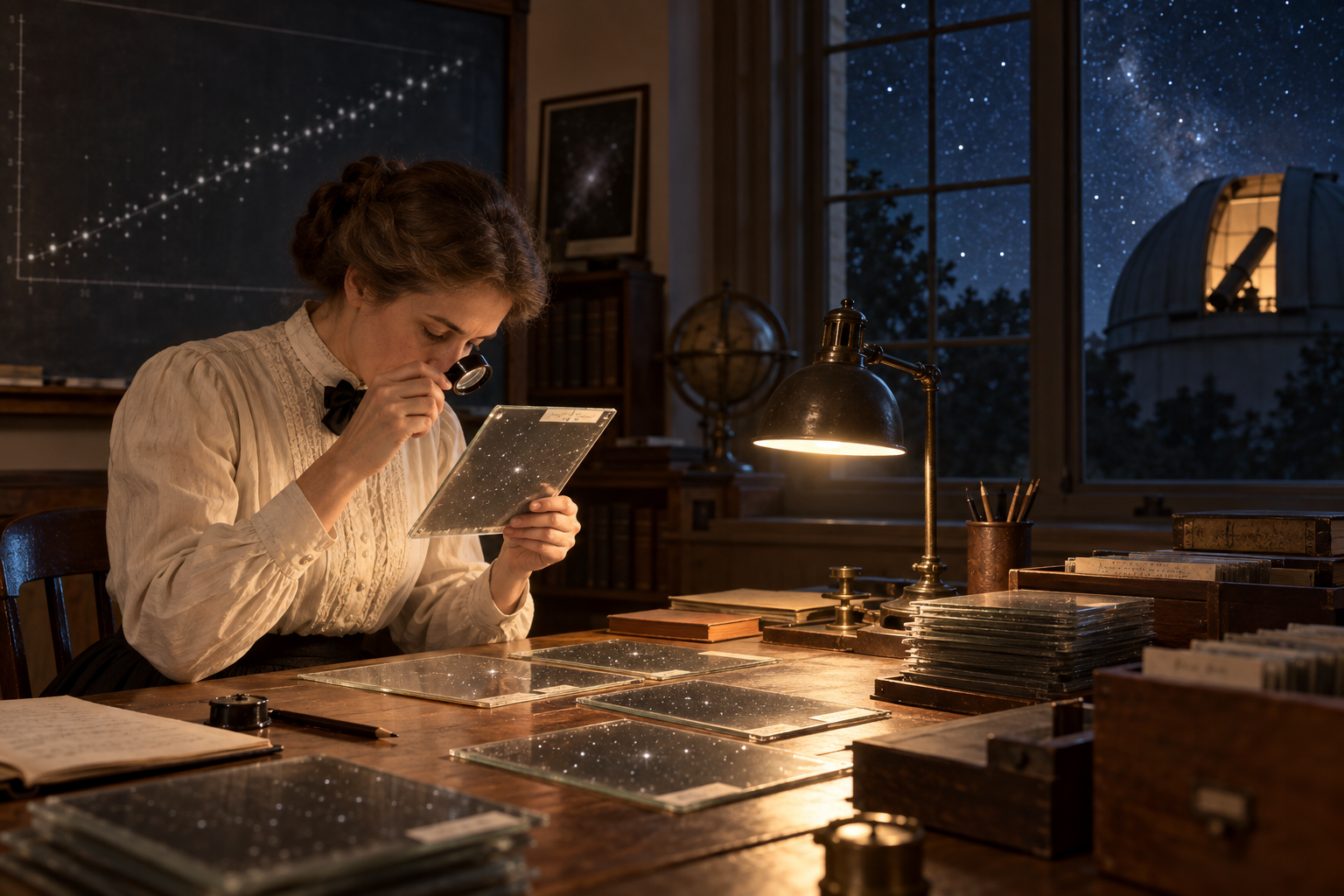
Henrietta Leavitt gave astronomy one of its most useful measuring tools: in 1912, she showed that Cepheid variable stars with longer pulsation periods are intrinsically brighter. That insight—now called the Leavitt Law, or the period-luminosity relation—made it possible to estimate distances far beyond the reach of ordinary parallax. This Saturday, September 19, Mount Wilson Observatory in the Los Angeles mountains is hosting a 5:30–11:30 p.m. program about her legacy, followed by public observing through its historic 60- and 100-inch telescopes. Tickets are $50 and final sale.
Her story is a reminder that astronomy often begins with patient attention: looking again, recording what changes, and sharing the pattern with other people who are paying attention too.
Who was Henrietta Leavitt?
Leavitt worked at Harvard College Observatory from 1893 until her death in 1921. She was one of the women later known as the Harvard Computers: highly skilled researchers who examined photographic plates, measured stellar brightnesses, and built the datasets modern astronomy still leans on. The name should not shrink the work. These were scientific observations and classifications performed with exceptional care.
Leavitt focused on variable stars in the Magellanic Clouds. Because stars in a given Cloud are approximately at the same distance from Earth, differences in their apparent brightness can reveal genuine differences in luminosity. In her 1912 work on 25 Cepheid variables in the Small Magellanic Cloud, she identified the simple relationship that changed the scale of astronomy. The Harvard Plate Stacks biography is an excellent starting point for the original context and her published work.
What is the Henrietta Leavitt period-luminosity relation?
Cepheids are stars that brighten and dim on a predictable cycle. Leavitt found that a Cepheid’s period is linked to its actual luminosity: longer-period Cepheids are more luminous. Observe a Cepheid’s cycle, use that relation to infer its true brightness, compare it with how bright it looks from Earth, and you have a distance estimate.
The essential distinction matters. Leavitt discovered the period–luminosity relation. Later astronomers calibrated and applied it to establish distances to nearby galaxies and to build out the cosmic distance ladder. It is not accurate to say that Leavitt alone measured every galaxy or personally discovered cosmic expansion; her work supplied a crucial rung that made later measurements possible.
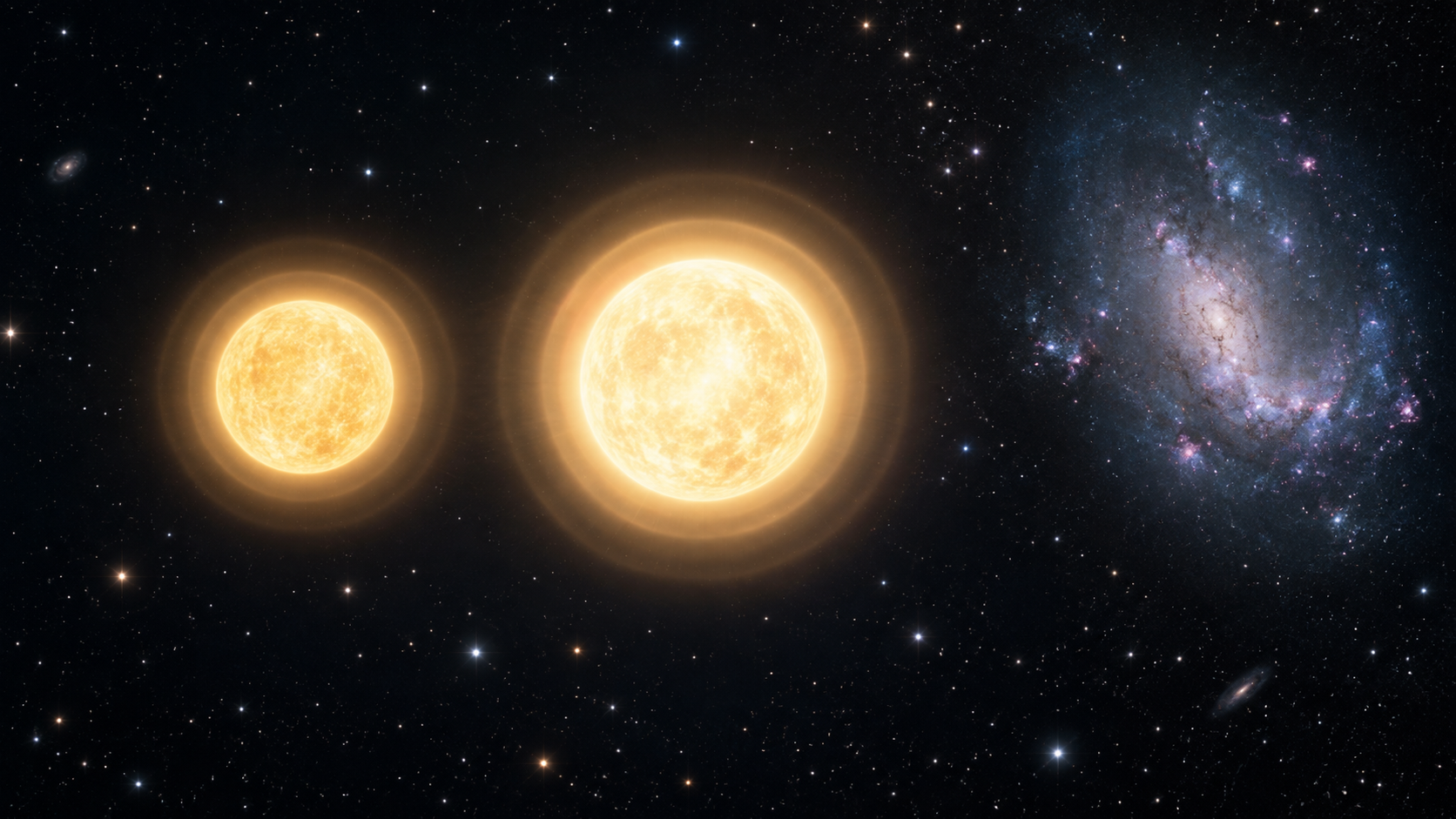
This is astronomy’s version of recognizing a familiar bulb at night: if you know how luminous the bulb really is, its dimness tells you how far away it must be. With Cepheids, the period supplies the clue to the true brightness.
How did Leavitt’s observation become a cosmic distance ladder?
Astronomers use overlapping methods because no single measuring tape reaches everywhere. Nearby stars can be measured with parallax. Cepheids can extend the reach to more distant stellar neighborhoods and galaxies. Other calibrated objects and observations extend it still farther.
That ladder is foundational to questions that remain very much alive. NASA explains that measurements of distant exploding stars showed the universe’s expansion is accelerating, evidence associated with dark energy. Those results rest on a web of calibrated distance methods, with Cepheids among its historic anchors. NASA’s overview of dark energy is useful context for the modern end of that long chain.
Leavitt’s work also changed what “the universe” could mean in practice. Instead of only mapping patterns projected on the sky, astronomers could begin assigning distance to objects whose scale had been unknown. The cosmos stopped being a flat backdrop and became a place with depth.
Why is Mount Wilson talking about Henrietta Leavitt this weekend?
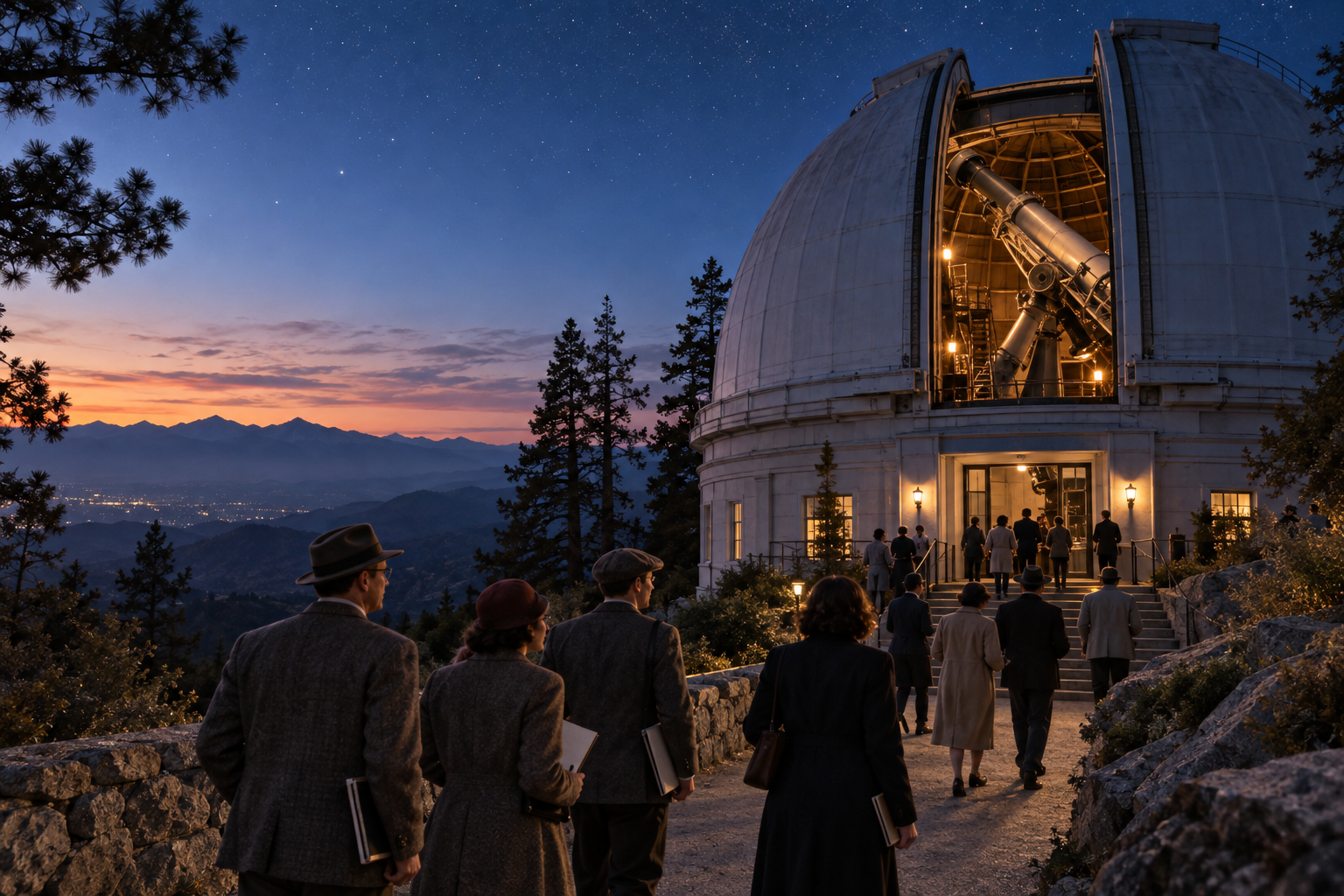
On Saturday, September 19, artist and author Anna Von Mertens will present “The Brightness of Stars: Henrietta Leavitt and the Transformative Nature of Attention in Art and Science” at Mount Wilson Observatory. The official program begins at 5:30 p.m.; after the talk, visitors can picnic and observe from dusk to 11:30 p.m. through the observatory’s 60- and 100-inch telescopes, with additional stargazing around the grounds from the Los Angeles Astronomical Society. The official listing says food will be available to buy, and guests may bring a picnic; it also notes that tickets are $50, final sale, with no refunds, exchanges, or transfers.
If you are heading up from LA, use our practical Mount Wilson Observatory first-timer guide for the broader visit-planning basics. Check the official event page again before you leave: mountain access and event logistics can change.
What can Leavitt’s story mean for amateur astronomers today?
You do not need an observatory job or a century-old plate archive to practice the habit at the center of her work. Keep a small observing log. Notice the color difference between stars. Return to the same patch of sky. Compare notes with someone who saw it differently. Astronomy gets richer when it is shared.
Whether you are planning a first public observing night or looking for regular skywatching company, join the Cosmic Match astronomy community and start with the stars you can see now. You can also find people who love a good observing plan and turn “I should get outside sometime” into a real night under the sky.
Leavitt’s legacy is not just a formula. It is proof that sustained, careful work can redraw our mental map of the universe—and that the next big shift often begins with someone deciding that a faint, repeating pattern is worth understanding.
FAQ
What did Henrietta Leavitt discover?
Leavitt discovered the relationship between the pulsation period and intrinsic luminosity of Cepheid variable stars. The relation lets astronomers infer a Cepheid’s true brightness and estimate its distance.
Why are Cepheid variables important?
Their regular cycles make Cepheids reliable “standard candles” once calibrated. They are a key rung in the cosmic distance ladder for measuring distances beyond nearby parallax targets.
Is the Mount Wilson Henrietta Leavitt program open to the public?
Yes. Mount Wilson lists the September 19, 2026 Talks & Telescopes program as a ticketed public event, with observing after the talk. Confirm availability and terms on the official event page before buying.
Do I need a telescope to connect with astronomy locally?
No. A public observing night, an observing log, or a shared walk under a clear sky is enough to begin. Curiosity is the only equipment that cannot be borrowed.