The Universe Still Has Atomic Hydrogen—So Why Is Star Formation Slowing?
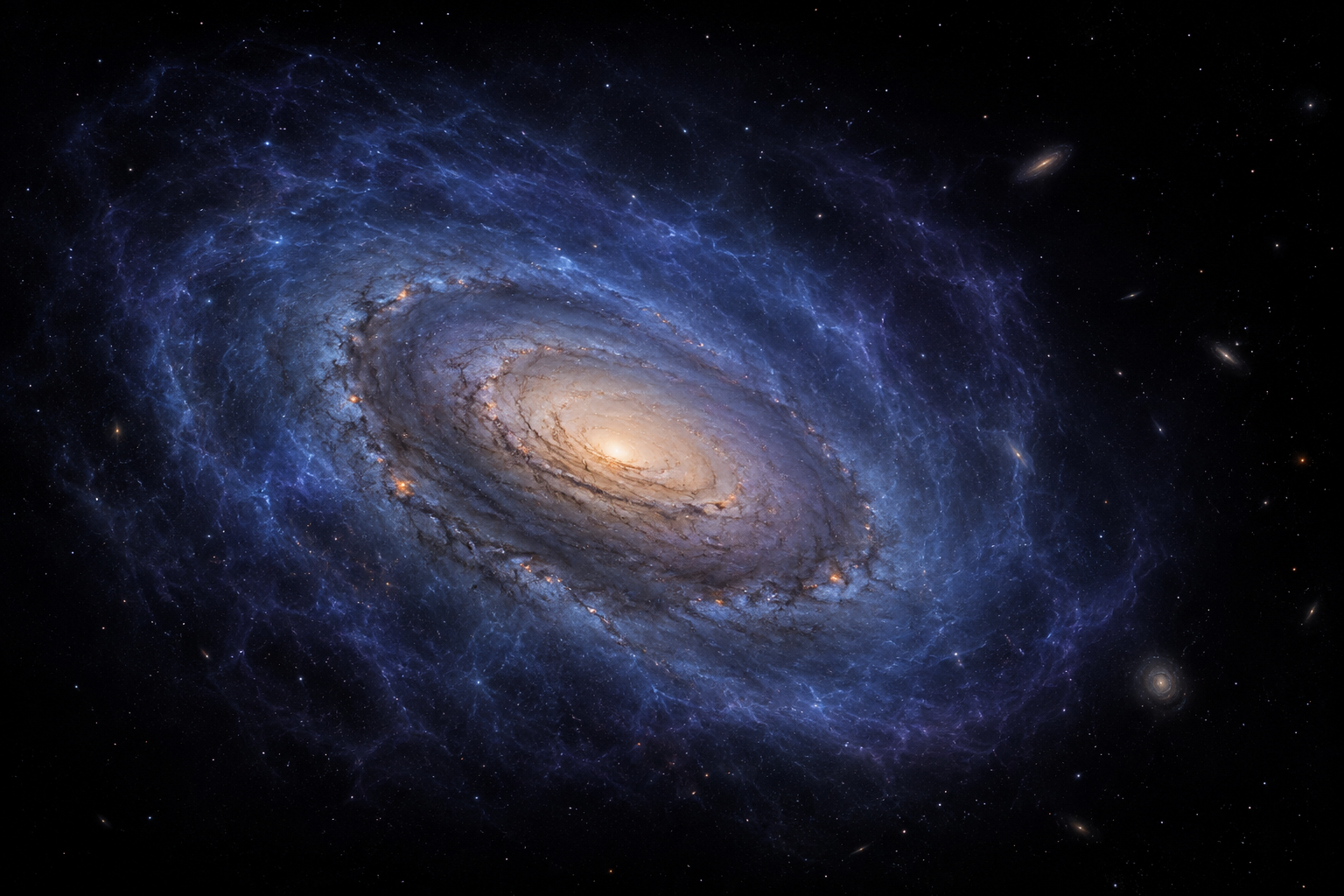
Cosmic star formation has slowed dramatically during the past 4.5 billion years—but a major new FAST and DESI analysis finds the universe’s reservoir of neutral atomic hydrogen declined much less. The result is a useful correction to a tempting story: fewer newborn stars does not simply mean galaxies have run out of hydrogen. The measured mismatch instead points researchers toward the harder question of how gas moves, compresses, and changes phase before a star can form.

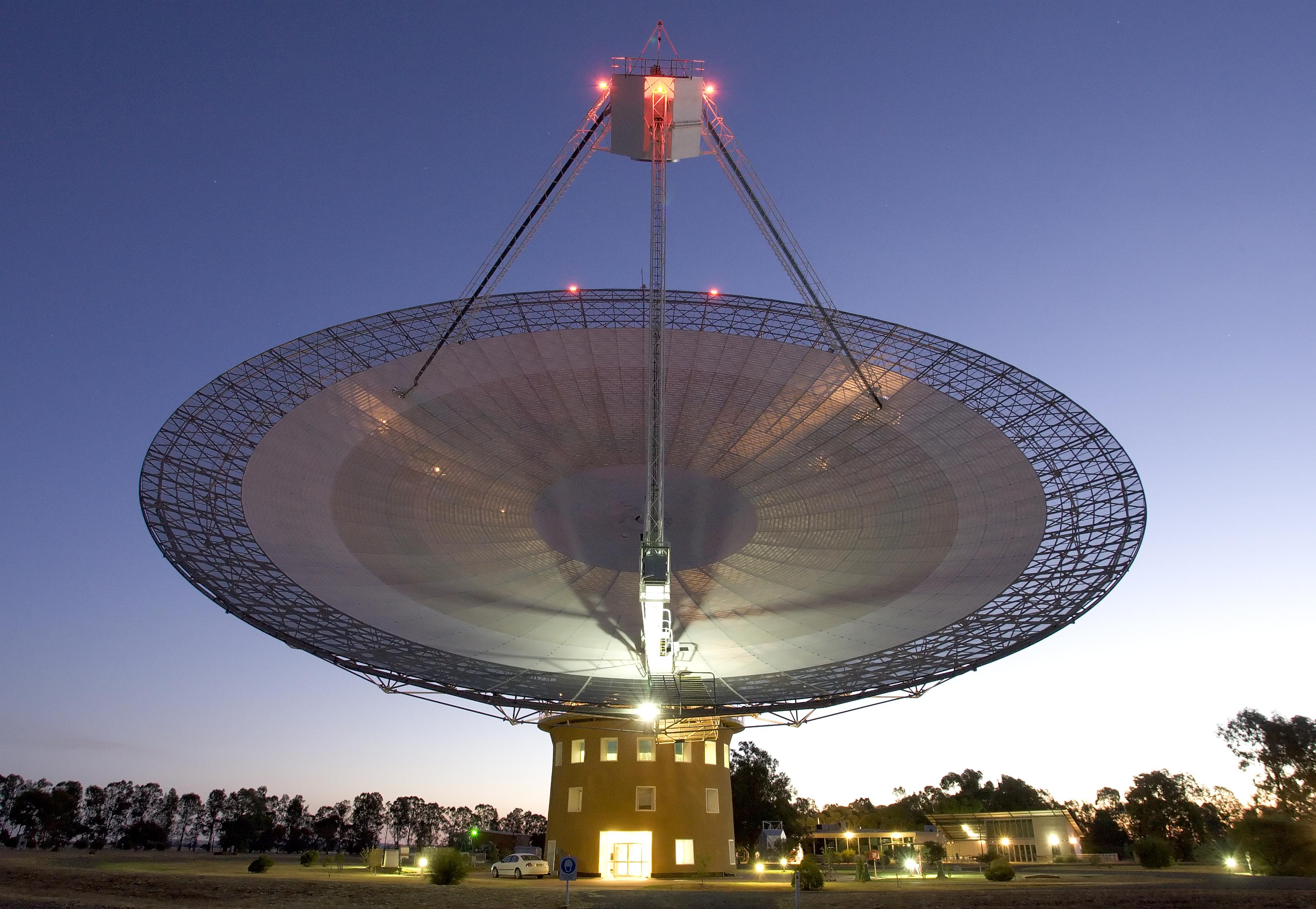
A September 1 Nature Astronomy paper combined radio measurements from China’s Five-hundred-meter Aperture Spherical Telescope (FAST) with optical redshifts from the Dark Energy Spectroscopic Instrument (DESI). The team analyzed about 2.5 million galaxies across roughly 12,000 square degrees—nearly one-third of the sky. Its results were also summarized by the Chinese Academy of Sciences and independently explained by INAF.
What did FAST and DESI measure?
FAST detects the faint 21-centimeter radio emission of neutral atomic hydrogen, written H I. DESI supplies highly precise optical redshifts—the information needed to line up millions of individually too-faint radio signals. By stacking those signals, the researchers could measure the average cosmic H I reservoir across a long slice of recent cosmic history.
The headline comparison is striking. Over the past 4.5 billion years, the study finds:
- A raw decline in cosmic neutral atomic-hydrogen density by a factor of 1.35 ± 0.10.
- A more conservative systematic-corrected decline of 1.12 ± 0.10.
- A decline in cosmic star-formation-rate density by a factor of 2.46.
Those figures do not say atomic hydrogen was unchanged. It declined. But it declined much less than the rate at which galaxies collectively make stars.
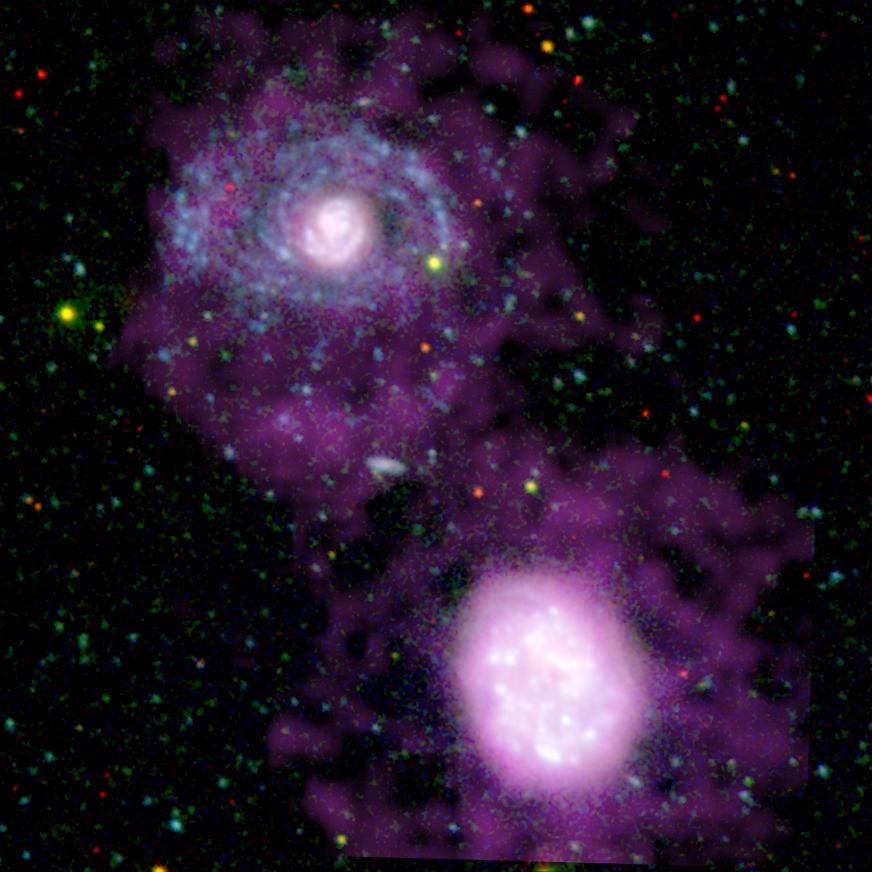
The distinction matters because H I is a reservoir, not the final material directly collapsing into newborn stars. At a fixed stellar mass, the paper also finds that the average atomic-hydrogen gas fraction changes by less than 0.2 dex over the interval. That is another way of saying the raw atomic supply evolves comparatively weakly while star formation fades more sharply.
If there is hydrogen, why is star formation slowing?
The short answer: stars form in dense molecular gas, primarily molecular hydrogen (H₂), not in diffuse atomic H I alone. Think of H I as an ingredient stored in a large pantry, while H₂ is closer to the prepared, dense cloud material in the kitchen where star formation can actually get underway. A pantry that is still partly stocked does not guarantee dinner is being made at the same rate.
The new study measures atomic hydrogen; it does not directly measure every step from H I to H₂ or identify one confirmed culprit for the slowdown. The authors and the CAS release point to a plausible interpretation: changes in gas accretion from the cosmic web, gas density, and the efficiency of converting atomic gas into molecular gas could matter more at late times than simple depletion of the total atomic reservoir.
That is an interpretation, not a direct measurement of this dataset. Galaxies may have more difficulty gathering gas into the dense, shielded molecular clouds that let gravity win over pressure and turbulence. They may also receive less fresh gas. Untangling those possibilities needs complementary observations that trace molecular gas and galaxy environments.
Why is this result useful for understanding galaxy evolution?
For years, “galaxies form fewer stars because they are running out of gas” has been a clean, intuitive sketch. This result keeps the spirit of that idea—gas still matters—but makes it more precise. The bottleneck may lie in the gas cycle: delivery, cooling, density, chemistry, and conversion between phases.
That makes the finding more exciting, not less. It narrows the mystery. Survey-scale radio astronomy can now tell theorists that any explanation for declining star formation has to accommodate a relatively slowly changing atomic reservoir alongside a much faster fall in star formation.
It also connects beautifully with another recent Cosmic Match explainer: Cloud-9, a candidate starless galaxy whose neutral-hydrogen observations reveal a compact gas core. In both cases, hydrogen is a clue—but not a shortcut to a simple conclusion about stars.
What did the study not measure?
It did not observe an individual galaxy suddenly failing to make stars, and it did not prove that any one physical mechanism caused the universe-wide slowdown. It also did not measure H₂ directly as the missing variable. The result is statistical: a carefully measured population-level mismatch between two changing cosmic quantities.
There is no backyard target to find from Austin, Houston, or Los Angeles for this survey result. But it is a great conversation starter for anyone who enjoys asking bigger questions than “what can I see tonight?” Share the puzzle with fellow sky-curious people at Cosmic Match: how can the universe keep so much hydrogen around while making far fewer stars?
The next steps are likely to combine this kind of wide H I census with molecular-gas surveys and detailed galaxy-environment studies. For now, the durable takeaway is simple: the universe has not merely run out of atomic hydrogen; something in the journey from diffuse gas to dense star-forming clouds appears to be changing.