Inks Lake Star Party: What First-Time Visitors Need to Know
Inks Lake Star Party: What First-Time Visitors Need to Know
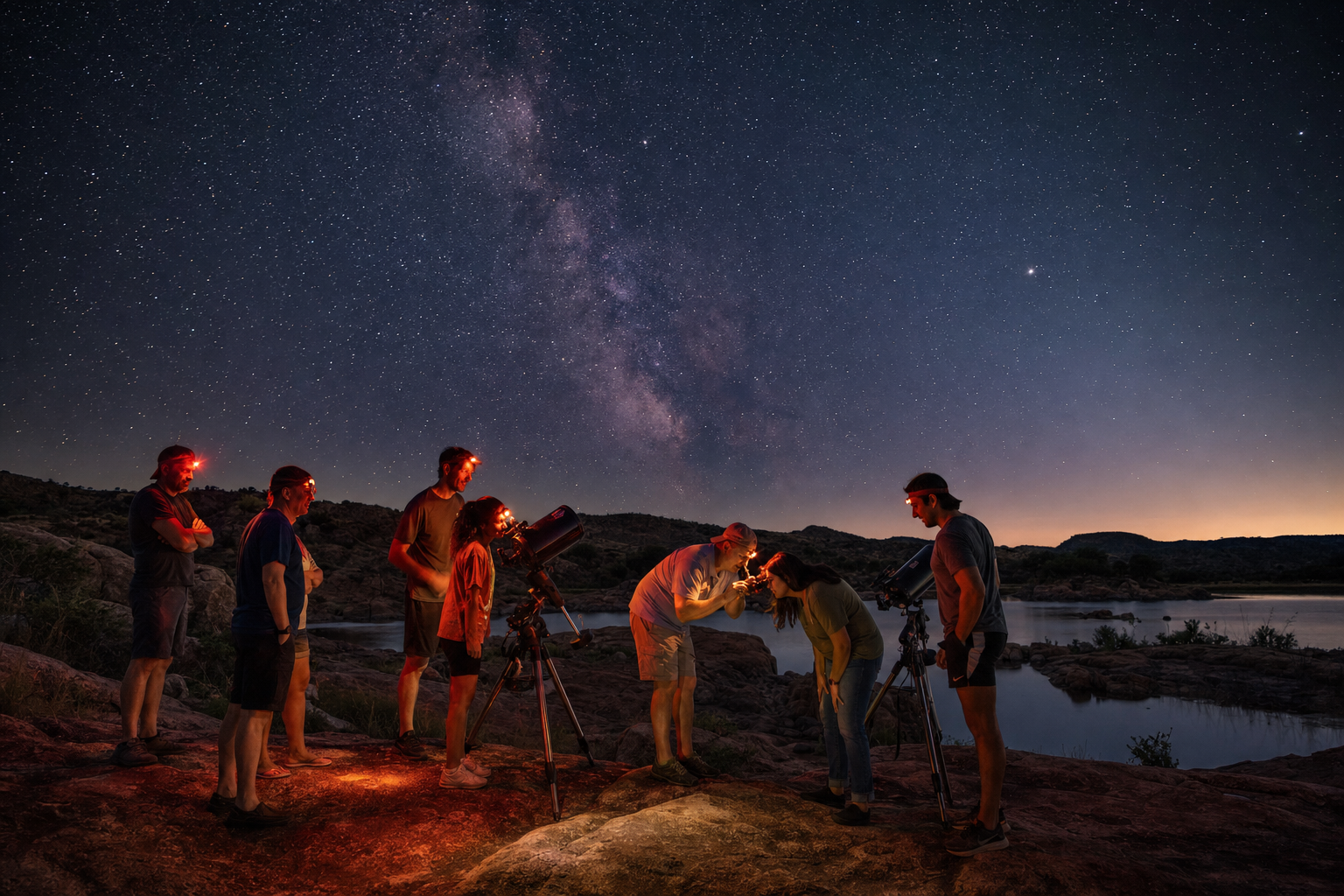
On Saturday, August 1, the Austin Astronomical Society plans a public star party at Inks Lake State Park beginning at 8:30 p.m. You do not need a telescope, a star chart, or an astronomy résumé. You need a little patience after sunset, a way to get yourself home safely, and the willingness to let someone point a telescope at something astonishing.
This is the easy Saturday-night version of an Inks Lake star party: arrive prepared, keep your light low, ask questions, and let the sky do the rest. The Austin Astronomical Society lists the event on its 2026 public star-party calendar. Since clouds and park conditions can change a viewing night, check the Society and Inks Lake State Park on the day before you leave.
The practical plan: start in Austin, end under the stars
Inks Lake State Park is at 3480 Park Road 4 West, Burnet, TX 78611, about an hour northwest of Austin in normal conditions. The park says it is open daily from 6 a.m. to 10 p.m.; its current adult day-use fee is $7, while children 12 and under enter free. Summer is a busy season, and the park strongly recommends reserving day use in advance to guarantee entry. The astronomy gathering itself is listed as a public event, but park access is separate—reserve a pass before you make the drive.
Build in a cushion. A relaxed arrival lets you find your bearings in daylight, use the restroom, fill a water bottle, and switch your phone to a red-light setting before people are observing. Bring dinner or snacks for the road, but remember that a star party is not a tailgate: save bright interior lights and loud music for after you have left the observing area.
If you are still deciding whether this kind of night is for you, Cosmic Match is a welcoming place to meet Austin astronomy neighbors before the next clear-sky plan. The best first observation is often the one where someone is happy to explain what you are seeing.
What happens at a public star party?
The Austin Astronomical Society’s public events are built around shared telescope views. Volunteers set up their own instruments and invite visitors to look at the night’s available targets—often bright planets, the Moon when it is up, double stars, star clusters, nebulae, or galaxies. Exactly what is visible changes with the season, horizon, haze, and clouds, so treat any target list as a bonus rather than a promise.
The good news: equipment ownership is optional. A telescope at home is not a ticket into the conversation. At your first visit, let the volunteers’ scopes do the heavy lifting. If you bring binoculars, keep them close; they can be lovely for wide star fields, but there is no need to unpack them immediately.
You may find that the most memorable part is not a single object. It is the small shared pause after someone says, “Take a look.” That is exactly the kind of low-pressure, shared-passion moment that makes a local astronomy community feel easy to join. You can also create a free Cosmic Match profile to find future observing partners and share your next clear-night plan.
Pack for comfort, not for a gear test
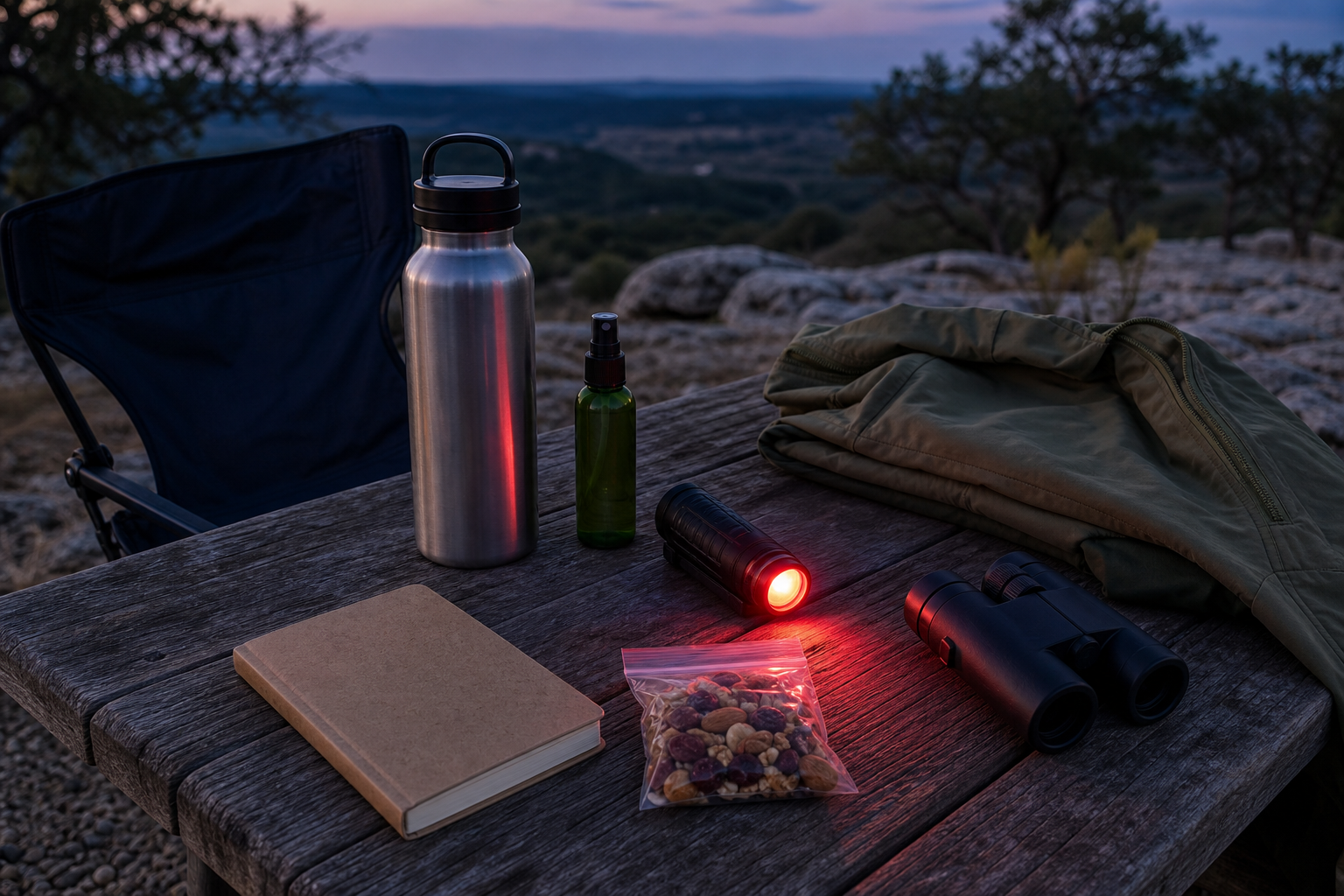
August at Inks Lake can still feel hot long after dinner, and weather can turn a pleasant night into a buggy or breezy one. Bring:
- Water and a small snack.
- Closed-toe shoes for uneven ground.
- A folding chair if standing is tough for you.
- A light layer; even warm forecasts can feel different beside the lake after dark.
- Insect repellent, used before you settle near the telescopes.
- A flashlight with a red mode, or a white flashlight covered with red film.
- Your phone, charged, with brightness lowered and flash disabled.
Leave expectations for a perfect Milky Way photo at home. Public observing is friendlier when the camera and bright screen stay in your bag. If a volunteer welcomes questions about your phone or binoculars, ask; otherwise, enjoy the view with your own eyes first.
Dark-field etiquette, in five friendly moves
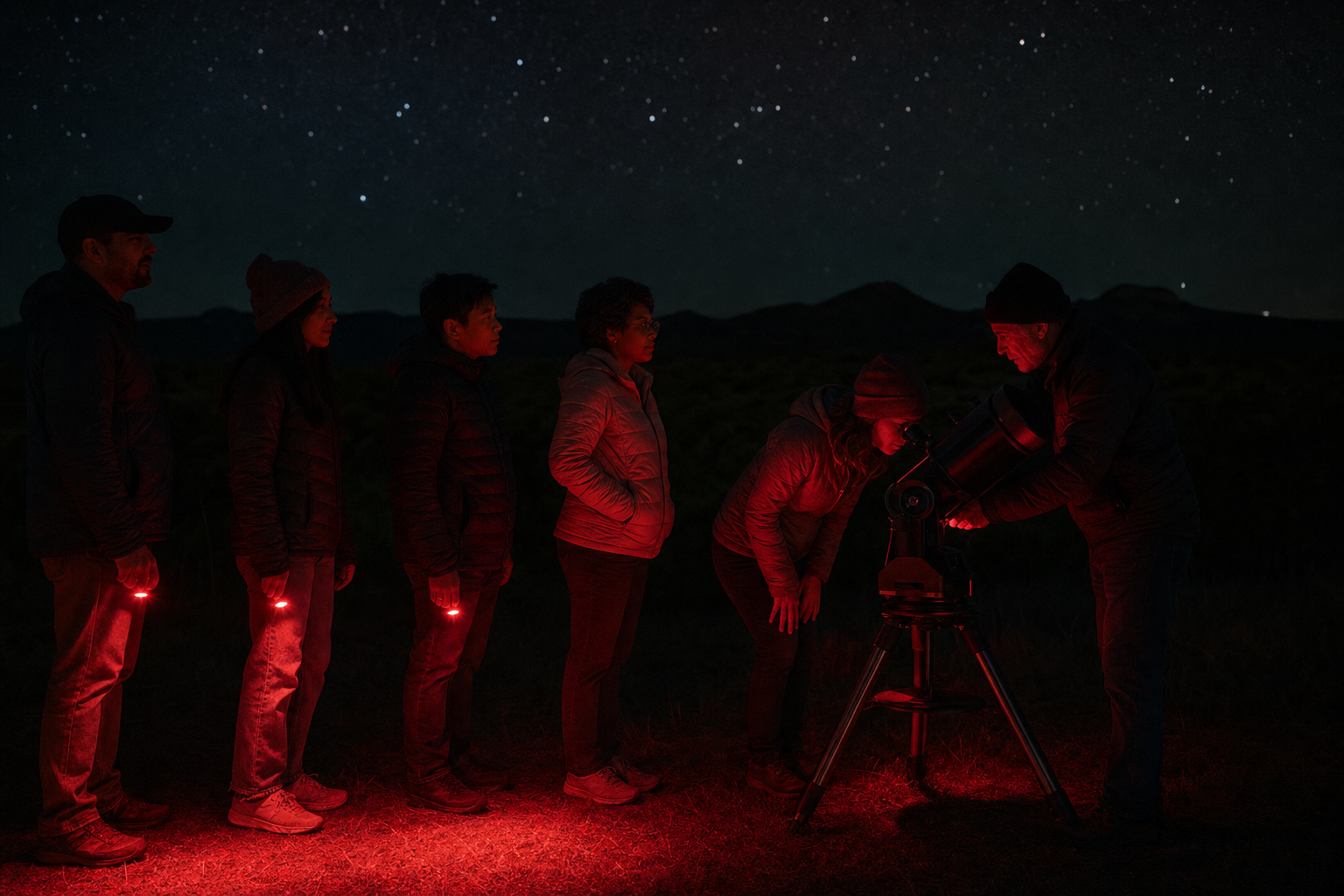
The fastest way to feel like you belong is to help protect everyone’s night vision. It takes roughly 20–30 minutes for eyes to adapt well to darkness, and one bright white beam can reset that work for a whole group.
- Use red light, pointed at the ground. Turn off phone flash and avoid bright screens.
- Wait behind the telescope line. Let the host invite you forward and follow any instructions for the eyepiece.
- Ask before touching. Focus knobs, tripods, and eyepieces are part of someone’s carefully balanced setup.
- Keep voices warm and low. Questions are welcome; a quiet field makes the night better for everyone.
- Save smoke, alcohol, and pets for another outing. The Society’s Inks Lake guidance has specifically asked visitors not to bring dogs near telescopes (except service animals), prohibits smoking around optical equipment, and notes that public alcohol consumption is not allowed in Texas state parks.
Weather is part of the plan
Clouds, lightning, high winds, and thick haze can change or cancel telescopic observing. Do not rely on a week-old social post. On Friday and again before leaving Saturday, check the Austin Astronomical Society’s event listing and the park’s current alerts or call the park office at (512) 793-2223. If the sky does not cooperate, you still have a Hill Country evening—but never drive through dangerous weather to chase a star party.
For a no-pressure backup, take a short walk earlier in the evening, enjoy the lake views, or save the astronomy plan for a clearer night. The Cosmic Match home community is also a good place to turn a weather cancellation into a future observing plan instead of a dead end.
A simple first-timer timeline
- Friday: Reserve day use if needed; check the event and weather.
- Saturday afternoon: Charge your phone, pack water, red light, a chair, and your layer.
- Around sunset: Leave Austin with a buffer for traffic and park entry.
- Before 8:30 p.m.: Arrive, orient yourself, and get your light settings right before the field gets dark.
- At the star party: Start with one telescope, ask what you are looking at, then move at the pace of the group.
- Before departure: Use low light, pack out what you brought, and drive patiently—dark roads deserve your full attention.
Your first Inks Lake star party does not need to become a technical project. Show up curious, bring a red light, and let a community of people who care about the sky make the universe feel a little closer.
Verify before you go
- Austin Astronomical Society 2026 public star-party calendar — lists Inks Lake State Park, August 1, 8:30 p.m.
- Inks Lake State Park visitor information — current park hours, reservations, address, and alerts.
- Inks Lake entrance fees — current day-use fee information.
For an Austin science-museum introduction to the research behind West Texas telescope trips, see our Hobby-Eberly Telescope exhibit guide.