The Hobby-Eberly Telescope Exhibit in Austin: A First-Timer Guide
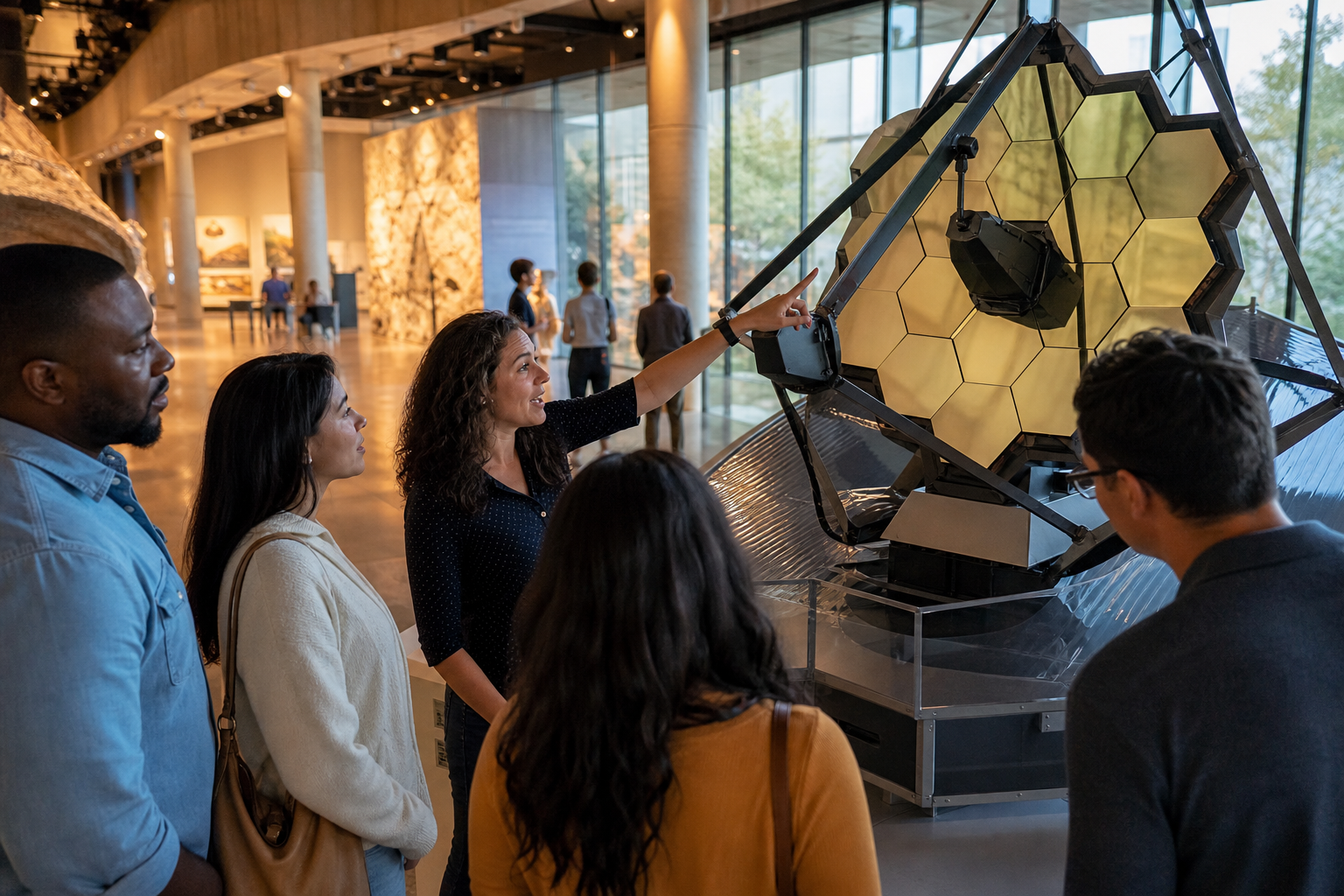
Austin has a low-commitment way to understand one of Texas’s most powerful research telescopes before you plan a West Texas road trip: the Texas Science & Natural History Museum’s third-floor Big Eye on Dark Skies exhibit. It includes a scale model of the Hobby-Eberly Telescope (HET) and hands-on spectroscopy context, according to the museum’s event listing. It is an easy science-first stop for anyone who likes big instruments, distant galaxies, or simply wants a better answer to “what does a telescope actually do?”
The important distinction: the exhibit is in Austin; the real Hobby-Eberly Telescope is at McDonald Observatory near Fort Davis. These are complementary experiences, not interchangeable visits.

What can you see at the Austin Hobby-Eberly exhibit?
At the museum, you can take your time with a scale model and the science behind the instrument. The useful takeaway is not a list of telescope specifications. It is the idea that astronomy turns faint light into evidence: instruments separate light, record patterns, and help researchers ask questions about objects too distant to visit.
The exhibit is a good choice for a rainy afternoon, a first science-museum visit with a space-curious friend, or a prelude to a bigger stargazing plan. Check the Texas Science & Natural History Museum’s current event and admission information before you go, since programming and hours can change.
Why is the Hobby-Eberly Telescope a big deal?
The 10-meter HET is a research telescope at McDonald Observatory. Its wide field feeds instruments including VIRUS, LRS2, the Habitable Zone Planet Finder, and HRS2, as McDonald Observatory explains. One major program, HETDEX, uses the telescope to study dark energy and the universe’s expansion.
That makes the Austin exhibit more than a photo stop. It is a way to connect a physical model to active research. Look for the mirror geometry, the instrument path, and any explanation of spectra. You do not need to memorize terms; asking “what light is this measuring?” is plenty.
Can you visit the real Hobby-Eberly Telescope?
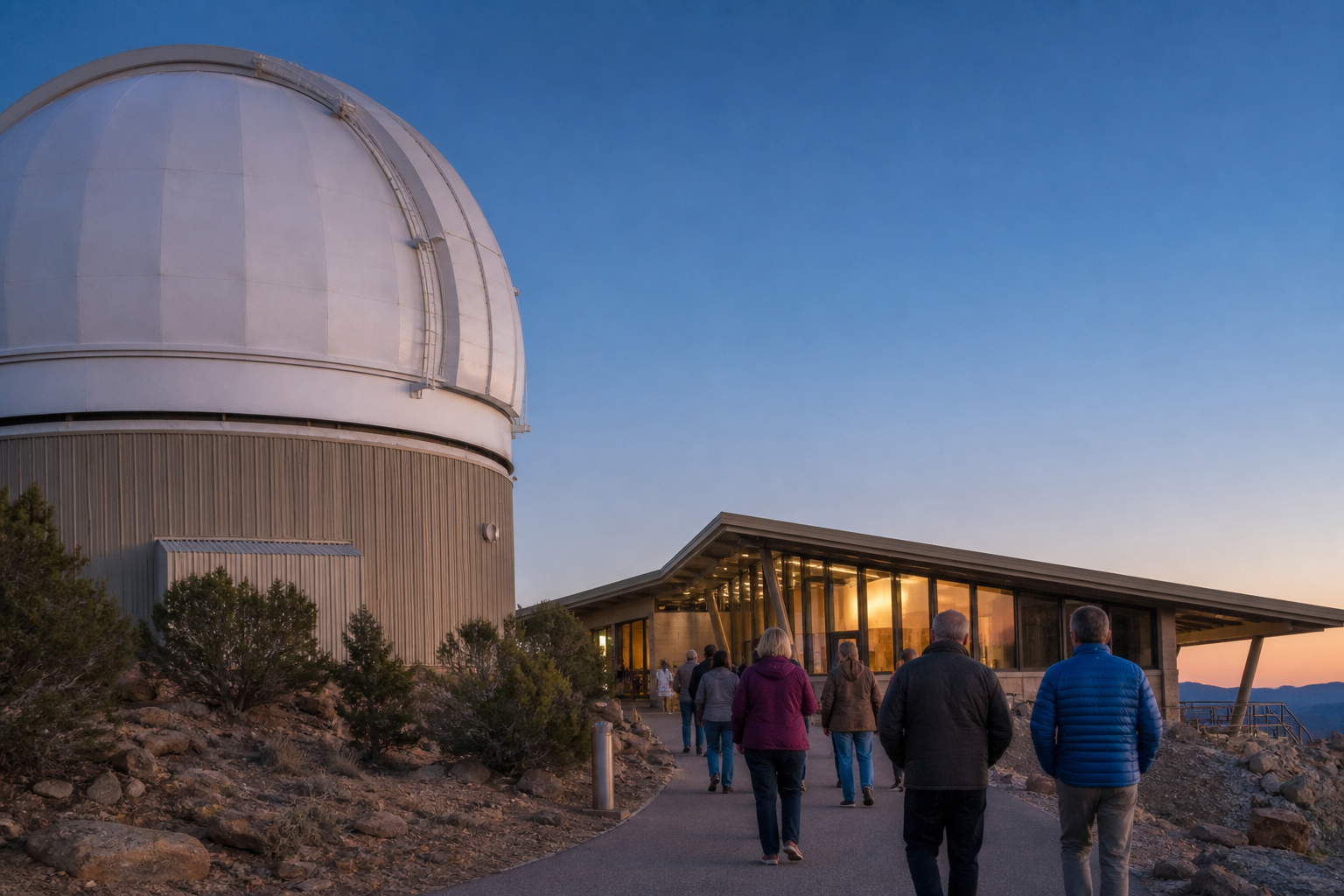
Yes, but plan for Fort Davis, not Austin. McDonald Observatory’s guided tour includes a visit to the Hobby-Eberly Telescope and typically lasts about 90 to 120 minutes. The observatory states clearly that visitors see the telescopes but do not look through them. That is normal for an active research facility.
The public visitor center is generally open Tuesday through Saturday from noon to 5 p.m., with guided tours listed at 2 p.m.; reservations can sell out. The drive from Austin is roughly 440 miles, so treat it as a West Texas trip, not an afternoon detour. Review the official McDonald Observatory visit page and guided-tour details before booking. Mountain roads, weather, altitude, and research operations all deserve more respect than a last-minute itinerary.
What does spectroscopy have to do with a telescope visit?
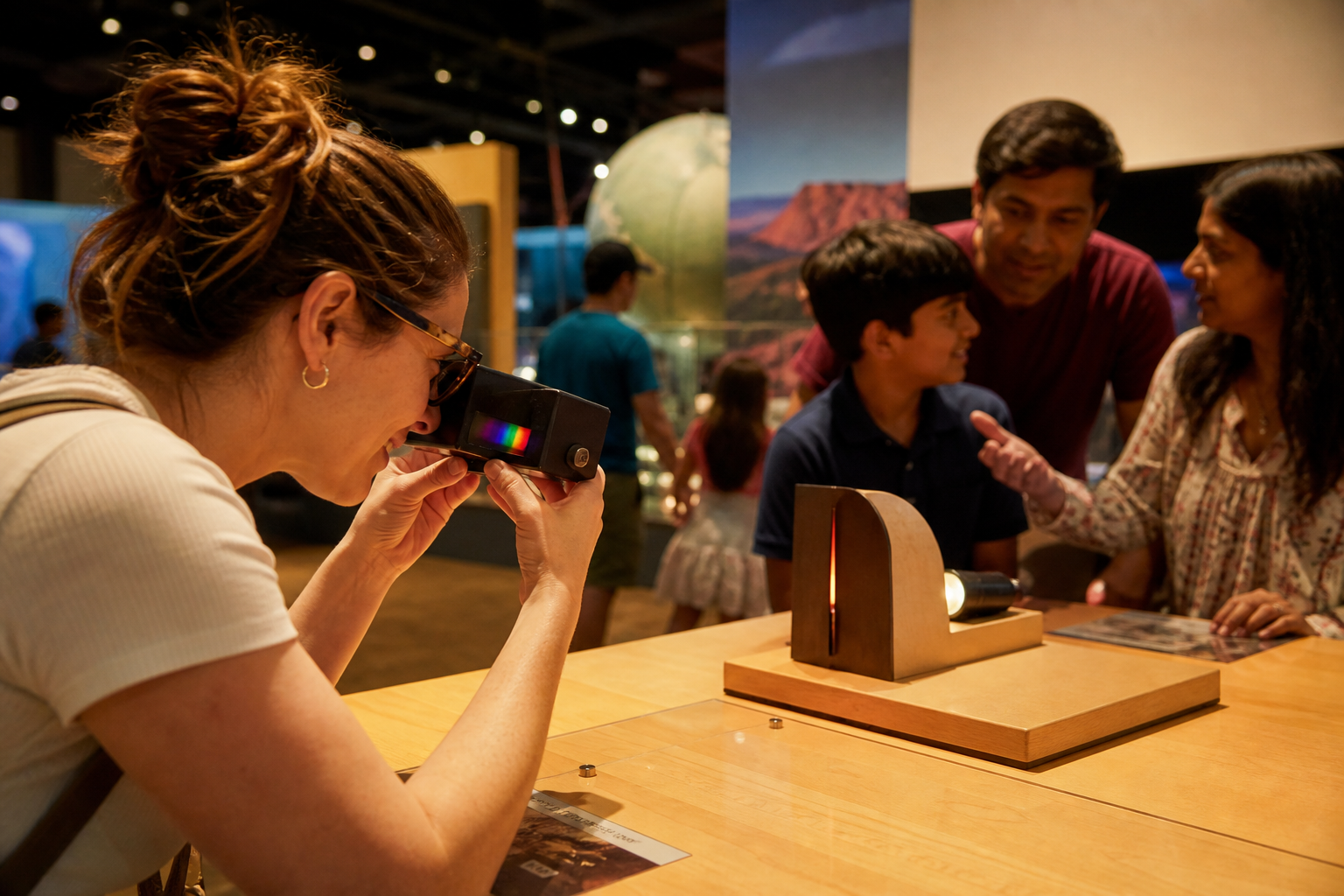
Spectroscopy is the practical reason astronomy can learn from light. A spectrum spreads light into wavelengths. Those patterns can reveal information about an object’s composition, motion, and conditions. You do not need lab equipment to appreciate the core idea: the colorful band is data, not decoration.
The Austin exhibit’s hands-on approach makes this easier to absorb than a paragraph of terminology. Spend a few minutes with it, then use the model to imagine how HET sends collected light to its instruments instead of simply making a larger image for someone to look through.
Make it a community sky day
Pair the museum with an evening plan that stays local: a clear-sky walk, a low-key backyard constellation check, or the next public observing event you can attend. For a no-equipment starting point, our Perseids city-night plan has the simple habits that make outdoor observing feel doable. If a future Davis Mountains trip is calling, our Inks Lake Star Party first-timer guide is a good reminder that shared skywatching can start closer to home.
Cosmic Match is built for those small, repeatable moments of curiosity. Join free at Cosmic Match to meet people who will happily compare museum notes now and plan a star party later.
FAQ
Is the Hobby-Eberly Telescope in Austin?
No. The real HET is at McDonald Observatory near Fort Davis, Texas. Austin’s Texas Science & Natural History Museum has a related scale-model exhibit.
Can visitors look through the Hobby-Eberly Telescope?
No. McDonald Observatory’s guided-tour information says visitors can see the research telescopes but cannot look through them.
How far is McDonald Observatory from Austin?
It is roughly 440 miles by road, so plan it as a multi-day West Texas outing or a long travel day, not a short Austin excursion.