What Telescope Do You Need to See Saturn’s Rings? A Beginner Gear Guide

Saturn reaches opposition on October 4, 2026, making it one of the year’s best windows to spot the ringed planet. The honest answer to “what telescope do I need to see Saturn’s rings?” is encouraging: a small, well-collimated telescope on a steady mount can show the rings as a separate shape. You do not need a huge observatory instrument—but you do need reasonable expectations, patient focusing, and a night when the air cooperates.
NASA lists October 4 as Saturn’s 2026 opposition, the point when Earth passes between Saturn and the Sun and the planet is especially well placed for evening observing. NASA’s 2026 skywatching calendar is a useful starting point for putting the date on your calendar.
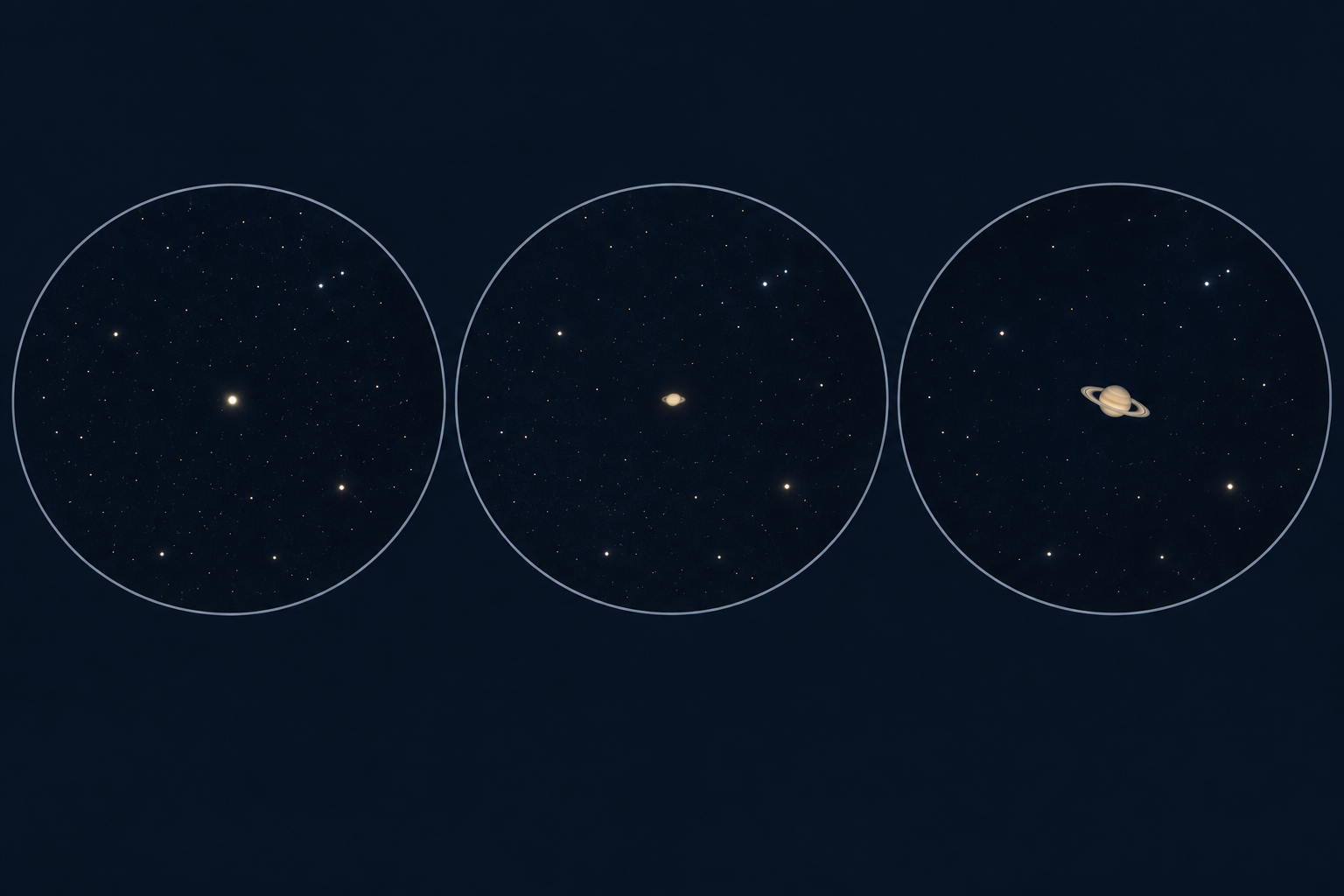
Can you see Saturn’s rings without a telescope?
No. With your unaided eyes, Saturn is a steady, warm-colored point of light—not a tiny picture of the planet. You can absolutely learn to find it that way, which is valuable: locating the planet before you set up optics saves a lot of wandering around the sky.
Binoculars can make Saturn easier to locate and may reveal its non-stellar, slightly oval look under good conditions. They generally will not cleanly split the planet from its rings. Think of binoculars as the finder tool, not the ring-resolving tool. A sky map or a friendly observer at a local event can make this first step much easier; Cosmic Match’s Austin star-party guide has the practical etiquette that helps first visits feel comfortable.
What telescope aperture is enough to resolve Saturn’s rings?
For a first real look, a 60–90 mm (about 2.4–3.5 inch) refractor or a 114–130 mm (about 4.5–5 inch) reflector is a sensible entry range. Those apertures can gather enough light and resolution for the rings to read as a separate, thin ellipse around a small disk—when the optics are in good shape and the atmosphere is steady.
A larger aperture can reveal more, but it is not a magic guarantee. A wobbly, hard-to-aim telescope is frustrating at any size. For Saturn, an easy telescope you bring outside and use often beats a more ambitious setup that stays in a closet.
Why does the mount matter as much as the telescope?
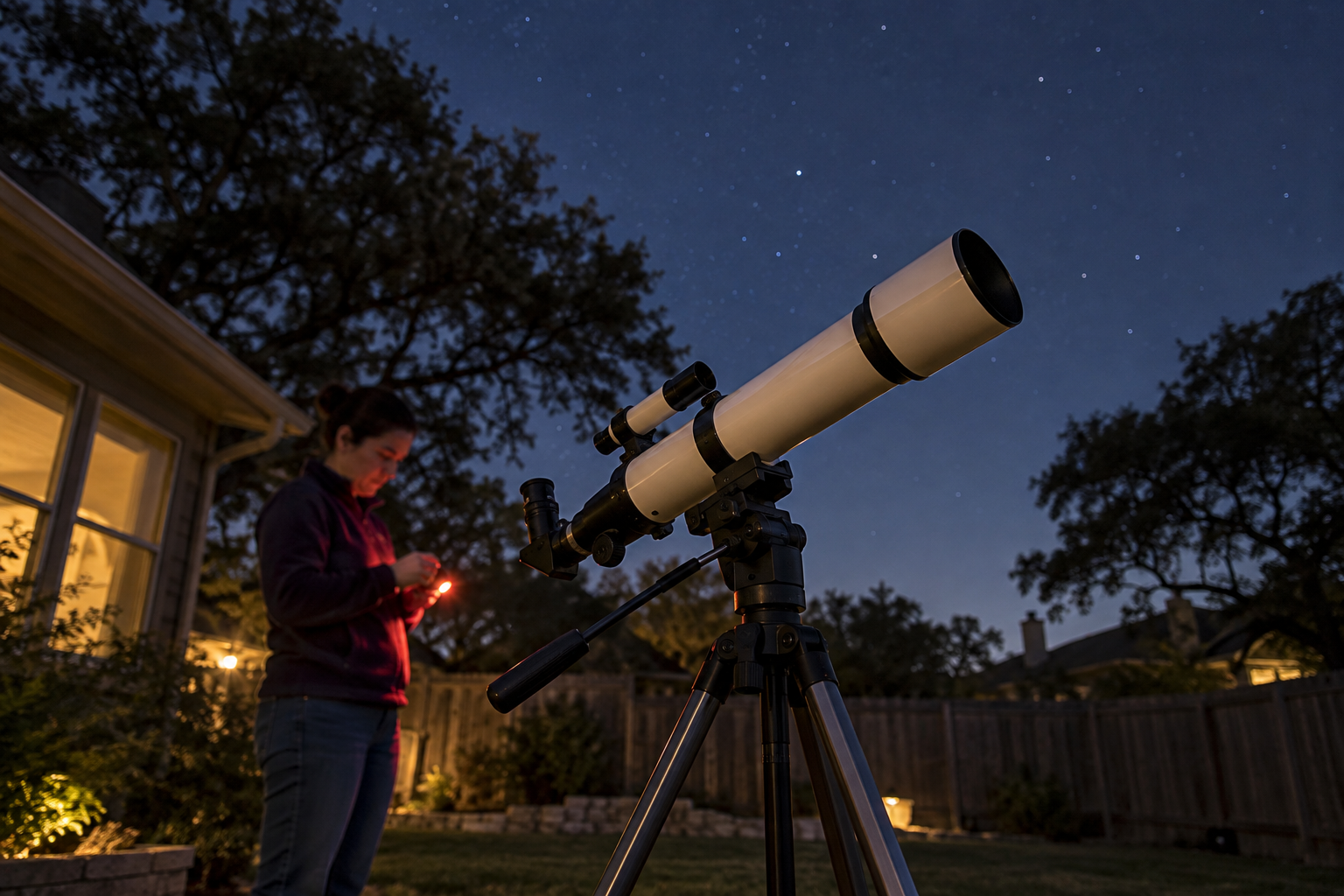
Saturn is small in the eyepiece, so every shake is obvious. Put stability high on your checklist: a solid tripod, a mount that locks without drooping, and slow-motion controls or smooth manual movement. Let the telescope cool toward outdoor temperature, then use a gentle touch when focusing.
Avoid treating the number printed on an eyepiece box as the whole story. Useful magnification is the amount the sky and optics can support on that night. Start around 75× to 100×, center Saturn, focus slowly, and increase only if the image remains crisp. Around 100× to 150× is often a productive range for a small beginner telescope on a steady night; pushing higher can turn a sharp little planet into a larger, softer blur.
What will Saturn actually look like through a beginner telescope?
Expect something small, bright, and thrillingly real—not a NASA press image. On a good night, you should see a pale globe with the rings visibly extending to either side. Depending on ring tilt, aperture, magnification, and atmospheric steadiness, you may also notice a darker gap between ring and globe, subtle banding, or Titan nearby as a tiny point.
The rings’ apparent shape changes over the years as Saturn orbits the Sun. That is part of the fun: your view is a live geometry lesson, not a fixed postcard. Do not judge your first attempt by an online image taken with stacked video frames and specialized equipment.
How do you get your best first view of Saturn?
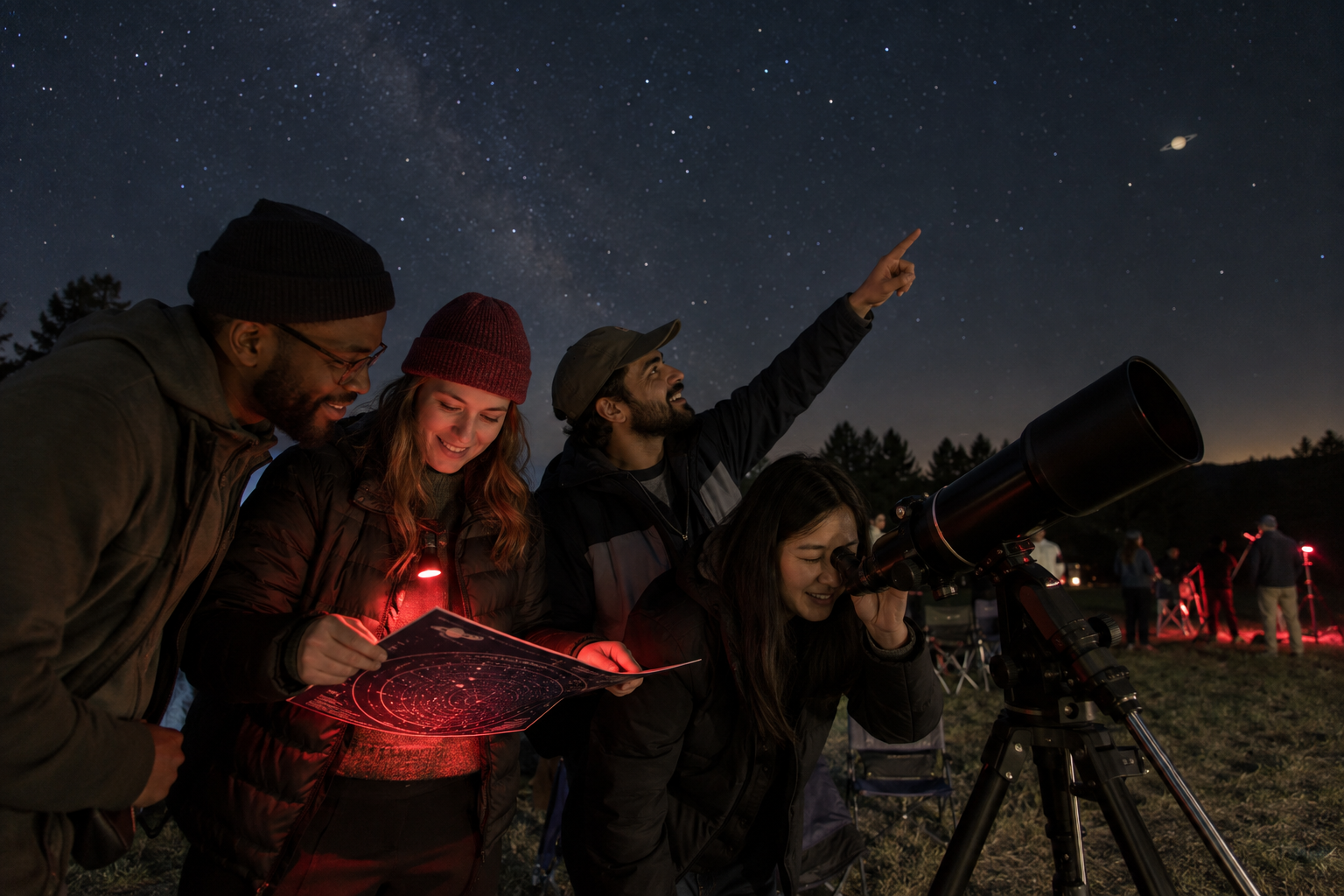
Pick a clear night when Saturn is high above rooftops and trees; looking through more low-altitude air makes the image shimmer. Give yourself 20 minutes away from bright indoor light, use a dim red flashlight, and keep expectations flexible when humidity or turbulence is high. If the planet looks as though it is boiling, reduce magnification and try again later.
A simple first-night plan:
- Find Saturn with your eyes or binoculars before aiming the telescope.
- Begin with a low-power eyepiece to center it.
- Focus at modest magnification, then step up only while the image stays sharp.
- Wait through the wobbles. Moments of steady air can suddenly make the rings pop.
- Share the eyepiece. Comparing what everyone notices turns a brief look into a memory.
If you are still deciding whether to borrow, buy, or wait, a paper sky tool is a low-pressure companion to your first sessions. Our guide to the best planisphere for beginners in Austin, Houston, and LA explains how to choose the right latitude version—or use a no-purchase fallback.
Saturn opposition is a lovely excuse to step outside with people who get why a tiny ringed dot can stop a conversation. Bring curiosity, not perfection. Then join the Cosmic Match astronomy community to meet people who will happily take another turn at the eyepiece.
FAQ
What is the smallest telescope that can show Saturn’s rings?
A good 60 mm refractor can begin to separate the rings from the planet under steady skies, but 70–90 mm refractors and 114–130 mm reflectors give a more forgiving first experience. Optical quality and a stable mount matter alongside aperture.
Are binoculars enough to see Saturn’s rings?
Usually no. Binoculars can help you identify Saturn and may show it as a tiny non-stellar shape, but resolving the rings as separate from the planet normally requires a telescope.
What magnification should I use for Saturn?
Start at roughly 75× to 100×. If the image remains sharp and steady, try 100× to 150×; if it becomes soft or shimmery, lower the magnification.
Is October 4, 2026 the only night to observe Saturn?
No. Opposition is a strong milestone because Saturn is especially well placed, but the planet is rewarding on clear nights around that date too. Your local horizon and atmospheric conditions determine what looks best in the eyepiece.
Seeing Saturn after opposition? For a weather-aware city plan in Austin, Houston, or Los Angeles, read our Saturn opposition viewing guide.