June 2026 Stargazing Calendar: What to Watch Before Summer Starts
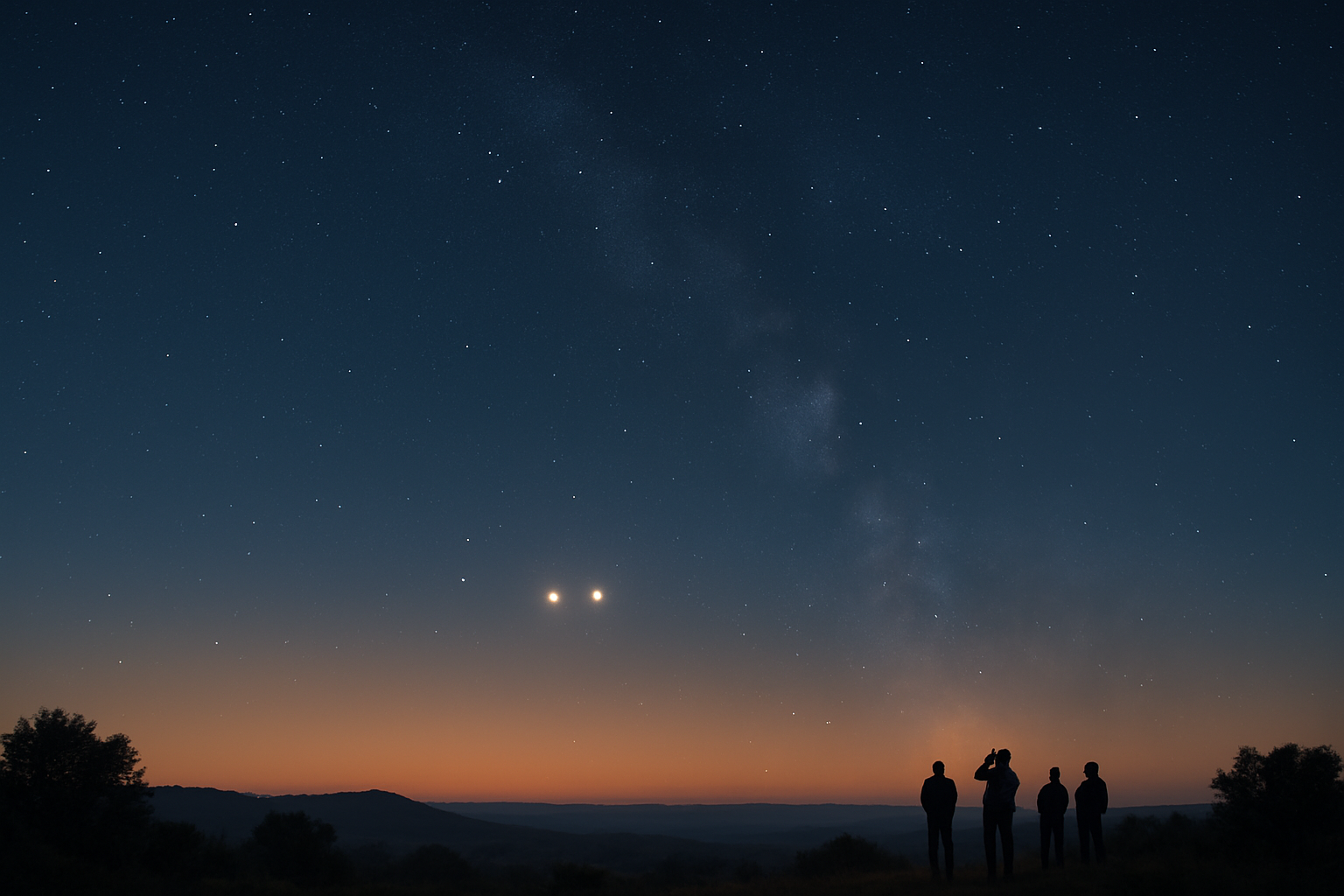
June 2026 is stacked in a way that works unusually well for city skywatchers. Before the month is half over, Venus and Jupiter squeeze together low in the western sky, Mercury reaches its best evening visibility, and the crescent Moon turns the whole scene into an easy naked-eye lineup. You do not need a remote desert, a giant telescope, or a perfect forecast to get something out of this month. You need a clear horizon, a few specific dates on your calendar, and the patience to step outside more than once.
One late-breaking addition belongs on this calendar: NOAA's updated June 5 geomagnetic-storm forecast still reaches G3 on paper, but the strongest local block for Austin, Houston, and Los Angeles now lands in dawn or daylight hours. We broke that correction out separately in our updated aurora forecast timing guide, since the main audience value is the timing change, not a stronger local viewing case.
According to NASA’s 2026 skywatching guide and timeanddate’s June 2026 sky guide, the headliner is the June 8-9 Venus-Jupiter conjunction, followed by Mercury at greatest elongation east on June 15, the Moon-Mercury-Venus-Jupiter lineup around June 16-18, the June solstice on June 21, and the Strawberry Moon on June 29. That gives Austin, Houston, and Los Angeles readers a practical month: easy evening targets first, a photogenic mid-month sequence next, and a bright Moon to close things out. If you want the focused how-to for Mercury's part of that sequence, our new guide to spotting Mercury before June 15 breaks down the low-west timing in more detail. If you want actual venue ideas for this week instead of just sky events, use our Austin, Houston, and Los Angeles stargazing roundup.
For the next-step science explainer after Mercury's June viewing window ends, our Mercury at aphelion guide explains why July 1 matters even though it is not a visibility event.
One more late-June update now belongs on the list: asteroid 1997 NC1 makes a safe close pass on June 27, with livestreams starting tonight and a real small-telescope tracking window over June 26 to 28. Our guide to the asteroid 1997 NC1 close pass tonight breaks down what the label means, when to watch, and what Austin, Houston, and Los Angeles observers can realistically see.
June 2026 Stargazing Calendar at a Glance
| Date | Event | Why it matters |
|---|---|---|
| June 8-9 | Venus-Jupiter conjunction | The two brightest evening planets appear extremely close together low in the west after sunset. |
| June 15 | Mercury at greatest elongation east | Mercury gets its best evening placement of the month, making it easier to spot than usual. |
| June 16-18 | Moon-Mercury-Venus-Jupiter lineup | The waxing crescent Moon joins the western planets for the month’s prettiest casual skywatch. |
| June 21 | June solstice | Summer starts in the Northern Hemisphere, bringing long evenings and a useful seasonal reset for skywatching plans. |
| June 29 | Strawberry Moon | June ends with a full Moon that is also a micro full moon, so it appears a bit smaller than average. |
June 8-9: Venus and Jupiter Steal the Show
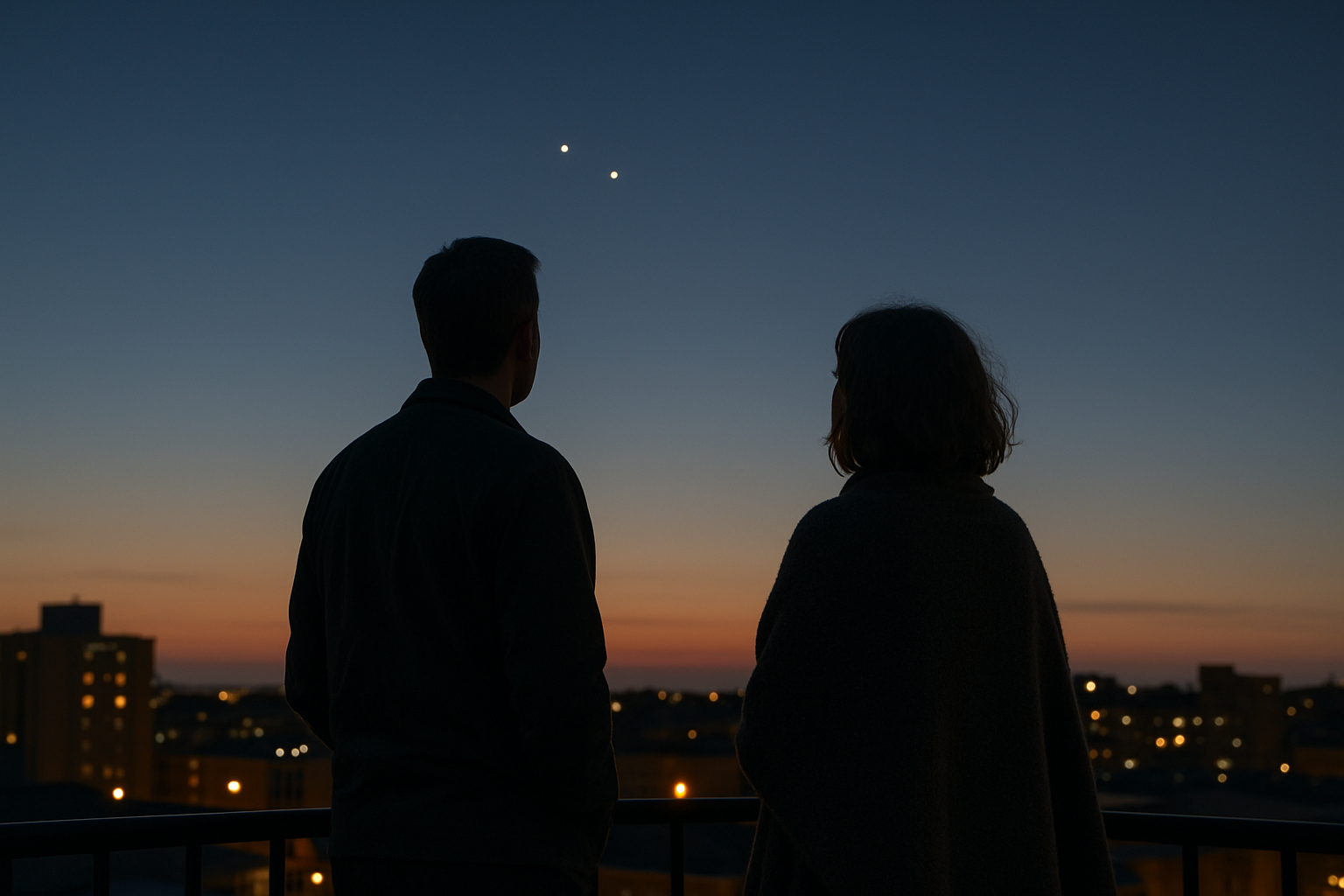
NASA’s roundup of the year’s biggest sky events calls out June 8-9 as the date when Venus and Jupiter appear only about a pinky finger apart, and no telescope is required. That is the most important June date to protect if your forecast looks mixed.
The practical move is simple: head outside about 35 to 50 minutes after sunset and face west to west-northwest. Venus should punch through the twilight first. Jupiter sits nearby, dimmer but still obvious once the sky deepens a bit. If you want a more detailed setup for that window, our earlier guide to tracking Venus and Jupiter before June 9 breaks down the viewing rhythm in more detail.
For Austin, elevated west-facing overlooks beat darker but obstructed locations. For Houston, humidity and haze matter more than light pollution for low-altitude targets, so a clean horizon is worth more than driving far. For Los Angeles, marine haze can soften the view, but a west-facing hill, bluff, or rooftop can still make the pairing easy.
June 15-18: Mercury Gets Easier and the Moon Joins In
Mid-month is where June turns from a one-night conjunction into a sequence. timeanddate lists June 15 as Mercury’s greatest elongation east, which is the point in this stretch when Mercury stands farthest from the Sun in the evening sky and is therefore easier to pick out.
That matters because the next few evenings are the prettiest of the month. Around June 16-18, the waxing crescent Moon lines up with Mercury, Venus, and Jupiter in the western twilight. The exact best evening varies a bit by time zone and local conditions, so it is smarter to think in terms of a three-night window than one perfect minute. On June 17, that same sequence also turns into a daytime Moon-Venus occultation with exact city timings for Austin, Houston, and Los Angeles.
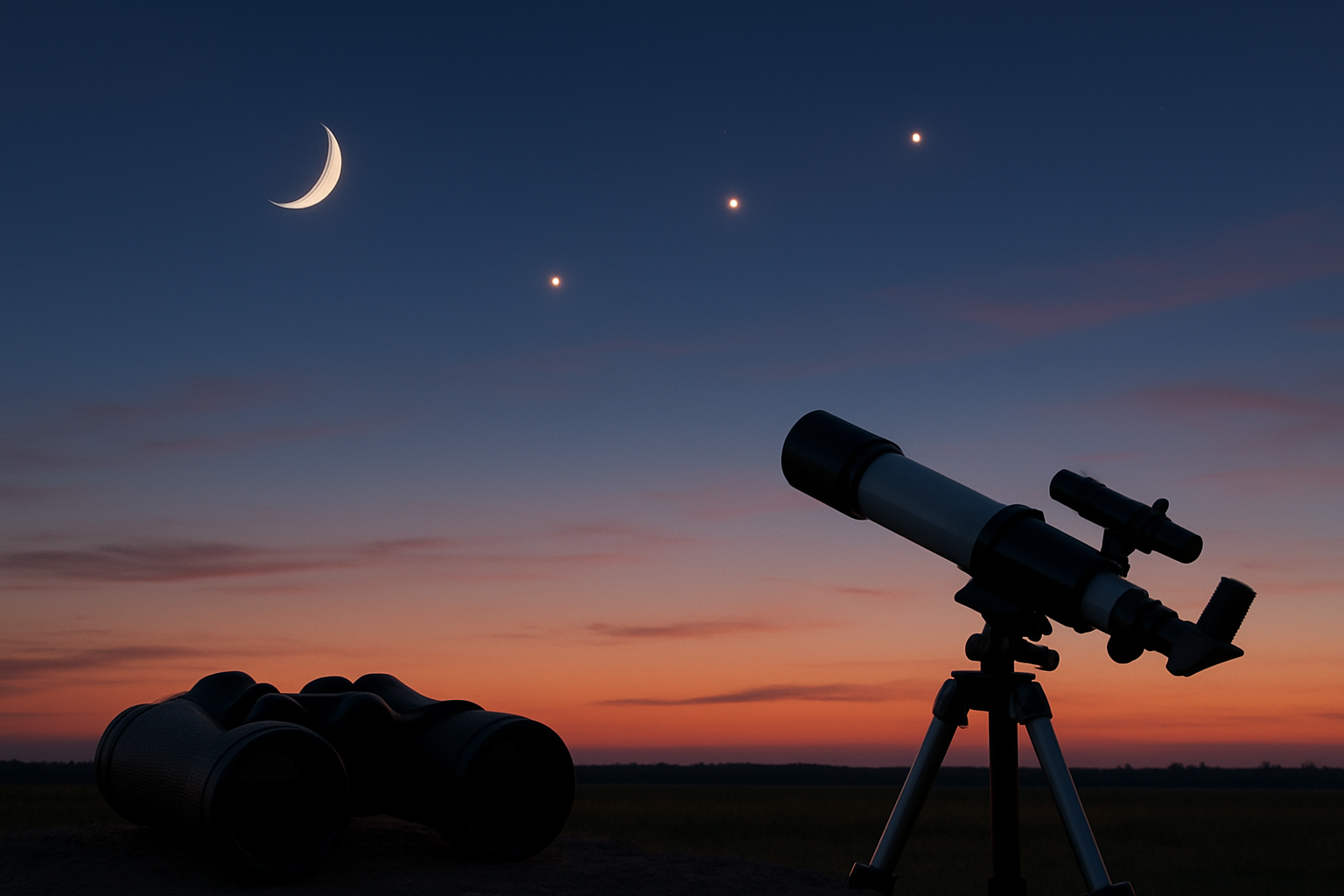
This is the stretch to use if you want a social skywatch rather than a single check-the-box sighting. Bring binoculars if you have them, but naked-eye viewing is the point. The best routine is to step outside soon after sunset, lock onto Venus first, then work downward and sideways for Mercury while the crescent Moon gives you an obvious reference.
If you are still learning how to aim basic gear, our post on three easy evening targets for a first telescope is still useful here because the same low-pressure habits apply: start early, find the brightest object first, and keep your horizon as open as possible.
June 21: The Solstice Is a Seasonal Marker, Not the Month’s Best Viewing Night
The June solstice happens on June 21 at 08:24 UTC, which is 3:24 a.m. CDT for Austin and Houston and 1:24 a.m. PDT for Los Angeles. It is not the most dramatic naked-eye event of the month by itself, but it does mark the official start of summer in the Northern Hemisphere and a useful reset point for evening observing habits.
In practice, the solstice means late sunsets, warm sidewalks, and more casual time outside, which is good for beginner skywatching even if the headline event is not happening that night. If the first half of June gets clouded out, the solstice is a good reminder not to treat the month as over. Mercury and the bright evening planets still give you reasons to keep looking west. For the city-by-city timing shift and a practical solstice-week plan, read our June solstice night-sky guide.
June 29: The Strawberry Moon Closes the Month
June ends with the Strawberry Moon on June 29 at 23:56 UTC, which converts to 6:56 p.m. CDT in Austin and Houston and 4:56 p.m. PDT in Los Angeles. That peak illumination happens before moonrise for many U.S. viewers, so the most practical advice is to treat moonrise that evening as your viewing moment, not the exact timestamp.
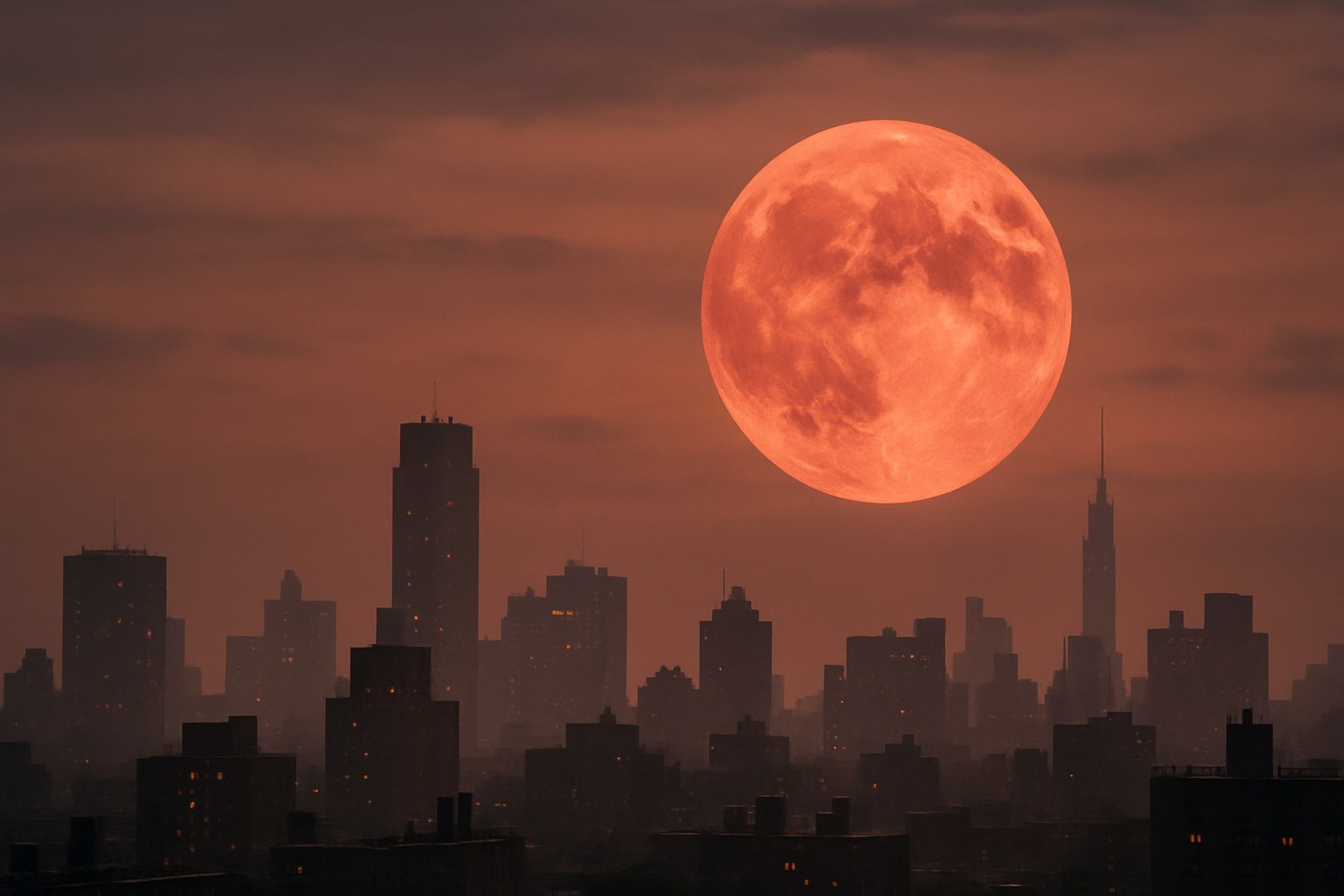
timeanddate also notes that this full Moon is a micro full moon, meaning it occurs when the Moon is relatively far from Earth. The difference is subtle. It will not look dramatically tiny to the eye, but it may appear a bit smaller and dimmer than an average full Moon. The better reason to watch is simply that a June full Moon rising through summer haze can look excellent in photos and feels like a clean end-of-month target.
If you want to turn that kind of night into something shared instead of solo, you can meet local space nerds in Austin, Houston, or Los Angeles, or just join free on Cosmic Match before the next clear night.
Best June Game Plan for Cosmic Match Readers
Do not try to “cover June” in one outing. This month works better as three short missions.
- Protect June 8 or 9 for the Venus-Jupiter conjunction.
- Check the western sky again on June 16-18 for the Moon-plus-planets lineup.
- Save one easy evening for June 29 moonrise if you want a low-effort final target.
That mix gives you one bright conjunction, one photogenic lineup, and one full-Moon closeout without needing advanced gear. For a city-based audience in Texas and Southern California, that is exactly the kind of calendar that is realistic enough to follow.
June 2026 is not a month for memorizing every faint object overhead. It is a month for stepping outside on the right evenings and letting a few bright, obvious targets do the work.\n\n## Also useful this weekend\n\nIf you are planning a mid-June session before the solstice, see our Summer Triangle guide for a simple way to spot Vega, Deneb, and Altair and turn one bright pattern into a full observing session.\n
For the best binocular-and-small-telescope targets in the current dark-sky stretch, use our June dark-moon deep-sky guide, which breaks down what to chase after moonset in Austin, Houston, and Los Angeles.
If you are deciding whether the late-June meteor slot is worth your time, our new June Bootids weekend guide explains why June 26 and 27 look more like a low-key community skywatch than a high-count shower in 2026.