June Solstice 2026: What Changes in the Night Sky Before the Longest Day

If you walked outside this week and thought, "Why is it still not dark?", the June solstice is the reason. The exact solstice lands on Sunday, June 21, 2026 at 08:24 UTC, which is 3:24 a.m. CDT in Austin and Houston and 1:24 a.m. PDT in Los Angeles. That moment starts astronomical summer in the Northern Hemisphere, but for actual skywatchers the bigger change is practical: sunset runs later, true darkness takes longer, and the best part of your observing session shifts deeper into the evening.
That does not make June worse for stargazing. It just changes the game plan. Early evening still belongs to bright twilight targets low in the west. Later evening belongs to summer patterns like Vega, Deneb, and Altair. If you want the month-wide checklist first, our June 2026 stargazing calendar gives the broader rhythm. This post is the solstice-week version: what actually changes, when to go outside, and what is still worth your time in Austin, Houston, and Los Angeles. And if you want one easy southern-sky target once late twilight finally gives up, our Antares and Scorpius finder guide turns the June 26 and 27 Moon into a clean pointer.
If your main question is why the longest day itself arrives while much of the U.S. is asleep, and why the latest sunset comes later, read our June solstice overnight explainer for the daylight side of the same weekend.
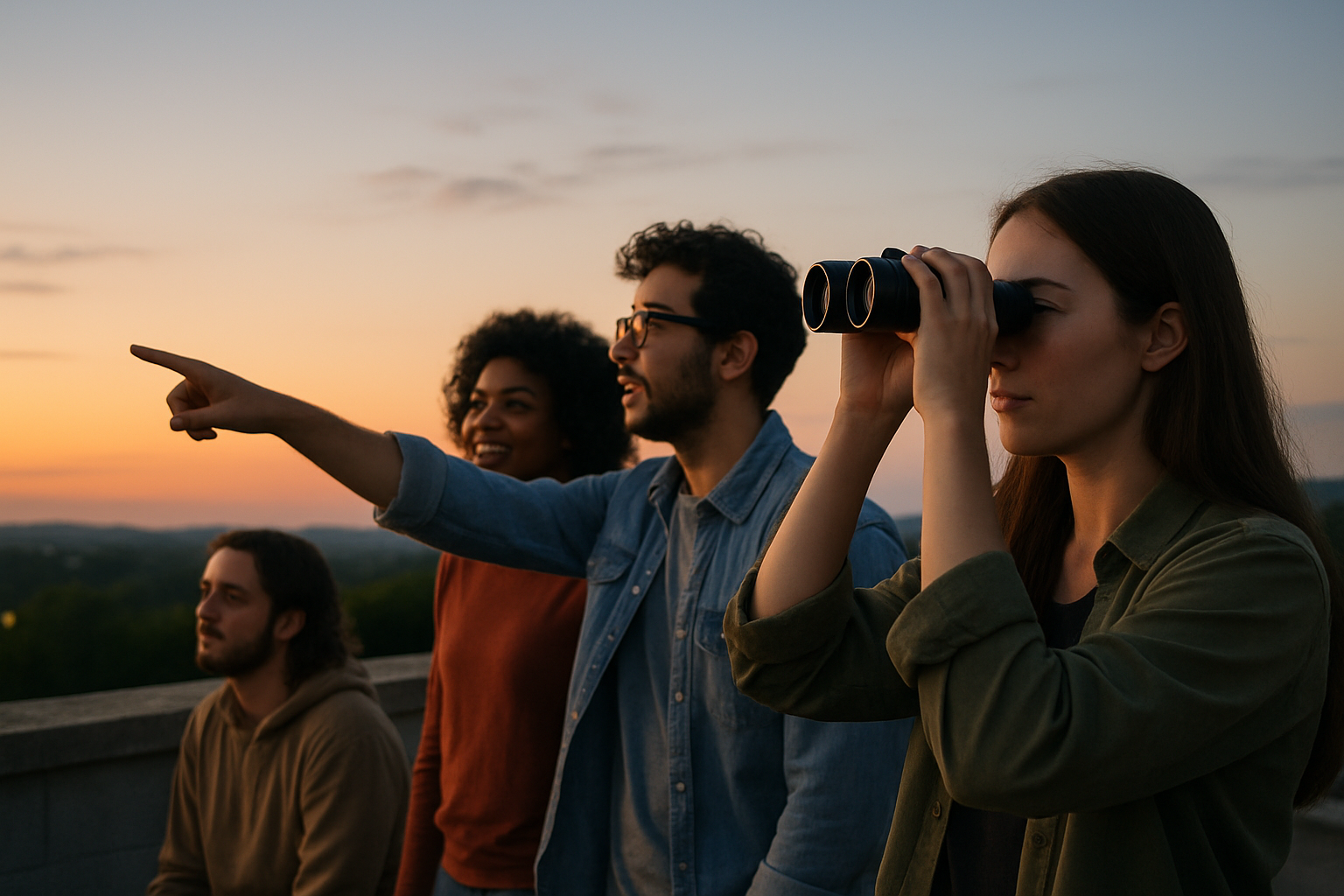 Twilight targets still work in solstice week, but they reward people who head outside earlier instead of waiting for full darkness.
The Solstice Changes Your Schedule More Than Your Target List
According to timeanddate, June 21 is the year's longest day around all three live markets, but the more useful number for observers is when astronomical darkness finally arrives. That is the point when faint stars and nebulae stop fighting leftover glow.
| City | Sunset on June 21 | Full astronomical darkness | What it means |
|---|---|---|---|
| Austin | 8:35 p.m. CDT | about 10:13 p.m. CDT | Great for after-dinner meetups, but faint-sky observing starts later than most beginners expect. |
| Houston | 8:25 p.m. CDT | about 10:01 p.m. CDT | Slightly earlier darkness than Austin, but still late enough that 9 p.m. can feel deceptively bright. |
| Los Angeles | 8:07 p.m. PDT | about 10:08 p.m. PDT | A little earlier than Texas, but still late enough that a casual session needs more patience than people expect. |
If you step outside in Austin at 9 p.m. and think the solstice "washed out" the sky, the problem is usually timing, not the season. Civil twilight may be over, but full darkness is not. The solstice shortens your truly dark-sky window, yet it also makes warm casual skywatching easier because more people are willing to be outside later.
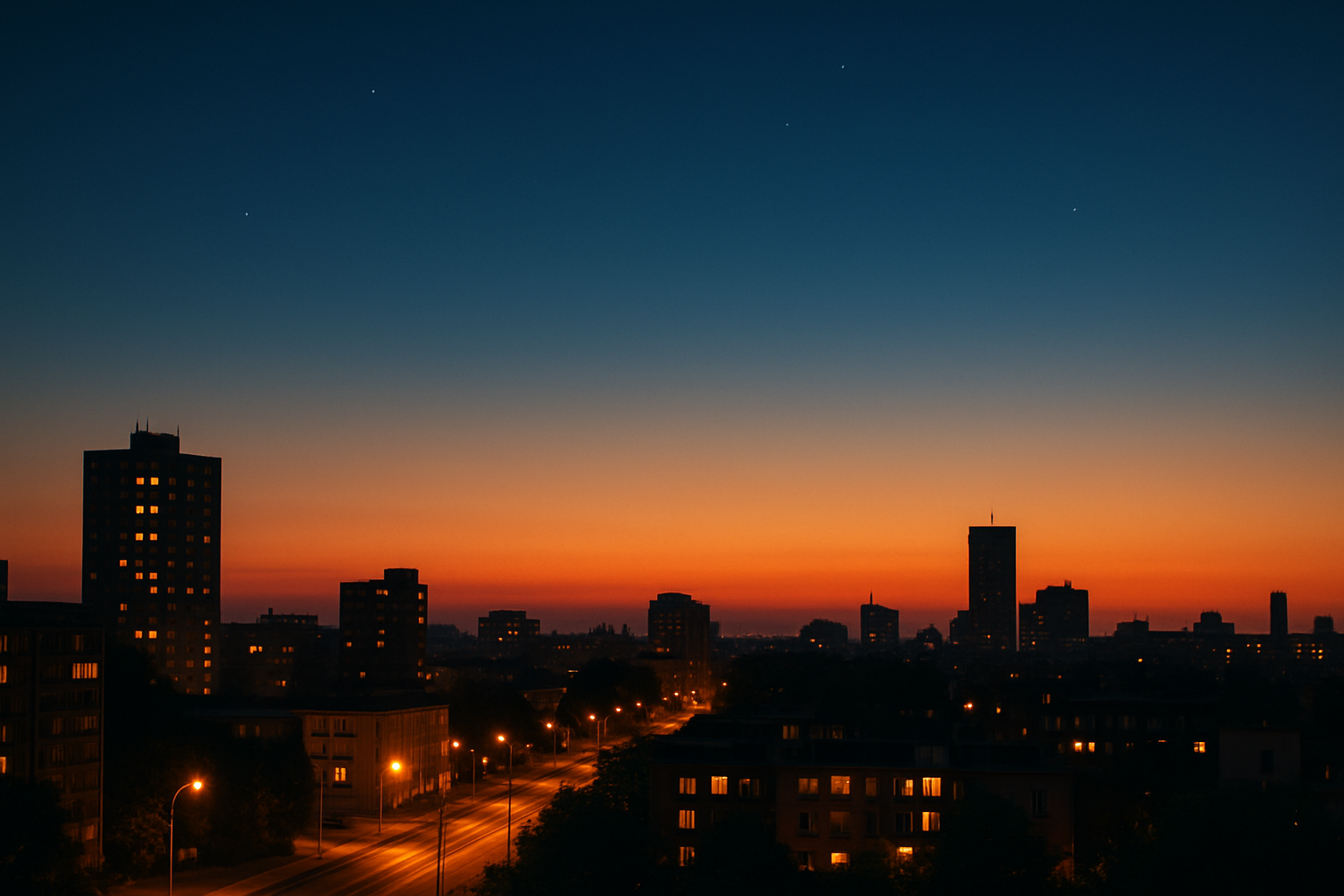 Late June keeps a surprising amount of glow in the sky well after sunset, which is why solstice-week deep-sky sessions start later than many beginners expect.
Western Twilight Targets Need an Earlier Start
Solstice week is still good for bright evening targets, but they need to be treated like twilight missions, not late-night ones. NASA's June 2026 skywatching guide notes that Venus remains the brightest easy target after sunset, while the Summer Triangle and deeper sky targets rise into better view later in the evening. Mercury reached its best June evening placement on June 15, which means it is now a lower, more fragile bonus target rather than the main event.
A practical rule: if your goal is Venus, Jupiter, or a last look for Mercury, be outside about 35 to 45 minutes after local sunset with an unobstructed western view. Do not wait for full darkness. In Houston, humidity and haze can erase low-altitude targets faster than light pollution. In Los Angeles, marine haze can do the same. In Austin, a hilltop with a clean western gap can beat a technically darker spot with trees or buildings.
The safety rule is simple too: if you are searching low in bright twilight with binoculars or a telescope, stay deliberate and never sweep anywhere near the Sun. On June 19 and June 20 the most reliable naked-eye anchor is still bright Venus, and if you want the broader west-sky setup before Mercury sinks lower, our Mercury evening visibility guide is the better companion read.
Later Evening Gets Better for Summer Stars
The solstice does not make the night sky empty. It changes which part of the evening matters. Once darkness settles in, summer patterns get more useful, and NASA specifically calls out the Summer Triangle as one of the season's easiest anchors. Vega, Deneb, and Altair are bright enough to work from city skies, and the Triangle opens the door to richer observing once your eyes adjust.
That is why solstice week pairs so well with our Summer Triangle guide. If you are carrying a tripod instead of binoculars, our Summer Triangle astrophotography guide turns the same bright pattern into a simple post-solstice photo plan. The Triangle gives beginners a low-jargon way to turn "I can see a few stars" into "I know where I am." It also scales well. A naked-eye observer gets a recognizable shape. A binocular user gets richer star fields. A telescope user gets access to the region NASA highlights for objects like the Dumbbell Nebula, Ring Nebula, North America Nebula, and Veil Nebula.
For Austin and Houston readers, this is the strongest case for staying out later instead of trying to force everything into twilight. Los Angeles readers get a slightly easier transition, but the same logic applies: bright western planets are the appetizer, and summer stars are the real payoff once the sky settles down.
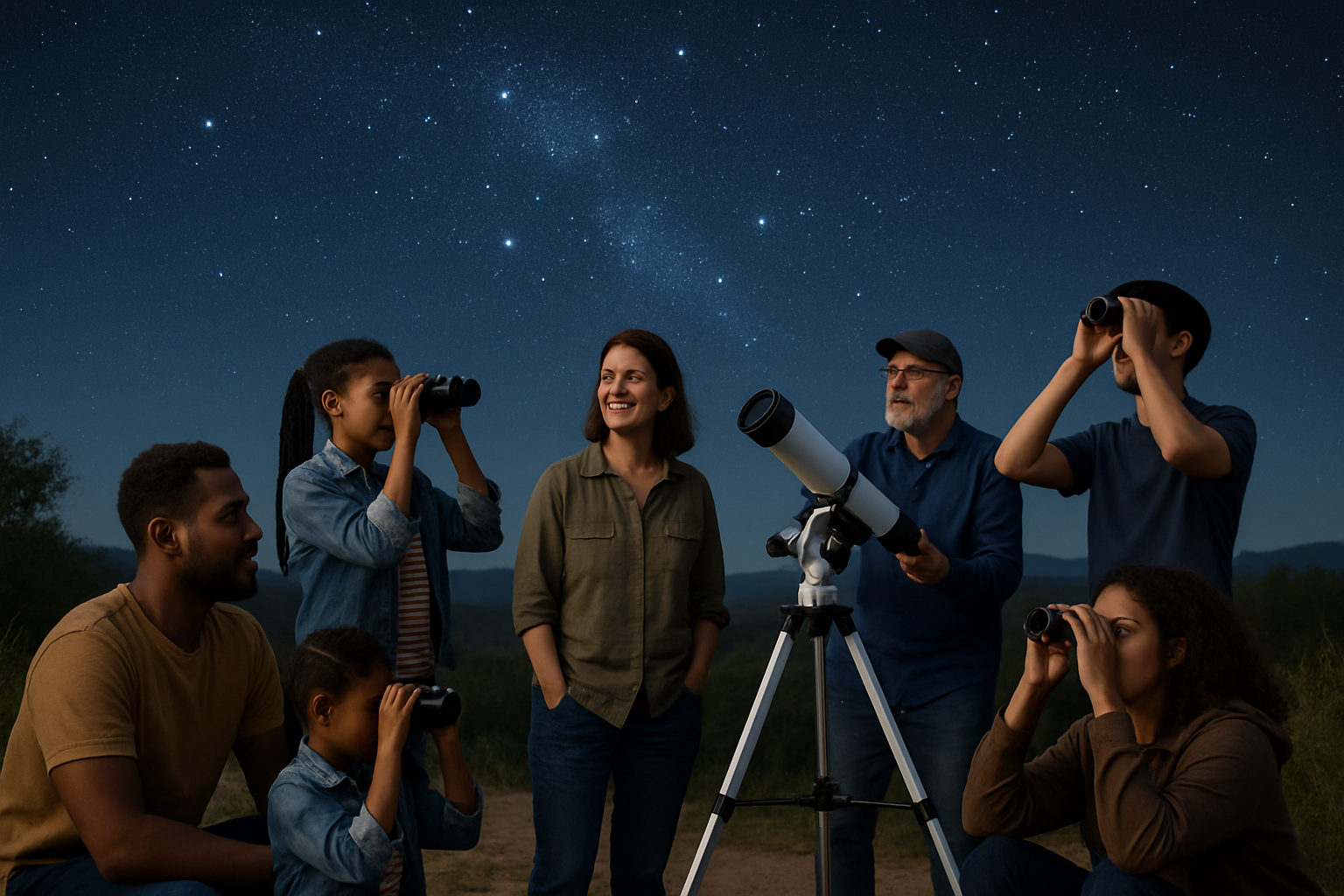 Once the twilight glow fades, the Summer Triangle becomes the easiest bridge from casual skywatching to a longer summer observing session.
What Beginners Should Actually Do on Solstice Week
If you own no telescope, the solstice is still worth planning around. The best approach is to pick one of two sessions instead of trying to do everything in one night.
Option 1: The easy twilight session
Go out soon after sunset, face west, and look for the brightest planet first. Venus is the usual anchor. Add Jupiter if it is still easy from your location, and treat Mercury as a bonus target only if your horizon is unusually clean.
Option 2: The later summer-sky session
Wait until astronomical darkness in your city. Then look east or southeast for the Summer Triangle and use that as your map for the rest of the night. This is the better option if you want a calmer session, a darker sky, or a more social hang where you are not racing the horizon.
If you are in Central Texas and want an easy local starting point, our Austin stargazing guide is still the safest low-friction page to share with friends who are new to this. If you want more people in your orbit who already understand why a 10 p.m. sky session can be the real start of the night, you can join free at Cosmic Match.
The Solstice Is Not the Best Night of Summer. It Is the Reset Button.
That is the mindset shift this week rewards. The June 21 solstice is not a single magic show. It is the point where your summer observing habits need to change. Stop expecting faint-sky observing right after dinner. Start separating twilight targets from late-evening targets. Use bright patterns first, then let the season expand from there.
If you do that, solstice week stops feeling like the part of summer when the sky gets harder. It starts feeling like the week when summer observing finally makes sense.