Aurora Update for June 5, 2026: NOAA's Strongest Forecast Window Shifted Into Daylight

Update note (2026-06-05 13:33 UTC): NOAA's 3-day forecast issued at 2026-06-05 12:30 UTC moved the strongest June 5 geomagnetic-storm block to 12:00-15:00 UTC, which converts to 7:00-10:00 a.m. CDT in Austin and Houston and 5:00-8:00 a.m. PDT in Los Angeles. This article was revised to replace the earlier June 4 evening-peak framing.
If you're tracking the next summer watch window, see our July 4 weekend aurora guide for the current July 3 G2 timing.
NOAA's latest aurora forecast for Friday, June 5, 2026 is a good example of why space-weather timing matters as much as headline storm strength. On paper, the forecast still looks impressive: NOAA's Space Weather Prediction Center says the greatest expected three-hour Kp block for June 5-June 7 is 6.67, which is still G3, or Strong geomagnetic storm conditions on NOAA's scale. The problem for Cosmic Match readers in Austin, Houston, and Los Angeles is that the strongest June 5 block no longer lines up with dark local skies.
The updated peak is now 12:00-15:00 UTC on June 5, 2026. That converts to 7:00-10:00 a.m. CDT in Austin and Houston and 5:00-8:00 a.m. PDT in Los Angeles. In other words, the forecast stayed elevated, but the most important local watch window moved into dawn or full daylight across all three launch cities.
That is the correction readers need. A storm can look stronger on paper and still become less useful for local viewing once the timing shifts out of darkness.

Credit: NOAA Space Weather Prediction Center.
What NOAA Is Actually Forecasting on June 5
As of 2026-06-05 12:30 UTC, NOAA's Space Weather Prediction Center says the greatest expected 3-hour Kp for June 5-June 7, 2026 is 6.67 (G3). NOAA's rationale is that multiple coronal mass ejections launched on June 3 are still expected to affect Earth on June 5, with a chance for isolated G4 periods.
The updated timing is what changed the public-facing guidance:
| Forecast block on June 5, 2026 | Austin / Houston | Los Angeles | Why it matters |
|---|---|---|---|
| 12:00-15:00 UTC | 7:00-10:00 a.m. CDT | 5:00-8:00 a.m. PDT | Strongest forecast block at G3, but it lands in dawn or daylight. |
| 15:00-18:00 UTC | 10:00 a.m.-1:00 p.m. CDT | 8:00-11:00 a.m. PDT | Still elevated at G2, but fully daytime. |
| 18:00-21:00 UTC | 1:00-4:00 p.m. CDT | 11:00 a.m.-2:00 p.m. PDT | Drops to G1 and remains a daylight window. |
| 00:00-03:00 UTC | 7:00-10:00 p.m. CDT on June 4 | 5:00-8:00 p.m. PDT on June 4 | The old evening-centered block is no longer the top June 5 forecast. NOAA now lists it at only Kp 1.33 for June 5. |
That last line is the real correction. Yesterday's version of this article centered on the June 4 evening conversion. NOAA's latest June 5 bulletin no longer supports that as the main practical takeaway.
The broader setup still matches what public-facing coverage was warning about on June 4. Space.com's aurora alert said the timing could shift by several hours because multiple incoming CMEs might interact before arrival, and SpaceWeather.com flagged the same cannibal-CME style uncertainty. The uncertainty broke in exactly the direction local readers care about: later on the UTC clock, worse for dark-sky timing in Texas and Southern California.
If you want a broader skywatching plan for the rest of the month, our June 2026 stargazing calendar still has the stronger practical targets, including the Venus-Jupiter conjunction and the Strawberry Moon.
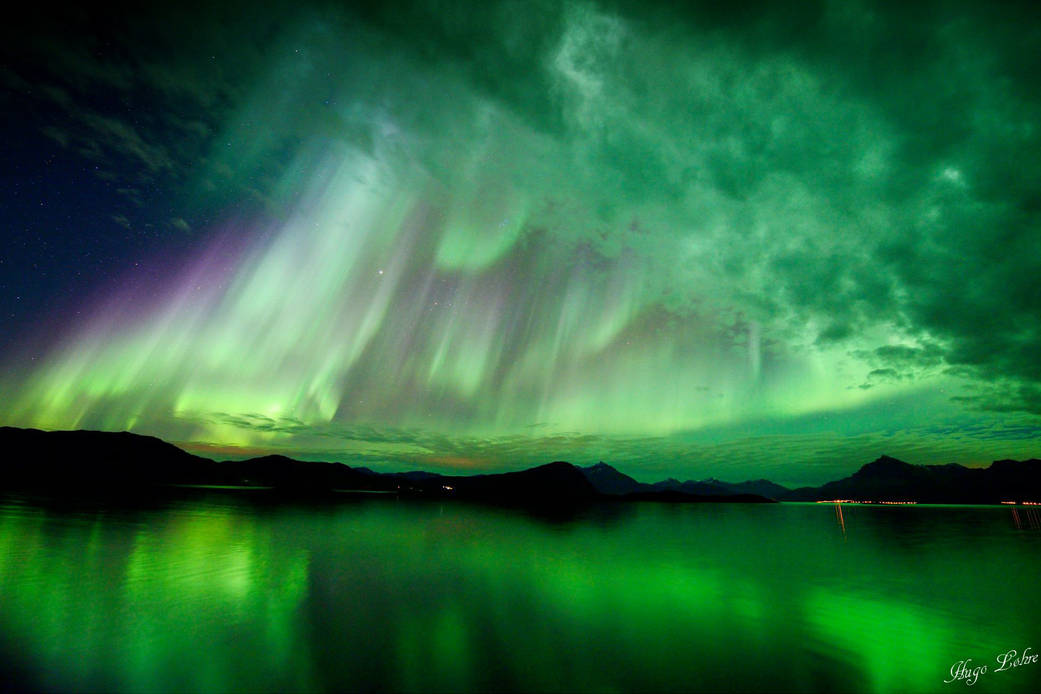
Credit: NASA / Hugo Løhre.
Why a Stronger Forecast Can Still Mean a Worse Local Opportunity
It is easy to read G3 and assume the aurora chance improved everywhere. That is not how local viewing works.
Kp measures geomagnetic disturbance intensity, not whether your city will be dark when the strongest block arrives. If the best forecast window shows up after sunrise or during bright morning twilight, the forecast can stay impressive while the practical naked-eye opportunity gets worse.
NOAA's own scale still says aurora at G3 intensity has been seen as far south as Illinois and Oregon. That matters for northern and interior locations that can still line up darkness with the peak. It matters much less for Austin, Houston, and Los Angeles, which are both south of the likely visibility band and now dealing with a dawn-to-daylight timing problem.
This is also why NOAA's note about the greatest observed 3-hour Kp over the prior 24 hours being only 3 matters. The article is still forecast-led, not a report that a strong storm already arrived and produced confirmed low-latitude aurora sightings for the three target cities.
The Corrected Local Caveat for Austin, Houston, and Los Angeles
Here is the exact wording Cosmic Match readers should use after NOAA's June 5 update:
Austin, Houston, and Los Angeles should treat June 5 as a timing correction, not a practical local aurora window, because NOAA's strongest forecast block now lands in dawn or daylight hours in all three cities.
That is the most honest version of the story right now.
- Austin: The strongest block is now 7:00-10:00 a.m. CDT on June 5, followed by 10:00 a.m.-1:00 p.m. CDT at G2. Even if the disturbance verifies strongly, Austin is well south of NOAA's usual G3 visibility line and the best timing arrives after sunrise. If you want a more realistic local sky plan, our Austin stargazing guide is still more useful than chasing a marginal daytime aurora setup.
- Houston: Houston gets the same 7:00-10:00 a.m. CDT top block and the same daylight problem. Humidity and haze already make subtle sky events harder here, so losing darkness removes most of the practical upside. This remains a monitoring item, not a local viewing recommendation.
- Los Angeles: The strongest local block is 5:00-8:00 a.m. PDT on June 5. That is slightly earlier than Texas, but it still overlaps dawn and sunrise rather than a dark overnight window. Los Angeles is also south of the likely G3 visibility band, so the correction is mostly about expectations, not about sending readers outside.
If you want people who will understand why a higher Kp number can still be worse news for your local sky plan, you can meet local space lovers in Austin, find Houston stargazers on Cosmic Match, or browse the Los Angeles astronomy community.
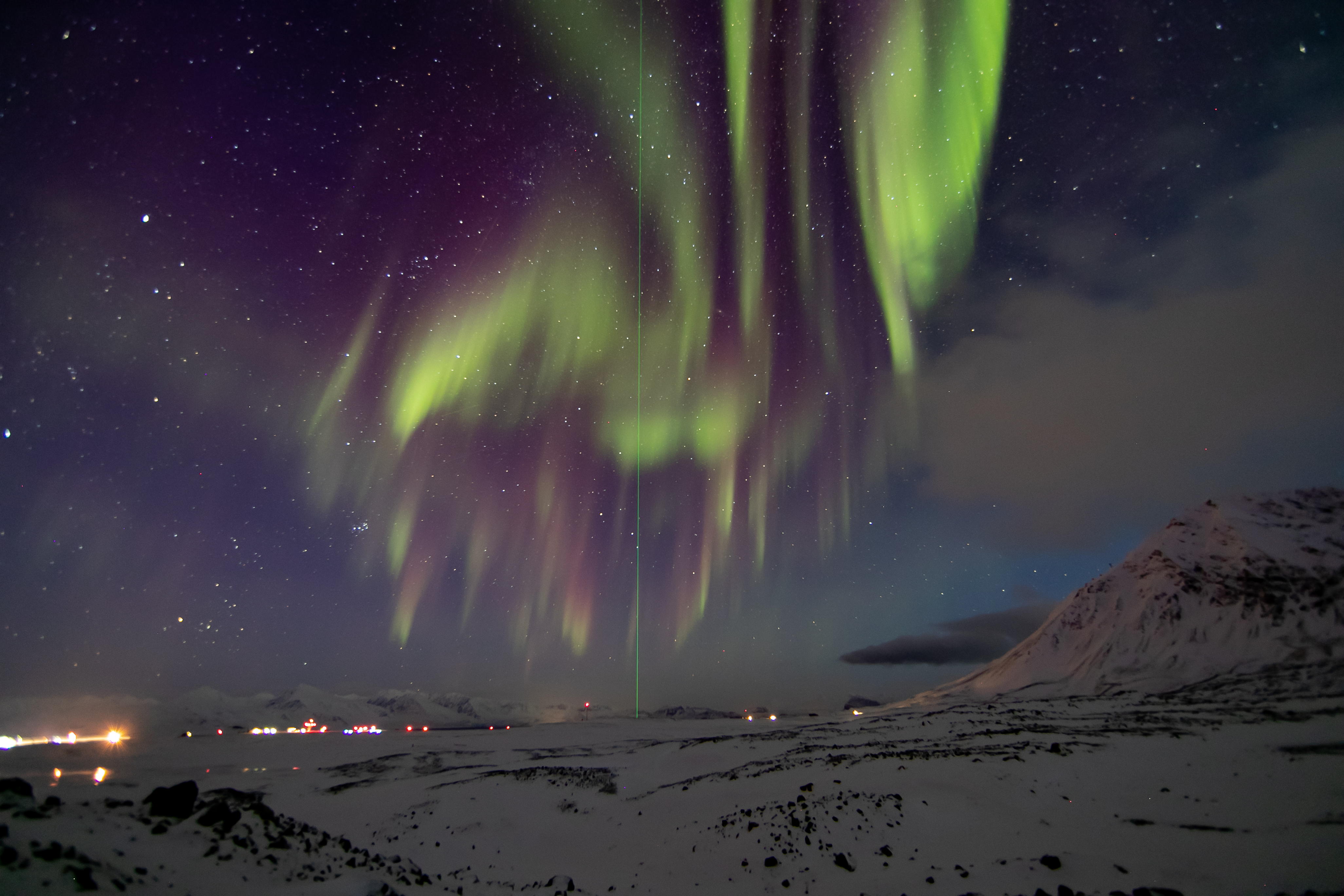
Credit: NASA SVS / Joy Ng.
If You Still Want To Track It, Here Is the Smart Way
If you live in one of the three focus cities and still want to follow the event on June 5, 2026, the smart move is not to expect a dramatic local show. It is to monitor the forecast like a live correction item:
- Re-check NOAA's latest forecast blocks on June 5, 2026 before the local morning window begins.
- Treat any stronger-than-expected southward push as a bonus, not the baseline.
- Watch for credible real-time reports from locations farther north before assuming the storm is overperforming.
- If you want an easier naked-eye target this week, shift your attention back to evening sky events instead of forcing the aurora angle.
That last point matters. For Cosmic Match readers in Austin, Houston, and Los Angeles, the better practical skywatch this week is still our guide to tracking Venus and Jupiter before June 9. Those planets show up after sunset, require less luck, and do not depend on a geomagnetic storm lining up with the dark part of the day.
Bottom Line
NOAA did not cancel the storm story on June 5, 2026. It changed the timing story.
The strongest forecast block is now 12:00-15:00 UTC on June 5, which means 7:00-10:00 a.m. CDT in Austin and Houston and 5:00-8:00 a.m. PDT in Los Angeles. That makes the local practical case weaker than yesterday's June 4 evening framing even though the storm forecast remains elevated on paper.
If you are in a farther-north location with darkness lining up better, this is still worth following. If you are in Austin, Houston, or Los Angeles, the honest read is narrower: understand the correction, keep expectations low, and treat this as a lesson in why space-weather timing matters as much as intensity.
If you want more realistic city-based sky plans with people who already speak the language, start at cosmicmatch.io and find your next observing conversation there.