Moon-Venus Occultation on June 17, 2026: Exact Viewing Times for Austin, Houston, and Los Angeles
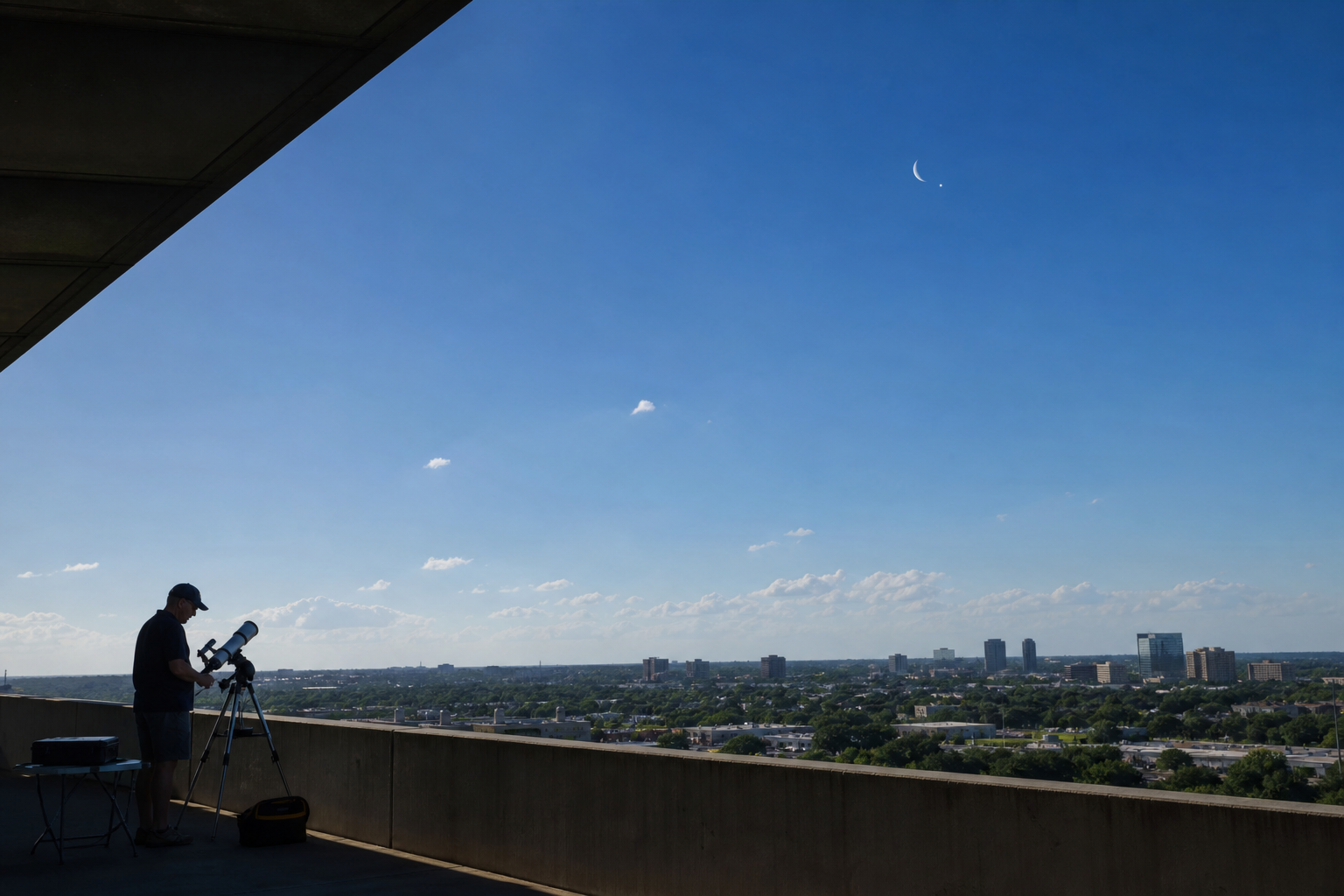
The Moon-Venus occultation on Wednesday, June 17, 2026 is one of those events that sounds subtle until you look at the actual timing. In Austin, Houston, and Los Angeles, this is not just a close pairing. The Moon really passes in front of Venus, making the planet disappear and then reappear later, and it all happens in broad daylight.
That daylight detail is the whole story. As of June 16, 2026, NASA still lists the June 17 occultation as visible from parts of the United States, and In-The-Sky still shows the full disappearance and reappearance for all three of Cosmic Match's core cities. The practical takeaway is simple: know your exact local time, and do not sweep anywhere near the Sun with binoculars or a telescope.
If you want the wider month map around this event, our June 2026 stargazing calendar shows how the Mercury, Venus, and Moon sequence fits together across mid-June.
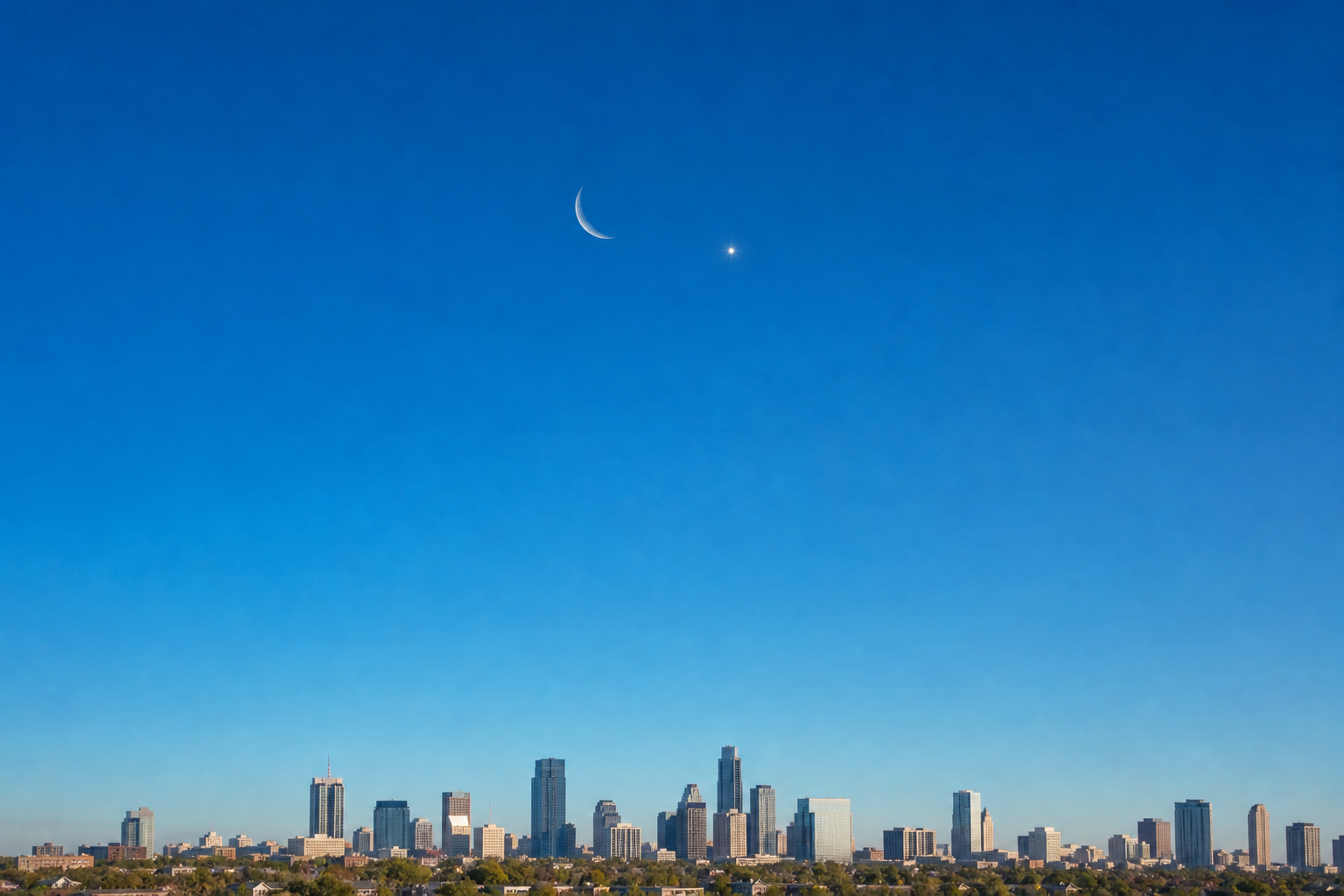
Exact Moon-Venus Occultation Times by City
These times are for Wednesday, June 17, 2026, and they are the details most readers actually need:
| City | Venus disappears behind the Moon | Venus reappears | What matters |
|---|---|---|---|
| Austin | 2:23 p.m. CDT | 3:31 p.m. CDT | Full event happens in daylight. |
| Houston | 2:30 p.m. CDT | 3:38 p.m. CDT | Also fully daylight, with nearly the same rhythm as Austin. |
| Los Angeles | 11:40 a.m. PDT | 12:47 p.m. PDT | The occultation lands before early afternoon, also in daylight. |
Those local times still match the city-specific In-The-Sky event pages on June 16, 2026. The broader NASA June skywatching guide still confirms that the occultation itself is visible from parts of the United States, while Space.com continues to frame it as a rare daylight occultation for most of North America.
Why This One Is Unusual
Many Moon-and-planet posts are basically twilight viewing guides. This one is different.
On June 17, the Moon is a thin waxing crescent, and Venus is still bright enough to matter at around magnitude -4.0. That is why this event is worth discussing at all in daylight. The catch is that the Moon and Venus sit only about 38 degrees from the Sun, which is far enough to make the geometry possible but still close enough to make careless observing dangerous.
So yes, the event is real, visual, and worthwhile. It is also the kind of event where the setup matters more than the optics.
If you missed last night's Mercury-centered skywatch, our guide to Mercury's best June evening view is still useful background for how this whole mid-June western-sky sequence came together.
The Safe Way To Observe It
The safest version of this event is the one you plan before you step outside.
Here is the practical setup that makes sense:
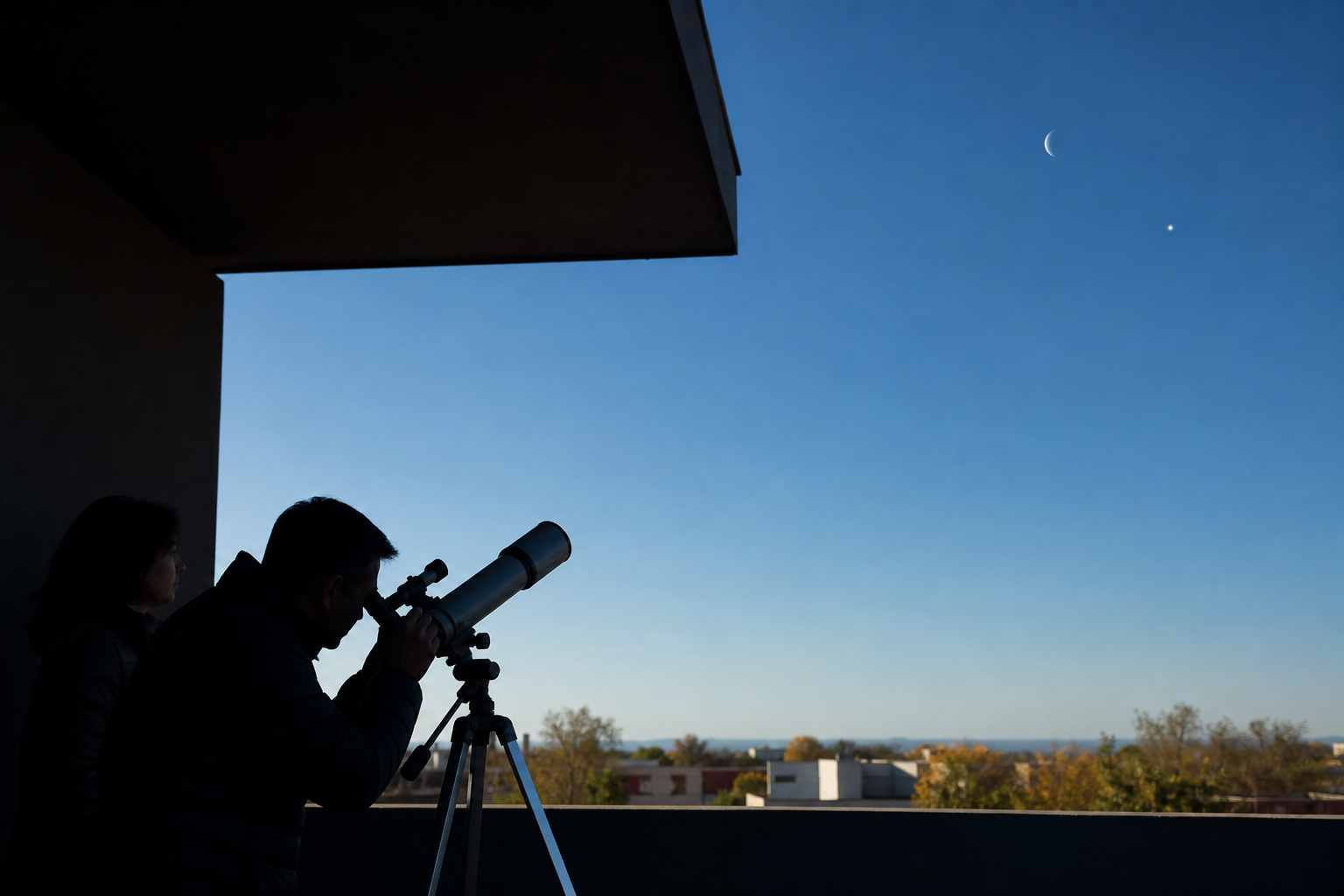
- Find a location where a roofline, wall, or building edge physically blocks the Sun from your observing position.
- Get there early enough that you are not rushing the setup.
- Locate the crescent Moon first with your naked eye.
- Only if the Sun is fully blocked from your instrument's line of sight should you use binoculars or a telescope.
- Never sweep the daytime sky randomly while searching.
That last point is not generic caution language. It is the main operational rule. Space.com's current June 2026 sky guide is explicit that sweeping near the Sun with optics can cause instant, permanent eye damage. For a daylight occultation, the goal is not to explore. It is to start with a known Moon position and use a fixed, controlled setup.
For beginners, this is one of the rare cases where a modest instrument used carefully is better than a more powerful one used casually. A small telescope or steady binocular view can make the disappearance easier to appreciate, but only if the Sun is fully kept out of the equation.
What You Should Expect To See
The visual sequence is cleaner than people expect.
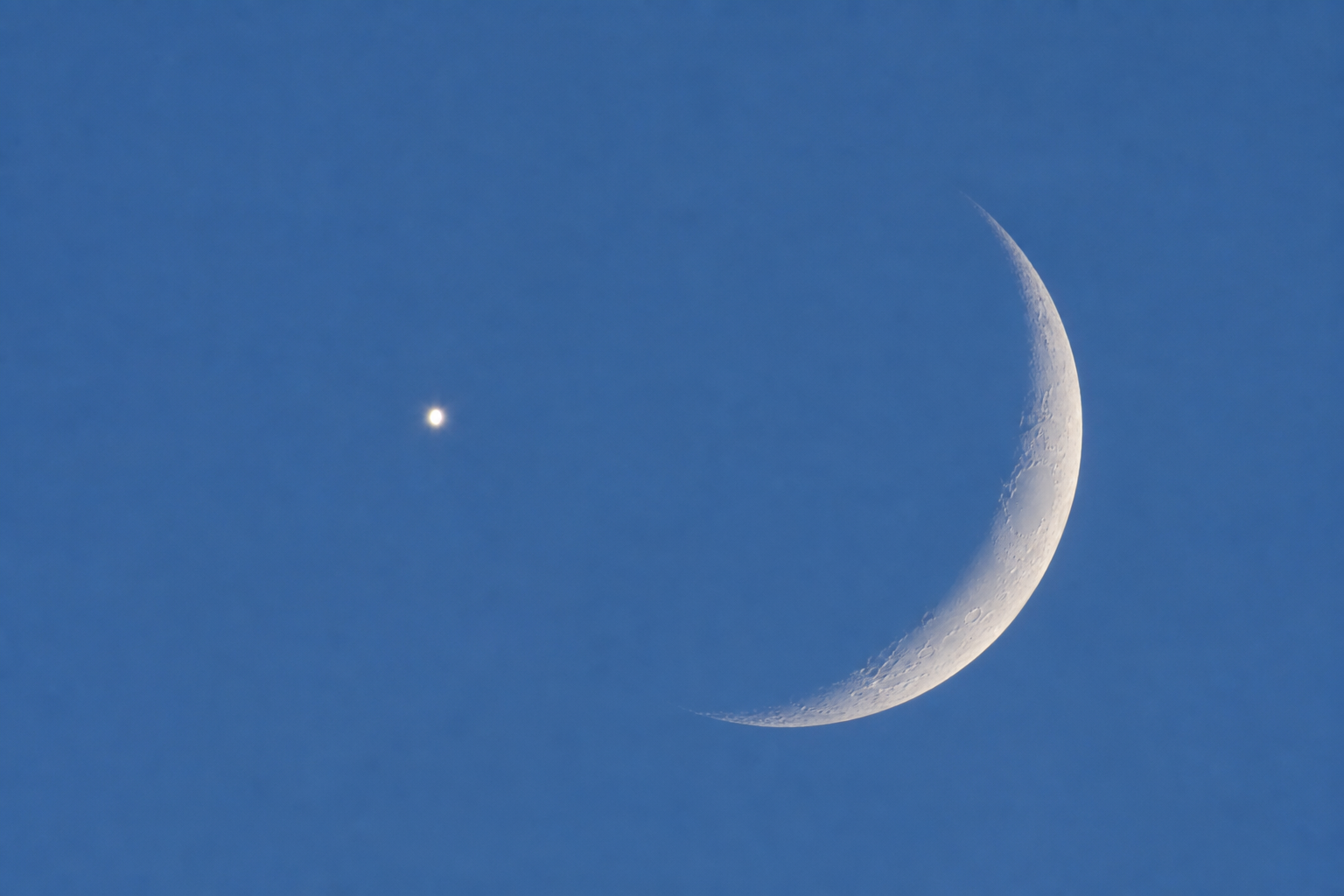
Venus disappears behind the Moon's dark, unilluminated edge, which usually makes the disappearance feel sharper than the reappearance. Later, Venus comes back from the Moon's brighter side. Because the Moon is only about 11% illuminated, the contrast between the dark limb and the bright crescent is part of what makes this event interesting through optics.
In Austin and Houston, the rhythm is very similar: disappearance in the mid-afternoon, then reappearance a little over an hour later. In Los Angeles, everything happens earlier on the clock, but the practical advice stays the same because the event is still entirely daytime.
If haze, cloud, or work schedules get in the way, the consolation prize is still decent. Outside the exact occultation path, many observers will still get a close Moon-Venus pairing. That is less dramatic than the planet actually vanishing, but it is still a good reminder that mid-June has been unusually strong for easy planet-and-Moon alignments.
Best Local Mindset for Austin, Houston, and Los Angeles
This is not an all-afternoon event. It is a timed appointment.
- Austin: Treat 2:23 p.m. CDT as the moment you cannot miss. If you only have one clean break in your day, bias toward the disappearance rather than assuming you will catch both phases.
- Houston: The same rule applies at 2:30 p.m. CDT, with the added reality that humidity can soften contrast. A stable setup matters more than chasing a perfect sky.
- Los Angeles: Because the disappearance starts at 11:40 a.m. PDT, this may be easier to fit into a lunch-hour observing plan than people expect, provided you already know your safe viewing spot.
If you want people who will actually care about whether the disappearance happened on the dark limb, or why a roofline matters more than magnification, you can meet local space lovers in Austin, Houston, or Los Angeles. If you just want your next observing conversation lined up before the next clear night, join free on Cosmic Match.
Bottom Line
The useful headline for June 17, 2026 is not just that the Moon and Venus get close. It is that Austin, Houston, and Los Angeles all get the actual occultation in daylight, with local disappearance and reappearance times that are specific enough to plan around.
As of June 16, 2026, the city timings still verify at 2:23 p.m. and 3:31 p.m. CDT for Austin, 2:30 p.m. and 3:38 p.m. CDT for Houston, and 11:40 a.m. and 12:47 p.m. PDT for Los Angeles. If you prepare a Sun-blocked setup and treat this like a timed observing window instead of a casual scan, it is one of the most memorable practical sky events of the week.