Moon, Mars, and Saturn Before Dawn on May 14: Austin, Houston, and LA Guide
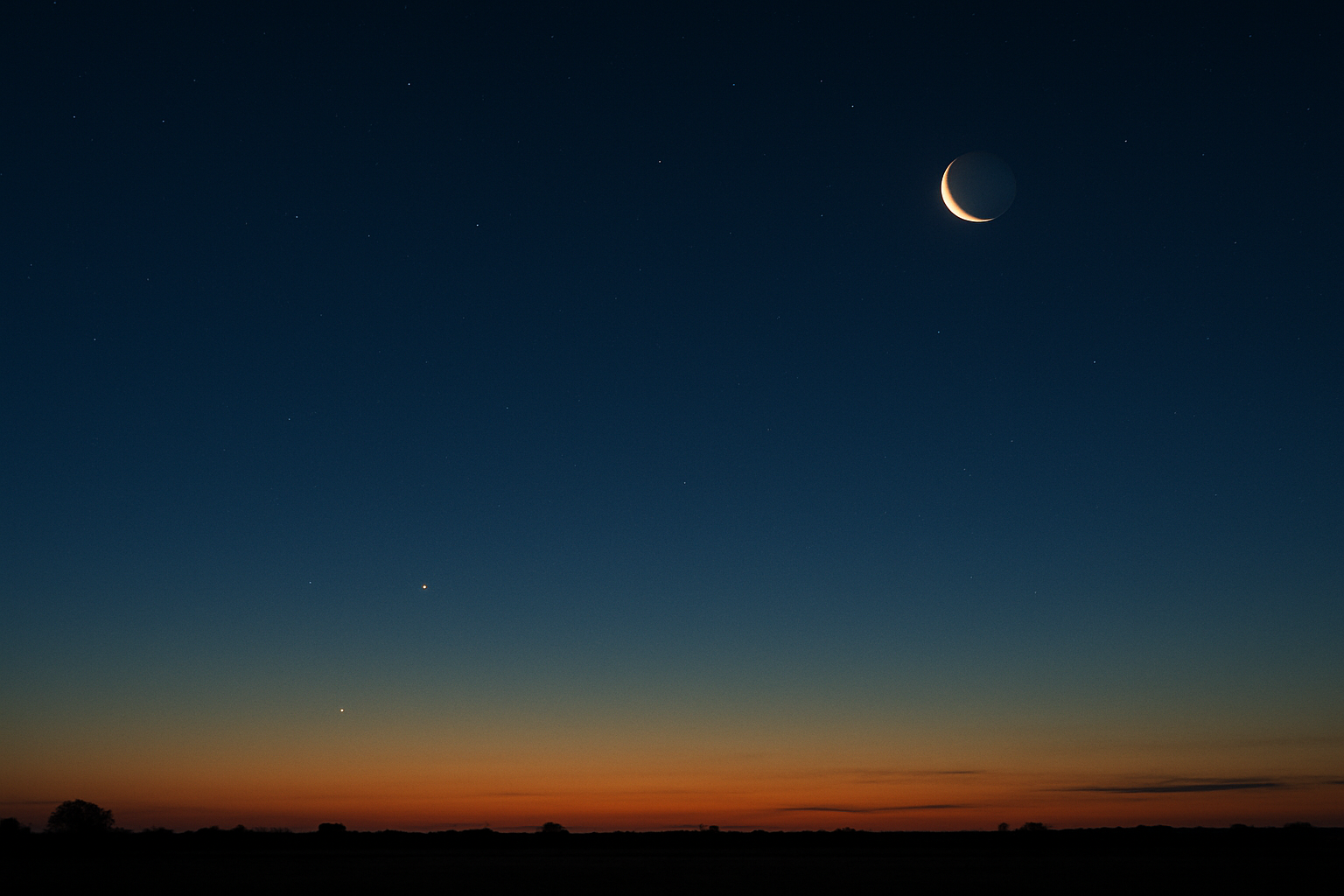
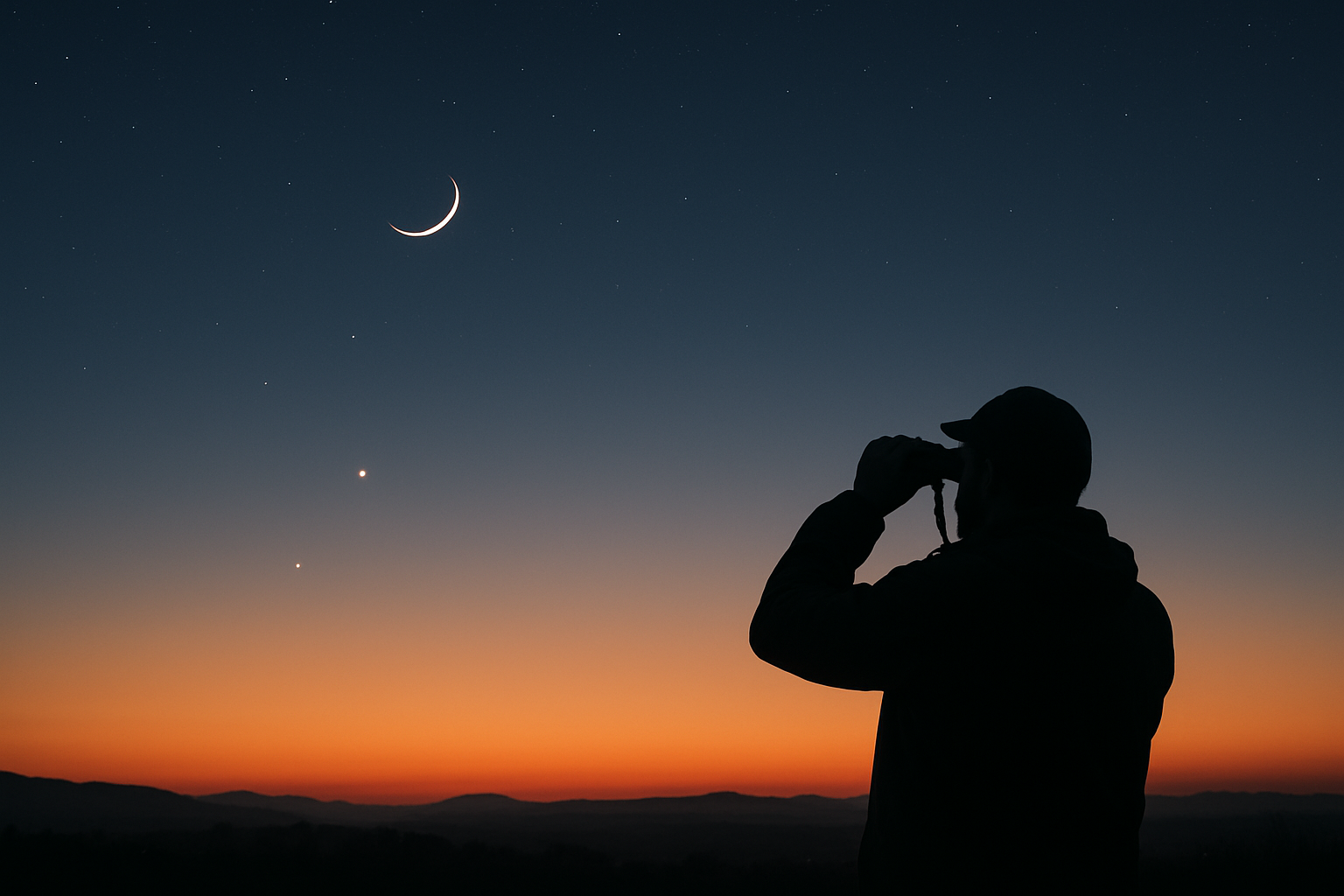
If you want one easy sky target before dawn on Thursday, May 14, 2026, let the Moon do the work. This is not a rare alignment and it is not a guaranteed dramatic view from every neighborhood. It is a practical predawn prompt: a thin waning crescent Moon will be the easiest thing to spot, Saturn will sit below it, and Mars will be farther to the Moon's lower left.
That order matters because Mars is the tricky one. Astronomy's May 2026 sky guide says Saturn is only about 7° high an hour before sunrise by May 13, and on May 14 you should scan about 7° to the Moon's lower left (east) to find Mars at magnitude 1.3. In other words: both planets are low, dawn is already brightening, and a clean eastern horizon matters more than fancy gear.
If you want better low-horizon setups after this quick look, our guides to Houston beginner stargazing with darker skies and Los Angeles stargazing before the May new moon are the right next reads.
The Simple Way to Find It
- Go outside roughly an hour before sunrise.
- Face low in the eastern sky.
- Find the thin crescent Moon first.
- Look below the Moon for Saturn.
- Then scan down and left of the Moon for Mars.
If your horizon has trees, apartments, or morning haze, the Moon may be the only part that stands out immediately. That is normal. The Moon is the finder here; Mars and Saturn are the harder targets.
Best City Windows for May 14
These are rounded planning windows, built from Astronomy's hour-before-sunrise guidance plus each city's May 14 sunrise and civil-twilight times from Time and Date. Start early if you can. Once dawn brightens, Mars gets easier to miss.
| City | Practical viewing window | Why this window works |
|---|---|---|
| Austin | 5:35-6:10 a.m. CDT | Sunrise is 6:37 a.m. and civil twilight starts at 6:11 a.m., so the best contrast is before the sky brightens too much. |
| Houston | 5:30-6:00 a.m. CDT | Sunrise is 6:29 a.m. and civil twilight starts at 6:03 a.m.; Mars is likely the first thing to wash out. |
| Los Angeles | 4:50-5:20 a.m. PDT | Sunrise is 5:52 a.m. and civil twilight starts at 5:24 a.m., so the cleanest predawn contrast comes earlier. |
City-by-City Reality Check
Austin
Austin viewers should prioritize an open eastern horizon over darker skies. This is a low-altitude dawn view, not a deep-sky session. If buildings or trees block the east, move rather than waiting for the planets to climb much higher. For longer planning, the Austin stargazing guide is useful for horizon-friendly local spots.
Houston
Houston's humidity and low-horizon haze can make Mars especially easy to lose. If the Moon is obvious but Mars is not, do not assume you are looking in the wrong place. Give yourself a few extra minutes and keep scanning low to the Moon's lower left.
Los Angeles
Los Angeles has enough city glow that you should keep expectations modest, but bright dawn objects still punch through better than faint galaxies ever will. A beach, overlook, or any spot with a cleaner eastern opening is better than trying from a courtyard boxed in by buildings.
Do You Need Gear?
No. Start with your eyes.
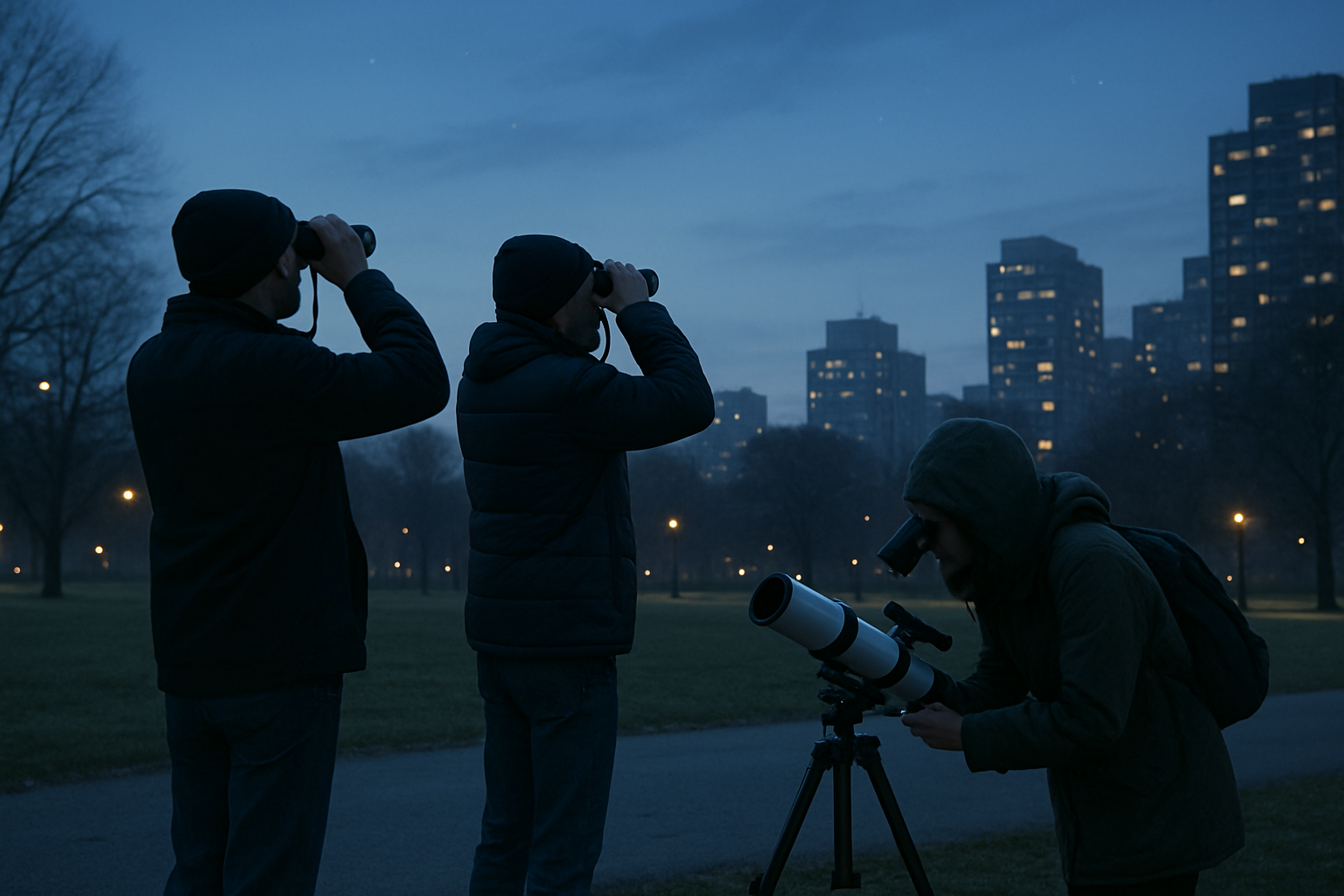
Binoculars can help once you know where to look, but they are optional. A telescope is not the best first tool here because the hardest part is finding the planets while they are still low and the sky is brightening.
If you do bring optics, wait until you are fully clear of sunrise glare and keep your sweep well away from the Sun's position. Safety matters more than squeezing out one more minute of contrast.
Worth Setting an Alarm?
Yes, if you like quick, low-effort sky checks with a specific target. No, if you are expecting a huge, dramatic lineup high overhead.
The honest pitch is simple: the Moon gives you an easy anchor, Saturn should be reachable, and Mars may take a little patience. That is enough to make May 14 a solid pre-dawn excuse to look east for a few minutes before work.
If you want more people in your life who will actually set that alarm with you, join the Cosmic Match community.