How to See the Moon, Venus, and Spica Before Dawn on Nov. 7
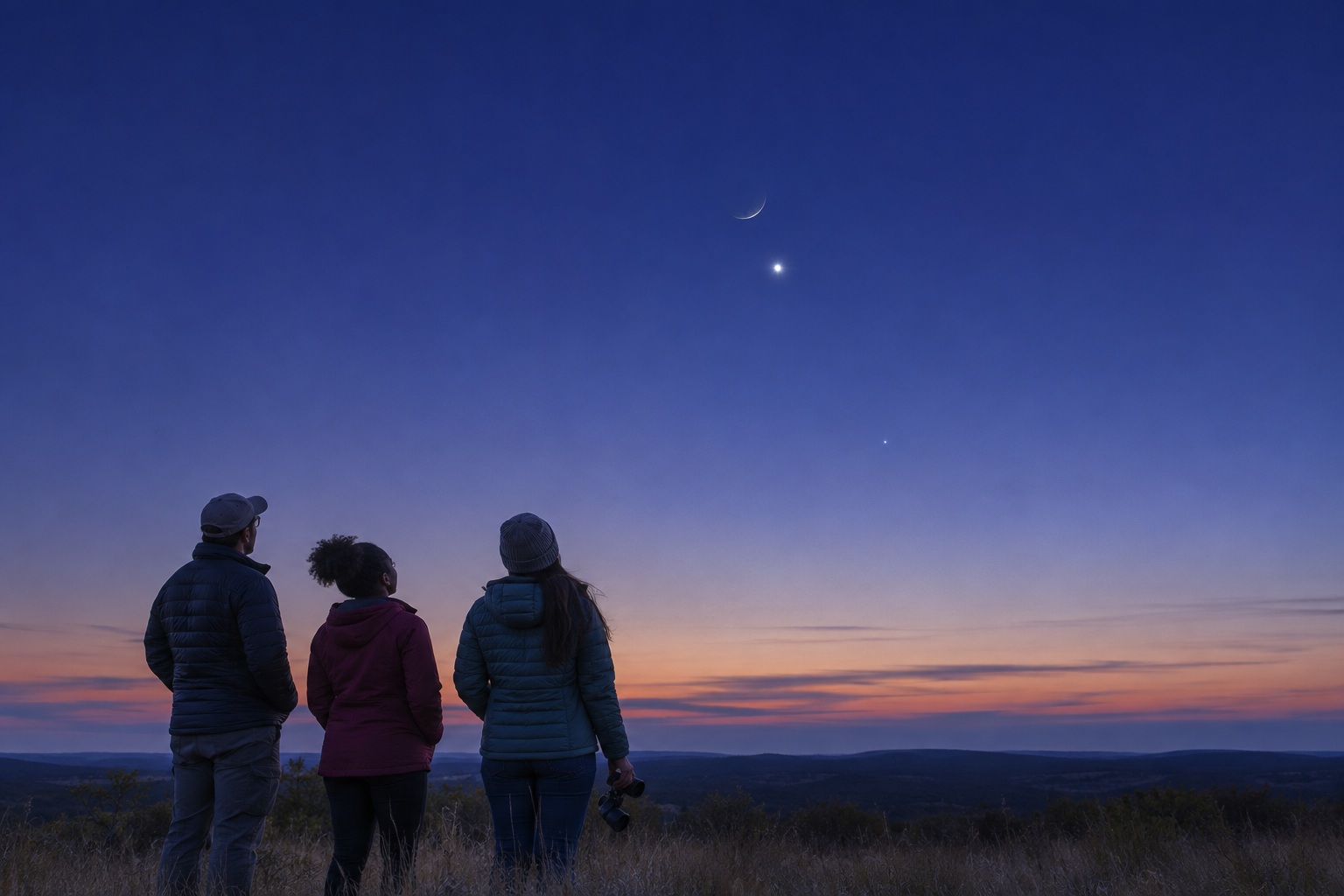
On Saturday, November 7, look low in the east-southeast before sunrise for a beautifully tight trio: a very thin waning crescent Moon, dazzling Venus, and blue-white Spica. From Austin, Houston, and Los Angeles, this is a close approach—not an occultation—and it is an easy, no-telescope reason to make a small morning plan with friends. Venus is the beacon: find it first, then look nearby for the crescent and Spica.
The moment is brief because the whole grouping sits low in brightening twilight. Bring a clear horizon, arrive early, and give your eyes a few minutes to settle. The Moon will be only about 3% illuminated, while Venus will be extraordinarily brighter than the nearby star.
What will I see before dawn on November 7?
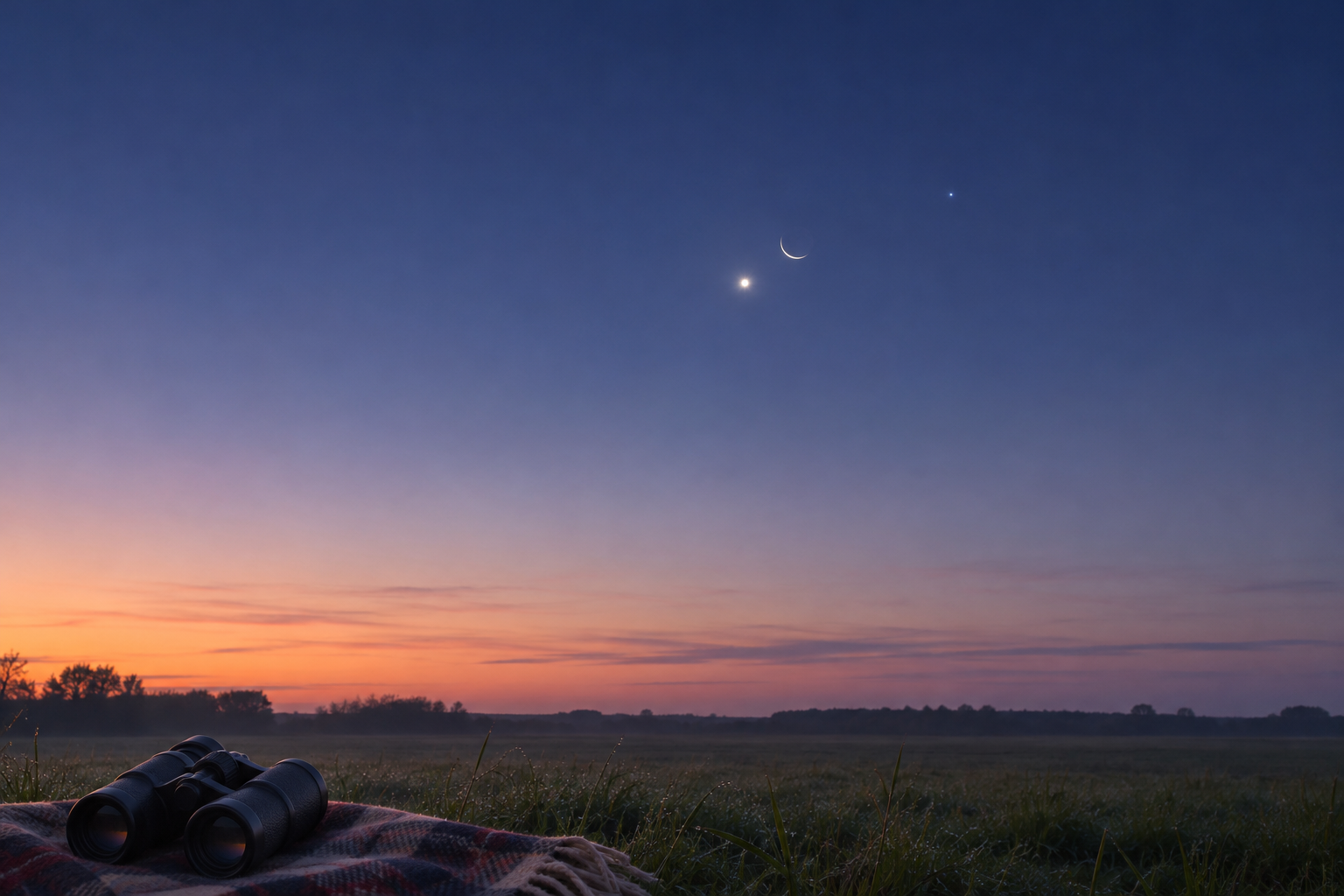
Start with Venus, the brilliant point of light low in the east-southeast. It will be much easier to pick out than either companion. The delicate Moon sits close by, with Spica—Virgo’s brightest star—a little farther away. The Moon and Venus will be less than a degree apart; the Moon and Spica will be roughly two degrees apart. That means the whole scene fits comfortably in binoculars, but it is lovely with unaided eyes.
A useful reality check: no one in Austin, Houston, or Los Angeles will see Venus disappear behind the Moon. NASA notes that the November 7 lunar occultation is visible from southern South America. In our three cities, enjoy the close pairing instead—the kind of low, quiet sky scene that rewards an early alarm.
When should I look in Austin, Houston, and Los Angeles?
Use these as approximate local windows for Saturday, Nov. 7, not a promise that the trio will clear every building or tree line. The U.S. Naval Observatory lists the Moon rising at 5:19 a.m. in Austin, 5:08 a.m. in Houston, and 4:50 a.m. in Los Angeles; civil twilight begins at 6:25, 6:15, and 5:52 a.m., respectively. A spot with an open east-southeast view matters more than chasing an exact minute.
| City | Approximate best window | What to plan for |
|---|---|---|
| Austin | 5:35–6:25 a.m. CST | Moonrise is 5:19; find a Hill Country or lakeside horizon with no trees in the way. |
| Houston | 5:25–6:15 a.m. CST | Moonrise is 5:08; choose an open field, bayfront, or elevated clear view east-southeast. |
| Los Angeles | 5:05–5:50 a.m. PST | Civil twilight begins early; get to a viewpoint with a genuinely open eastern horizon. |
Cloud cover, hills, and buildings can shrink those windows. If the crescent is hard to spot, do not assume you missed it: lock onto Venus first, then scan a small area nearby. The Moon’s thin lit edge is more subtle as dawn brightens, and Spica will fade first.
Do I need a telescope for the Moon, Venus, and Spica?
No. This is a naked-eye event. Binoculars can help you separate the faint crescent and Spica from the twilight, but use them only while the Sun is safely below the horizon. Never point binoculars or a telescope toward the Sun.
A simple kit is enough:
- A warm layer and a drink—pre-dawn waits feel longer than they sound.
- A blanket or chair, plus a horizon that is open rather than merely dark.
- Optional binoculars for a closer look before sunrise.
- A friend who is happy to be the designated Venus-finder.
For a richer early-morning outing, pair this with the tips in our Southern Taurids fireball watch for Austin, Houston, and Los Angeles. The meteor shower needs dark skies; the Venus–Moon scene does not. They are two very different ways to enjoy the same November sky.
How do I find the trio when it is low on the horizon?
Face east-southeast, not straight east. Begin looking while the sky is still deep blue, rather than waiting for sunrise. Venus should be obvious; from there, search nearby for the very fine crescent. Spica is the more delicate third member of the group, a blue-white star that twilight can wash out quickly.
The McDonald Observatory skywatch guide also flags this tight dawn triangle for Nov. 7. If you want to confirm your exact horizon and local rise/set times, use the U.S. Naval Observatory’s sunrise and moonrise calculator before you go.
Make it a tiny community event
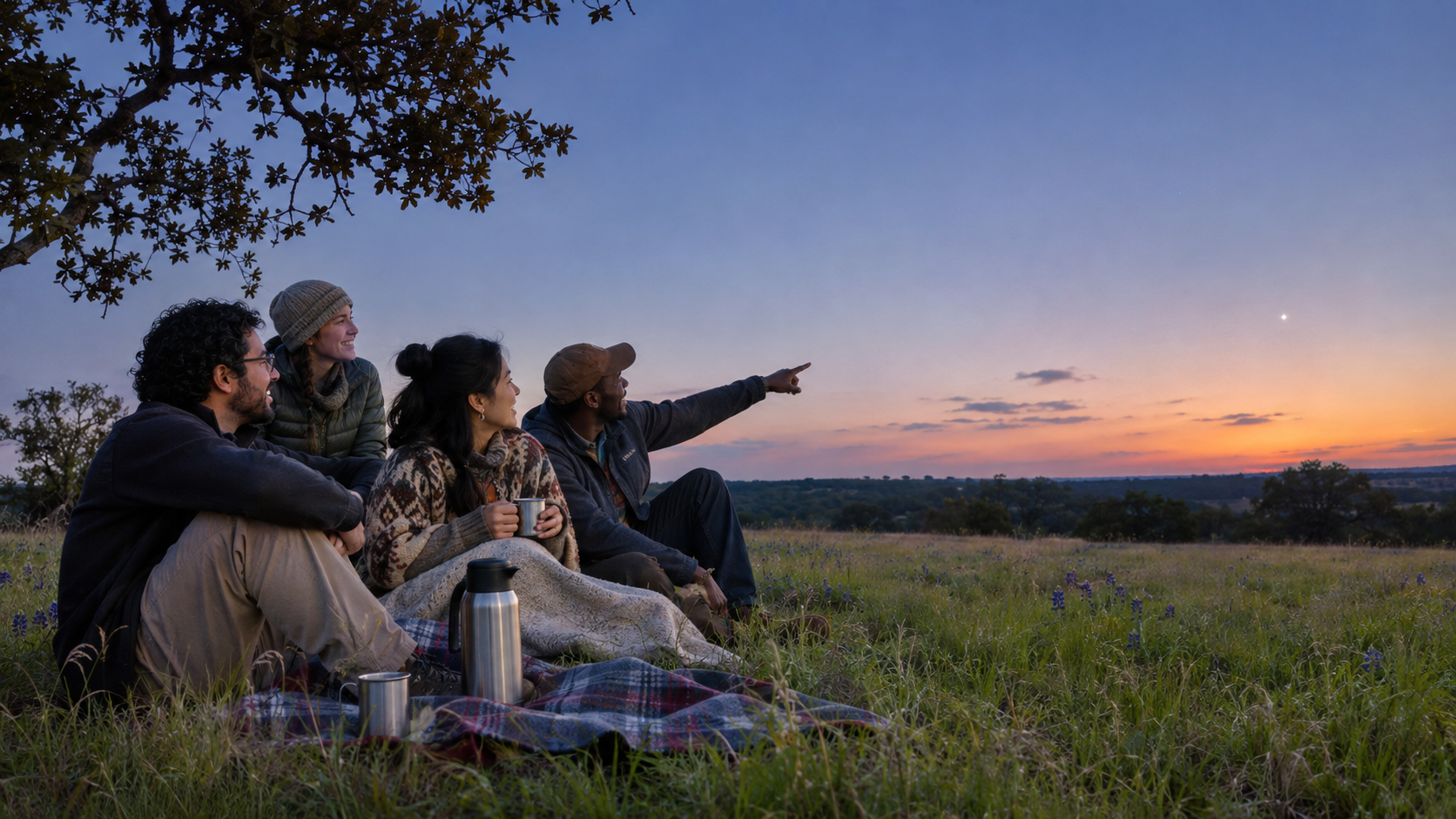
This is a friendly one: no gear learning curve, no late-night drive required, and no need to identify a whole constellation. Text a friend, pick a clear-horizon spot, and agree to meet 15 minutes before your city window. Someone spots Venus, someone brings coffee, and everyone gets a better story than “I saw a bright dot on the way to work.”
Want more people who will happily set an early alarm for a three-object sky lineup? Join the Cosmic Match astronomy community and connect around the observing plans, photos, and local sky moments you actually want to share.
FAQ
Is the Moon–Venus–Spica event visible without equipment?
Yes. Venus, the thin crescent Moon, and Spica are visible with the naked eye if you have a clear east-southeast horizon. Binoculars are optional and should never be used after the Sun rises.
Will Austin, Houston, or Los Angeles see the Venus occultation?
No. The Nov. 7 occultation path is in southern South America. The three launch cities will see a close approach of the Moon, Venus, and Spica before dawn.
Why can’t I see Spica as easily as Venus?
Venus is dramatically brighter, and Spica fades rapidly in morning twilight. Find Venus first, then look nearby before the sky becomes too bright.
What if clouds block the view on Nov. 7?
The event will still be a close visual grouping on the morning of Nov. 7, but weather is local. Check the forecast the evening before and choose an open backup viewpoint if you can.