Plan a Near-New-Moon Weekend from Austin, Houston, or Los Angeles—No Telescope Required
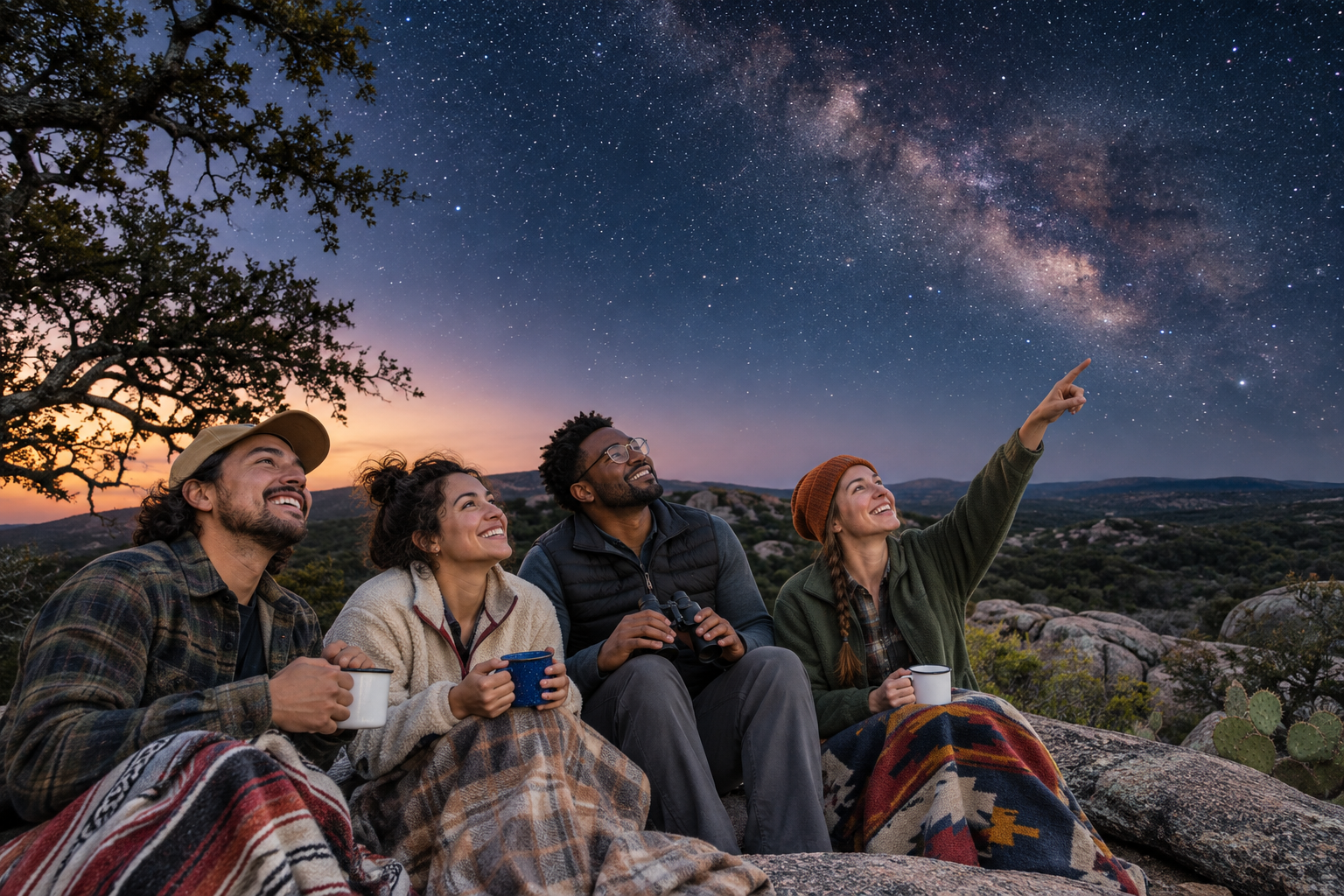
The weekend of November 7–8, 2026 is a friendly window to plan a first real night under the stars: the New Moon arrives November 9 at 07:02 UTC, so moonlight will be low before the weekend. You do not need a telescope, an advanced sky vocabulary, or a heroic midnight drive. Pick one legal destination, bring warm layers and a red light, and give your eyes 20 minutes to settle in. As checked November 4, the official forecasts call for a chance of showers near Enchanted Rock, mostly cloudy conditions around Brazos Bend, and a clear Saturday night near Joshua Tree—so treat the plan as a weather-aware invitation, not a promise of perfect skies.
If you want company for the first outing, join the Cosmic Match astronomy community and make a low-pressure plan with people who are equally happy to spot one bright planet or stay for a whole constellation.
Why is a near-new-Moon weekend better for beginners?
The Moon is beautiful, but bright moonlight washes out faint stars. With the lunar cycle heading into the November 9 New Moon, November 7–8 gives you darker evening conditions than a full-Moon weekend. That makes the basic magic easier: notice more stars than you can from a brightly lit patio, trace a few shapes, and let your eyes adjust.
The goal is not to “see everything.” Give yourselves one tiny mission: find a dark patch of sky, spot the Summer Triangle sinking west or Orion rising later in the evening, and identify one star with a sky map. Clouds, haze and light pollution can change the view; a good outing is still a good outing if it becomes a sunset walk and a warm drink.
Your no-telescope weekend formula
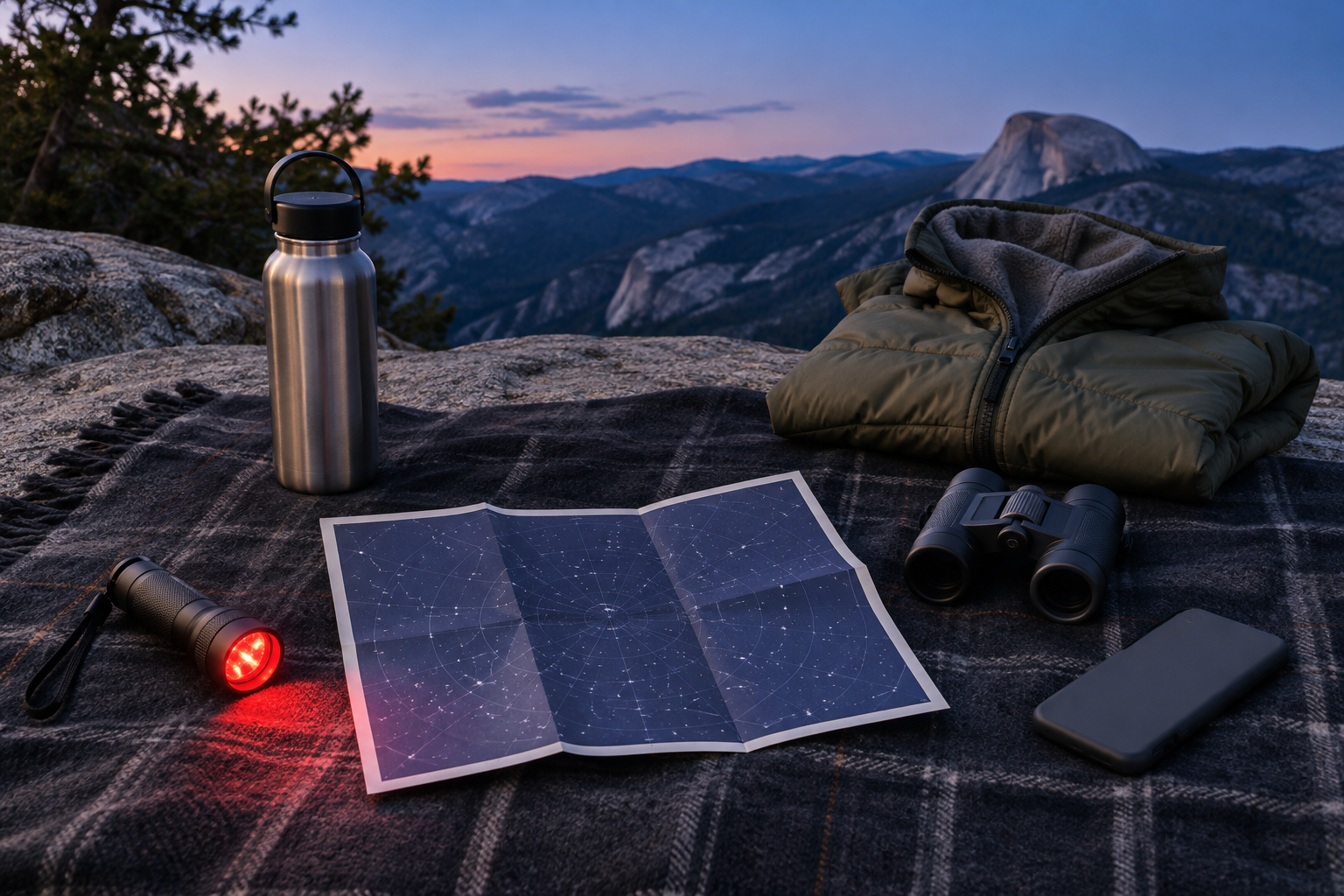
Friday: make the easy decision. Check the official forecast and park alerts after lunch. Choose a legal destination, tell someone where you are going, and set a turn-around time. Download a sky map while you still have service; then dim your screen or use red-light mode.
Saturday: arrive before dark. Use daylight to find restrooms, parking, the safest walking route and the horizon. Bring a chair or blanket, water, a warm layer, snacks, and a red-light flashlight. Binoculars are optional but fun; a telescope is not required. Avoid bright white lights once people have started dark-adapting.
Sunday: make it social, not performative. Share one favorite observation or photo, even if it is just a silhouette at dusk. Want a fresh reason to look up later in the week? Our Southern Taurids fireball-watch guide is a helpful no-telescope next step.
Where should Austin beginners go for a near-new-Moon weekend?
Enchanted Rock State Natural Area is the practical Hill Country choice, roughly two hours from central Austin depending on traffic. It is a place to hike, camp and stargaze—not an all-night summit mission. Texas Parks & Wildlife lists the park as open 6:30 a.m.–10 p.m., with the gate open until 8 p.m.; trails generally close 30 minutes after sunset except the Loop Trail. The park is in its busy season, and officials recommend reserving a day pass to guarantee entry. Campers arriving late must contact the park before 5 p.m. for the gate code.
For this particular Saturday, the official forecast currently includes a slight chance of showers by day and chance of rain at night. Recheck the National Weather Service forecast linked by TPWD and the park’s trail status before you leave; elevated areas can close in wet conditions. If you go, make it a simple early-evening Loop Trail or campground-sky plan, not a hike after closing.
Where should Houston beginners go for a near-new-Moon weekend?
Brazos Bend State Park, about 45 miles from downtown Houston, gives a group an easy nature-and-sky destination. The park’s George Observatory is operated by the Houston Museum of Natural Science and is open Saturday nights year-round, weather permitting. Tickets must be purchased online ahead of time, and visitors also need a park day pass. It is an unusually good first outing because an observatory visit adds a human guide to the night—no one has to pretend they already know the sky.
The current Saturday-night forecast is mostly cloudy, so book only if you are happy with a flexible plan and check the observatory’s update before departing. Keep alligator safety in mind around the lakes and follow park signs. If the clouds win, you still have a good shared outing; save the sky map for the ride home and make a clearer-night plan with other local sky watchers on Cosmic Match.
Where should Los Angeles beginners go for a near-new-Moon weekend?
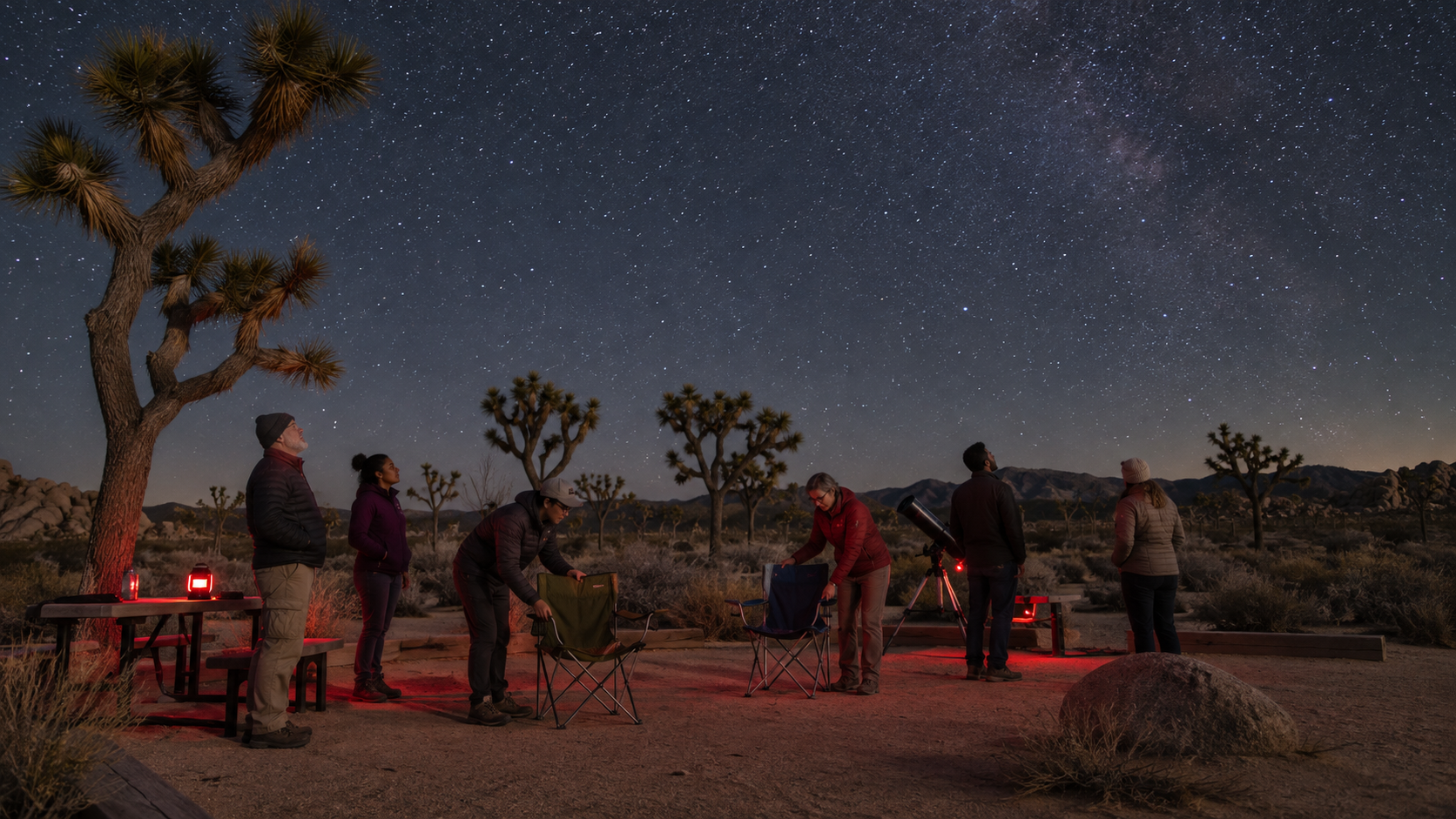
Joshua Tree National Park is the big-sky option for Los Angeles: a substantial desert drive, so give it a full evening rather than a rushed detour. The park is open 24 hours a day, but visitor centers have their own schedules. Official guidance says cell service is limited, and weekend campsites are competitive from September through May. Reserve a site in advance if you want to camp; do not assume a first-come site will be available, and never sleep in a vehicle on a roadside pullout.
The current Saturday-night forecast is clear, near 47°F with light wind—promising, but still subject to change. Bring more water and insulation than an LA evening usually calls for, use established pullouts and campgrounds, and protect the darkness for everyone. Check Joshua Tree’s current NPS conditions and weather right before departure.
The real point: make room for a shared sky
A near-new-Moon weekend is not a test of whether you can name every constellation. It is a nudge to step outside with a plan that leaves room for surprise. Bring the people who will laugh when the “bright star” turns out to be a plane, or meet a few new ones who get why that still counts as a great night.
Final pre-drive check: official forecast, official alert page, reservations, route, water, warm layer, red light. Then go look up.
FAQ
Do I need a telescope for a near-new-Moon stargazing trip?
No. Your eyes, a safe legal viewing location and about 20 minutes of dark adaptation are enough. Binoculars and a star-map app can add detail, but they are optional.
Is November 7–8 actually a new-Moon weekend?
The New Moon is November 9, 2026, at 07:02 UTC according to the U.S. Naval Observatory. That makes the preceding weekend a near-new-Moon window with relatively little moonlight during the evening.
Can I count on clear skies at Enchanted Rock, Brazos Bend or Joshua Tree?
No. Forecasts and park conditions can change quickly. Check the official forecast and the venue’s alerts or reservation page on the day you leave, and have a lower-key backup plan.
What is the best way to meet people who enjoy stargazing?
Start with a simple outing: a public observatory night, a legal park visit or a small sky-watch. You can find astronomy-minded people on Cosmic Match to share the planning and the view.