Southern Taurids 2026: A Patient Fireball Watch for Austin, Houston, and Los Angeles
Southern Taurids 2026: A Patient Fireball Watch for Austin, Houston, and Los Angeles
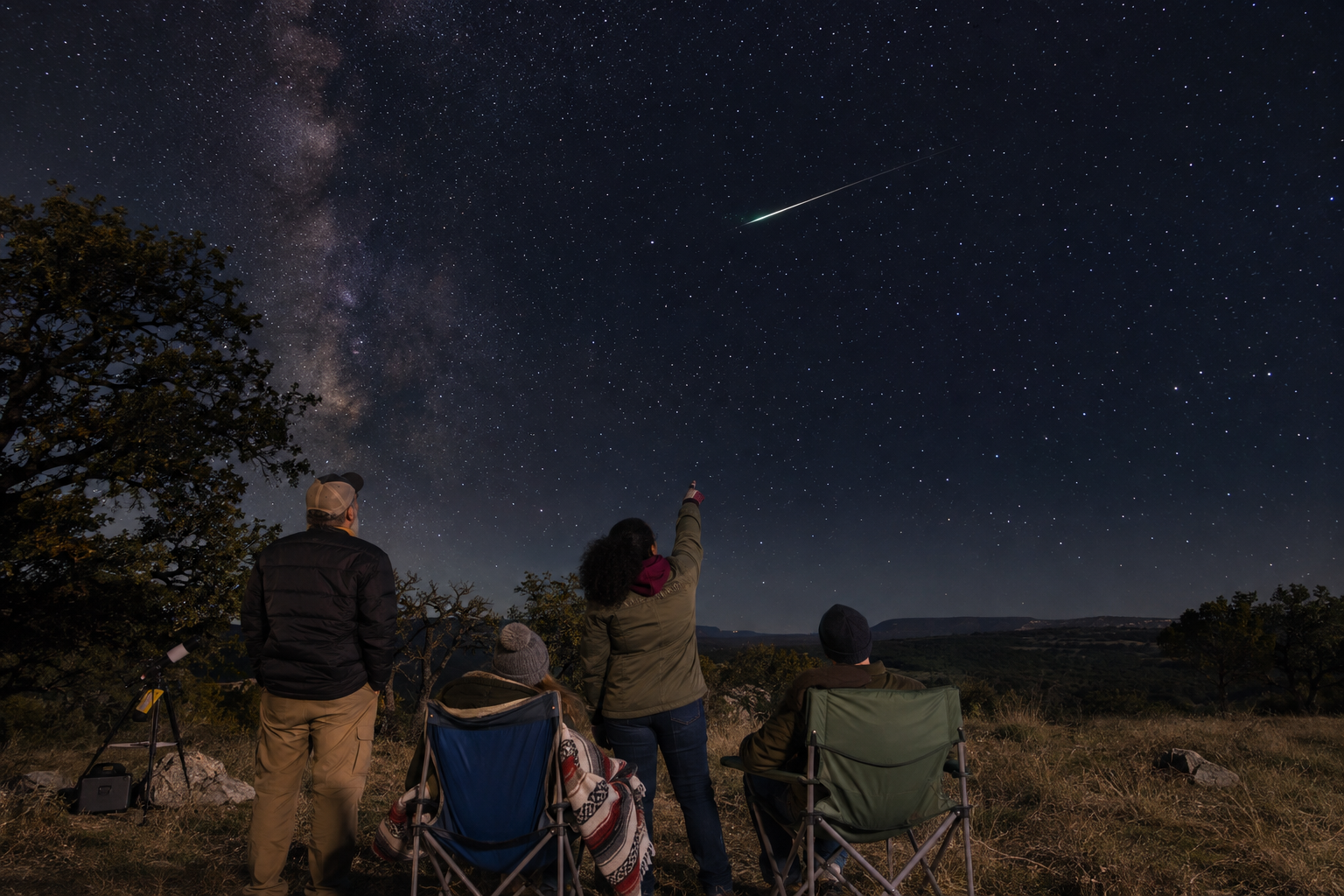
The Southern Taurids reach their 2026 peak on the night of November 4–5. This is not a rapid-fire meteor shower: NASA puts the ideal rate at roughly five meteors an hour, and real city-side counts are often lower. But the slow, sometimes brilliant Taurids make a low-pressure reason to spend an hour outside with friends—no telescope required.
The good news for tonight: the Moon is a waning crescent, about a quarter illuminated, so it should cause limited interference. The International Meteor Organization lists the Southern Taurids as active through November 20 and identifies the Nov. 4–5 peak as the shower’s fireball-swarm window. One bright, unhurried meteor is a win; a quiet sky for ten minutes is completely normal.
What can you actually expect from the Southern Taurids tonight?
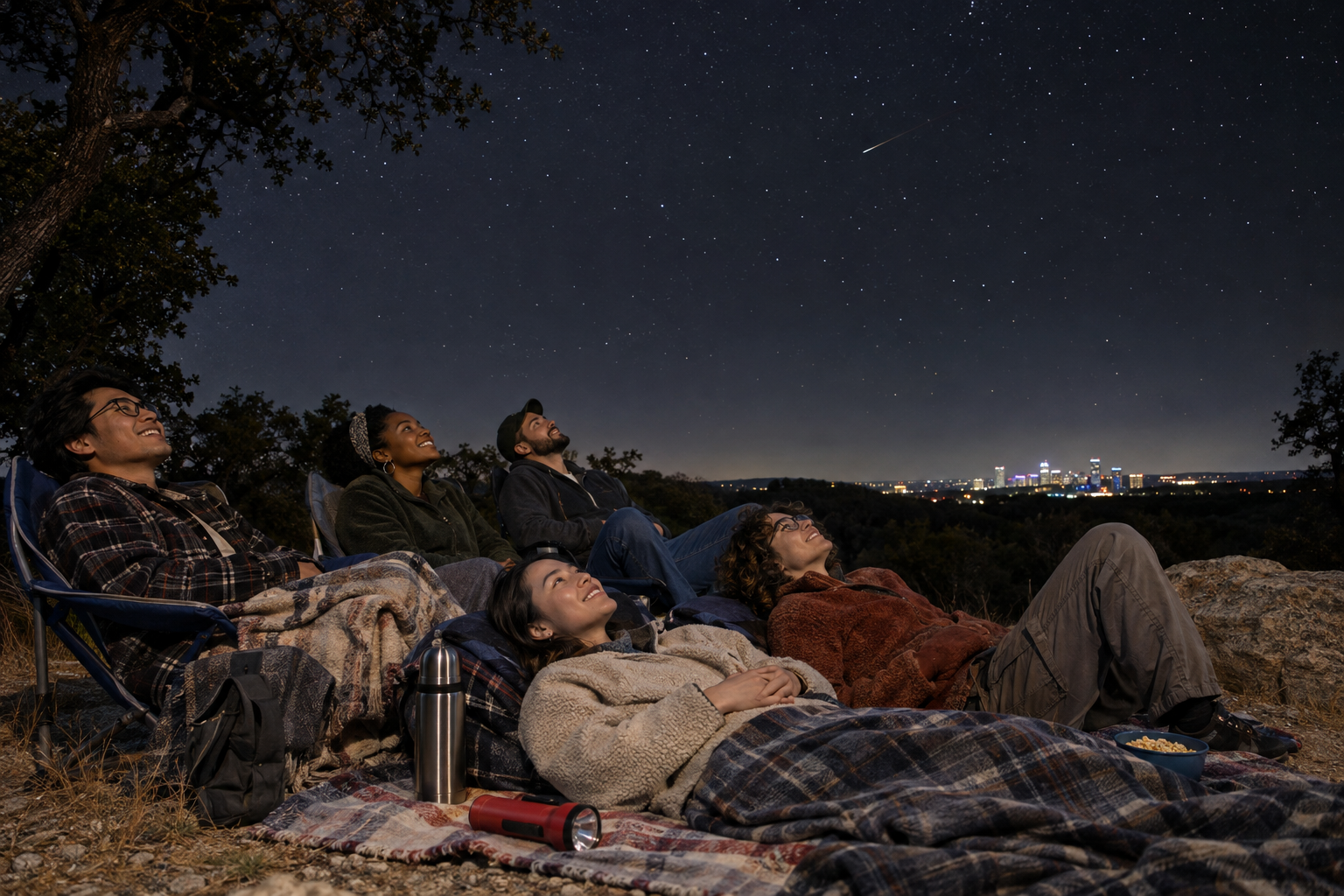
Think “patient watch,” not “meteor storm.” The around-five-per-hour figure is a zenithal hourly rate: it assumes ideal dark skies, an experienced observer, and the radiant overhead. Your own number depends on clouds, light pollution, the amount of sky you can see, and how long you stay out.
The payoff is character. Taurid meteors are relatively slow, and this stream is known for producing the occasional fireball—an unusually bright meteor. That is a possibility, never a guarantee. NASA’s November skywatching guide and the American Meteor Society’s weekly outlook both make the same practical case: give the sky time.
When is the best time to look in Austin, Houston, and Los Angeles?
Start once the sky is fully dark, then stay out for at least an hour if conditions feel good. Late evening through the hours before dawn gives you a longer, darker observing window; the Taurus region climbs higher as the night goes on. You do not need to wait for an exact minute of “peak.” The Southern Taurids are active across several nights, and the Northern Taurids are beginning to overlap later in the month.
For a more comfortable city escape, prioritize a safe place with an open view of the sky and permission to be there after dark:
- Austin: head for a Hill Country viewpoint or a planned observing night away from central-city glare. Even a backyard can work if you can block nearby porch lights.
- Houston: look for a safe, open area west or north of the brightest urban core; humidity and haze can matter as much as light pollution, so a clear forecast is your first filter.
- Los Angeles: elevation and an unobstructed horizon help. A legal overlook or organized public observing spot is better than a last-minute pull-off.
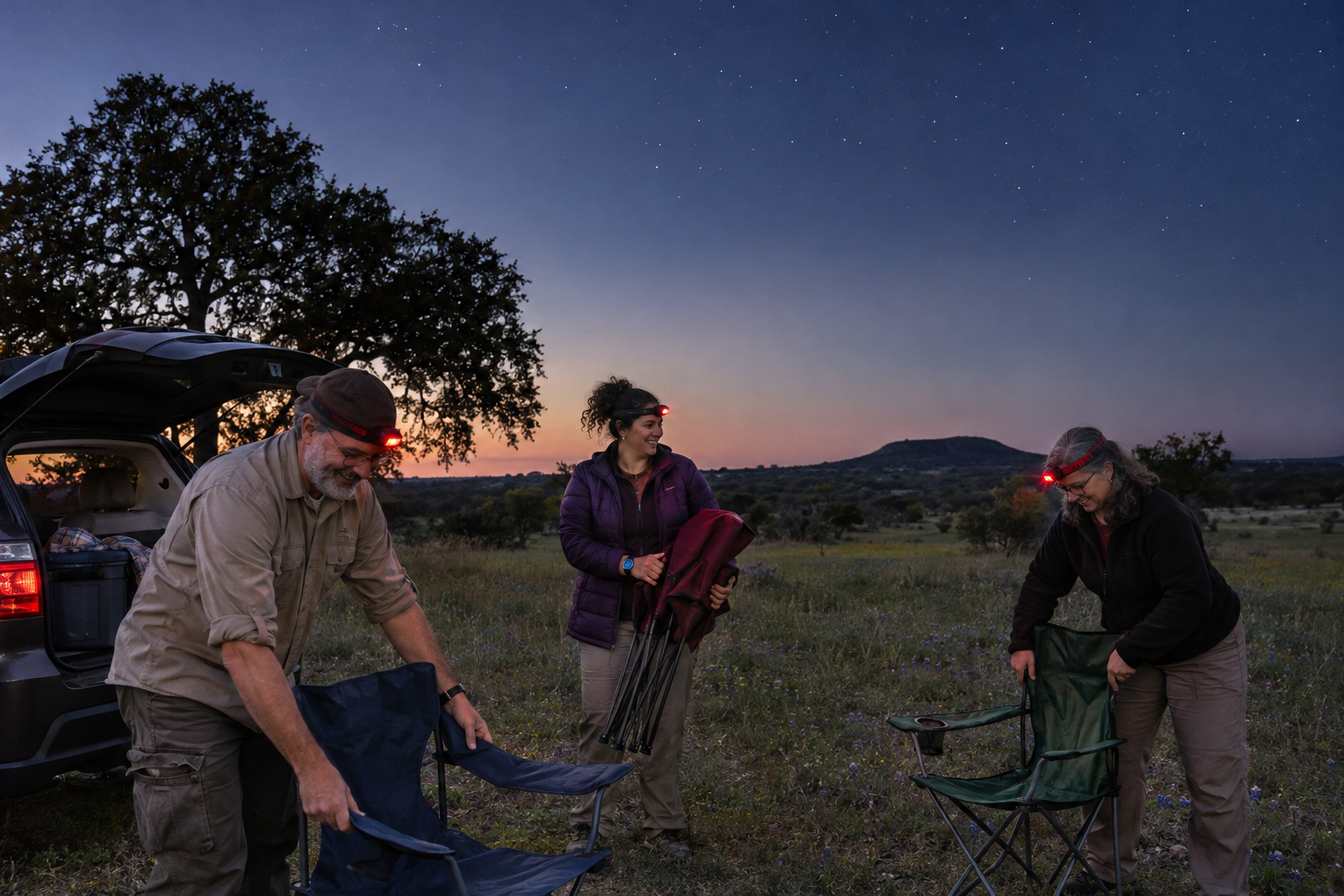
Bring layers, water, a chair or blanket, and a dim red light for finding your way. Let your eyes adapt for 20–30 minutes, keep your phone face-down or in night mode, and look at a broad patch of sky rather than through a telescope. If you’re still learning your way around the sky, our no-telescope guide to the Moon and Pleiades is a good companion for identifying a nearby seasonal landmark.
Do I need a telescope or binoculars for the Southern Taurids?
No. In fact, binoculars and telescopes narrow your view too much for meteor watching. Your best instrument is a comfortable, dark-adapted pair of eyes pointed at the widest sky you can see.
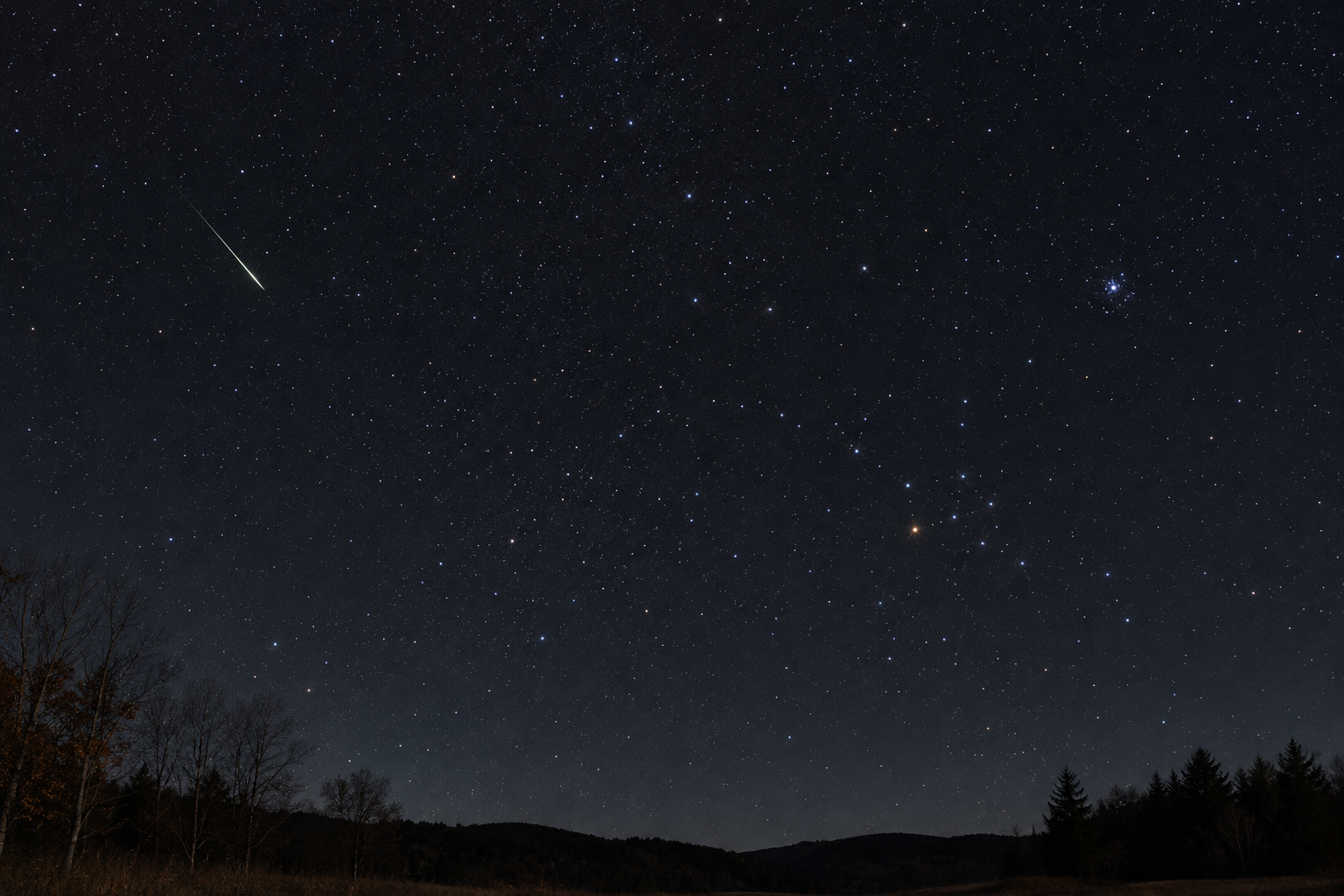
The meteors appear to trace back toward Taurus, but don’t stare at Taurus itself. Meteors close to the radiant can look short; scanning 30–60 degrees away gives you a better chance of seeing a longer streak. The International Meteor Organization’s 2026 calendar lists the Southern Taurids’ Nov. 4–5 peak and favorable waning-crescent conditions; its advice is useful context, not a personal forecast.
Make it a better watch, even if the sky stays quiet
Meteor watching is one of astronomy’s most social beginner experiences because there is nothing to calibrate and no eyepiece queue. Make a tiny plan: choose a safe location, check clouds shortly before you leave, settle in for an hour, and agree that a clear sky is already the activity.
Invite the friend who keeps saying they want to get into astronomy. Compare what you see, call out satellites, and count only streaks you actually catch. If you see a likely fireball, note the time, your location, direction of travel, and color; the American Meteor Society welcomes public fireball reports. A shared observation, even a modest one, is how a solo scroll becomes a real night outside.
Want more people for the next clear night? Join the Cosmic Match astronomy community to meet people who are up for a relaxed sky watch, a public star party, or simply a reason to look up.
A quick reality check before you go
Cloud cover can erase the view, and city light can hide the faintest meteors. That does not mean the forecast was “wrong.” It means your local conditions won. Check your local weather, bring a backup plan for the following night, and keep expectations calibrated to a handful of meteors—not a sky full of streaks.
The Southern Taurids are active through November 20. Tonight is a timely opportunity, not your only one.
FAQ
What time is the Southern Taurids peak in 2026?
The Southern Taurids peak on the night of November 4–5, 2026. Rather than a brief, exact-minute maximum, treat it as a patient all-evening-to-pre-dawn watch when your local sky is dark and clear.
How many Southern Taurid meteors will I see tonight?
NASA says each Taurid shower produces around five meteors per hour under ideal conditions. From Austin, Houston, or Los Angeles, light pollution, cloud, and how much sky you can see can reduce that number substantially.
Will I see a Taurid fireball?
Possibly, but it is never promised. The Southern Taurids are known for occasional bright fireballs; the point of a watch is to give that possibility time, not to expect a guaranteed spectacle.
Can I watch the Southern Taurids without a telescope?
Yes—your unaided eyes are better than a telescope for the wide sky. Use a chair or blanket, avoid bright screens, and scan broadly away from Taurus.