How to Photograph the Eta Aquariids Even With a Bright Moon
How to Photograph the Eta Aquariids Even With a Bright Moon
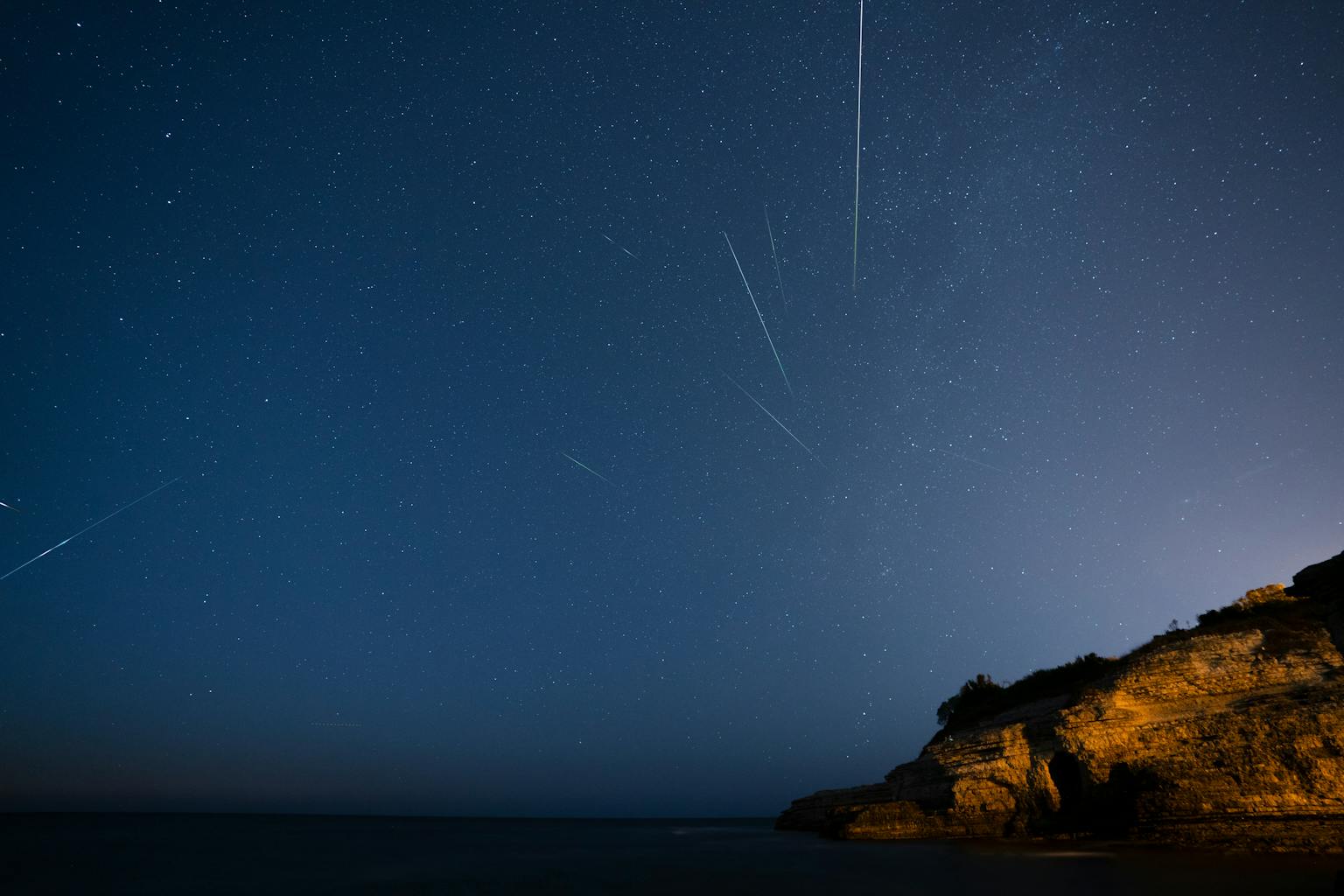
The Eta Aquariids peak before dawn on May 6, 2026, but this year comes with a very real catch: the Moon is still bright after the May 1 full moon. That does not make the shower pointless. It changes the assignment. Instead of chasing dozens of faint streaks, your best shot is to plan for a smaller number of brighter meteors, keep the Moon out of your frame, and let your camera run while you enjoy the quiet hour before sunrise.
Here is the beginner-friendly plan to photograph Eta Aquariids bright moon conditions without wasting the morning.
What to expect from the Eta Aquariids in 2026
NASA lists May 5 and 6 as the best time to see the Eta Aquariids in 2026, with the shower peaking in early May and the best viewing in the hours before dawn. The meteors come from debris left by Halley's Comet, and NASA notes that Eta Aquariid meteors are fast enough to leave brief glowing trains after they flash across the sky.
Under ideal dark skies, NASA says the shower can produce up to about 50 meteors per hour. That is the optimistic ceiling, not the forecast for a bright-moon morning in the United States. Timeanddate notes that the May 1 full moon leaves the sky bright during the May 5-6 peak, and the American Meteor Society lists the Moon as 84% full for the peak night. For Northern Hemisphere observers, that means fainter meteors will be hard to see or photograph.
So set your expectations this way: you are not going out to fill a memory card with meteors. You are going out to catch one or two strong streaks, maybe a long low Earthgrazer, and a beautiful dawn-side sky from Halley's debris stream.
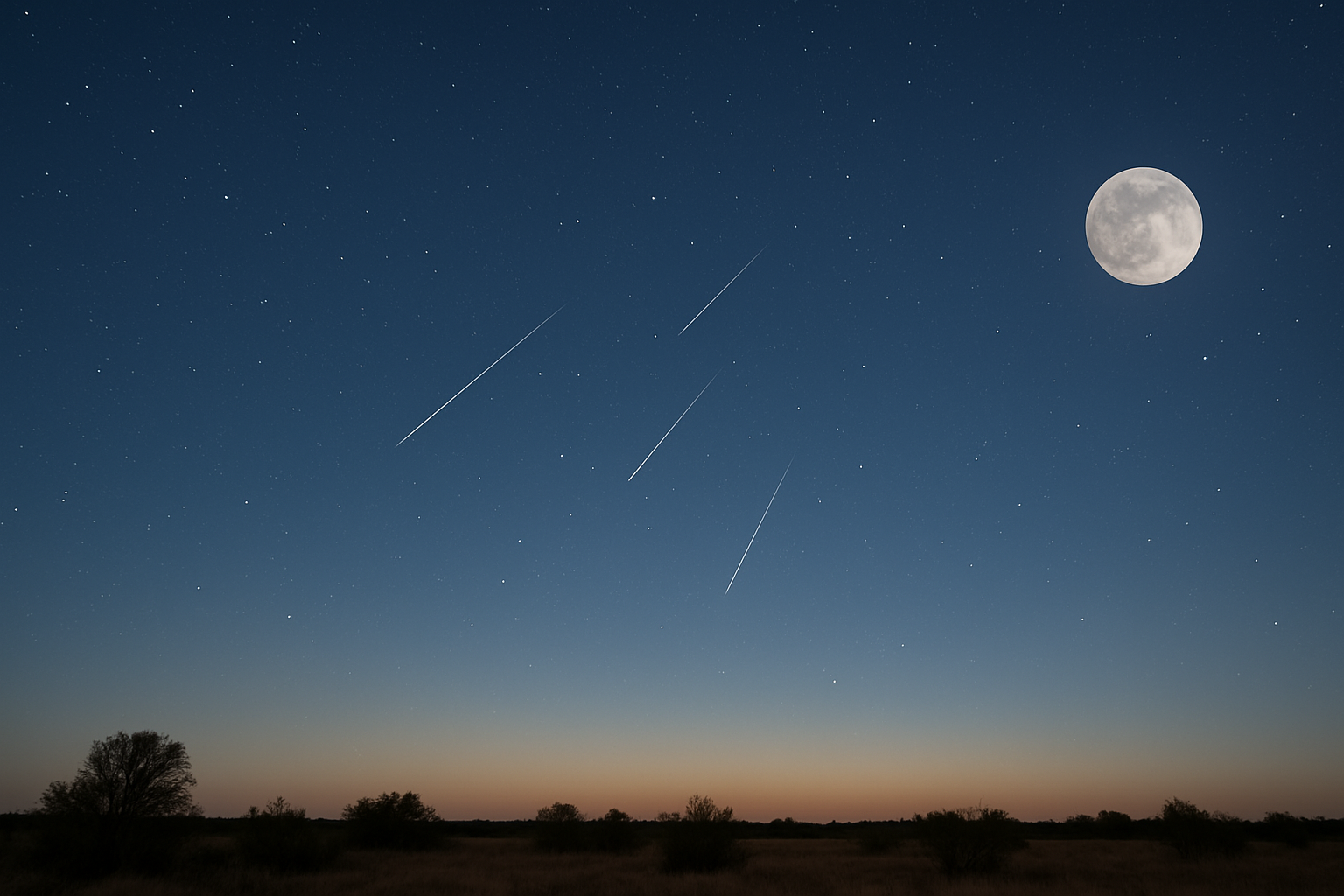
Use the radiant as context, not a bullseye. In bright moonlight, the better photo may be a longer meteor crossing open sky away from Aquarius.
The best time to set up
For most U.S. observers, the useful window is roughly 2:30 a.m. local time until the sky starts to brighten. Timeanddate's New York example shows the radiant rising after 2 a.m. and climbing higher toward dawn; your exact timing will vary by location, latitude, and horizon.
Do not wait until sunrise is close. Give yourself 20 minutes to choose a composition, lock focus, and test exposure. The camera should be shooting continuously by the time Aquarius is higher in the east-southeast.
If you are watching with someone else, use the downtime well. Share a thermos, compare test frames, and let the camera do its boring job. Cosmic Match is built for people who would rather spend a pre-dawn hour talking about meteors than pretending that is a normal wake-up time. You can meet other space and astrophotography enthusiasts at Cosmic Match before the next sky event sneaks up on your calendar.
Compose away from the Moon
The most important bright-moon trick is simple: do not point your lens at the Moon. If the Moon is above your horizon, put it behind a building, hill, tree line, or even your own vehicle, while keeping as much open sky as possible in the opposite direction.
For the Eta Aquariids, the radiant is in Aquarius and is generally found toward the eastern sky before dawn. You do not need to aim directly at the radiant. In fact, meteors photographed farther from the radiant often look longer because they cross your frame at a better angle. Try aiming a wide lens east, southeast, or 45 to 90 degrees away from the Moon, depending on your local sky.
Foreground matters more in moonlight than it does on a fully dark night. A bright Moon can gently light a desert road, trees, a shoreline, a telescope silhouette, or a parked tripod. Use that. The photo may become less about a black sky full of streaks and more about one clean meteor over a recognizable place.
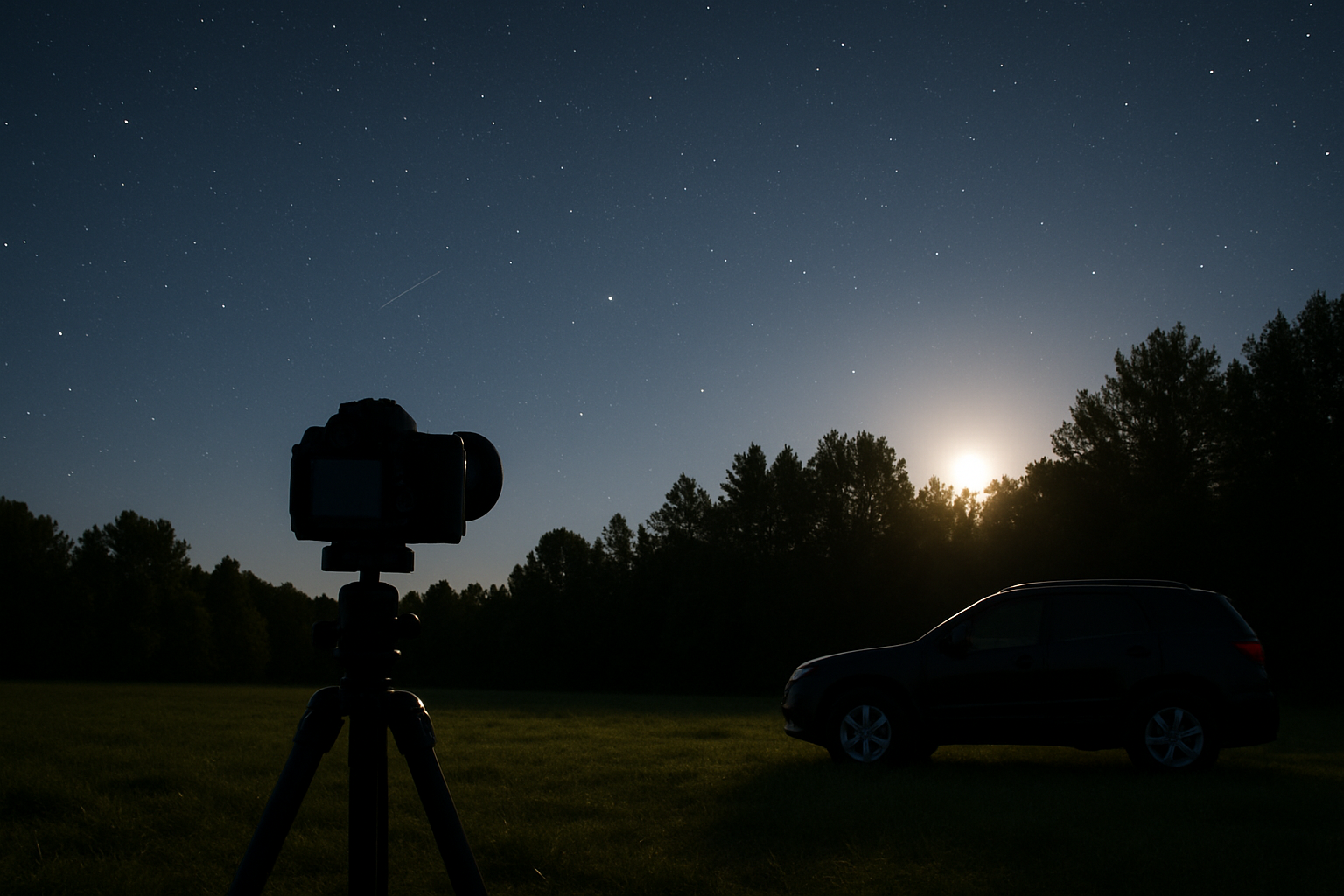
Block the Moon with a solid object, then aim into the cleanest open sky. Moonlit foreground can become part of the composition instead of a problem.
If you are in Central Texas, pair this guide with our Austin-specific timing and location notes in The Eta Aquariids Peak Before Dawn: Where Austin Should Look Tonight.
Camera settings for a bright-moon meteor shower
Start with these settings for a DSLR or mirrorless camera:
- Lens: 14-24mm if you have it, or the widest lens you own
- Aperture: f/1.8 to f/2.8
- Shutter speed: 8 to 15 seconds
- ISO: 800 to 1600 under bright moonlight
- Focus: manual focus on a bright star or distant light, then leave it alone
- White balance: 3500K to 4200K for a cooler night-sky look
- File type: RAW if available
- Drive mode: continuous interval shooting
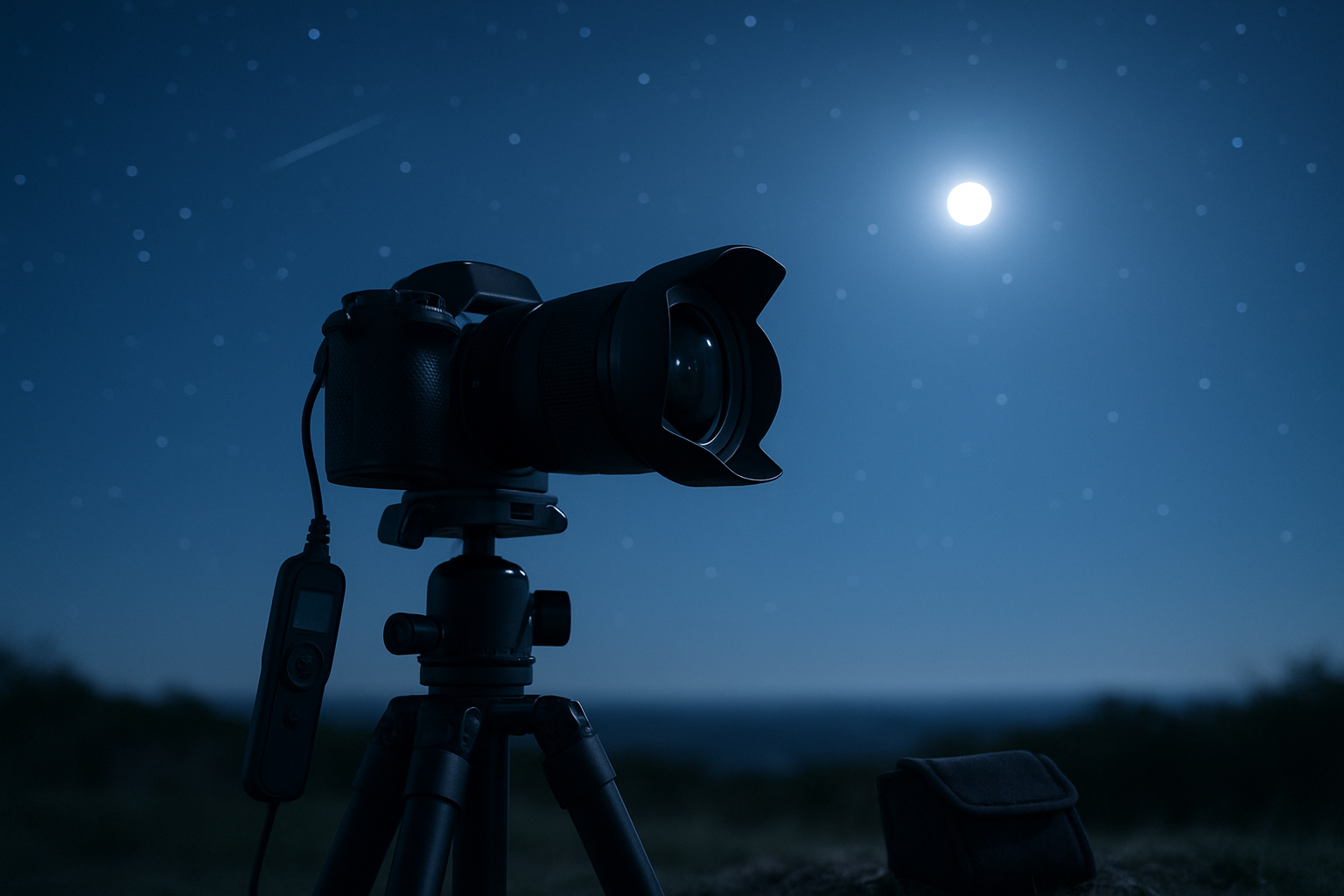
A stable tripod, wide lens, manual focus, and interval shooting matter more than constantly changing settings once the shower window starts.
Take one test frame and check the histogram. If the sky looks gray or the histogram is bunched too far to the right, lower ISO first. If stars trail too much, shorten the shutter speed. If the foreground is too dark but the sky is clean, keep shooting; you can lift the foreground slightly in editing.
Avoid very long exposures. A 30-second frame may catch a meteor, but moonlight can wash out contrast, and stars may trail depending on your focal length. Shorter exposures create cleaner frames and give you more chances to catch a meteor cleanly.
If you are still choosing gear, our beginner astrophotography camera guide explains which cameras and lenses make night-sky work easier without pushing you into overkill equipment.
Phone settings that can still work
A phone can photograph the brightest meteors, but it needs help. Use a tripod or clamp. Turn off the flash. Use night mode, pro mode, or a manual camera app if your phone supports it.
Try:
- Exposure: 10 to 15 seconds
- ISO: 400 to 800 if manual control is available
- Focus: infinity or the farthest manual focus setting
- Timer: 3 seconds, or use a remote trigger
- Format: RAW/DNG if your phone offers it
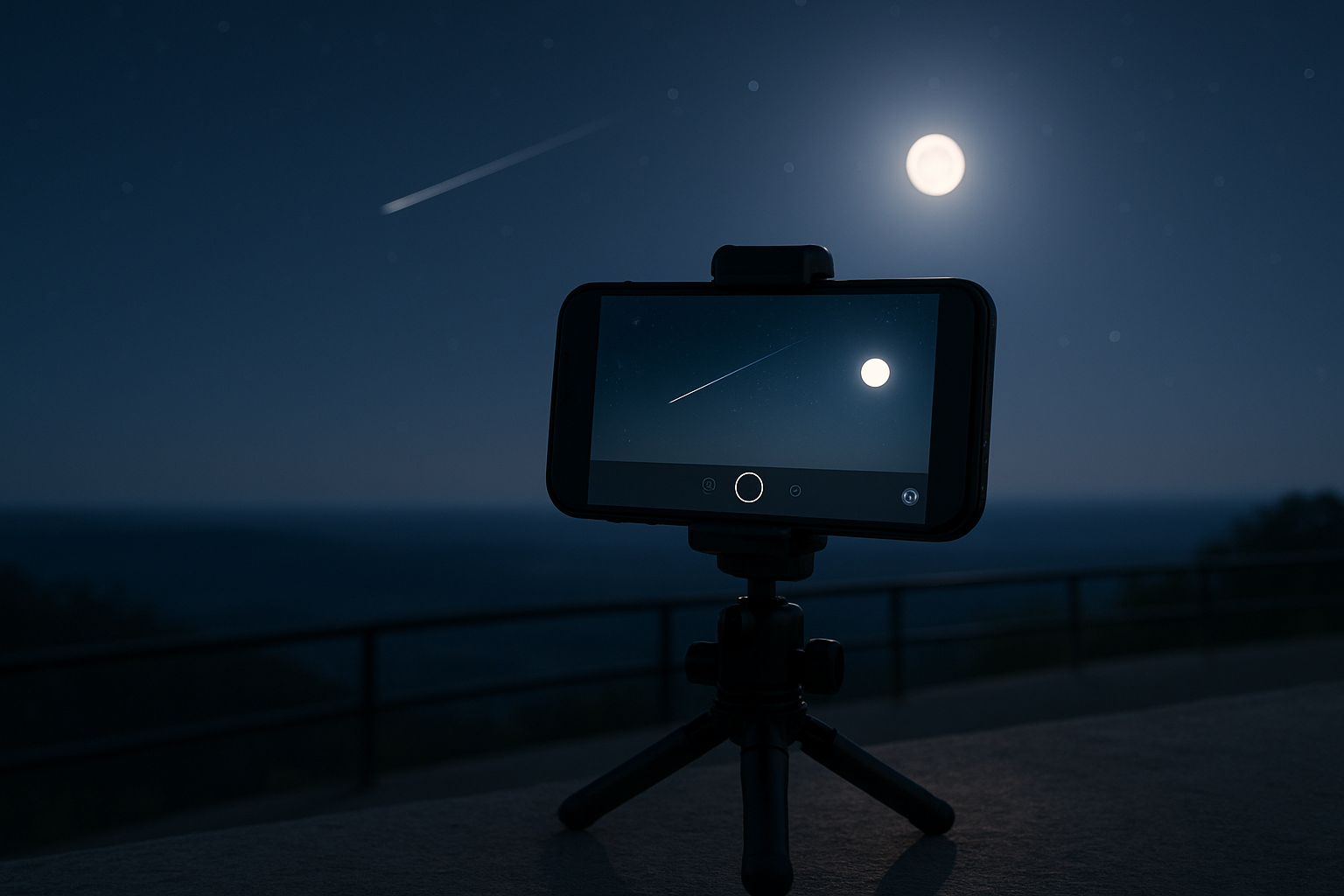
For phone photos, stability is the whole game: clamp it, dim the screen, use a timer, and let the long exposures run.
Do not handhold. Do not pinch-zoom. Do not keep tapping the screen after every frame, because screen light will hurt your night vision and distract everyone nearby. Set the phone, start the sequence, and let it work.
The realistic goal with a phone is one good wide scene with a lucky bright streak. That is still a win.
A simple pre-dawn shooting plan
Use this checklist before you leave:
- Check cloud cover and transparency, not just rain probability
- Look up your local moonrise, moonset, and radiant timing
- Pick a spot with a clear eastern or southeastern horizon
- Bring a tripod, charged batteries, empty memory card, and warm layer
- Arrive by about 2:30 a.m. local time if possible
- Block the Moon behind something solid
- Shoot continuous 8-15 second frames until twilight becomes obvious
- Review later, not after every exposure
If you catch nothing, you still get useful practice: focusing in the dark, working with moonlit foregrounds, and learning how your camera behaves before dawn. That practice pays off during darker meteor showers later in the year.
Editing the frames afterward
When you review your images, scan quickly at full-screen size. Meteors are usually clean, straight streaks that appear in only one frame. Airplanes often show dotted or repeated lights. Satellites move steadily across multiple frames. If you are unsure, compare adjacent shots.
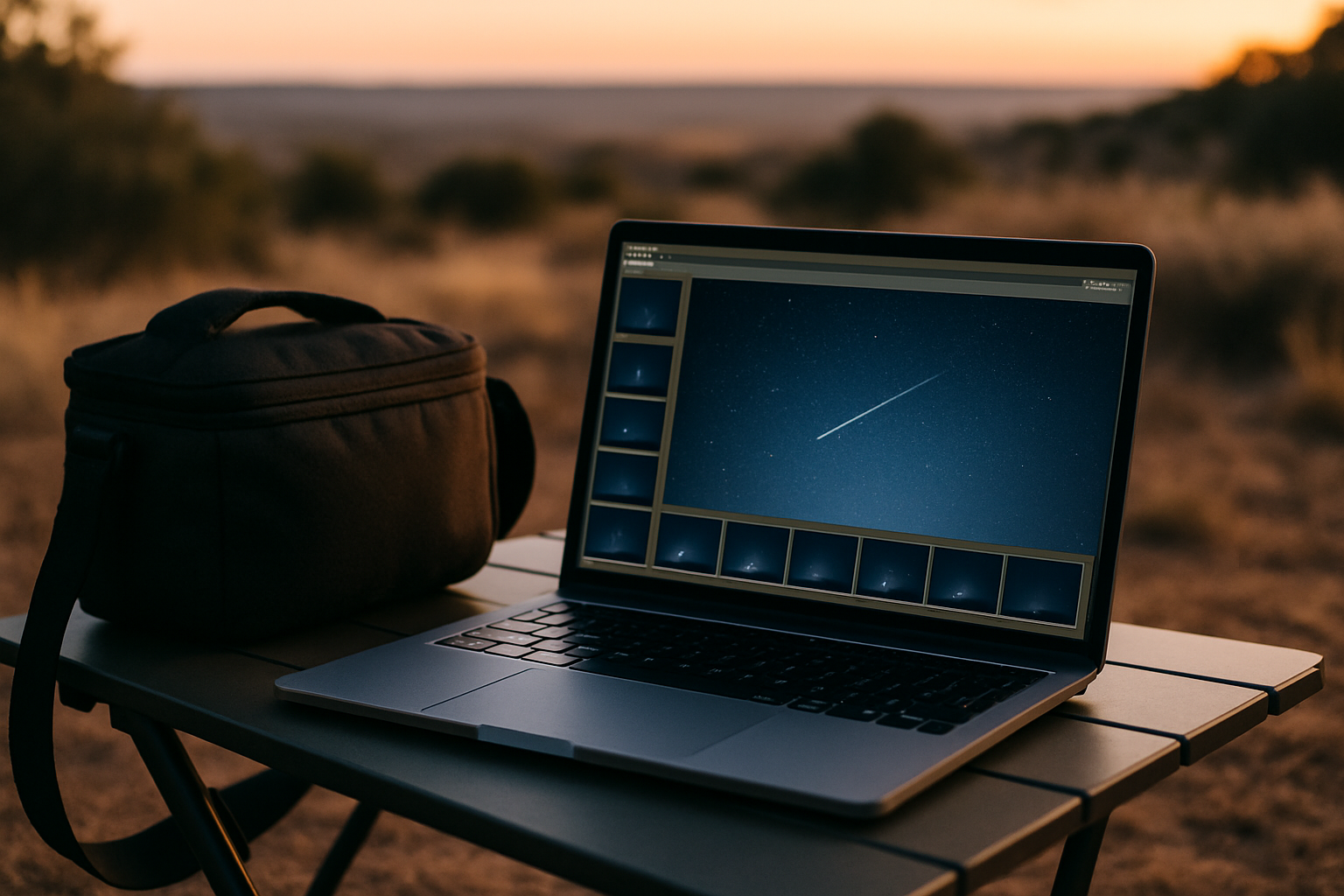
Review frames in sequence before editing. A true meteor usually appears in one exposure, while satellites and aircraft tend to reveal themselves across adjacent frames.
For a single good meteor frame, keep edits gentle:
- Lower highlights if moonlight made the sky too bright
- Add mild contrast or dehaze
- Keep noise reduction moderate so stars do not smear
- Avoid over-saturating the sky
- Crop only after you know where the meteor sits best
A composite is fine if you clearly present it as a composite, but beginners should first aim for one honest frame. It is easier to learn from one strong exposure than from a stack of mistakes.
The real win: making the morning social
Meteor photography can feel lonely because the camera does most of the work while everyone waits. Make it a small shared mission. Bring one friend, compare different directions, and trade frames after breakfast. If your usual friends are not excited about a 3 a.m. sky alarm, that is exactly why Cosmic Match helps space lovers find people who share the obsession.
The 2026 Eta Aquariids are not perfect for photographers. The Moon is too bright for that. But if you keep expectations realistic, aim away from moonlight, and shoot continuously before dawn, you still have a fair chance at the kind of image that makes the early alarm feel worth it: one fast piece of Halley's Comet crossing a moonlit sky.
Sources checked
- NASA: What's Up: May 2026 Skywatching Tips
- timeanddate.com: Eta Aquarid Meteor Shower 2026
- American Meteor Society: Meteor Shower Calendar 2026-2027