Columbia Memorial Space Center: A First-Timer Guide to LA’s Space Shuttle Legacy
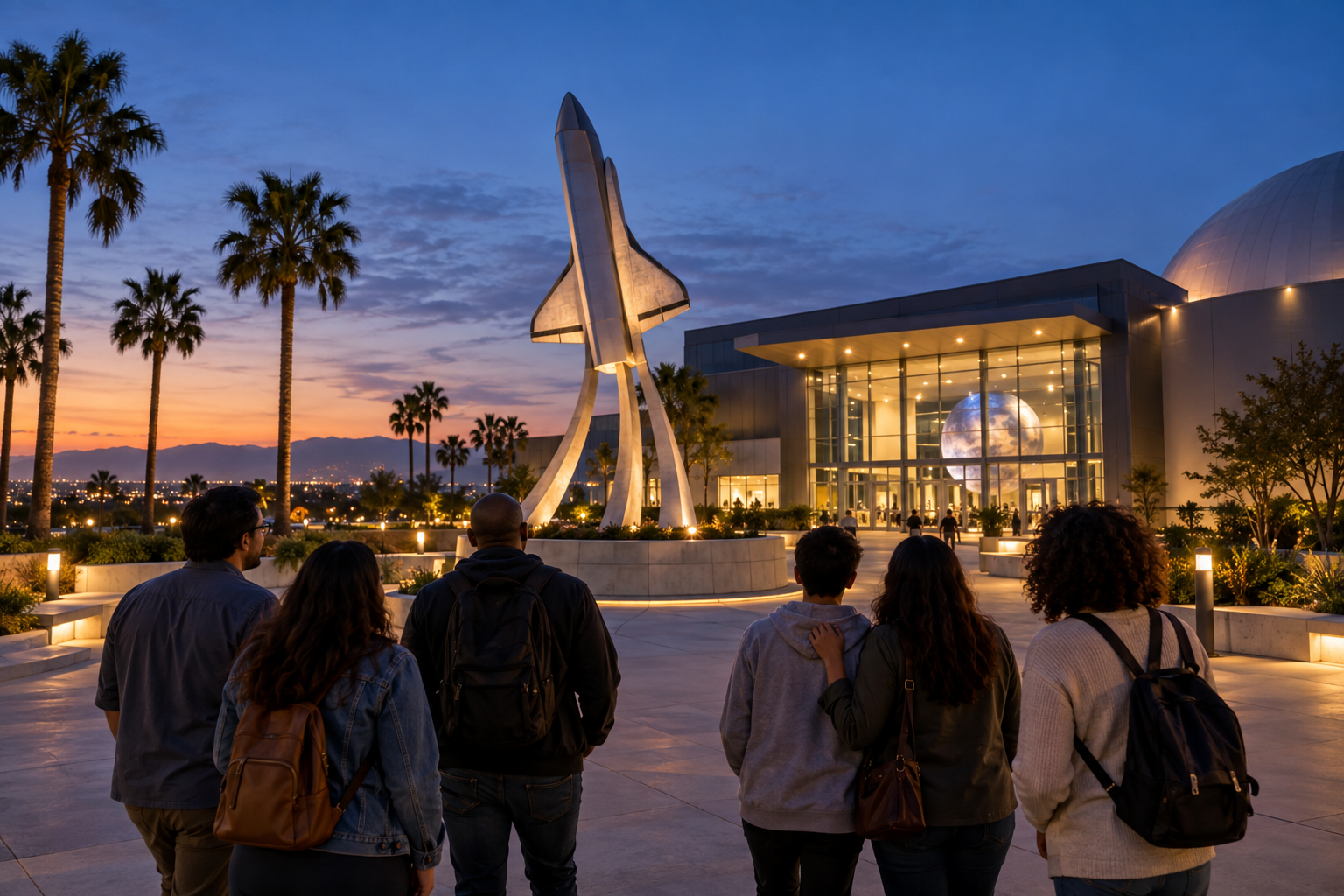
Downey’s Columbia Memorial Space Center is a compact, hands-on stop where you can spend an easy afternoon with Southern California’s spaceflight story—no telescope, technical background, or all-day museum commitment required. The Center at 12400 Columbia Way is open Tuesday through Saturday, 10 AM–5 PM; current adult admission is $5, with free parking in front and along Columbia Way. That makes it a practical first space outing for a solo curiosity day, a family visit, or a few friends looking for something more memorable than another coffee run. Check the official visitor page before you leave: weekday field trips and programs can affect the rhythm of a visit.

What makes Columbia Memorial Space Center different from Griffith Observatory?
Griffith is spectacular for its hilltop views, planetarium, and evening atmosphere. Columbia Memorial is a different kind of LA-area space destination: intimate, participatory, and rooted in the aerospace work that happened in Downey. It is a science learning center built around engineering, technology, and the local story of Apollo and the Space Shuttle era.
The site’s history is the reason to go. Downey’s former aerospace complex was involved in Apollo spacecraft development and later Space Shuttle work. The Center opened in 2009 and is dedicated both to STEM learning and to honoring the seven STS-107 astronauts lost aboard Columbia on February 1, 2003. The Center’s official Downey aerospace history is worth a look before or after your visit if you want the longer arc—from aircraft manufacturing to Apollo hardware to the shuttle program.
If you want the classic observatory experience on another weekend, pair this guide with our Mount Wilson Observatory first-timer plan. The contrast is lovely: Downey for hands-on spaceflight history, Mount Wilson for a mountain-scale view of astronomy.
What happens on a first visit to the Space Center?
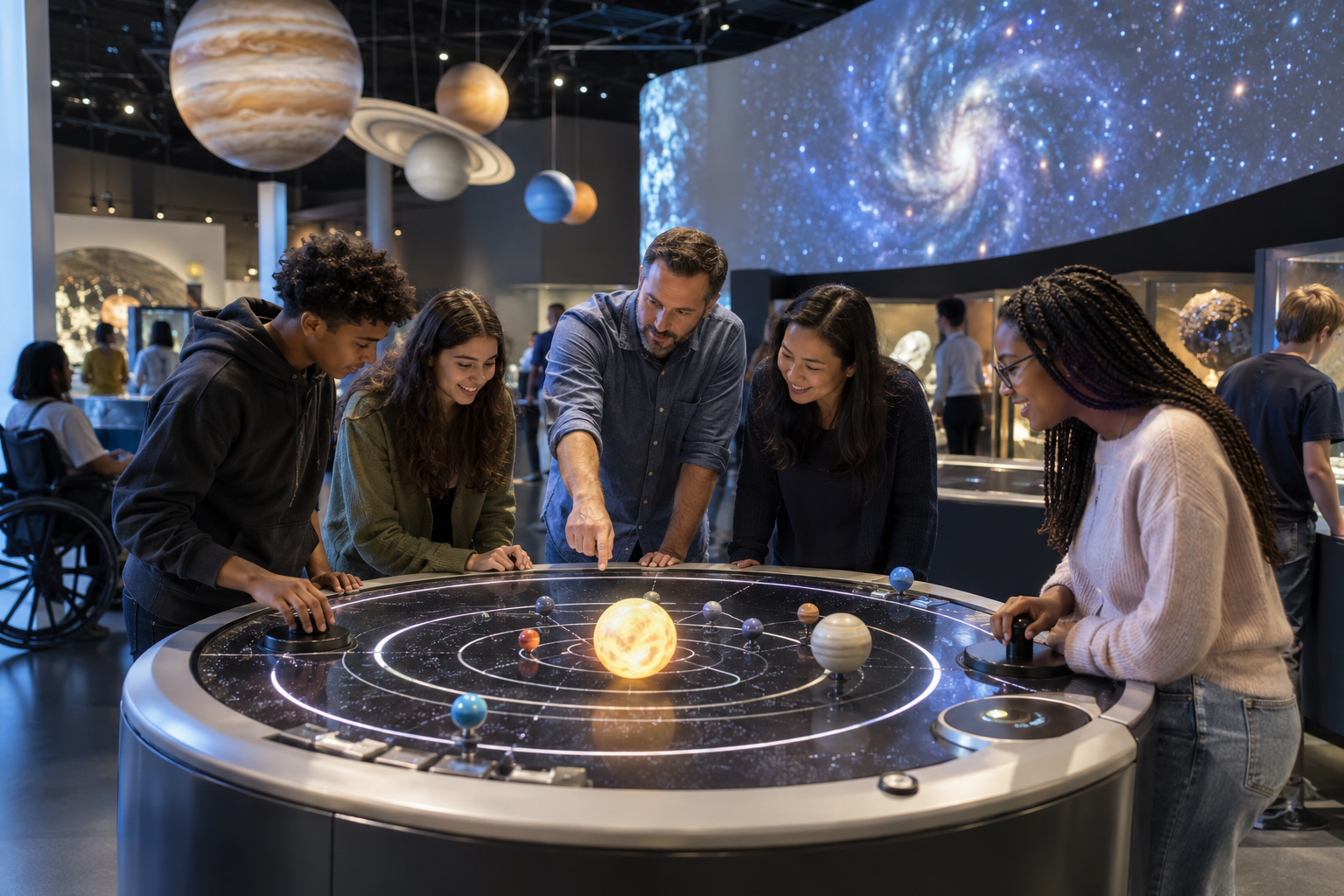
Think of it as a place to follow your questions. Start by taking in the permanent spaceflight-history material, then give yourselves time for the interactive learning areas rather than trying to race through. The Center’s own history materials describe exhibits and programs spanning robotics, space science, planetary science, and physics; availability can change with classes, camps, and special programming, so treat any single activity as a bonus rather than a promise.
A good low-pressure rhythm is: arrive soon after opening, get oriented, choose one hands-on area that catches your eye, then pause for the memorial and aerospace-history displays. Ask staff which activities are running that day and whether there is a program you can join. It is exactly the kind of place where one person’s “wait, how does that work?” can become the best part of the visit.
How should you approach the Columbia memorial?
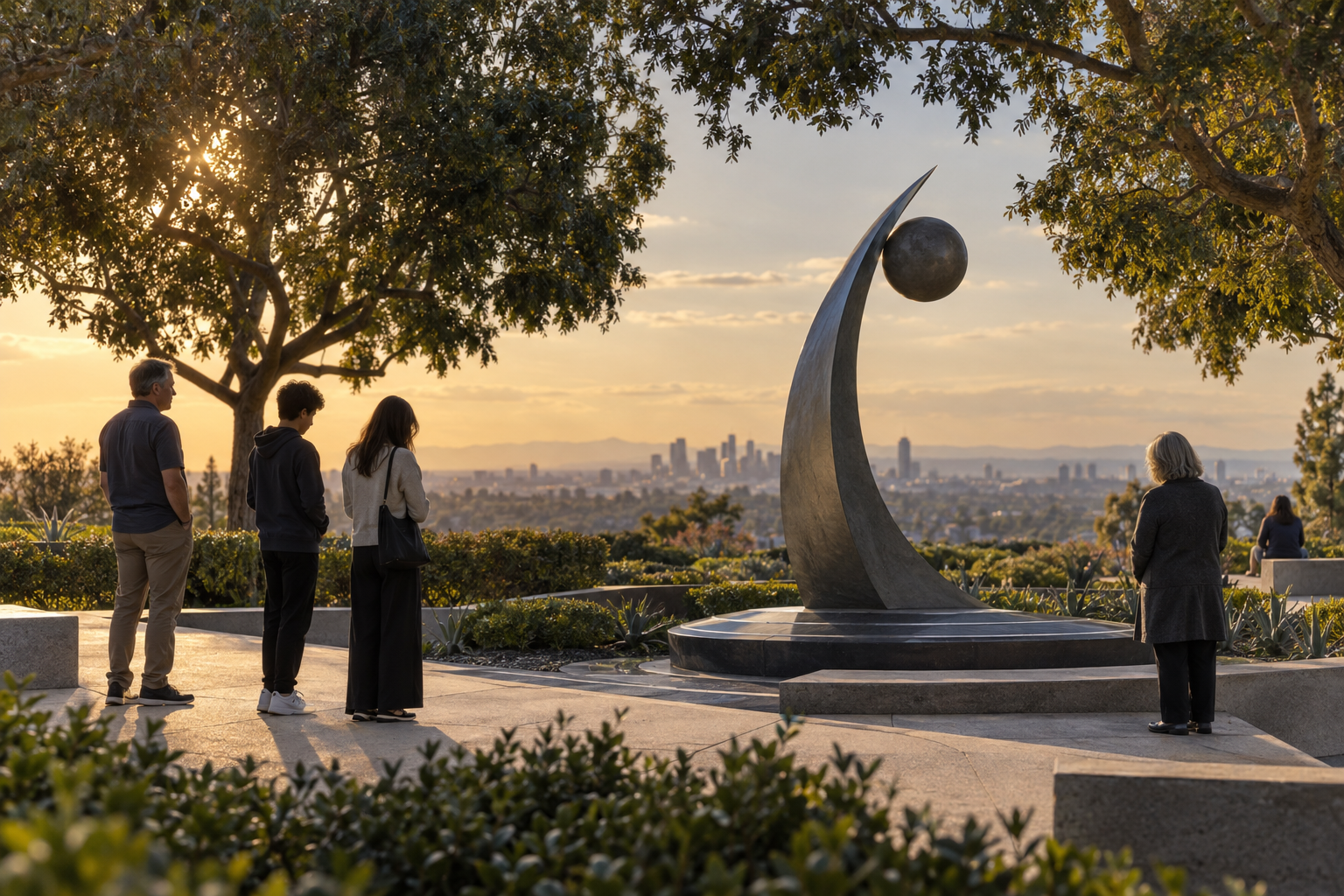
Give it a quiet moment. The Center is the national memorial to the Columbia crew, and its mission is not to turn a loss into spectacle. Read the material, notice the people behind the mission, and let the engineering story remain human. That perspective also helps first-time visitors understand why space centers matter: they connect the thrill of exploration with the patience, care, and shared responsibility behind it.
The historical collection notes that an Apollo Boilerplate 12 test vehicle is on permanent view outside the Center. It is a useful anchor for the site’s connection to real hardware, but check with the staff on arrival for the day’s outdoor and exhibit access. A practical guide should never substitute for an on-site update.
A simple first-timer plan: 90 minutes to two hours
10:00 AM — Arrive and orient. The official address is 12400 Columbia Way, Downey, CA 90242. Parking is free in front of the Center and along Columbia Way. It sits near Lakewood Boulevard and Imperial Highway, close to the Downey Promenade and Kaiser Permanente Downey Medical Center. Transit riders should use the official directions page for current Metro and DowneyLINK options.
10:15 AM — Start with the Downey story. Before jumping into every button and screen, get the site’s through-line: a place where local manufacturing, the Apollo program, and shuttle development overlap.
10:45 AM — Pick one hands-on thread. A robotics, planetary-science, or physics activity is more memorable when you give it time. Ask a friend or your kid to choose first; curiosity works better when it has an owner.
11:20 AM — Visit the memorial with care. This is the emotional center of the guide, not an item to check off. Then check outdoor pieces or any staff-recommended activity.
11:45 AM — Compare notes over lunch nearby. Ask one simple question: “What would you want to build or explore next?” For a community that loves space, that is a fine icebreaker.
What should you bring, and what can you skip?
Bring a water bottle, a phone for maps and updated hours, and a small amount for admission. Bring questions, especially if you are visiting with someone who thinks space is “not really their thing.” You do not need binoculars, a telescope, or any prior knowledge.
Skip the overplanning. The Center is small enough to be flexible, and its program calendar is more useful than a rigid checklist. If accessibility, a particular program, group arrangements, or exhibit availability will shape your day, call the Center at (562) 231-1200 before heading over.

Make it a shared LA space habit
The best beginner astronomy plan is often not a purchase—it is a place and a person to share it with. Use a Columbia Memorial Space Center visit as a reason to invite a science-curious friend, meet up with your local astronomy circle, or start planning the next stop. Join the Los Angeles Cosmic Match community to find people who are equally happy to talk Apollo history, swap museum tips, or make a night of an observatory visit. You can also join Cosmic Match free and bring the conversation with you after the day ends.
FAQ
How much does it cost to visit Columbia Memorial Space Center?
The current posted daily admission is $5 for adults and children ages 4 and over; seniors, teachers with valid ID, and veterans with valid ID are $3. Children 3 and younger are free. Recheck the official hours and admission page before your visit.
When is Columbia Memorial Space Center open?
The Center currently lists Tuesday through Saturday, 10 AM–5 PM. Weekday field trips and special programming may affect a visit, so call ahead if timing matters.
Is Columbia Memorial Space Center good for adults without kids?
Yes. The $5 admission, local aerospace history, national Columbia memorial, and interactive science focus make it a worthwhile short visit for adults who want a more hands-on alternative to a traditional museum.
Do I need a telescope or space-science experience?
No. This is a telescope-free, beginner-friendly visit. Go with curiosity and let the day’s available exhibits and activities shape the experience.