How to Try Free Public Telescope Observing in Los Angeles
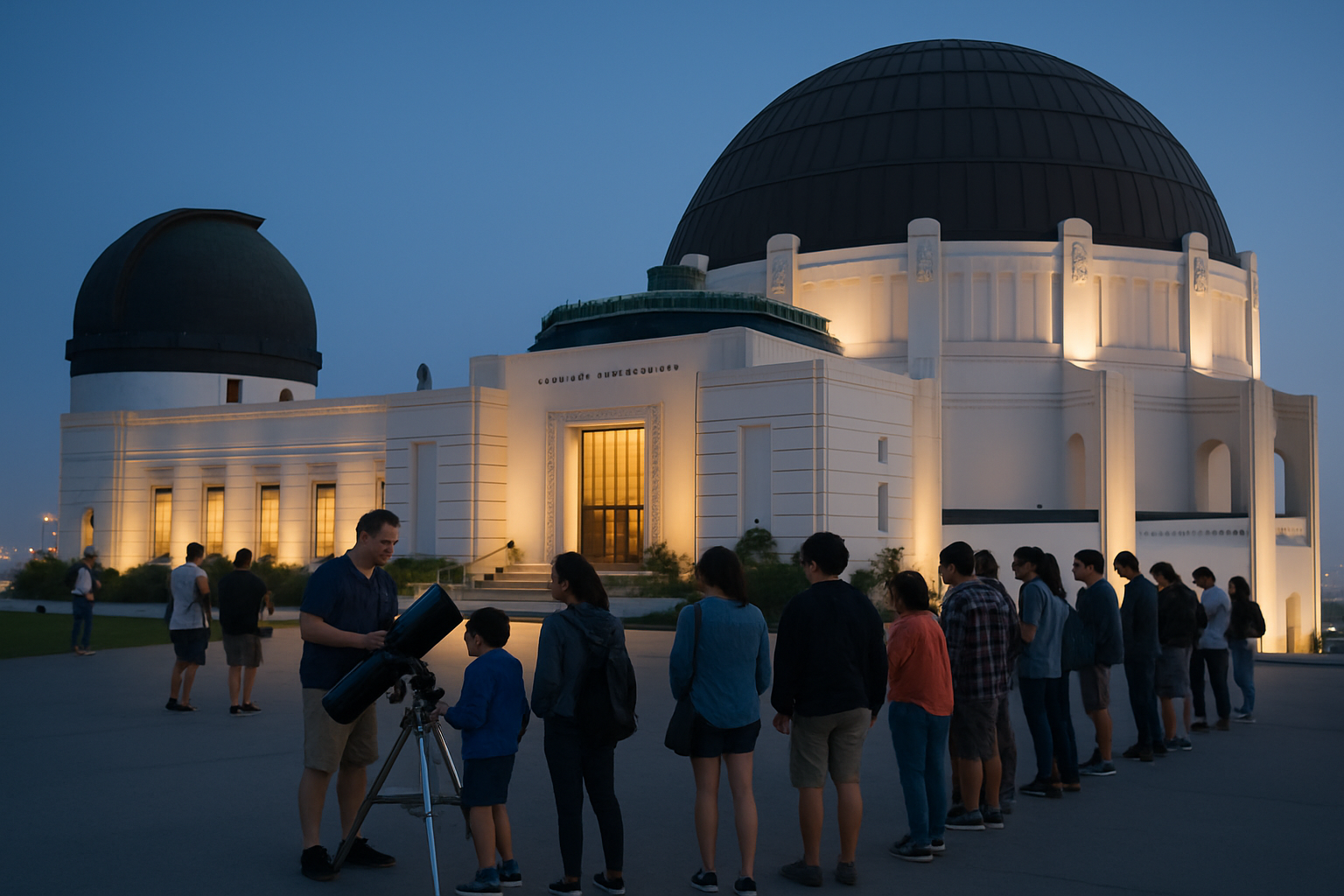
Los Angeles has one of the easiest beginner astronomy on-ramps in the country, and it does not require a telescope, binoculars, or a friend who already knows the sky. Griffith Observatory offers free public telescope viewing on clear evenings when the building is open, which means your first real eyepiece look can be as simple as showing up at the right time with realistic expectations.
That matters because a lot of first-time stargazers make the hobby harder than it needs to be. They assume they need to buy gear first, drive two hours first, or learn constellations first. Public telescope observing in Los Angeles gives you a cleaner first step. You can stand in line, look through a serious observatory telescope, ask questions, and find out whether you actually enjoy the experience before you spend a dollar on equipment.
If you want a broader list of current official observatory and star-party options, start with our Los Angeles stargazing events guide. If you want the simplest possible answer for this week, though, Griffith is still the easiest no-gear option in the city.
What Griffith's public telescope program actually is
Griffith Observatory runs free public telescope observing each evening the Observatory is open and the sky is clear. The official daily programs page confirms the basic setup: the telescopes are part of the normal visitor experience, not a special paid add-on or members-only event.
The observatory's telescope page adds the practical details beginners actually need:
- observing usually begins around 7:00 p.m.
- the line for each telescope is cut off at 9:30 p.m. or earlier
- all viewing is usually wrapped up by about 9:45 p.m.
That "or earlier" matters. If you show up at 9:20 thinking you outsmarted the line, you may have already missed it.
When to go if you are brand new
If your goal is a good first experience rather than a rushed box-check, treat timing as part of the plan.
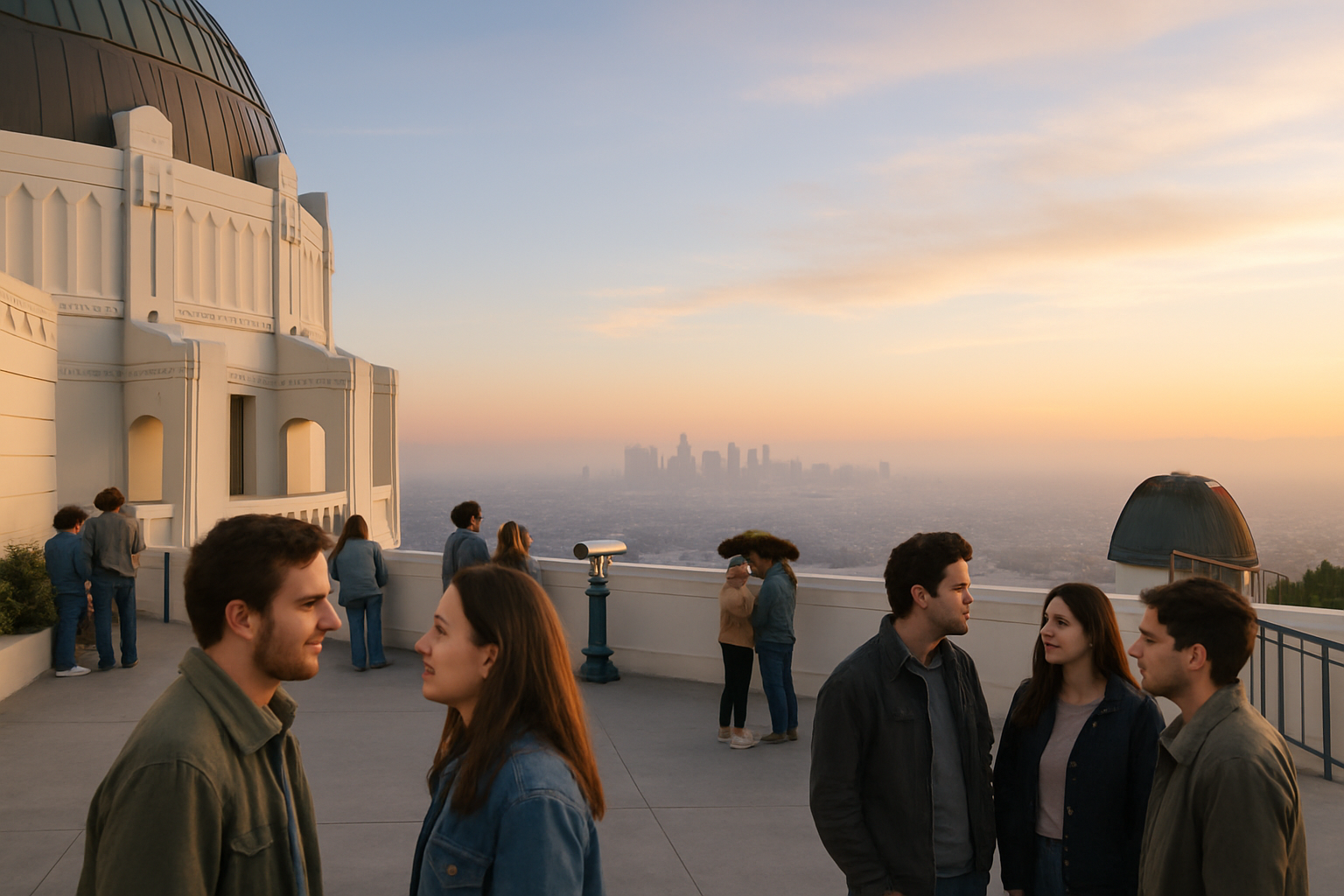
Griffith Observatory is currently closed on Mondays, open 12:00 noon to 10:00 p.m. Tuesday through Friday, and open 10:00 a.m. to 10:00 p.m. on weekends. Telescope hours are narrower than building hours, so do not confuse "the building closes at 10" with "I can stroll up at 9:50 and still observe."
For a beginner visit, the best move is usually to arrive before the telescope line gets long, not right when you think the sky will be darkest. On a normal clear evening, that means aiming for roughly 6:30 to 7:00 p.m. so you have time to park, look around, and get into the observing flow without feeling rushed.
Weekend sunsets, summer nights, and holiday periods can all push crowds up. The official visit page explicitly notes that the building is busiest on weekends, during summer, holiday periods, and at sunset. If you dislike lines or want a calmer first impression, a Tuesday, Wednesday, or Thursday evening is the safer bet.
One more practical note: Griffith's official calendar can list special hours. If you are planning around a holiday week, re-check the calendar the day you go instead of assuming the standard closing time applies.
What your first public telescope night will probably feel like
The romanticized version of observatory visiting is silent awe under a perfect sky. The real beginner-friendly version is better than that in a different way: it is social, a little busy, and full of people who are also learning.
You may wait in a line. You may get only a short look through the eyepiece. You may not know what you are seeing until someone explains it. That is normal. Griffith's Zeiss telescope page says the observatory serves up to 600 visitors per night through the rooftop Zeiss refractor when skies are clear, which tells you two things at once: the program is genuinely public, and it is popular enough that efficiency matters.
The good news is that the targets are chosen for public viewing. According to the observatory's own telescope page, the historic 12-inch Zeiss refractor is commonly aimed at the Moon, planets, and the brightest showpiece objects in the night sky. Those are exactly the kinds of targets that work for beginners because they give you a clear payoff fast.
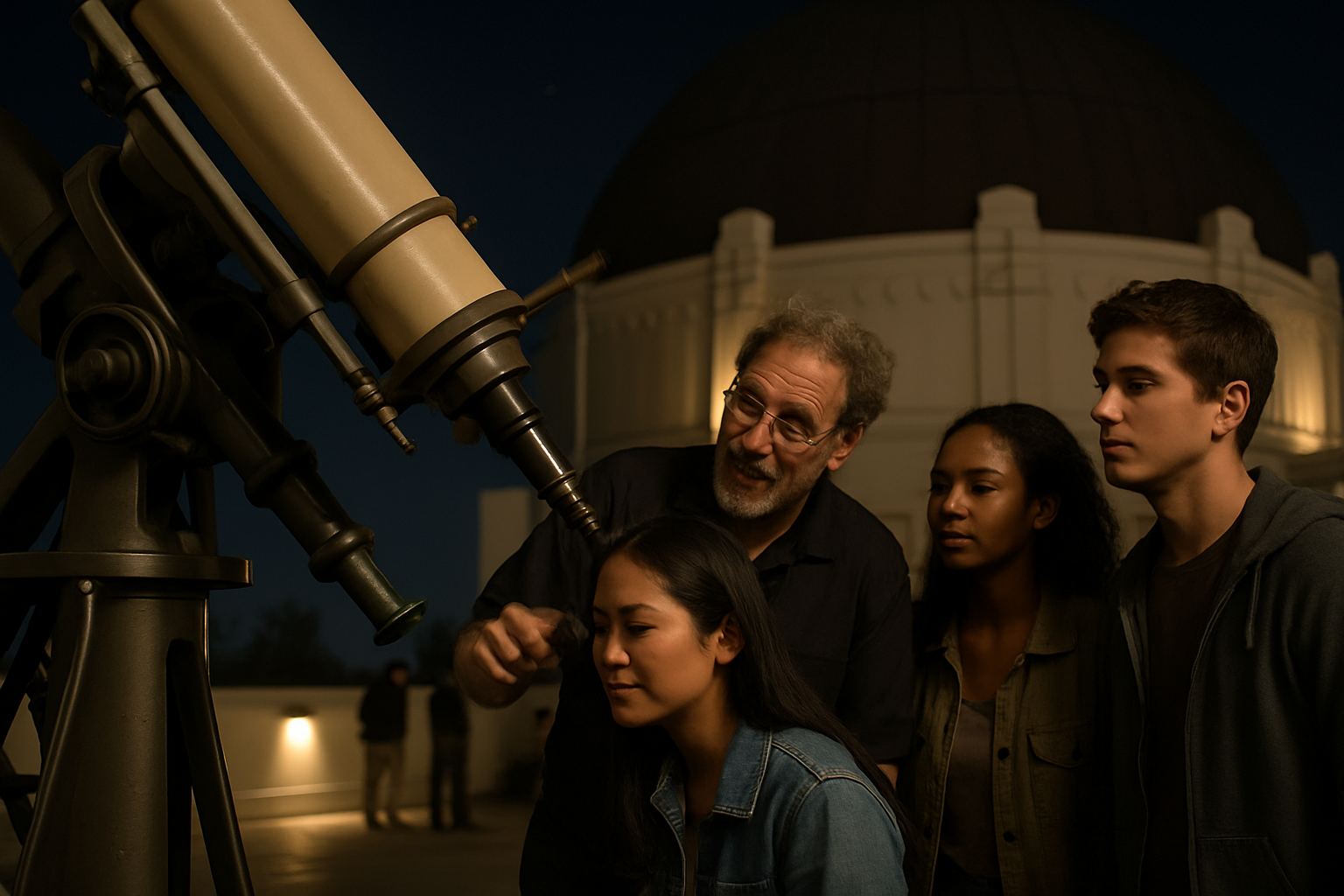
If Saturn is up, people tend to react immediately because the rings look unmistakably real. If the Moon is the headline object, the contrast and crater detail usually land well even for people who have never touched a telescope before. If conditions are softer, the experience can be more about the process than the wow moment. That is still useful. Your first night is partly about learning what a real telescope session feels like.
What to bring and what not to overthink
You do not need to bring optics. That is the whole advantage of starting here.
What helps instead:
- a light layer, because evening wind on the hill can feel cooler than expected
- a little patience for lines and parking
- enough time to stay flexible if a telescope queue moves slowly
- realistic expectations if haze or marine layer softens the sky
What you do not need:
- a star chart you barely know how to use
- a giant camera setup
- a telescope purchase plan before you have even looked through one
If the night goes well and you leave wanting your own gear later, then it makes sense to read our guide to the best beginner telescope for city stargazing. Starting with public viewing first is the cleaner sequence.
What Griffith is great for, and what it is not
Griffith Observatory is the best Los Angeles first step for trying telescope observing without equipment. It is not the same thing as a dark-sky trip.
That distinction matters. Griffith gives you public access, staff guidance, observatory atmosphere, and an easy city location. It does not give you the darkest possible Southern California sky. If your goal is to feel the difference that truly darker skies make, our guide to where to escape the glow around Los Angeles is the better next read.
For most beginners, though, Griffith should come first. It removes the hardest beginner friction points all at once:
- no gear purchase
- no learning curve before the outing
- no need to drive deep into the desert
- no guesswork about whether anybody else will be there
That is exactly why this is such a strong "try it once" astronomy night.
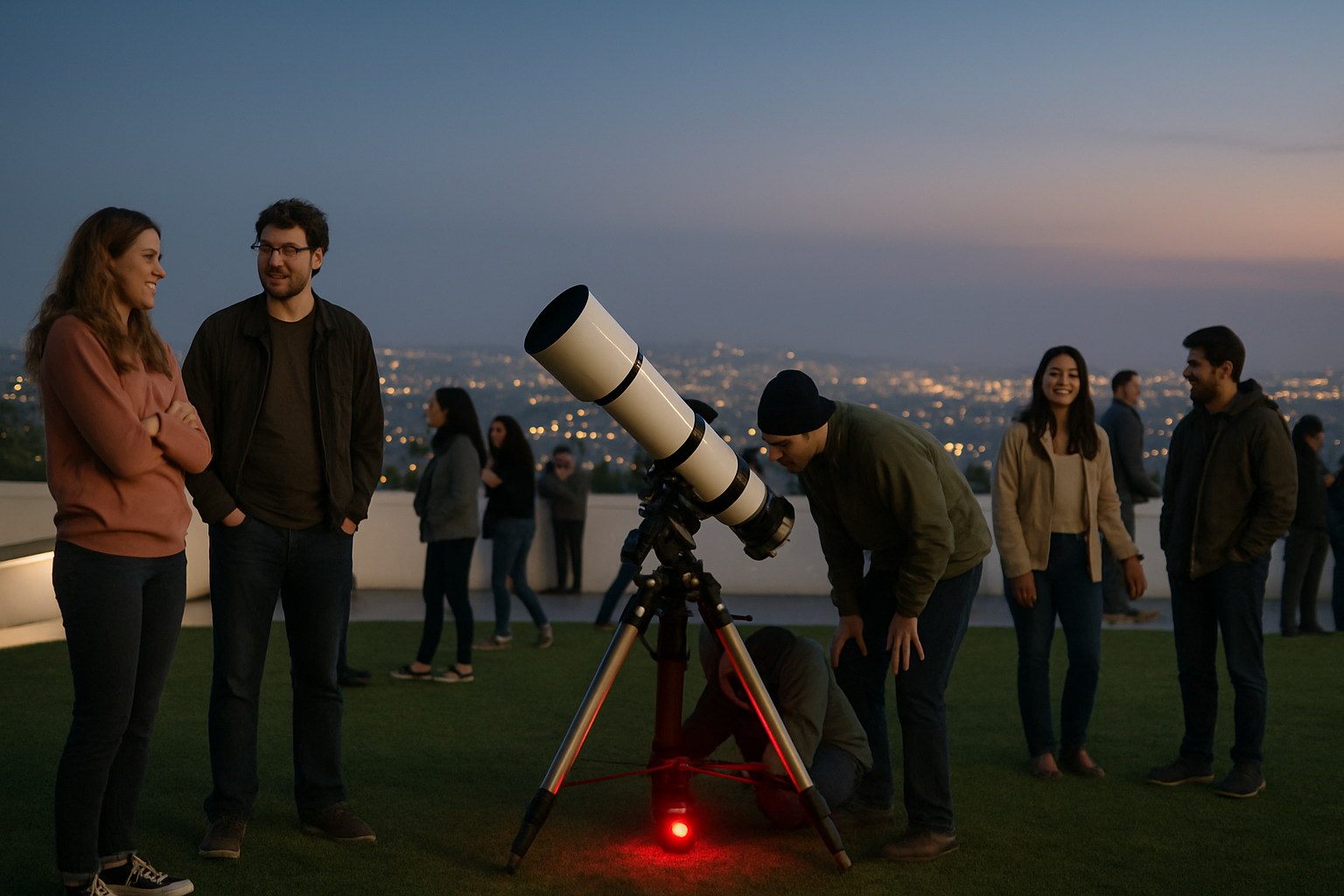
If you are ready for the mountain-version next step, our Mount Wilson public star party first-timer guide walks through the July 11-12, 2026 event, including parking, layers, and how to enjoy the night without owning gear.
The easiest next step after your first visit
If you enjoy the eyepiece experience, do not let it end as a one-off tourist moment. Turn it into a repeatable habit.
You can use Griffith as your first telescope night, then build outward: a second observatory evening, a beginner star party, a darker-sky drive, or eventually your own compact backyard setup. The point is not to rush into gear. The point is to notice what part of the experience you actually liked most.
If you liked the social side, join the Los Angeles Cosmic Match community and meet people who are already planning observatory nights, museum stops, and low-key skywatching meetups. If you are ready to jump straight in, you can also sign up free at Cosmic Match.
Los Angeles makes astronomy feel complicated when you start from the wrong end of the hobby. Griffith Observatory is the opposite. Show up on a clear evening, get in line early enough, look through the telescope, and let that be step one.
Sources
- Griffith Observatory Daily Programs: https://griffithobservatory.lacity.gov/explore/daily-programs/
- Griffith Observatory Visit page: https://griffithobservatory.lacity.gov/visit/
- Griffith Observatory Zeiss Telescopes page: https://griffithobservatory.lacity.gov/exhibits/telescopes/zeiss-telescopes/
- Griffith Observatory Calendar: https://griffithobservatory.lacity.gov/visit/calendar/