McDonald Observatory Road Trip from Austin: Drive, Star Party, and What to Book
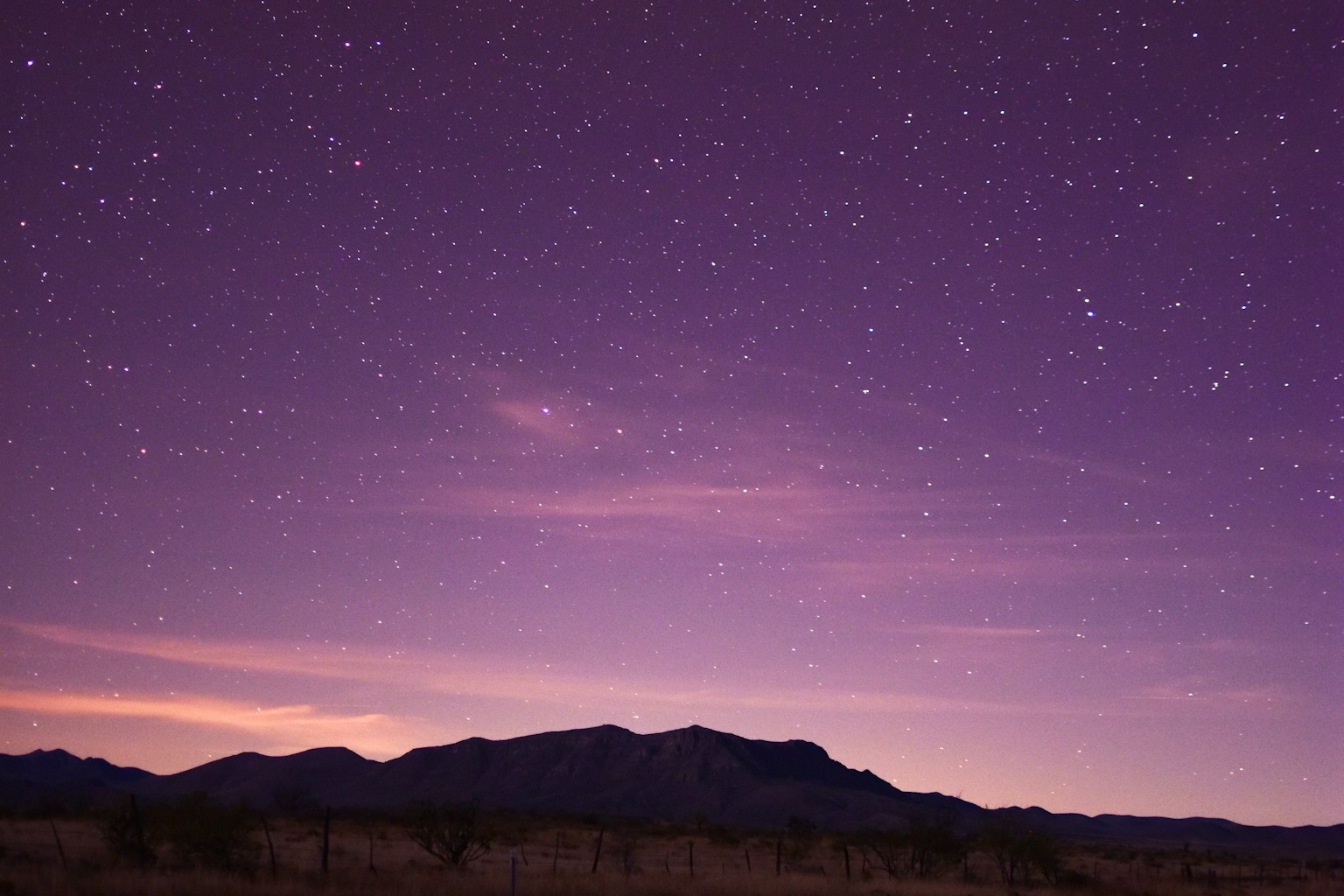
Austin makes it easy to forget how dark Texas can get. Drive west long enough, though, and the city glow gives way to big horizons, high desert air, and a road that seems to point straight into the stars. At the end of that road is McDonald Observatory, a working University of Texas research observatory near Fort Davis—and one of the best astronomy weekends an Austin beginner can plan around.
This is not a quick day trip. McDonald lists Austin at about 438 miles away, so think in terms of two or three nights rather than a frantic there-and-back. The payoff is a place where working telescopes, public programs, and the West Texas sky all share one landscape. Here is how to make the road trip feel exciting, not over-engineered.
Book the sky before you book the hotel
Start with the official McDonald Observatory calendar. Public programs can sell out around holidays and busy travel periods; the observatory recommends booking at least three weeks ahead. Pick the program first, then choose lodging and your driving rhythm around that reservation.
For most first-time visitors, the two-hour Star Party is the anchor. It pairs an open-air constellation tour with live telescope viewing, and general admission is included. The start time changes with the season—summer programs run later, winter programs earlier—so use your ticket confirmation, not an old blog itinerary, as the final word.
Daytime options make it easy to turn an evening ticket into a fuller observatory day. At publication, the Frank N. Bash Visitors Center is open Tuesday through Saturday, noon to 5 p.m.; general admission, solar viewing, and guided tours have their own listed times. Build a little breathing room around a guided tour rather than racing straight from the car to a program.
The drive from Austin: give it the time it deserves
The listed distance from Austin is roughly 438 miles. In practice, that means a long driving day after fuel, food, and the stops you will actually want to make. Leave early, accept that West Texas runs on a slower clock, and avoid planning to reach the mountain five minutes before your evening program.
Fort Davis is the simplest home base for a Star Party: it is about 15 miles from the observatory. Alpine and Marfa are roughly 43 and 38 miles away, respectively, and work well if you want the observatory to be one chapter of a broader high-desert weekend. A comfortable plan is to arrive the afternoon before your program, check in, eat in town, then drive back up the mountain with time to spare.
Before leaving Austin—and again before you head into the mountains—check DriveTexas current conditions. Weather and road work can change quickly on a remote route. Download your maps, too: McDonald warns that cell coverage can be spotty to nonexistent between towns, and the visitor center has no public Wi-Fi.
Fuel is another small detail that matters. There is no fuel at the observatory, so top up in Fort Davis. EV drivers can use two Level 2 stations near the Frank N. Bash Visitors Center, but should plan charging across the Fort Davis–Alpine–Marfa area rather than treating the observatory as the only option.
Why this mountaintop is worth a detour
McDonald Observatory is not just a pretty dome at the end of a scenic road. It was dedicated in 1939 after Texas banker William Johnson McDonald left much of his estate to the University of Texas for an astronomical observatory. Since then, the site has been a serious home for research on planets, stars, and galaxies.
One piece of history makes a visit especially vivid: the 107-inch Harlan J. Smith Telescope was completed in the late 1960s and began regular observations in 1969. Its planetary work supported the Space Age, and it once took part in lunar laser ranging by reflecting laser light from Apollo-era mirrors on the Moon. On a public tour, that turns a giant dome from a photo opportunity into a nearby chapter of lunar science.
If a trip to Fort Davis leaves you wanting more Texas space history, save our Space Center Houston first-timer guide for another weekend. It is a completely different setting, but the same good reminder that space is more fun when you can walk into the story.
Pack for a high-desert night, not an Austin evening
Even in summer, do not dress as though you are staying at Austin elevation. The visitor center sits above 6,200 feet, and some public programs take place closer to 6,800 feet. Temperatures can feel markedly cooler after sunset. McDonald recommends a light jacket and long pants in summer; in cooler seasons, bring warm layers, a coat, and gloves.
Keep your list practical:
- A water bottle; altitude can bring fatigue, headache, or nausea.
- Layers and closed-toe shoes for rough, rocky ground.
- Offline maps, snacks, and a full fuel tank.
- A red-light flashlight if you already have one, used in accordance with staff guidance.
- Flexible expectations. When conditions do not allow telescope viewing, the observatory may offer indoor talks, sky simulations, and demonstrations instead.
You do not need a telescope, astrophotography gear, or a memorized constellation chart to belong at a Star Party. Bring questions. A public astronomy night is one of the rare places where saying “I’ve never seen that before” is the best possible opening line.
A beginner-friendly Austin-to-McDonald weekend plan
Friday: Leave Austin early, make the distance at an unhurried pace, and settle into Fort Davis or a nearby town. Keep the first night easy.
Saturday: Visit the Frank N. Bash Visitors Center during public hours. Add a guided tour if it fits your reservation, eat in town or use the visitor-center picnic tables, then return for the Star Party. There is no public food service at the observatory.
Sunday: Choose a slow morning in Fort Davis, a detour through Alpine or Marfa, or an extension toward Big Bend before heading home. Do not plan to camp or park an RV on observatory grounds; overnight camping there is not permitted.
Making the trip solo can still be a social adventure. Share your itinerary, ask a local member for road-stop ideas, or join Cosmic Match to meet people who also think a late-night telescope program counts as an excellent weekend. For Austin-area sky ideas that require less driving, explore the Cosmic Match community and start a conversation about what is overhead tonight.
McDonald Observatory asks you to plan because the setting is remote, the weather has a vote, and the best programs have limited space. That is part of the charm. Book first, check conditions, give the road time, and let West Texas remind you how large the sky can feel.
Program availability, start times, prices, and road conditions can change. Confirm your reservation on McDonald Observatory’s visit pages and review DriveTexas before departure. Cover photo by Alex Moliski via Unsplash.