Inside Mount Wilson's 100-Inch Telescope: A Summer Astronomy Day Trip from Los Angeles
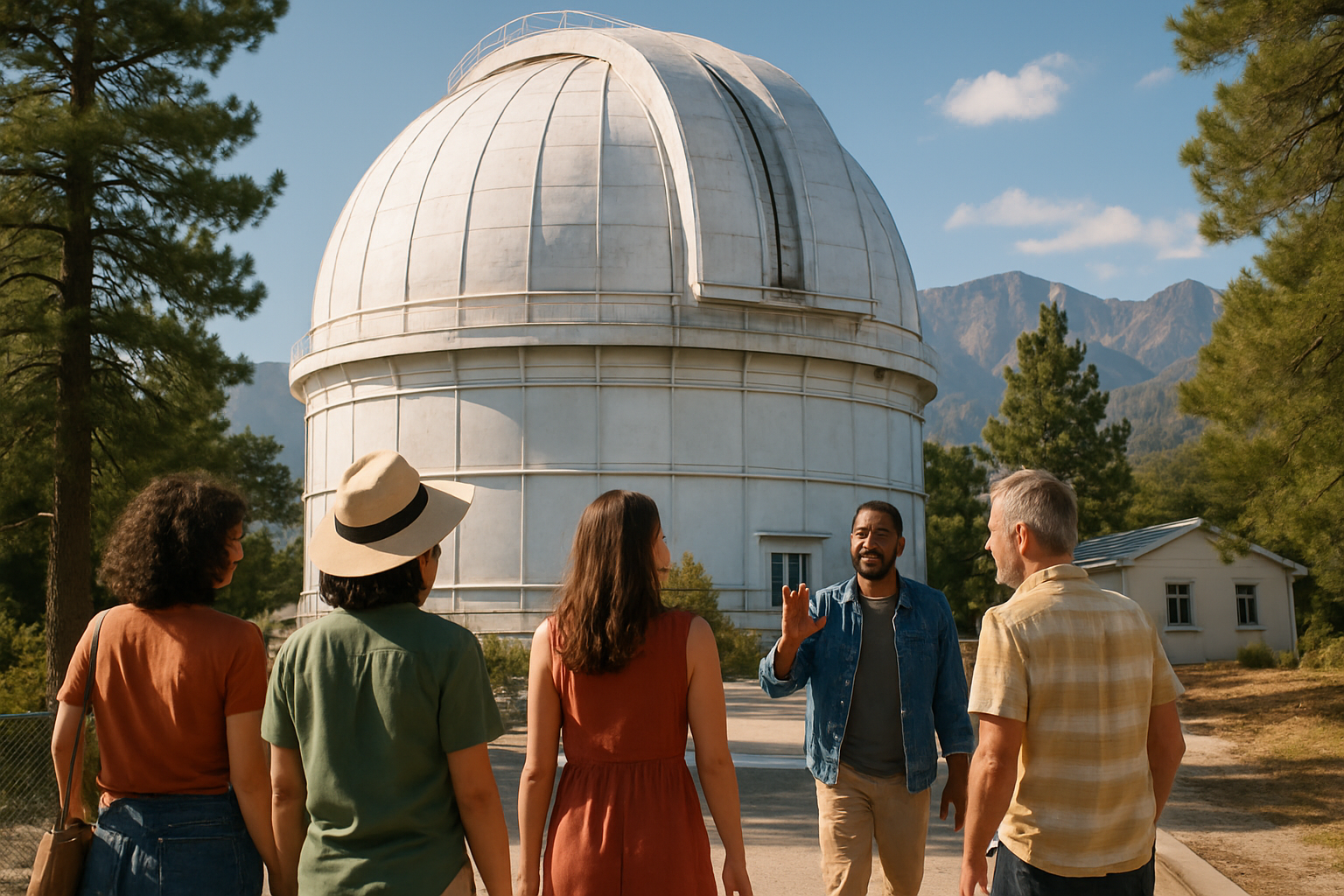
There is a kind of Los Angeles day trip that works even when you are not chasing beach weather or brunch. You drive up into the San Gabriel Mountains, the air cools off, the city falls away, and suddenly you are standing beside one of the telescopes that changed modern astronomy. Mount Wilson Observatory is that kind of outing. It is not just a pretty overlook or a dark-sky flex. It is a real piece of scientific history that is still open to the public.
For summer 2026, Mount Wilson is especially useful for curious beginners because the experience does not require your own gear, a midnight alarm, or a perfect new-moon weekend. The official Mount Wilson site says the grounds are open daily, the museum and 100-inch viewing gallery are open during spring and summer hours, and weekend docent tours include exclusive access inside the 100-inch dome. If you want a local astronomy destination that feels more substantial than a quick photo stop, this is one of the strongest Los Angeles-area choices.
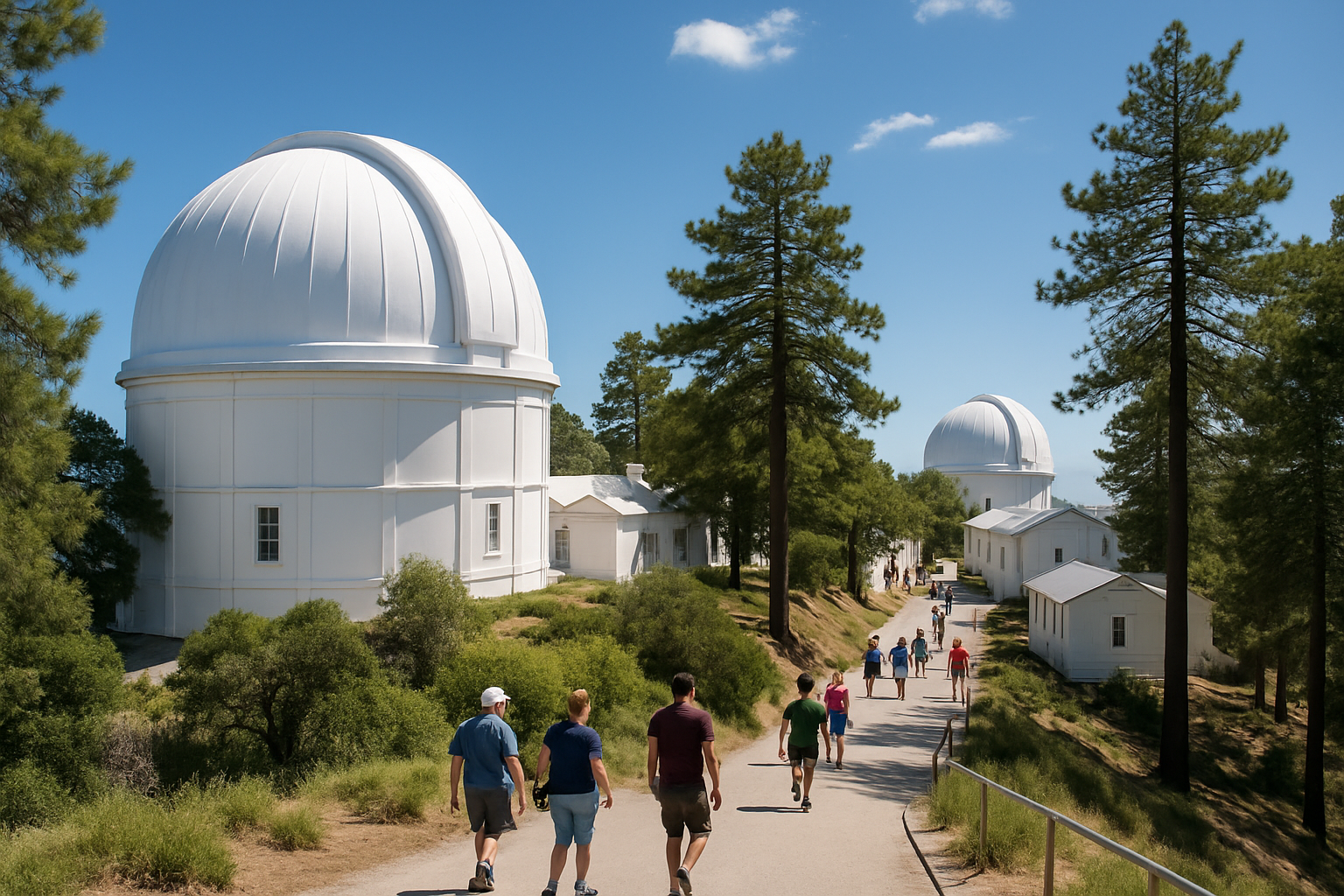 Mount Wilson feels like a science campus first and a scenic mountain stop second, which is exactly why the day trip lands so well.
What makes the 100-inch telescope such a big deal?
Mount Wilson was founded by George Ellery Hale in 1904, long before Southern California became shorthand for traffic, studios, and aerospace campuses. The official observatory history describes it as home to some of the most important telescopes in the development of modern astronomy, including two that were the largest of their time.
The star of the day-trip story is the 100-inch Hooker Telescope. Mount Wilson's official telescope page says it was the world's largest telescope from 1917 to 1949. More importantly, it was the instrument Edwin Hubble and Milton Humason used in the late 1920s when measuring the expansion of the universe. That is the kind of sentence that can sound abstract until you are physically in the dome and realize the breakthrough was not a metaphor. It happened right there, on a mountain above Pasadena.
The construction story is part of the appeal too. Mount Wilson's history page on building the telescope says John D. Hooker funded the mirror, the glass was ordered in 1906, and more than eleven years passed before first light. That long runway matters because it reminds you this was not a gadget upgrade. It was a multi-year bet on whether human beings could even build something this ambitious well enough to change science.
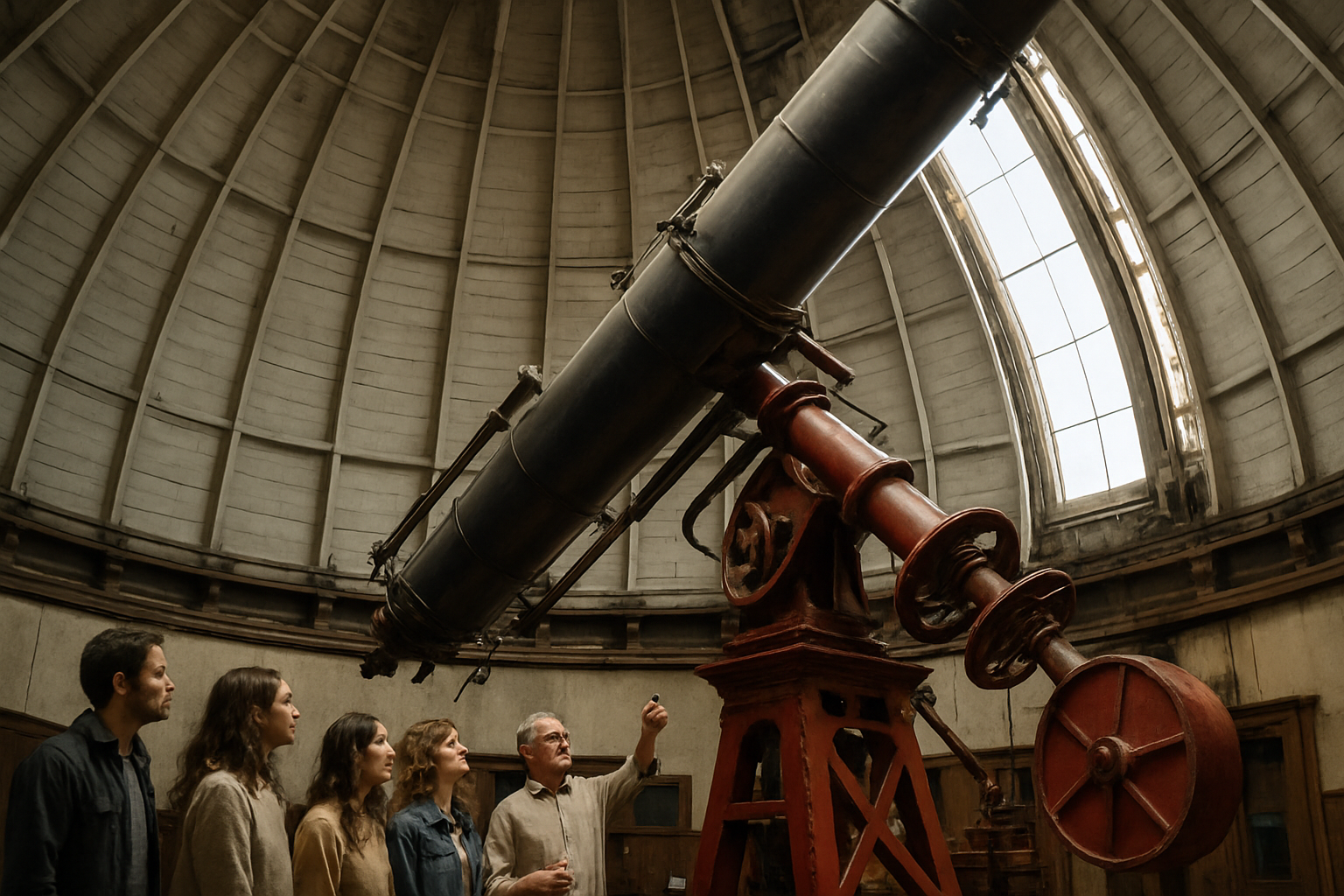 The scale of the dome is the point. Even before anyone starts explaining Hubble, the telescope looks like an argument for why people kept driving up this mountain.
What a summer visit actually looks like
This is where Mount Wilson becomes more than a history lesson. According to the official visiting page, the grounds are open daily from 10 AM to 5 PM during spring and summer, and the museum plus the 100-inch viewing gallery are open during that window. That means even a simple weekday visit can still give you a strong sense of place.
If you want the fuller experience, the official weekend public tours page is the better move. Those docent-led walking tours run Saturdays and Sundays at 11:30 AM and 1 PM from April through November, take up to two hours, and include the major telescopes plus access directly beneath the 100-inch telescope rather than only the visitor gallery. Tickets are listed at $20 for adults and $15 for children 12 and under and adults 62 and older, with same-day first-come purchase at the Cosmic Cafe. Children under 6 are not permitted. As of June 28, 2026, the official tours page also notes there is no 1 PM tour on Sunday, July 5, 2026, which is a good reminder to check the page before you commit to a time.
The same official page adds a few realities worth respecting. The tour covers about a mile, includes some stairs, and takes place at roughly 5,715 feet. Mount Wilson also warns that most of the century-old facilities are not ADA-compliant and that mountain weather can feel very different from conditions in the city below. In other words: treat it like a real outing, not a casual curbside stop.
The practical Los Angeles part
Mount Wilson works because it is close enough to feel easy but high enough to feel like you left the city. The official tours page calls it a stop that is "just an hour from Los Angeles," and the main site places it on a 5,710-foot peak in the San Gabriel Mountains near Pasadena.
Do not treat maps as infallible. Mount Wilson's directions page explicitly warns that phone apps can be wrong and says access is via Angeles Crest Highway, CA Hwy 2, from the 210 Freeway at La Canada Flintridge. That same page says a U.S. Forest Service Adventure Pass is required for parking at the observatory. The official site lists a $5 day pass and $30 annual pass, says weekend visitors can buy passes at the Cosmic Cafe, and recommends checking Los Angeles County road closures before heading up.
If you want to turn the trip into something social instead of solo, meet Los Angeles space enthusiasts on Cosmic Match. Mount Wilson is exactly the kind of place where conversation starts easily because nobody has to fake interest in the setting.
Why this is a better beginner destination than people expect
If your default picture of astronomy is a late-night field full of equipment you do not own, Mount Wilson is a helpful reset. It lets you walk straight into the history side of the hobby first. You can look at the domes, visit the museum, hear the story of the 100-inch, and decide what part of astronomy actually pulls you in before you buy anything or learn polar alignment.
If the visit leaves you wanting a small scope of your own, our guide to the best beginner telescope for city stargazing is a practical next step. Mount Wilson is not trying to replace backyard observing. It is the kind of visit that makes backyard observing feel more appealing afterward.
Bonus reasons to go this summer
Mount Wilson is not frozen in museum mode. The official 2026 events calendar currently lists Nocturnal Landscapes From The Arid West inside the historic 100-inch dome from June 27 through October 17, 2026. It also lists special behind-the-scenes engineering tours on July 11 and July 19, both focused on the mechanical, optical, and electrical details of the 60-inch and 100-inch reflectors.
That matters because the best version of a Mount Wilson trip is not just "I saw the dome." It is "I picked a specific reason to go." Maybe that is the standard weekend public tour. Maybe it is an art-and-astronomy crossover. Maybe it is the kind of engineering-heavy day that sends you home reading about telescope mounts and mirror figuring. The observatory gives you multiple on-ramps.
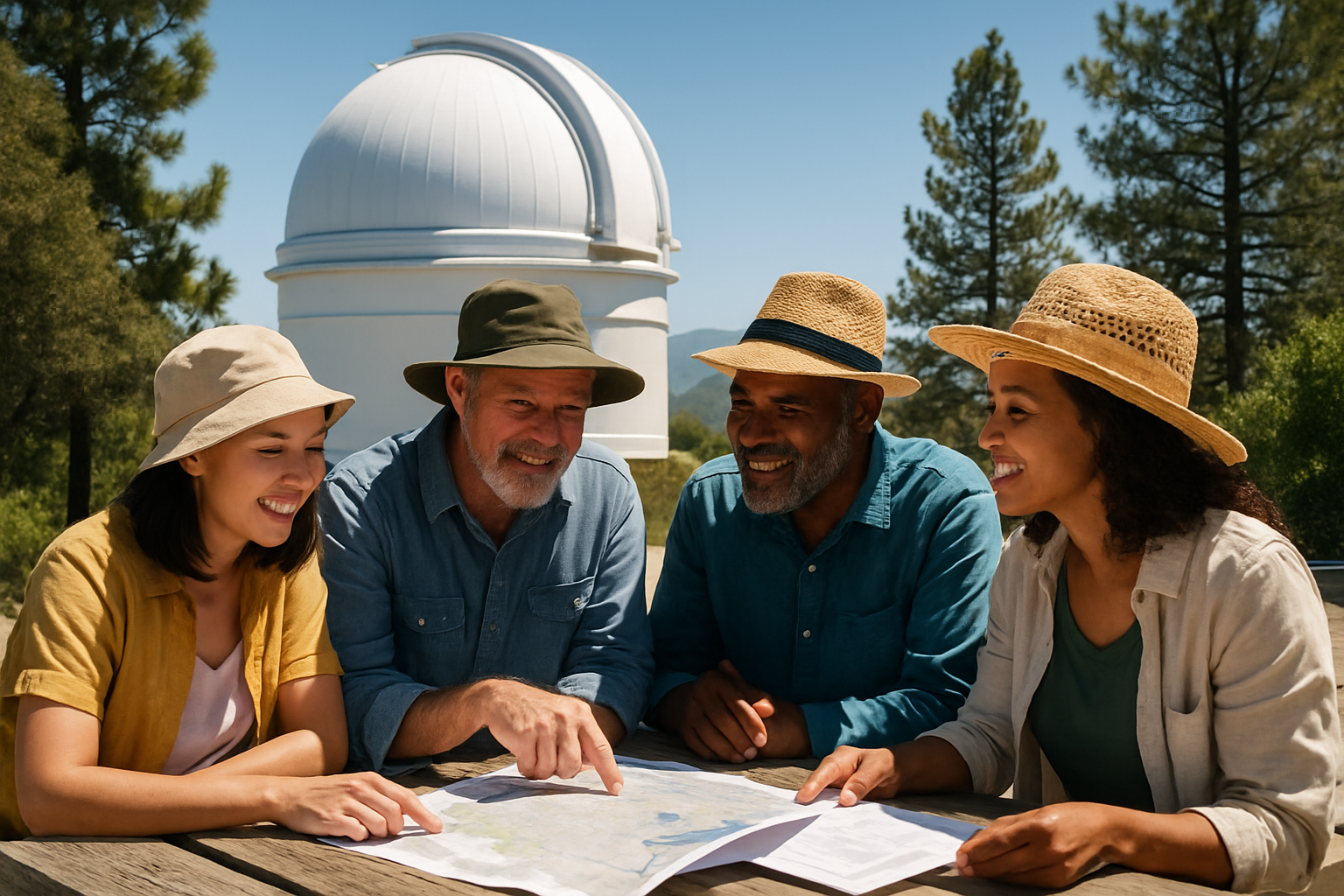 Mount Wilson works well as a shared outing because there is enough structure to keep the day moving, but enough history to give everyone something slightly different to care about.
Is it worth it if you are not already deep into space history?
Yes, and that is the key distinction. If you already love observatories, the 100-inch telescope is obvious catnip. If you are newer, the day still works because Mount Wilson is legible. You do not need prior knowledge to understand that a giant instrument, a mountain road, and a century of discovery add up to something memorable.
You can also treat it as the gateway version of a bigger Southern California astronomy routine. Do Mount Wilson in the daytime, then save darker-sky nights for later. If the history side grabs you, our post on why Sally Ride's first flight still matters is a good next read. If the community side matters more, join Cosmic Match free and find people who already think a Saturday dome tour counts as a solid plan.
If the daytime history side appeals to you but you also want a night-sky version of Mount Wilson, our Mount Wilson public star party first-timer guide covers the July 11-12, 2026 LAAS event and how to plan it as a beginner-friendly Los Angeles evening.
The takeaway
Mount Wilson Observatory is one of the rare Los Angeles day trips that feels both easy and consequential. Officially, it gives you summer daytime access, weekend tours, a museum, and the 100-inch viewing gallery. Emotionally, it gives you the much better experience of standing inside a place where astronomy stopped being small.
If you only do one Los Angeles-area astronomy outing this summer, make a serious case for this one. A lot of observatory recommendations are really just pretty views with a telescope nearby. Mount Wilson is different. The history is the main event, and the 100-inch telescope is still strong enough to carry the whole day.
Planning an August visit? Lita Albuquerque’s August 22 Talks & Telescopes guide covers the artist’s talk, arrival timing, picnic planning, and evening observing.