Sophie Adenot Returns After 237 Days—and Sets a European Spaceflight Record
Sophie Adenot Returns After 237 Days—and Sets a European Spaceflight Record
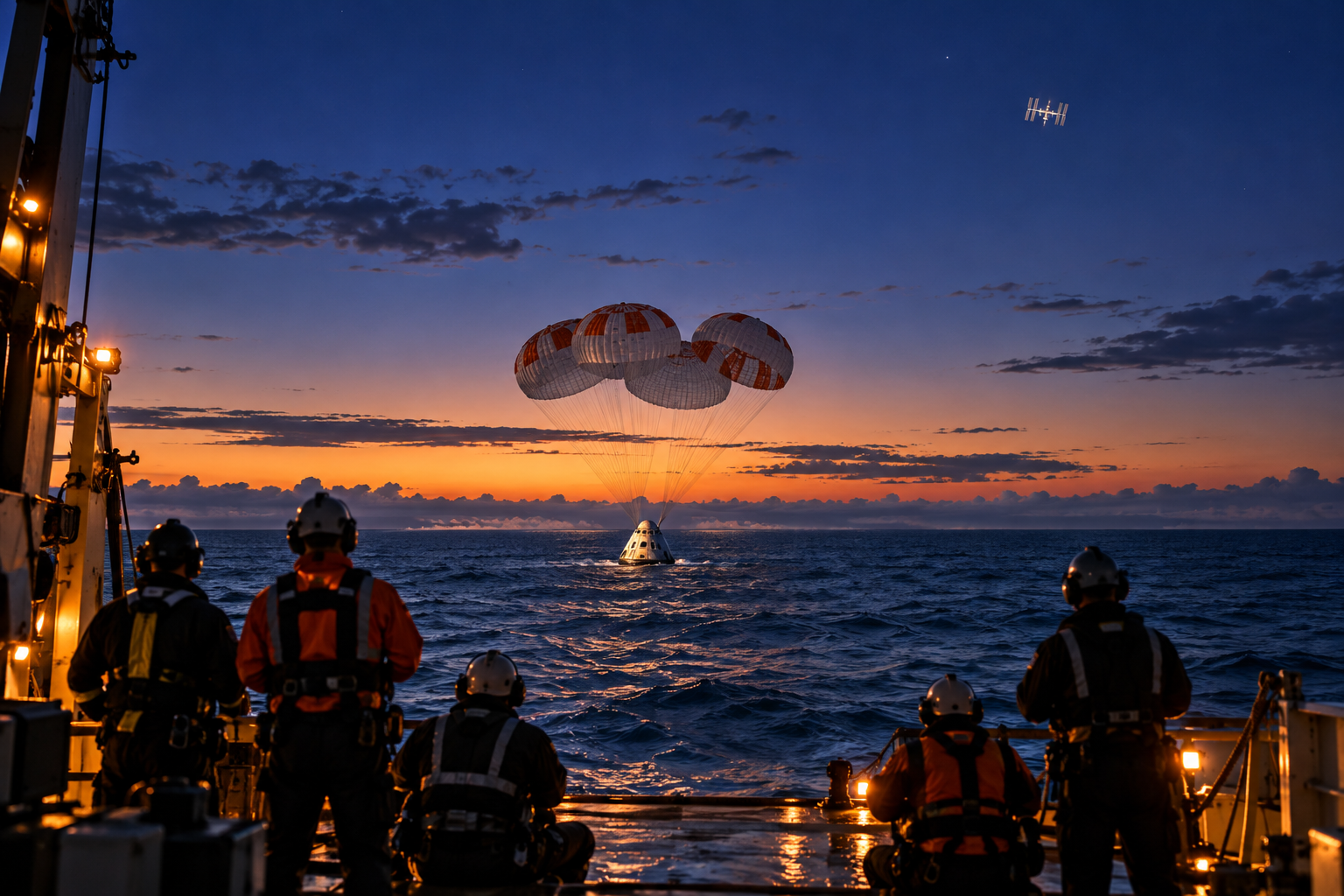
ESA astronaut Sophie Adenot is safely home after Crew-12’s October 8 splashdown off the coast of Los Angeles—and her completed εpsilon mission now holds Europe’s record for the longest single spaceflight. ESA clocks the journey from launch to splashdown at 237 days, 5 hours, and 18 minutes. Dragon Freedom splashed down at 15:34 UTC (12:34 BRT) with Adenot, NASA astronauts Jessica Meir and Jack Hathaway, and Roscosmos cosmonaut Andrey Fedyaev aboard.
This is an outcome story, not a watch alert: recovery teams reached the crew shortly after splashdown, and the four astronauts are moving through standard post-flight procedures. For people who follow human spaceflight, the number is worth sitting with. A mission record is never just one person’s endurance; it reflects the work of the crew, flight controllers, engineers, medical teams, recovery teams, and international partners who make months in orbit possible.
What is Sophie Adenot’s new European spaceflight record?
ESA says Adenot spent 237 days, 5 hours, and 18 minutes in space, from her February 13 launch at Cape Canaveral to the October 8 splashdown. That makes εpsilon the longest single spaceflight by a European astronaut, exceeding Luca Parmitano’s previous European single-flight record by more than 35 days.
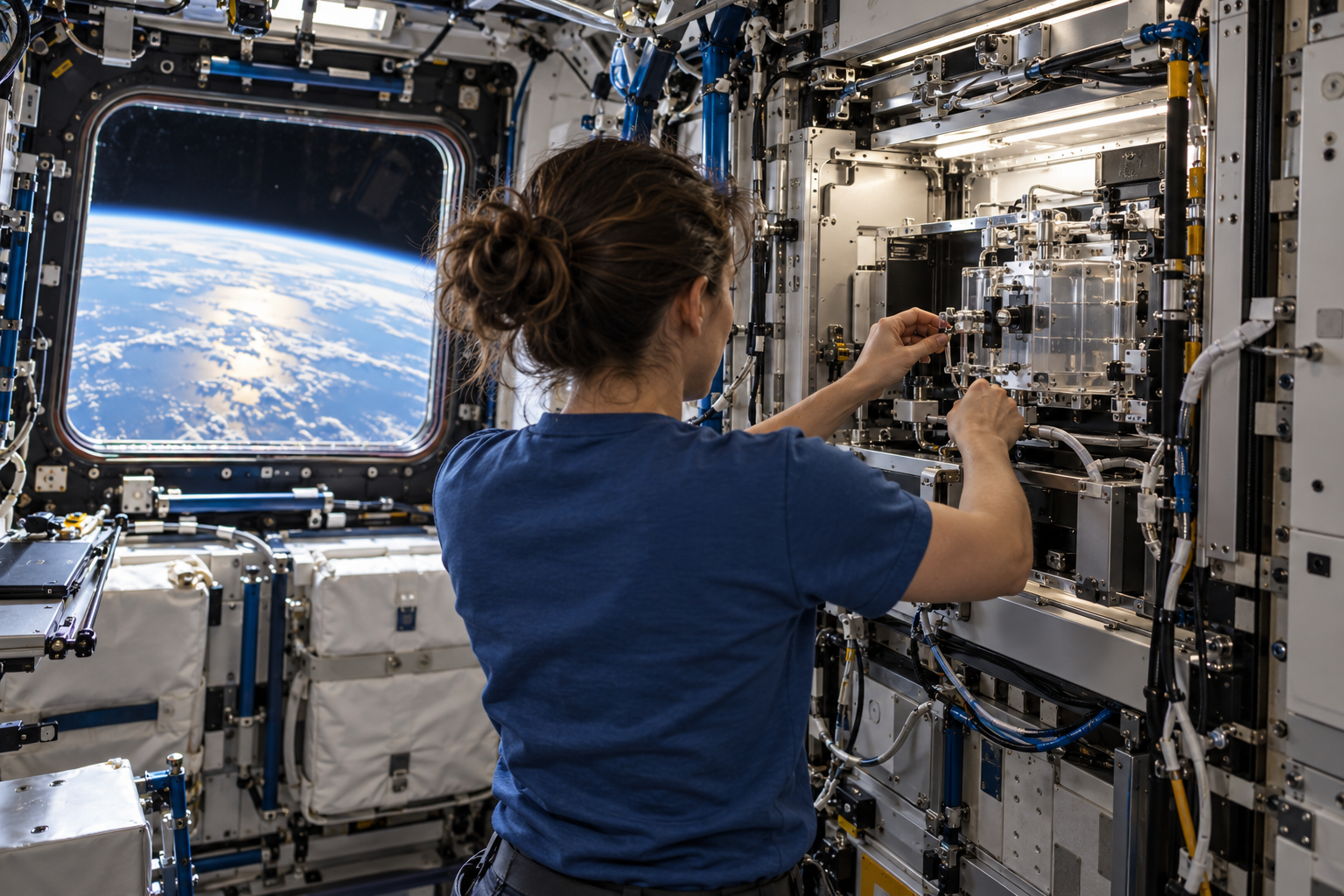
The milestone belongs in a larger mission picture. NASA says Crew-12 completed more than 3,792 orbits and traveled more than 100 million miles while conducting research ranging from health science to technologies needed for future exploration. Adenot’s flight was her first mission to space—an extraordinary opening chapter, but also a reminder that a record is the product of an enormous shared system.
Why do NASA and ESA list different mission durations?
They are describing different clocks, not disagreeing. NASA’s station-focused reporting refers to 235 days aboard the International Space Station. ESA’s 237 days, 5 hours, and 18 minutes is Adenot’s full launch-to-splashdown duration, including transit time before docking and after undocking.
That distinction is useful whenever spaceflight milestones make the news. “Time aboard the station” measures time at the orbital laboratory; “mission duration” measures the complete journey. Both tell a true part of the story, and ESA’s full-mission figure is the one attached to Adenot’s European record.
What else did Adenot achieve during εpsilon?
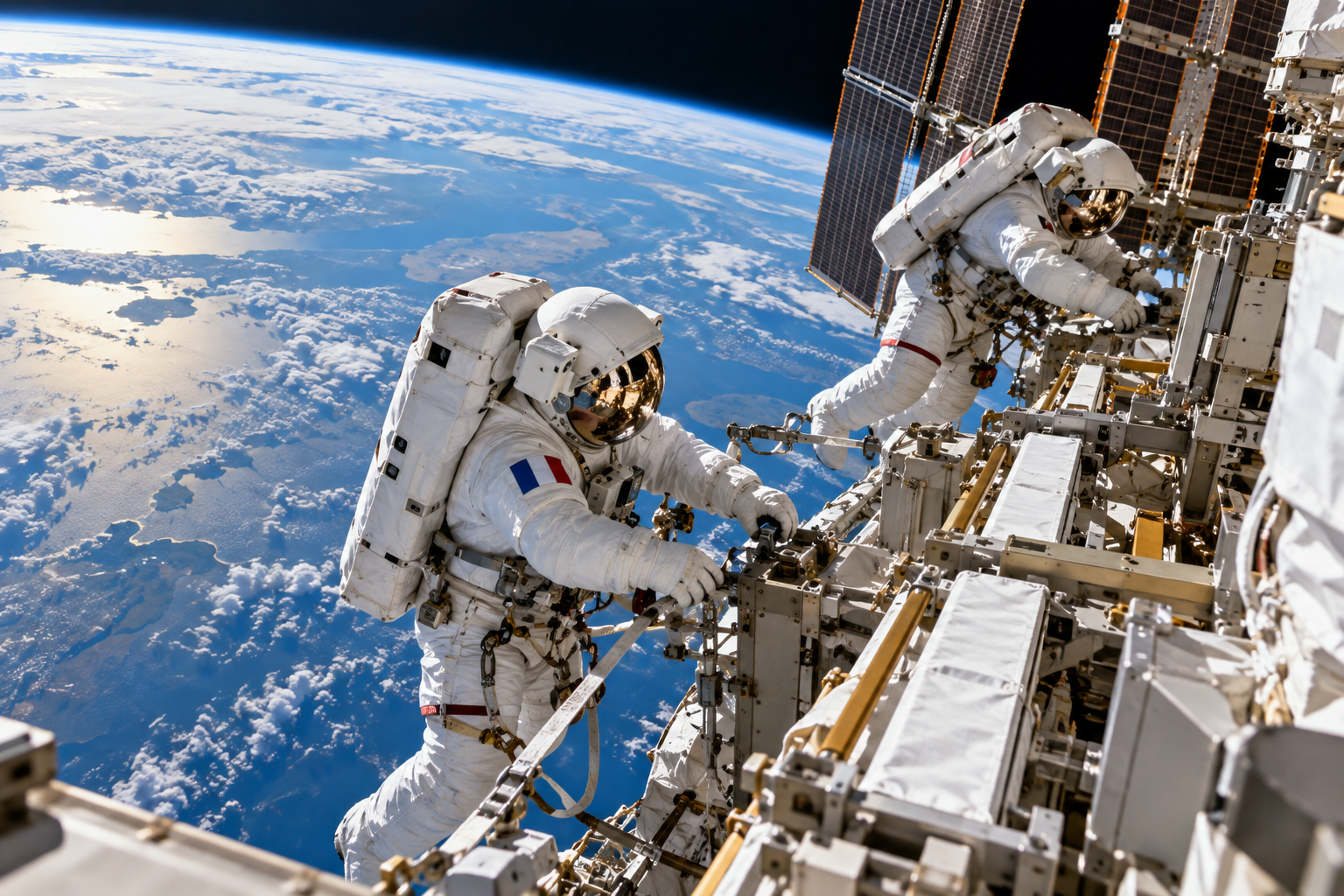
Adenot completed three spacewalks in 14 days, spending a combined 19 hours and 42 minutes outside the station. ESA identifies her as the first French woman to conduct a spacewalk. Those outings made the record feel especially tangible: long-duration flight is measured in days, but its most memorable moments often involve focused, high-stakes work performed one careful step at a time.
If you followed her earlier EVA work, our report on Adenot and Anil Menon completing the ISS antenna repair is a useful companion. It captures one example of the unglamorous-but-essential maintenance that keeps an international laboratory operating hundreds of kilometers above Earth.
A safe return completes the mission
NASA confirmed that Freedom landed in the Pacific near Los Angeles at 8:34 a.m. PDT on October 8. Recovery teams brought the capsule aboard the SpaceX vessel Shannon, then helped the crew through initial medical checks before their travel to Houston. Adenot is expected to continue onward to ESA’s European Astronaut Centre in Cologne, Germany.
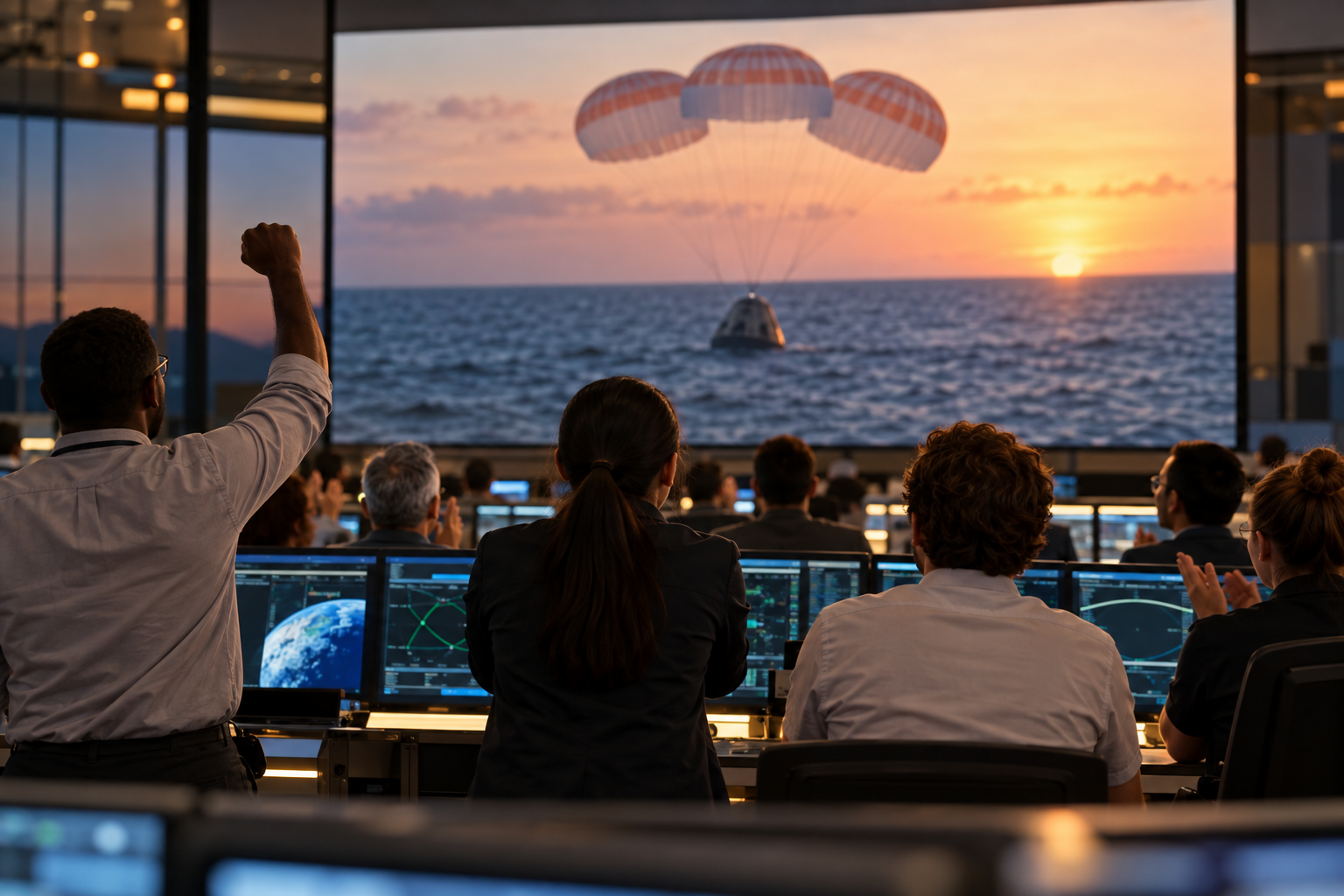
It is a satisfying kind of spaceflight news: a spacecraft home safely, a crew reunited with Earth, and a milestone that puts a European astronaut’s first flight in the record books. For the primary records, see NASA’s completed Crew-12 splashdown release and ESA’s mission record confirmation.
Space stories get better when you can unpack them with people who are equally delighted by orbital mechanics and recovery procedures. Join the Cosmic Match space community to meet fellow enthusiasts, or connect with space-minded people in Houston, close to the teams who welcome crews home.
FAQ
How long was Sophie Adenot in space?
ESA records her full launch-to-splashdown mission at 237 days, 5 hours, and 18 minutes. That duration set the European record for the longest single spaceflight.
Did Crew-12 return safely?
Yes. NASA confirmed that Dragon Freedom splashed down safely in the Pacific Ocean off the coast of Los Angeles on October 8, 2026, with all four Crew-12 members aboard.
Why does NASA say 235 days while ESA says 237 days?
NASA’s station-time figure measures time aboard the ISS. ESA’s 237-day figure includes the entire mission from launch through splashdown, so the two measurements refer to different intervals.
What did Sophie Adenot do during the mission?
She supported research on the ISS and completed three spacewalks totaling 19 hours and 42 minutes. ESA says she became the first French woman to conduct a spacewalk.
What comes after the ISS era?
Adenot’s record-setting mission is also a reminder of what sustained access to low Earth orbit makes possible. NASA’s new commercial-station RFP has opened the competition for the destinations that could carry that work forward.