Cecilia Payne-Gaposchkin: The Woman Who Discovered What Stars Are Made Of
Cecilia Payne-Gaposchkin: The Woman Who Discovered What Stars Are Made Of
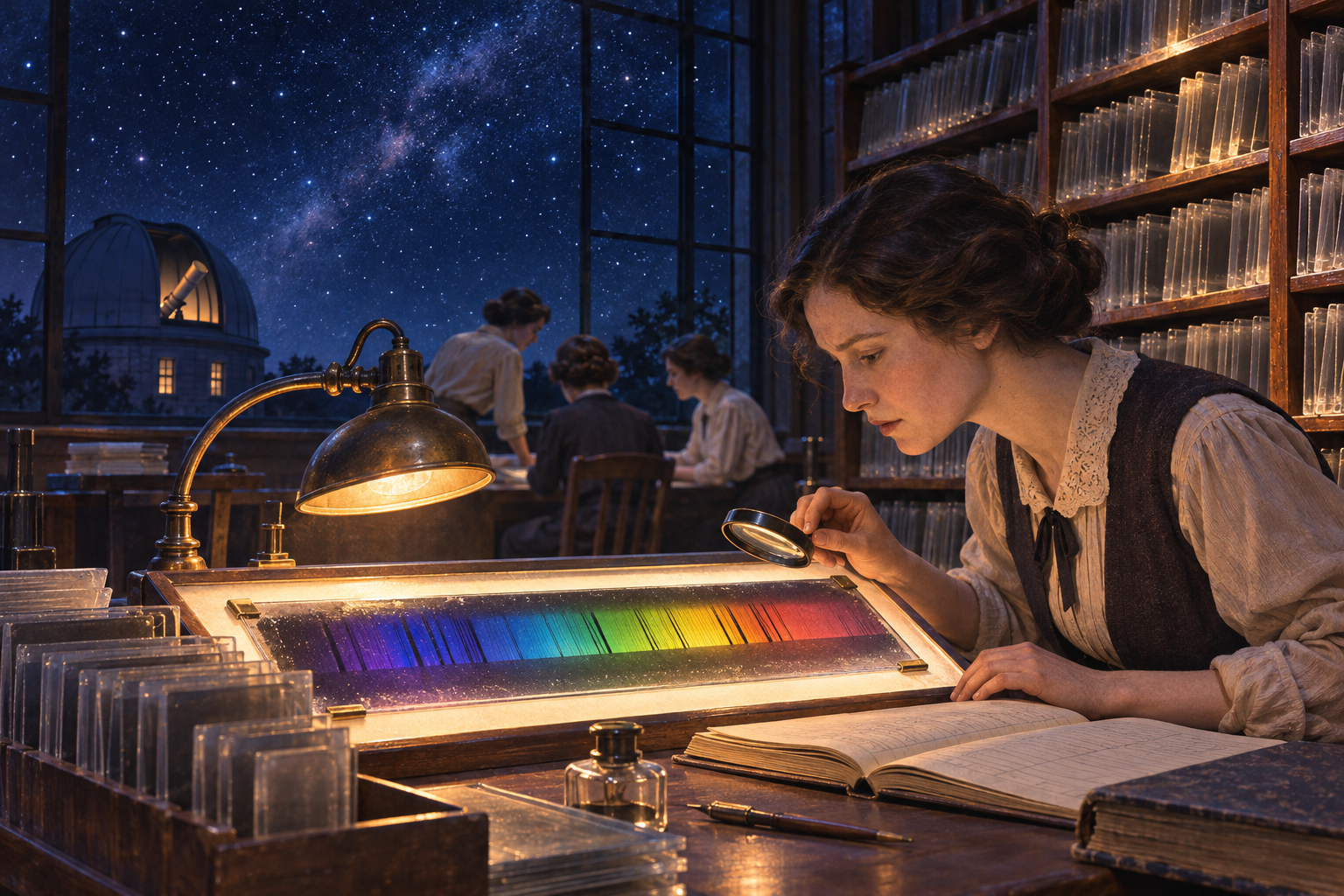
What are stars made of? The modern answer—mostly hydrogen and helium—feels almost obvious. In 1925, it was not. Working from the dark and bright lines in starlight, Cecilia Payne-Gaposchkin showed that those two light elements were overwhelmingly abundant in stellar atmospheres. Her doctoral thesis gave astronomy one of its foundational insights, even though its full importance was not accepted immediately.
For anyone who has ever looked through a telescope with friends and wondered what the light is actually telling us, Payne-Gaposchkin’s story is a wonderful reminder: the sky keeps evidence in plain sight. You just need the patience, tools, and imagination to read it.
How did Cecilia Payne-Gaposchkin learn what stars are made of?
She read their spectra. A spectrum is starlight spread into its component colors, much like a rainbow. It contains a pattern of lines: clues created when particular atoms absorb or emit particular wavelengths of light. Different elements leave different patterns.
At Harvard College Observatory, Payne worked with photographic spectra and applied new physics—especially the ionization work of Meghnad Saha—to separate the effects of temperature from the effects of chemical abundance. That distinction was crucial. A strong spectral line does not automatically mean an element is common; temperature can change how visible a line becomes.
Her calculations led to a startling result: hydrogen and helium were far more abundant in stars than astronomers had assumed from comparisons with Earth’s crust. Harvard’s Plate Stacks describes her work as determining stellar temperatures and chemical abundances from spectra; its archive preserves the observational world behind that conclusion.
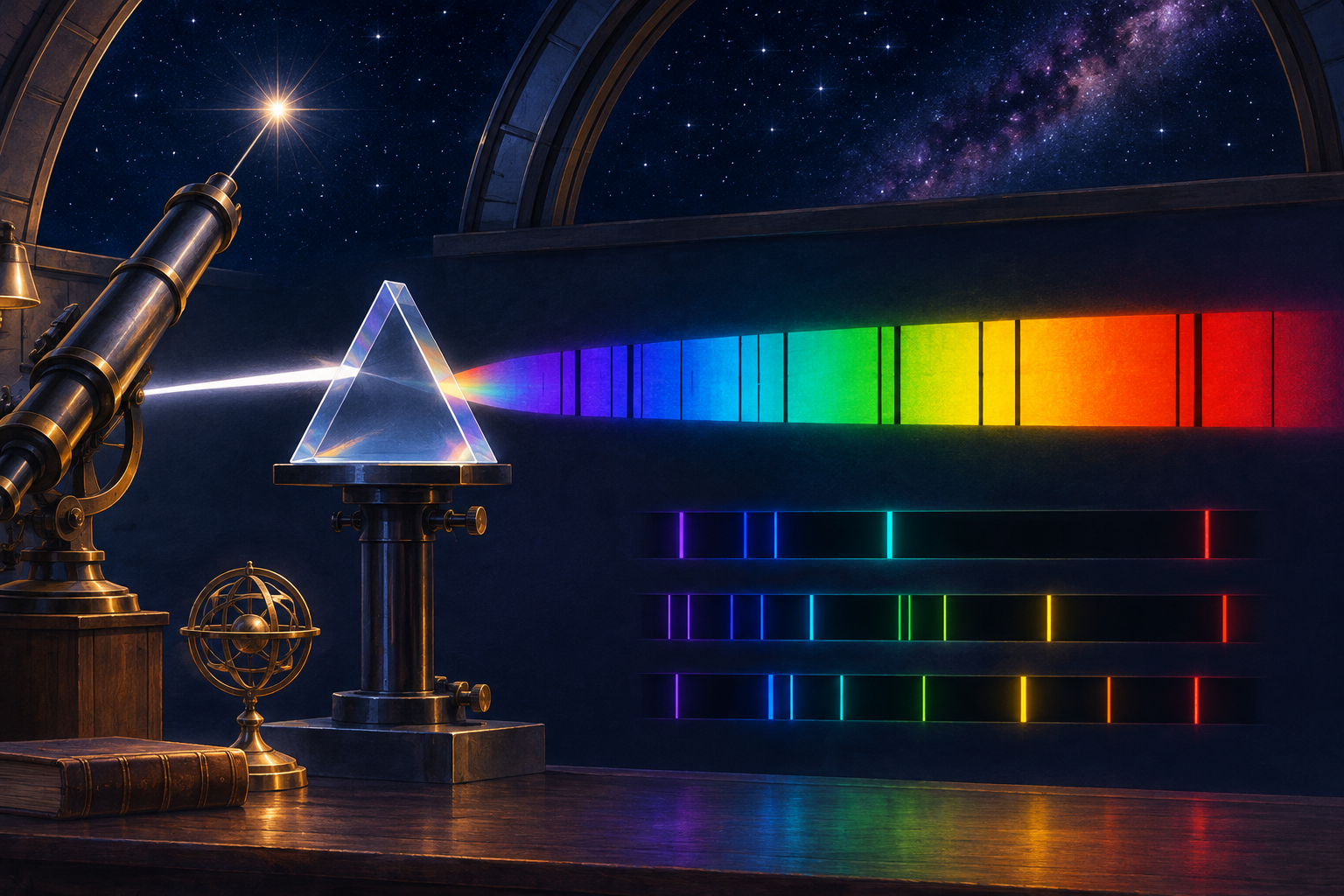
The takeaway for beginners is wonderfully direct: astronomy is not only about seeing farther. It is about learning to decode light. The color and line pattern from a distant star can tell astronomers about its temperature and ingredients without anyone traveling there.
Why wasn’t her result accepted right away?
This is where the story needs care. Payne-Gaposchkin did not simply announce a discovery and receive instant credit. In her 1925 thesis, Stellar Atmospheres, she reached the hydrogen-and-helium conclusion but was urged to treat the huge abundances with caution because they clashed with the prevailing picture of stars. She included language doubting that implication.
Henry Norris Russell, then a leading astronomer at Princeton, initially rejected the conclusion. Over the following years, further evidence accumulated. In 1929, Russell published work that accepted the result. The Harvard Plate Stacks and the Smithsonian’s National Air and Space Museum both document this sequence: Payne’s analysis came first; the field’s broader acceptance followed later.
That difference matters. It gives Payne-Gaposchkin credit for the insight and the evidence without pretending that scientific change happens in a single clean moment—or that she worked outside a wider community of observers, theorists, and archive workers. Her achievement was a rigorous interpretation of data at the exact moment astronomy had the tools to make sense of it.
A career bigger than one famous thesis
Born in 1900, Payne-Gaposchkin moved from Britain to the United States after finding limited opportunities for advanced astronomy study. At Radcliffe College and Harvard College Observatory, she completed the first Ph.D. in astronomy from Radcliffe in 1925. She went on to make major contributions to the study of variable stars, too.
Her path through Harvard was not straightforward. For years, institutional titles and pay did not match the level of her work. In 1956, she became the first woman promoted to full professor from within Harvard’s Faculty of Arts and Sciences, and later the first woman to chair a department there. Those facts belong alongside the science: careers are shaped not just by talent but by whether institutions make room for it.
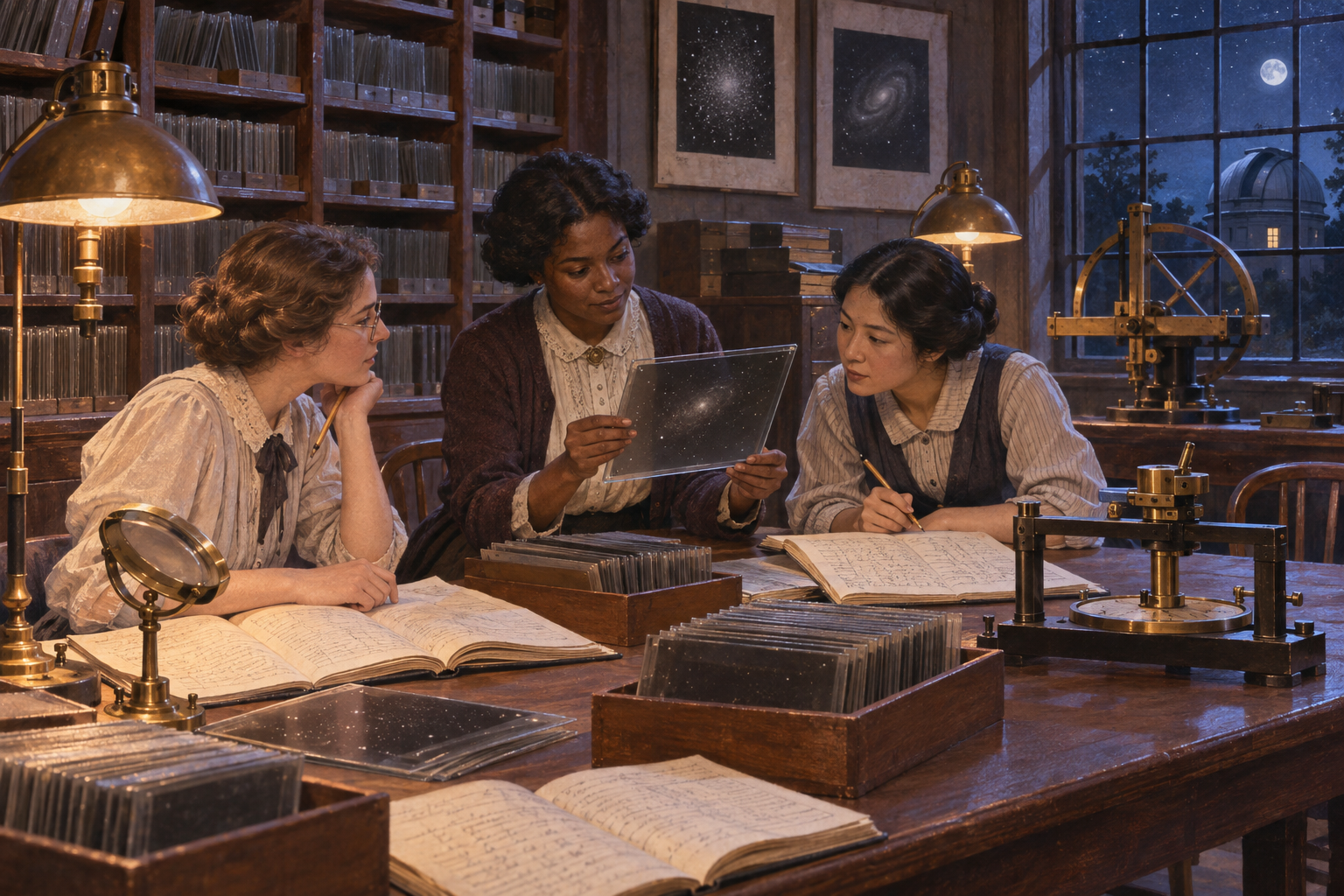
Her legacy also reaches beyond a single person. Harvard’s collection of glass plates, the many women who measured and classified them, and generations of astronomers who refined the physics all form part of the story. Payne-Gaposchkin’s brilliance is clearer—not smaller—when we see the collaborative infrastructure that let a difficult question become answerable.
What does her discovery mean when you look up tonight?
The next time you see a bright star, you are seeing light shaped by a hot, mostly hydrogen-and-helium atmosphere. A backyard telescope will not recreate Payne-Gaposchkin’s 1925 analysis, but it can start the same habit of attention: noticing color, comparing stars, asking what the light carries.
If you are just getting started, Cosmic Match’s near-new-Moon stargazing plan is a low-pressure way to make a first sky session. And if you want that curiosity to become a regular habit, join the Cosmic Match community to meet people who enjoy sharing a telescope, a skywatch, or simply a good space question.
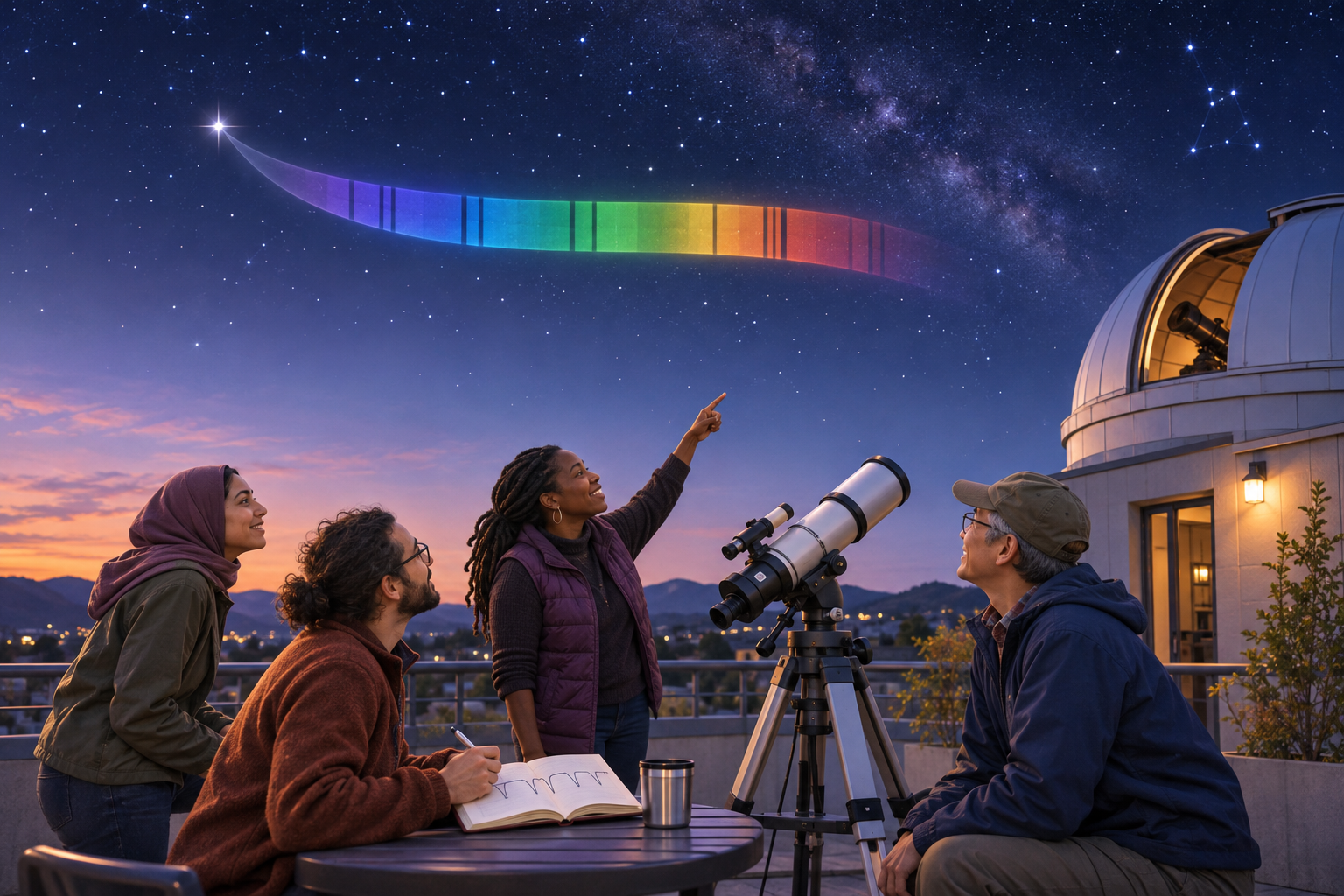
Payne-Gaposchkin’s lesson is not that every observer must become a professional astrophysicist. It is that careful looking counts. The same sky that invites a quiet rooftop pause or a lively star party is also a record of physics waiting to be read.
Sources and further reading
- Harvard Plate Stacks, Education and Doctoral Thesis
- Harvard Plate Stacks, Cecilia Payne-Gaposchkin
- Harvard Faculty of Arts and Sciences, history of the Department of Astronomy
- Smithsonian National Air and Space Museum, From "Computer" to Astronomer
FAQ
What did Cecilia Payne-Gaposchkin discover?
Using stellar spectra and ionization physics, she showed in her 1925 thesis that hydrogen and helium are enormously abundant in stellar atmospheres. Her interpretation became a foundation of modern stellar astrophysics.
How can astronomers tell what a star is made of?
They split the star’s light into a spectrum. Each chemical element produces characteristic spectral lines, and scientists account for temperature and other conditions to infer abundance.
Did Cecilia Payne-Gaposchkin receive a Harvard Ph.D.?
Her 1925 astronomy Ph.D. was awarded by Radcliffe College, which worked with Harvard at a time when Harvard did not grant degrees to women. Harvard sources describe it as the first Ph.D. in astronomy from Radcliffe and the Harvard Observatory.
Can I explore spectra as a beginner?
Yes. Start by noticing star colors with your eyes or binoculars, then use beginner-friendly astronomy resources to learn why color relates to temperature. A local observing session is a great place to ask questions and compare what you see.