The ISS Power Upgrade Is Complete: Final iROSA Deployed
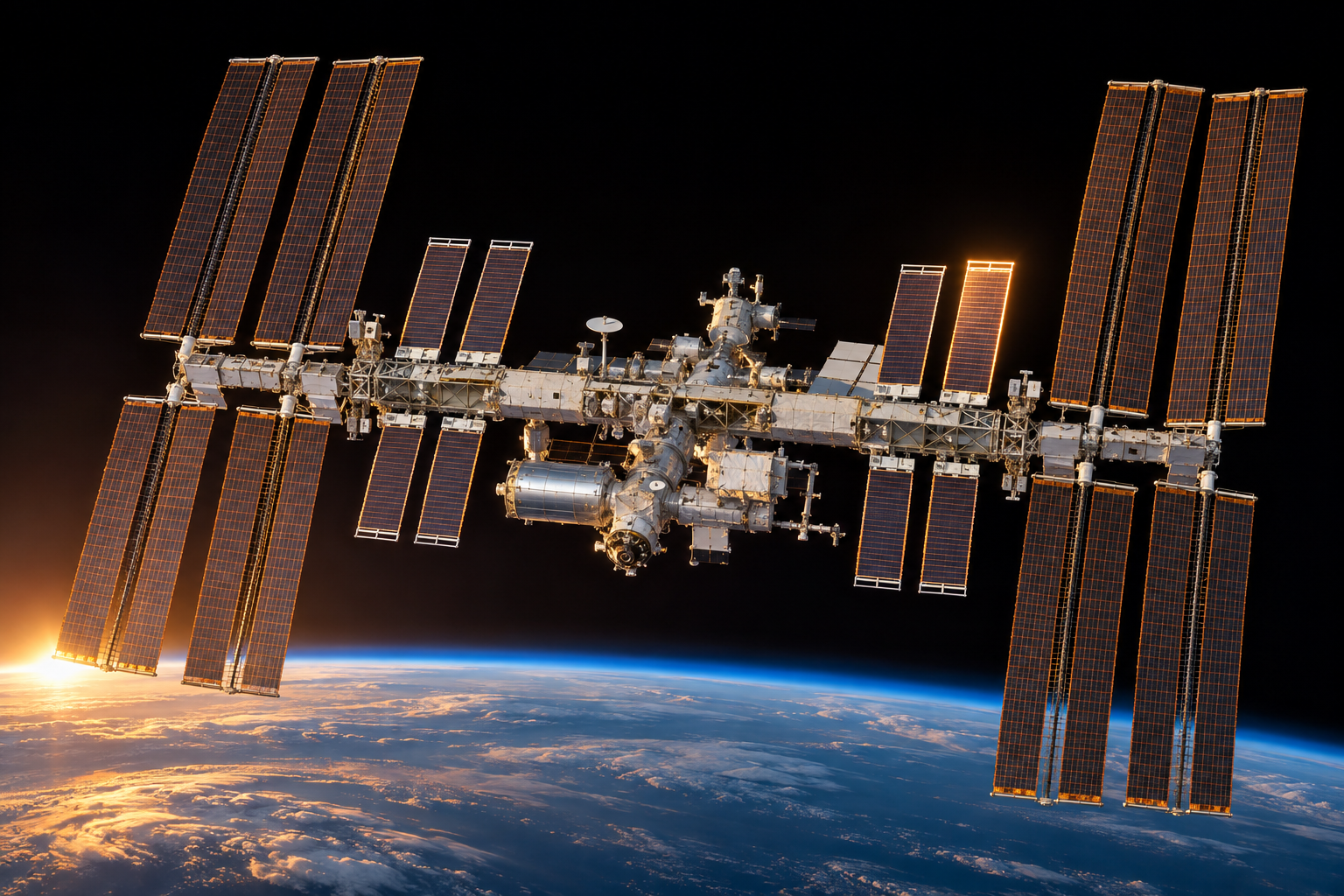
NASA astronaut Anil Menon and Canadian Space Agency astronaut Joshua Kutryk have completed the final installation in the International Space Station’s five-year solar-power upgrade. Their Nov. 5 spacewalk ended at 3:35 p.m. EST (20:35 UTC) after 6 hours and 59 minutes, with the eighth ISS Roll-Out Solar Array (iROSA) deployed on the 3B power channel. NASA says the full set raises the station’s available power from about 160 kilowatts to about 215 kilowatts.
That makes U.S. Spacewalk 101 more than a successful day outside the airlock: it closes an 18-spacewalk campaign that began in February 2021. The new array complements the ISS’s original solar wings; it does not mean those older wings were removed. Think of it as adding compact new generation alongside the working system that has powered the orbiting laboratory for decades.
NASA’s mission update is the primary record of the completed EVA, while the Canadian Space Agency’s recap captures Kutryk’s second spacewalk.
What did Menon and Kutryk accomplish on U.S. Spacewalk 101?
Menon and Kutryk installed and deployed the final iROSA on the station’s 3B power channel. NASA counts this as U.S. spacewalk 101, the 286th spacewalk supporting ISS assembly, maintenance, and upgrades, Menon’s fifth EVA, and Kutryk’s second.
Those tallies are satisfying, but the choreography behind them is the real story. An EVA turns careful ground planning into physical work: moving hardware through the airlock, translating along handrails, managing tethers, securing electrical hardware, and confirming deployment in a place where there is no quick reset button. The crew’s successful deployment finished a project that had been assembled one power channel at a time.
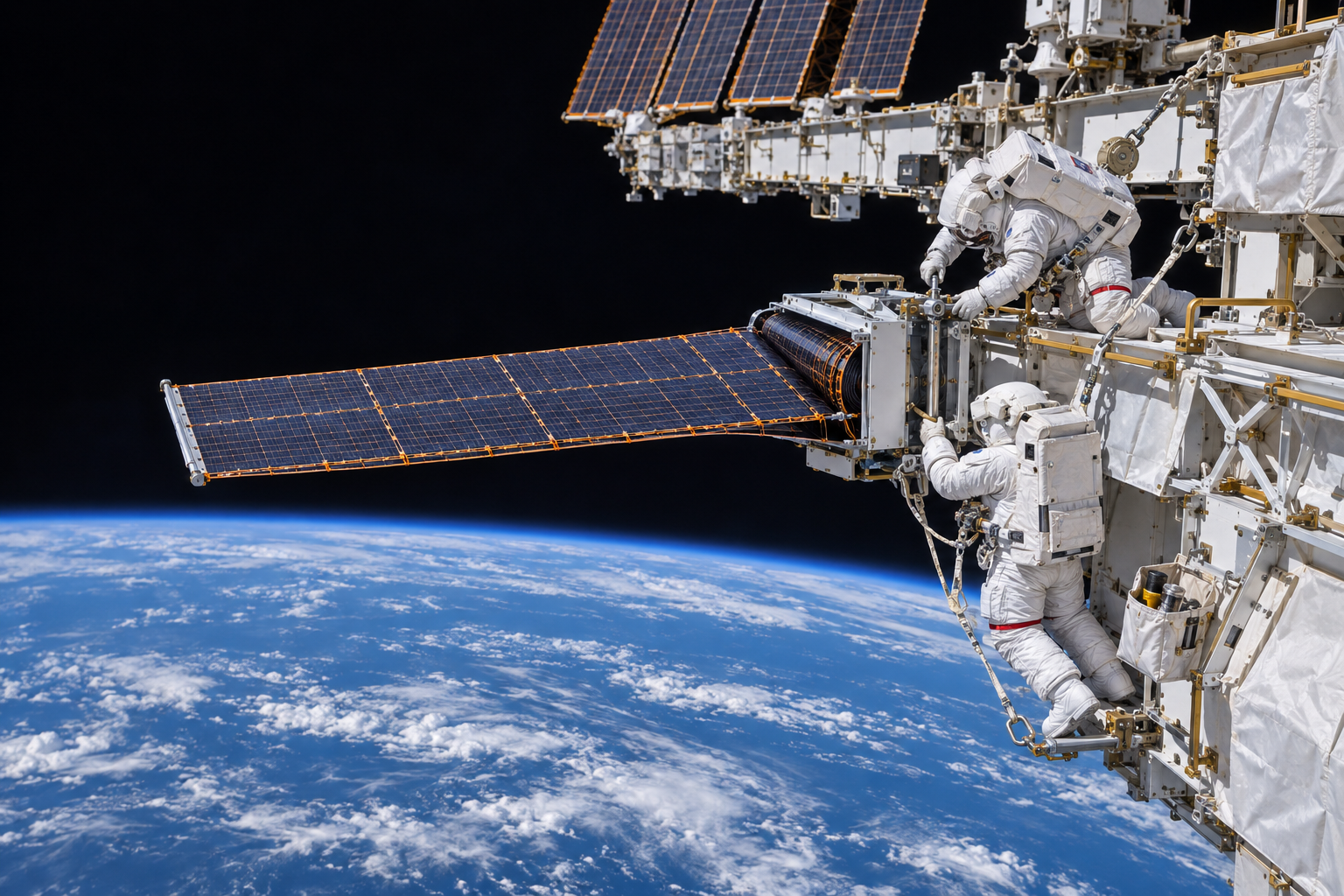
The previous installation had already made the campaign feel close. In our Spacewalk 100 outcome, Menon and Kutryk deployed the seventh iROSA on the 2A channel. The Nov. 5 EVA supplied the final piece: an eighth array on 3B, confirmed deployed rather than merely planned.
Why does the ISS need new solar arrays?
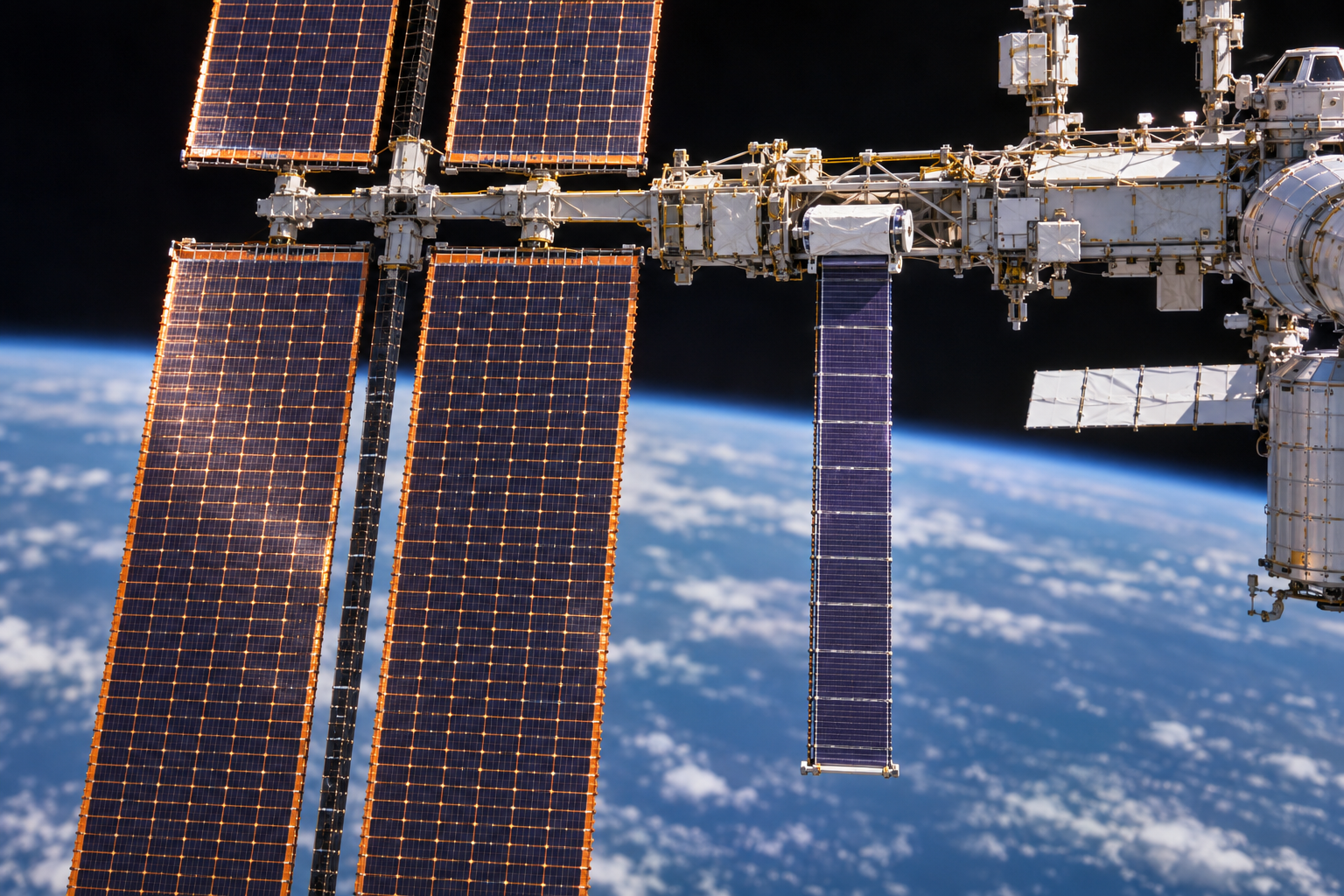
The ISS is a working laboratory, not a frozen museum piece. Its original solar arrays continue to operate, but long exposure to the space environment naturally changes their output over time. The iROSAs are designed to augment those legacy arrays, partly overlaying them in selected locations while increasing total available power.
NASA puts the campaign’s result plainly: roughly 160 kW of available station power becomes roughly 215 kW. That additional margin supports the everyday systems that make long-duration human spaceflight possible—life support, communications, research, visiting-vehicle operations, and the practical resilience needed to keep a complex spacecraft useful.
It is also a useful antidote to the idea that spaceflight is only launches and dramatic landings. Much of the work that keeps missions going is infrastructure: upgrades, inspections, new power capacity, and people who know how to make every connection count. If that is your kind of space story, join the Cosmic Match community and trade mission notes with people who will happily discuss orbital hardware over coffee or under the night sky.
Who made the final iROSA deployment possible?
The people outside the station are only the visible edge of an EVA. Menon and Kutryk worked with teams on the ground and colleagues inside the ISS, drawing on an international program built by NASA and its partners. JAXA’s EVA record for U.S. EVA 101 likewise logs the crew, date, and completed final-array work.
That shared effort is worth lingering on. A Canadian astronaut’s second spacewalk, a NASA astronaut’s fifth, robotic and operations teams, controllers, engineers, and the on-orbit crew all contribute to a result that looks deceptively simple in a final photograph: one dark blue panel against Earth.
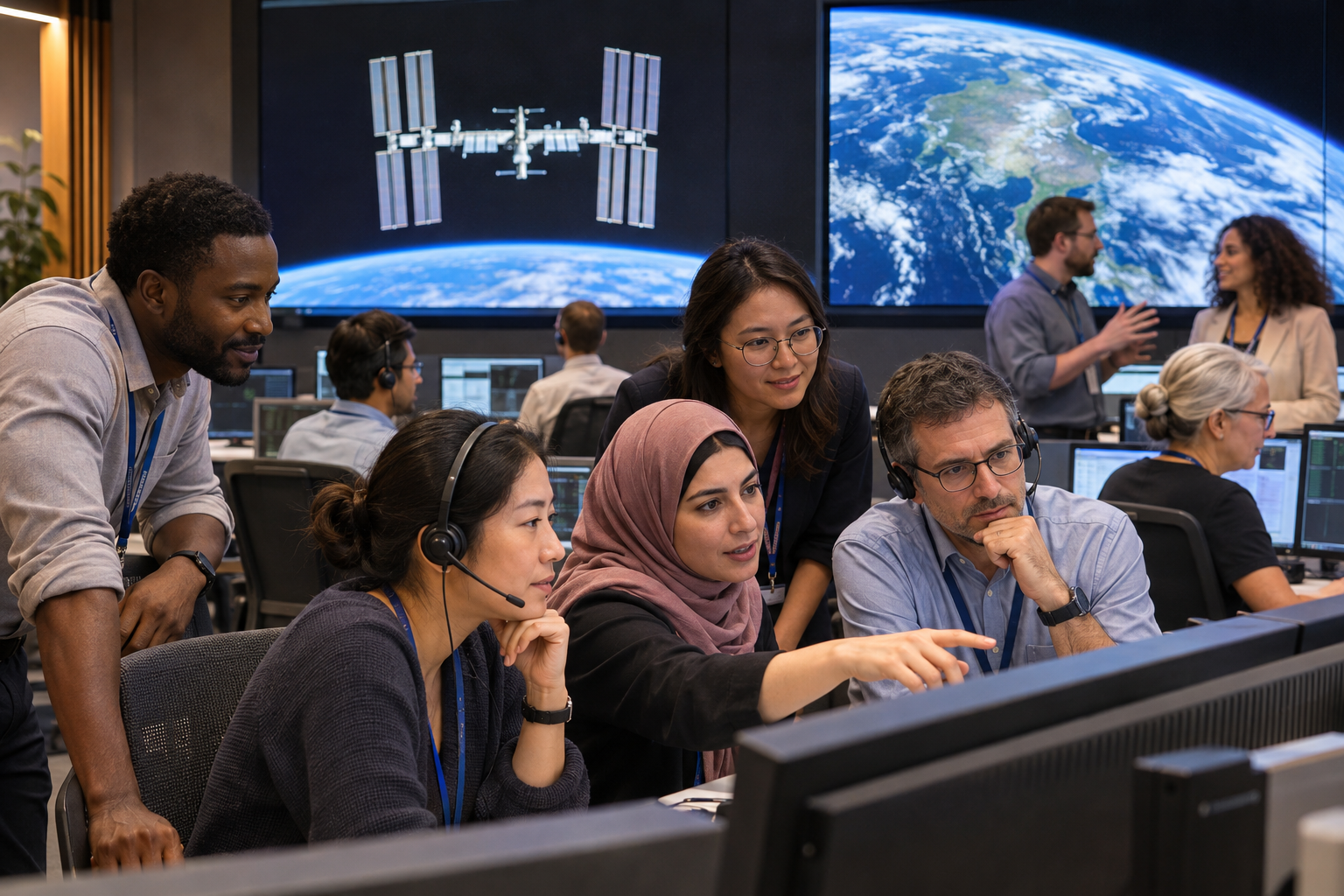
For Houston readers, that human chain has a local resonance: NASA Johnson Space Center is a major mission-control hub for station operations. For everyone else, it is a reminder that a space station’s power system is a community project spanning countries, specialties, and years—not a lone-hero moment.
The campaign is complete; the station’s work continues
Eighteen spacewalks. Eight roll-out arrays. About 55 kilowatts of additional available power. Those are the durable numbers behind this closeout, and each points to a bigger idea: the ISS continues to be maintained, adapted, and used by people solving very real engineering problems in orbit.
The final iROSA is now deployed. The legacy solar wings remain part of the station’s power system, now reinforced by the eight newer arrays. If you watched the coverage, followed the mission recaps, or simply love the idea of a five-year orbital upgrade reaching its last step, bring that enthusiasm to Cosmic Match—there is always another space story worth unpacking together.
FAQ
When did U.S. Spacewalk 101 end?
NASA reported that the Nov. 5 EVA ended at 3:35 p.m. EST (20:35 UTC) after 6 hours and 59 minutes.
Which ISS solar array did the crew install?
Menon and Kutryk installed and deployed the eighth and final iROSA on the 3B power channel.
Did the new iROSAs replace the ISS’s original solar wings?
No. The iROSAs augment the legacy solar arrays, partly overlaying them in selected locations while increasing available station power.
How much power does the completed iROSA campaign add?
NASA says the full eight-array set raises available station power from approximately 160 kW to approximately 215 kW.
Related Moon Base news
NASA’s newest lunar procurement announcements separate concrete rover delivery work from larger contract ceilings. See what the Moon Base awards actually fund.