Betelgeuse B: Why This Is the Clearest Look Yet at Its Likely Companion
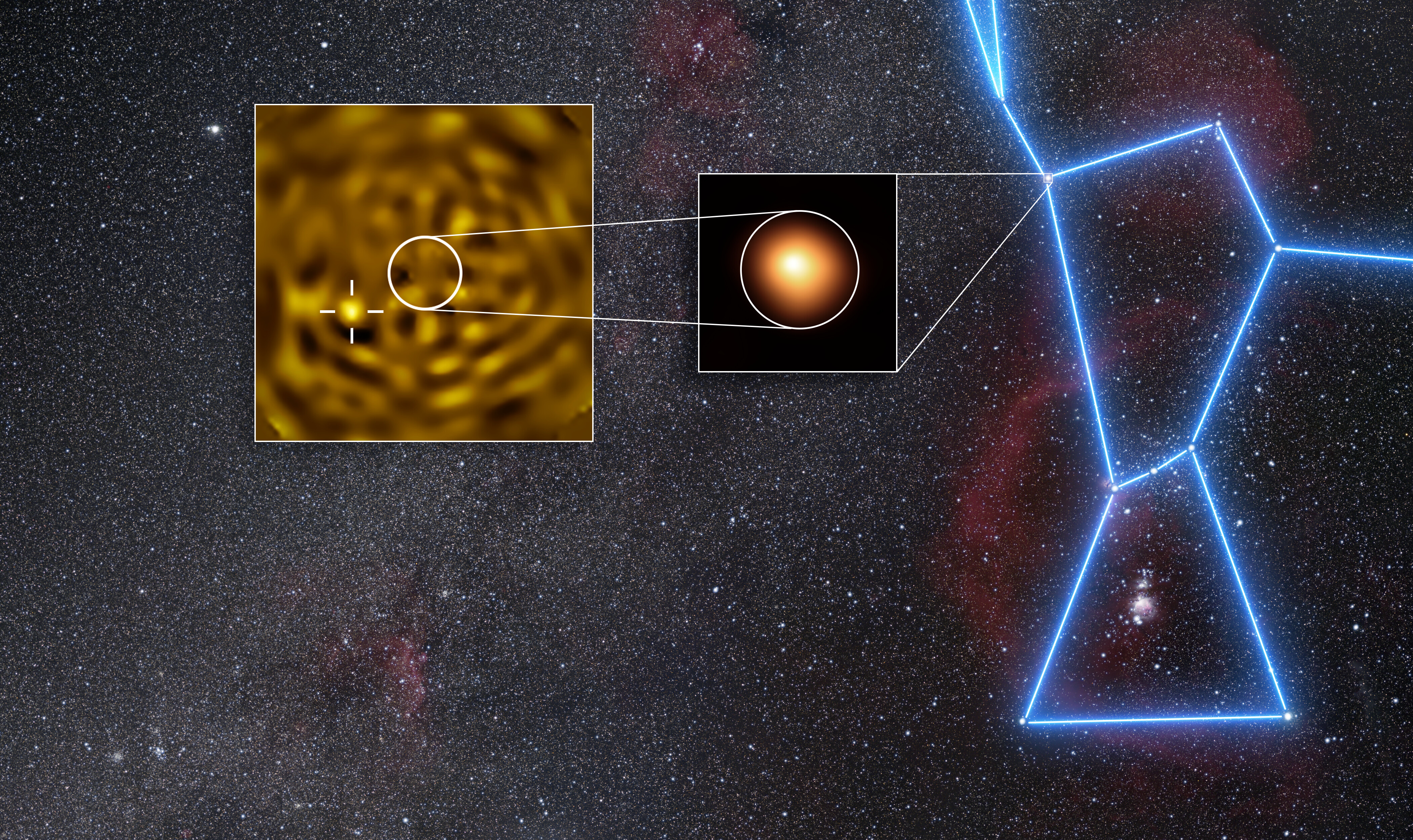
Betelgeuse has been a bright, familiar red shoulder in Orion for as long as people have looked up. Today, astronomers reported their clearest direct image yet of the faint source thought to be Betelgeuse B—a likely companion star hiding next to the famous red supergiant. It is a major step toward answering a century-old question, but it is not the same as final confirmation, and it does not mean Betelgeuse is about to explode.

Image credit: ESO/M. Montargès et al.; background: N. Rissinger (skysurvey.org).
The short version
A team led by Miguel Montargès used the European Southern Observatory’s Very Large Telescope (VLT) in Chile, along with its SPHERE instrument, to detect light from the candidate companion itself. The observations were made in December 2024, when orbital predictions placed the faint object at its greatest apparent separation from Betelgeuse—giving astronomers their best chance to distinguish it from the supergiant’s glare.
The result is the strongest evidence and clearest image so far for a stellar companion. But the careful word is still likely: the team says another observation in about one year, when the candidate should appear on the other side of Betelgeuse, is needed for complete certainty.
Why getting this image is such a big deal
Betelgeuse is exceptionally difficult to study beside a faint neighbor. It is enormous, luminous, and variable; a nearby source can be overwhelmed by scattered light and complicated patterns in the image. Earlier work had suggested a companion could help explain some of Betelgeuse’s repeating brightness changes, and 2024 studies identified a favorable viewing window.
SPHERE was designed for high-contrast work, including the challenge of separating faint exoplanets from bright stars. The team paired that capability with advanced image processing. The payoff is a compact source in the predicted location—a direct detection of the candidate’s light, rather than an inference based only on Betelgeuse’s motion or brightness.
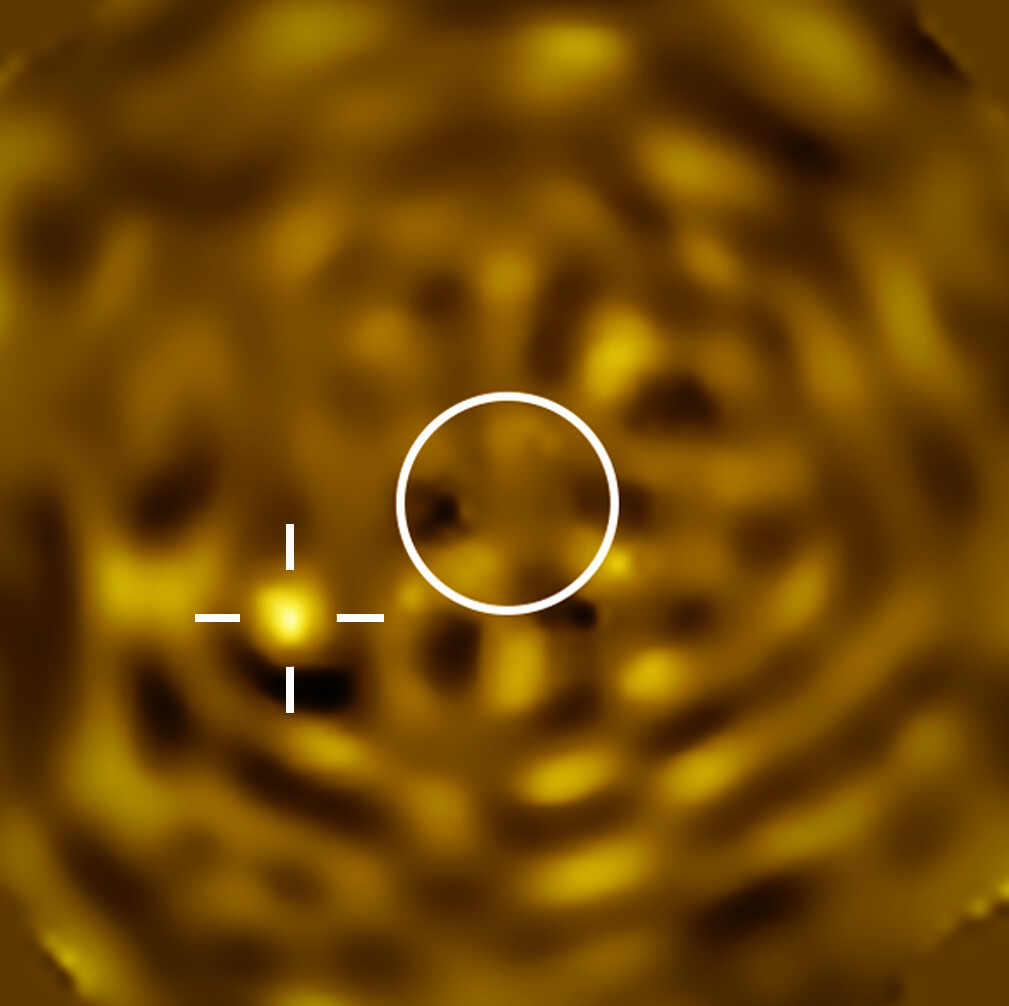
Image credit: ESO/M. Montargès et al.
There is a surprise in the result, too. The ESO team reports that Betelgeuse B appears to be roughly two to three times the Sun’s mass, rather than around one solar mass as originally expected. That makes it brighter and easier to see than forecast, while still dramatically fainter than its swollen red-supergiant neighbor.
Candidate companion is not the same as a settled binary
Astronomy is at its best when it keeps the confidence level visible. A single direct image at the expected separation is extremely persuasive, especially alongside the previous predictions, but the team wants to see the source move as an orbiting companion should. A second view from the opposite side of Betelgeuse would rule out more of the remaining alternatives.
So the sensible takeaway is: this is very strong evidence that Betelgeuse is part of a binary system, not the final word. That distinction matters because news headlines can make a scientific result sound more settled than the researchers themselves claim.
For another useful example of how to read a promising astronomical result without overclaiming it, see our explainer on what Fermi found behind the Jellyfish Nebula.
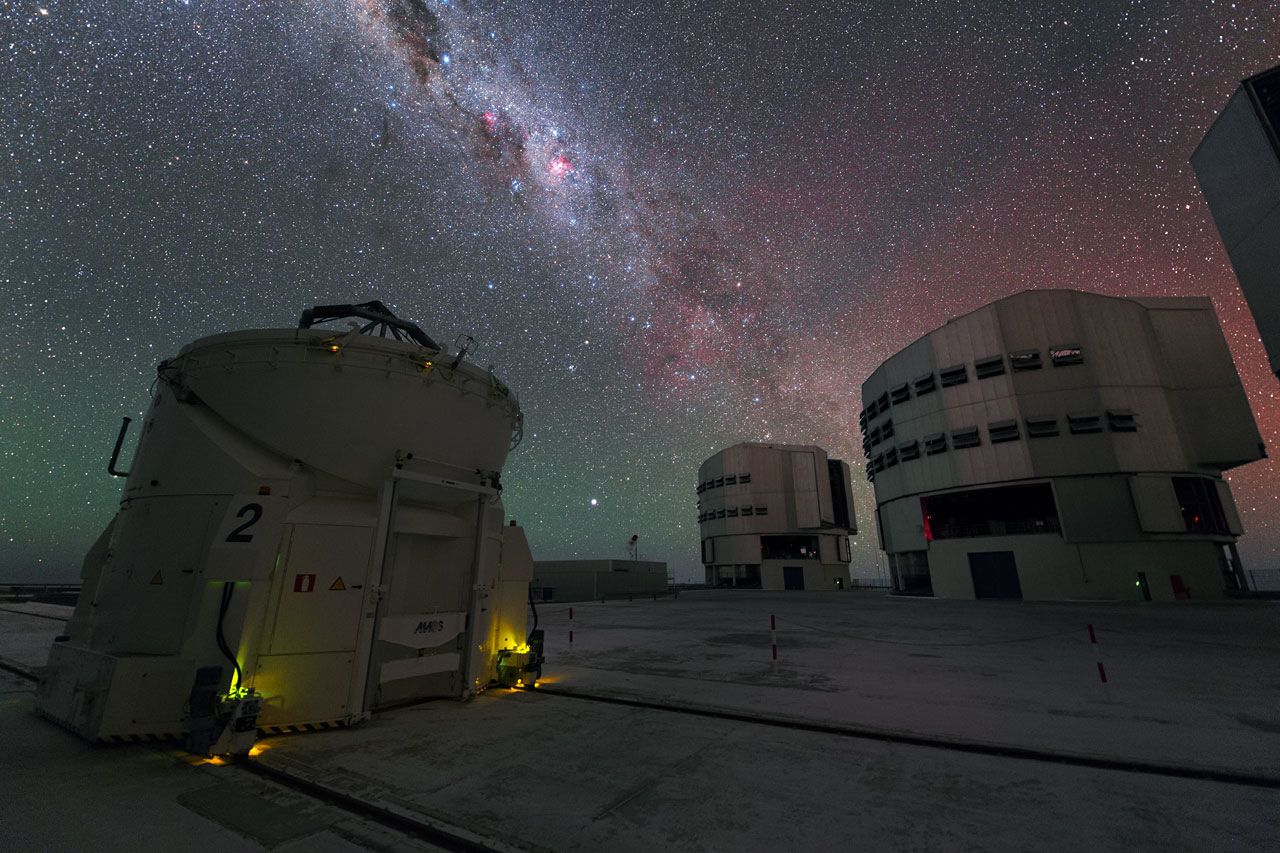
Image credit: ESO/Y. Beletsky.
No, this is not a new supernova warning
Betelgeuse’s dramatic 2019–2020 Great Dimming made it a magnet for “is it about to explode?” speculation. Follow-up VLT research found a much more down-to-Earth explanation: a cloud of dust had obscured part of the star. Today’s companion result does not rewrite that conclusion, and it does not provide a countdown to a supernova.
Betelgeuse will eventually end its life in a supernova because it is an evolved massive star—but “eventually” in astronomy is not a prediction for our lifetimes. The new observation opens a genuinely interesting future question: whether a companion could affect the red supergiant’s evolution before that final event. It is a research question, not an alarm.
What happens next
The next decisive observation is expected in roughly a year. If the faint source reappears where an orbital model predicts, astronomers can turn today’s compelling candidate into a much firmer binary-system picture. Until then, this image is worth enjoying for what it is: a rare, careful look at a hidden neighbor beside one of the sky’s most recognizable stars.
Want a place to share the sky news that sends you down a happy research rabbit hole? Join the Cosmic Match astronomy community free and find people who will be just as excited about the follow-up observation.
Sources
- European Southern Observatory, “Astronomers find strongest evidence yet that Betelgeuse has a companion” (July 28, 2026)
- ESO image release: VLT images of Betelgeuse and its companion
- ESO image release: VLT image of Betelgeuse’s companion
- Scientific American: Scientists Get Best Yet Glimpse of Betelgeuse’s Companion Star
- Space.com: Astronomers capture clearest image yet of Betelgeuse’s elusive companion