Southern Delta Aquariids and Alpha Capricornids Under a Bright Moon: What You Can Still See
Southern Delta Aquariids and Alpha Capricornids Under a Bright Moon: What You Can Still See
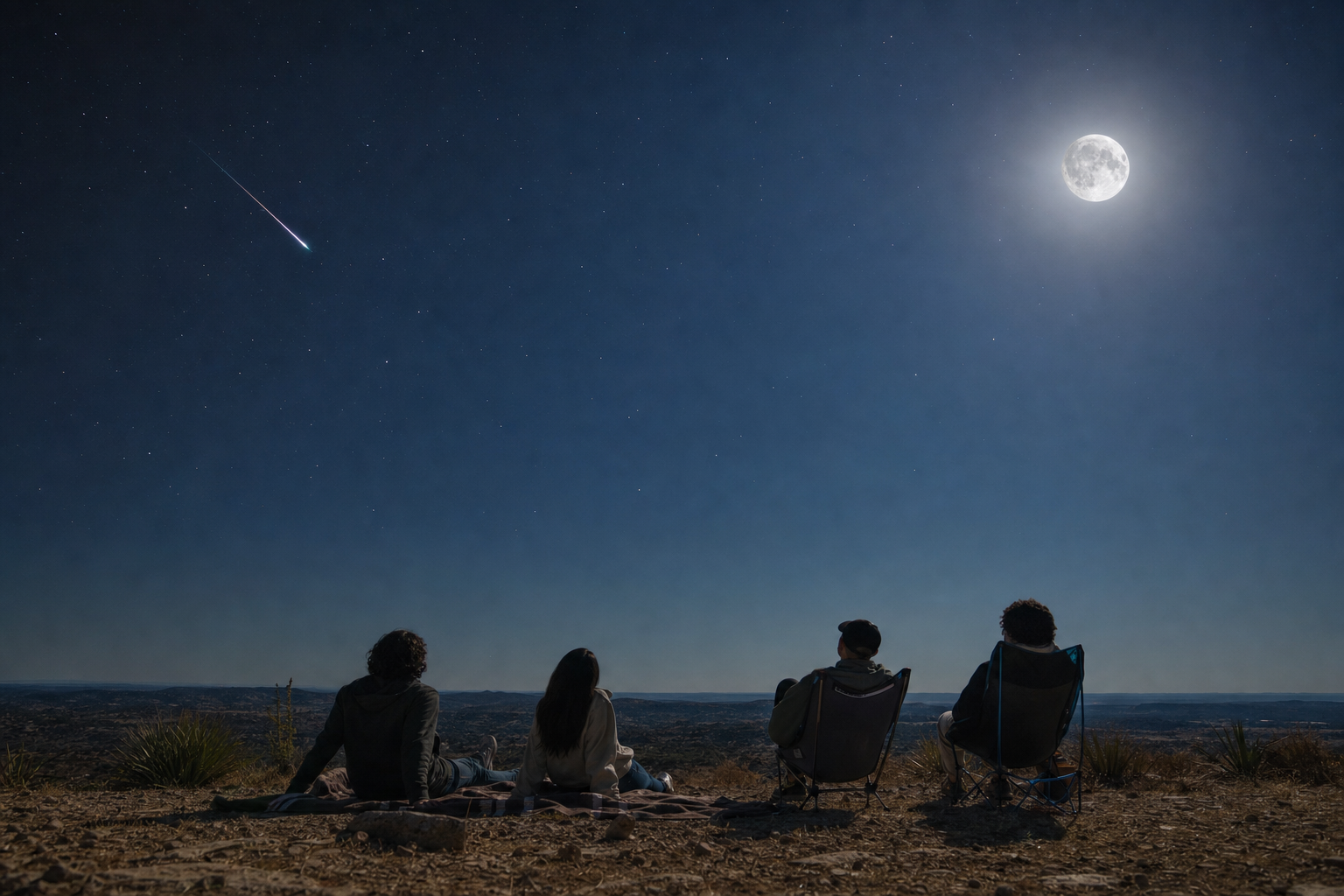
The night of July 30–31 will not be the kind of meteor-shower peak that rewards a big hourly-count promise. The Southern Delta Aquariids and Alpha Capricornids do share their peak, but a Moon about 98% illuminated will brighten the sky enough to erase many of the faint meteors that normally make the Southern Delta Aquariids worthwhile.
That does not make the night a write-off. It makes it a low-pressure skywatch: bring a friend, protect your night vision, face away from the Moon, and treat a bright, slow Alpha Capricornid fireball as a lovely bonus rather than something you are owed. For Austin, Houston, and Los Angeles, the southern radiants sit lower than they do in the tropics, so realistic expectations matter even more.
The honest forecast for July 30–31
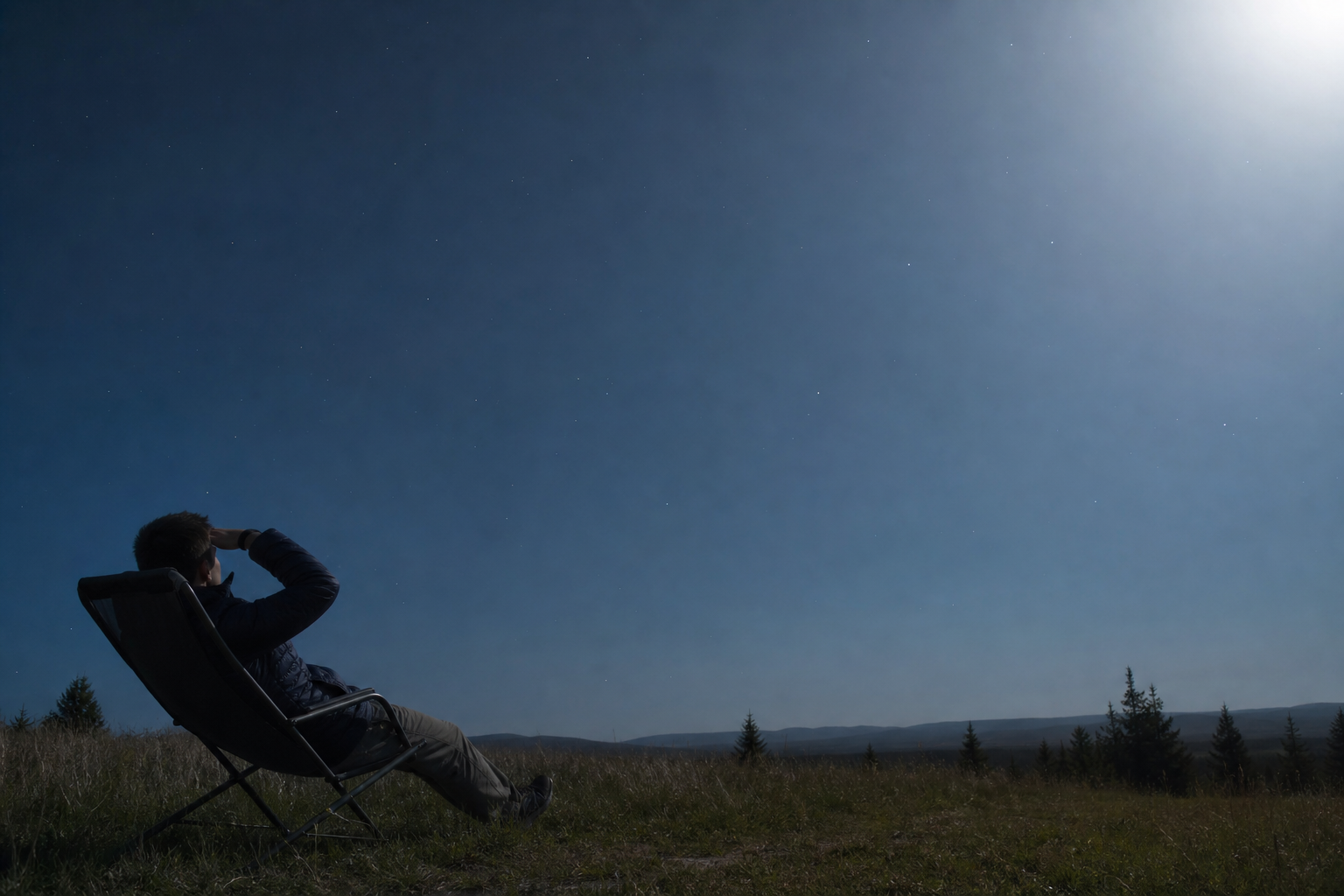
The American Meteor Society’s 2026 calendar places both peaks on the night of July 30–31, with the Moon 98% full. It describes the Southern Delta Aquariids as a southern-tropics-favored shower whose normally faint meteors will be severely compromised by the bright Moon. The International Meteor Organization reaches the same practical conclusion: the end-of-July high point for both showers falls close to Full Moon.
So skip the countdown math. Published ZHR figures describe an ideal dark sky with the radiant high overhead—not a promise for a backyard in Texas or Southern California. Clouds, haze, light pollution, the Moon, and the radiant’s height all reduce what a person actually sees. On this particular night, seeing a few meteors over an hour would be a satisfying result; seeing none for a while is completely normal.
The better reason to go outside is the overlap of two different personalities in the same patch of season. The Southern Delta Aquariids are the more active shower on paper, but their meteors are often faint. The Alpha Capricornids are sparse—usually no more than a handful per hour under ideal conditions—but are known for occasional bright fireballs. Moonlight hurts the former much more than it hurts a genuinely bright surprise.
Where the meteors seem to come from—and where to look instead
Both radiants are low in the southern part of the sky for observers in Austin, Houston, and Los Angeles. That is why the showers are better placed farther south: a low radiant means more atmosphere in the way and fewer meteors above your horizon.
Do not stare at Aquarius or Capricornus waiting for a streak to emerge. Meteors can appear anywhere across the sky, and a narrow, low-south view leaves you looking through the brightest, thickest air. Start with a wide, unobstructed view about halfway up the sky, away from the Moon. A patio, park, or hilltop with a clear southern half of the horizon is more useful than a perfect map pin with trees or buildings blocking the view.
For all three cities, the useful window is late night into pre-dawn, after the radiants have climbed a little higher. Houston’s humidity, Austin’s summer haze, and Los Angeles’ marine layer can make a clear forecast feel less clear in practice, so check the sky at sunset and again before leaving. Smoke or haze is a reason to reschedule the hangout, not a reason to force a disappointing all-nighter.
A simple bright-Moon observing plan
- Check the real conditions at dusk. Look at your local hourly cloud cover and air-quality/smoke outlook on July 30. The forecast matters more than a theoretical peak when the Moon is this bright.
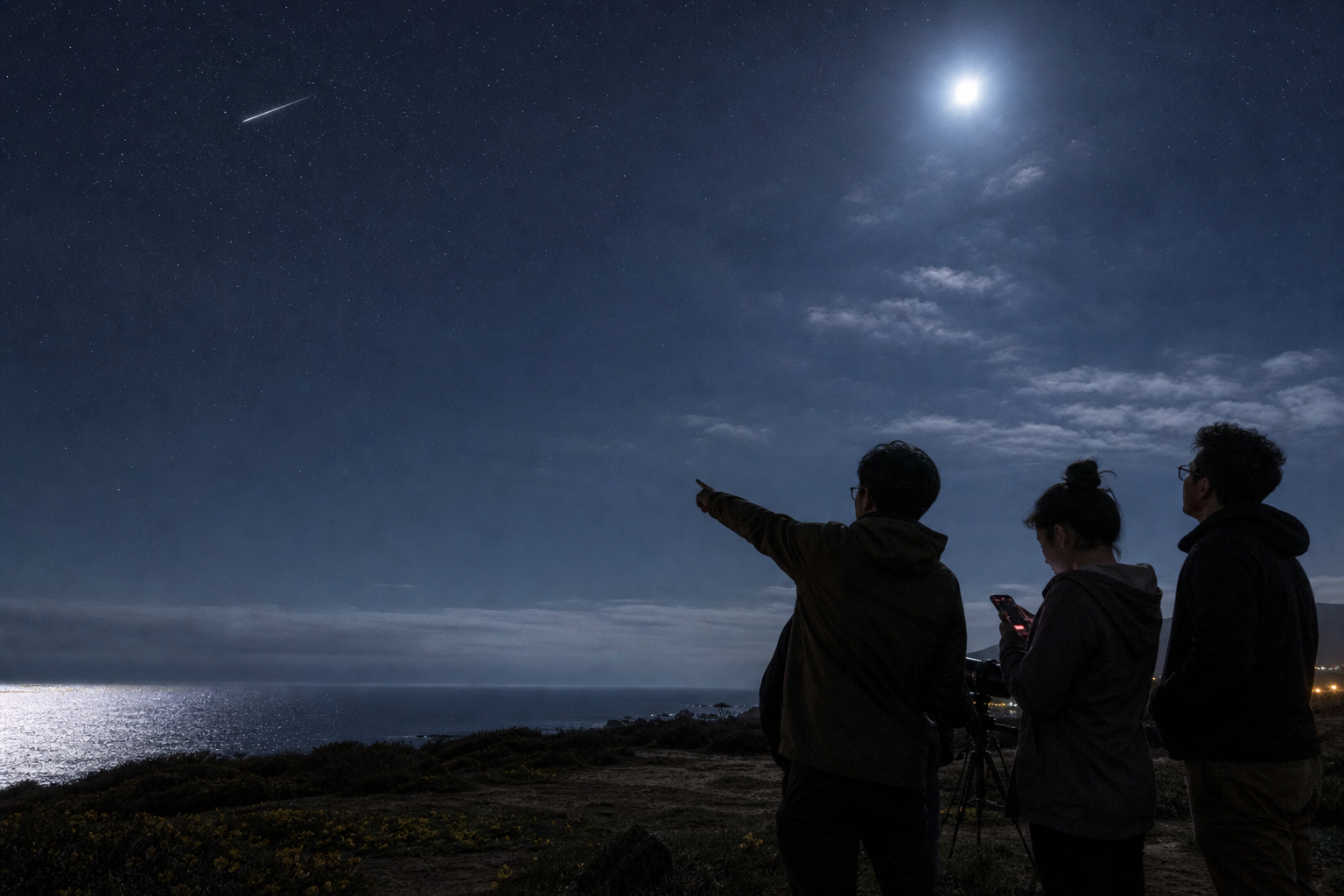
- Give your eyes time. Leave white phone screens off, settle into a reclining chair or blanket, and take at least 20 minutes before judging the sky. Use a red-screen setting only if you need an app.
- Put the Moon behind you or behind a building. A house, wall, tree line, or even the brim of a hat can cut direct glare. Do not block your whole sky; the goal is simply to keep the Moon out of your line of sight.
- Watch a large piece of sky. No binoculars or telescope are needed. They magnify too little sky for meteor watching. Your unaided eyes and a comfortable position are the right tools.
- Make it social, not performative. Call out every streak, even a probable sporadic. A shared hour under the sky is still a good night when the sky gives you only two meteors.
If you want an easy first observing outing, our Summer Triangle balcony guide gives you three bright stars to find while you wait. They will be far easier targets than these moon-washed meteors—and they turn an uncertain meteor watch into a night with a guaranteed win.
What each city can reasonably expect
Austin: Find the darkest, safely accessible southern view you can, but do not drive far solely for this peak. The bright Moon will follow you. Choose comfort, water, and a place where you can linger without lights sweeping across your eyes.
Houston: Give humidity and clouds extra weight. If the sky is milky or a storm line is nearby, save your energy for the Perseids two weeks later. A clear gap is enough for a casual check, but not a guarantee of a productive meteor session.
Los Angeles: A western or coastal marine layer can be decisive. If it is clear inland but cloudy at the beach, choose the clearer location with a safe open sky. The local microclimate beats a citywide icon on a weather app.
The smart comparison: wait for the Perseids if you want numbers
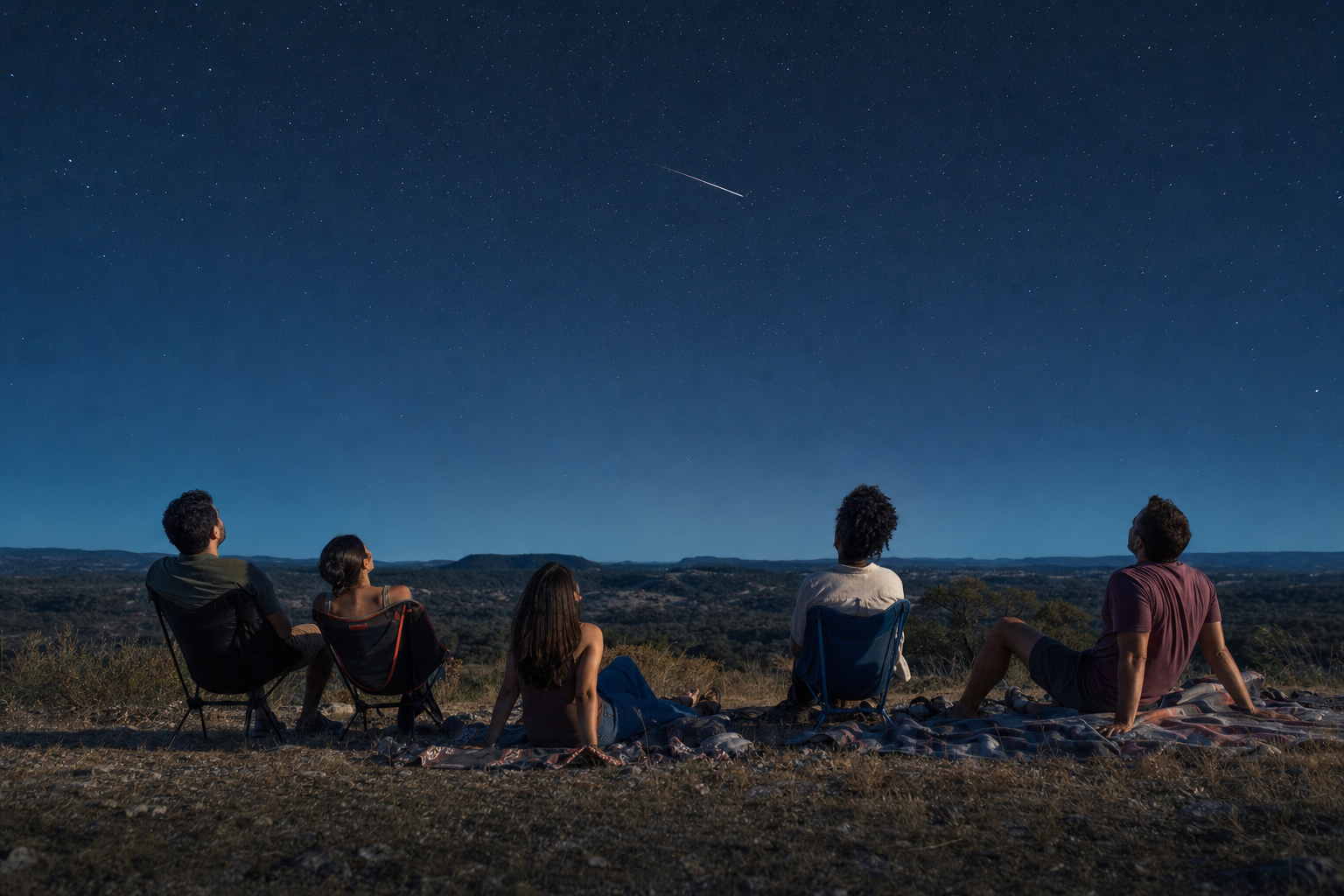
There is good news right behind this compromised peak. The Perseids are active in August and peak around August 12–13 near New Moon, according to the AMS and IMO calendars. They are a much better choice if your goal is a darker sky and a more reliable shared meteor-watching plan.
That is not a reason to ignore July 30–31. It is a reason to give the night the right job: an easy excuse to step outside, practice a comfortable observing setup, and maybe catch the kind of bright fireball people remember. Bring a thermos, set an hour limit, and let the Moon be part of the scene instead of pretending it is not there.
Want someone to swap forecasts and skywatch plans with? Join the Cosmic Match space community and meet people who are equally happy to trade a bright-Moon meteor count for a good conversation under the sky. You can also explore Cosmic Match for local astronomy-minded connections in Austin, Houston, and Los Angeles.
Publish-day note: Recheck the AMS/IMO calendar, local cloud and smoke forecasts, and the Moon’s actual timing before sharing this guide. Meteor rates vary, and this article intentionally does not promise an hourly count.