How to Photograph Earthshine Around the May 16 New Moon With Any Camera
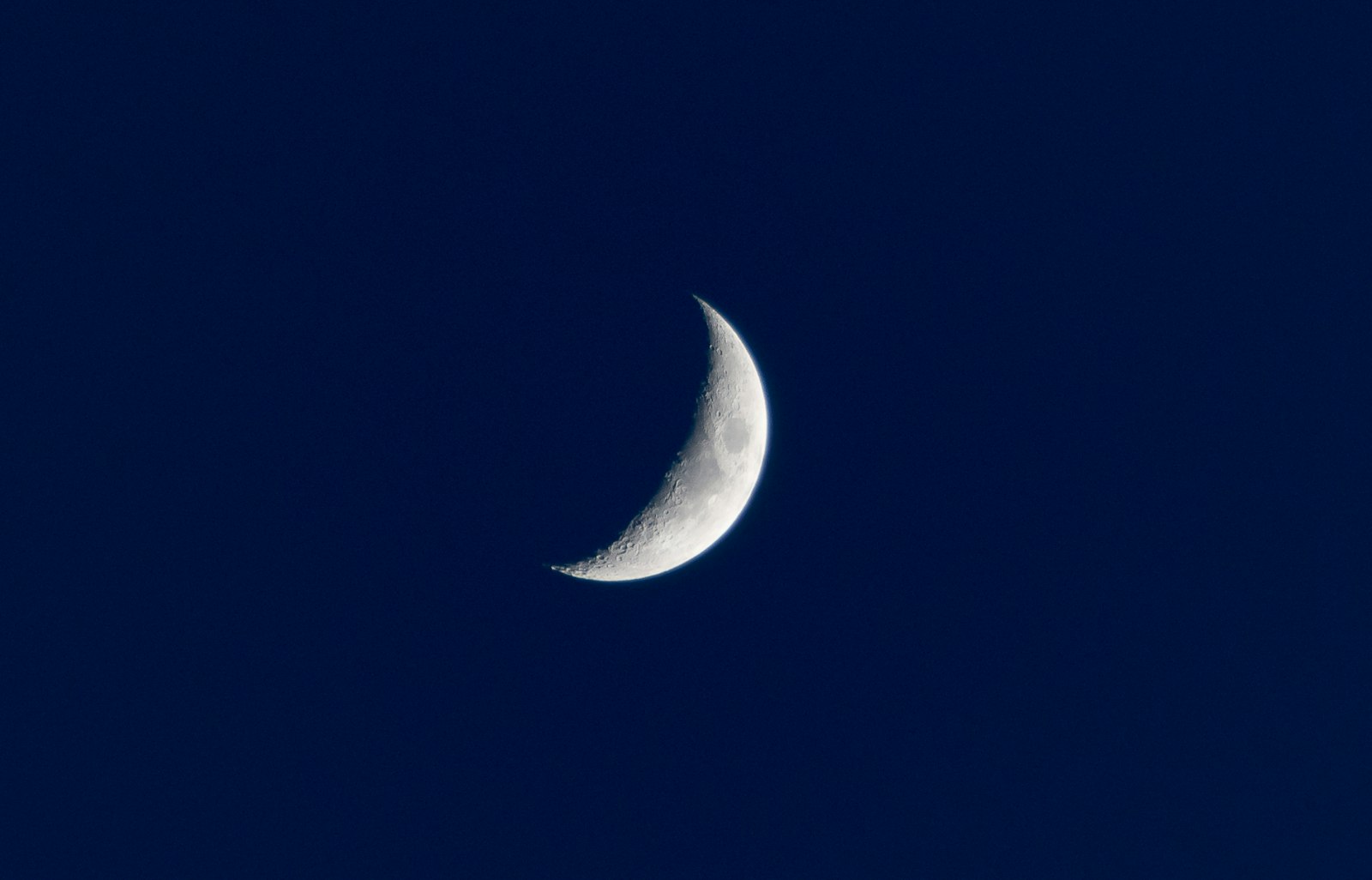
How to Photograph Earthshine Around the May 16 New Moon With Any Camera
If the sky is clear after sunset on Sunday, May 17, 2026, step outside and look low in the western sky. You will not see a dramatic full moon. You will see something better for photographers: a razor-thin crescent with a chance of earthshine, the soft gray glow that makes the Moon's dark side look faintly visible instead of disappearing into black.
This May window is unusually good for beginners because the exact new moon happens on Saturday, May 16, 2026 at 3:01 p.m. in Austin and 8:01 p.m. UTC, which means the first practical evening-photo window in the U.S. starts the next night. Time and Date's Austin phase calendar shows the Moon still only 1.7% illuminated on May 17 and 6.4% illuminated on May 18. NASA notes that earthshine is visible during crescent phases in twilight, and its Earth Observatory explains that the glow is easiest to see around the time of a new moon.
So the realistic plan is simple: skip the exact new-moon afternoon, then aim for May 17 and May 18 after sunset, when the crescent is still thin enough for earthshine but high enough to photograph.
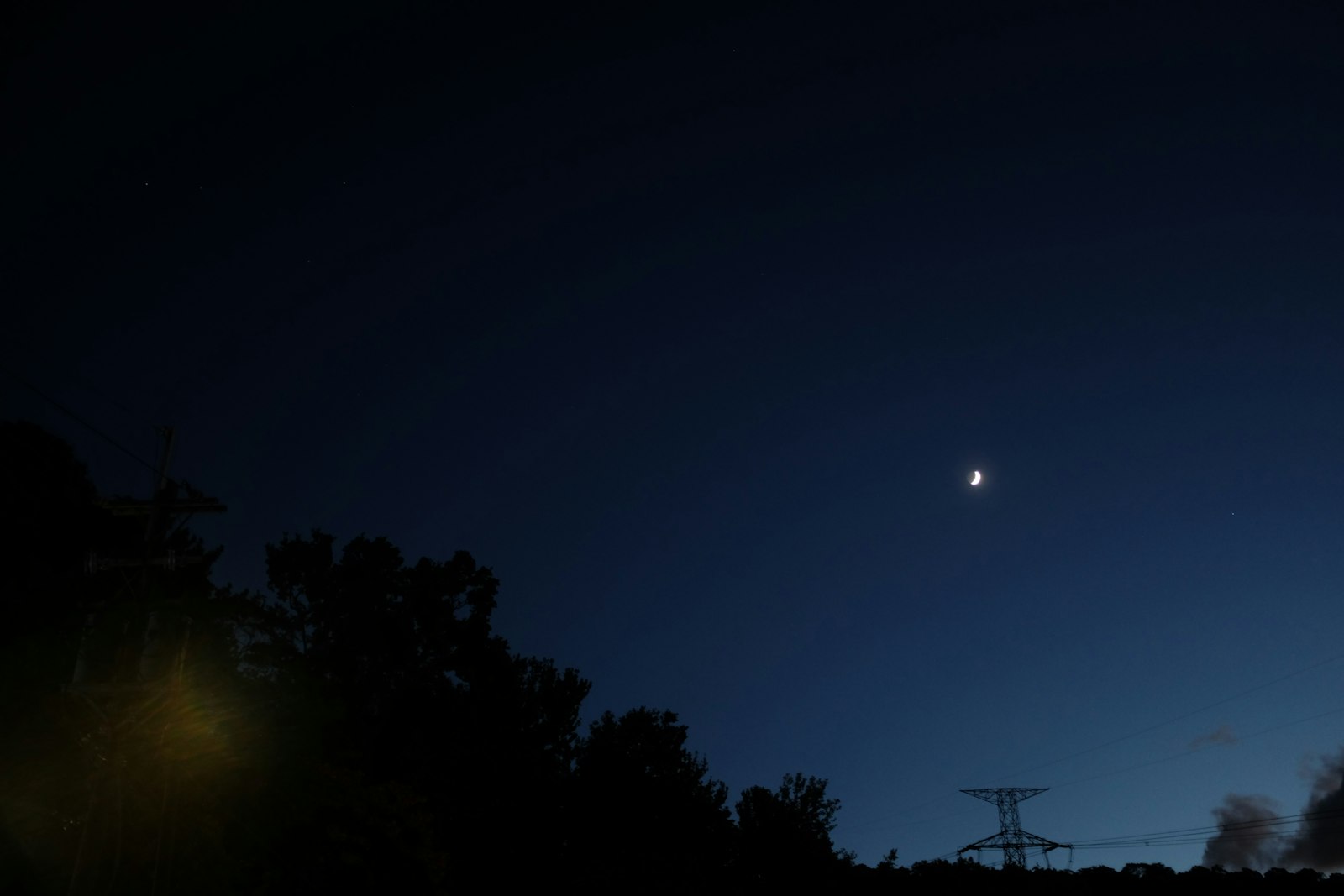
Earthshine is easiest when the crescent is still very slim. The goal is not a bright moon portrait. The goal is a delicate bright crescent with just enough detail in the dark side to feel ghostly and real.
What earthshine actually is
Earthshine is sunlight reflected off Earth, then bounced back from the Moon toward us. NASA describes it as the dim illumination of the Moon's darkened near side when the Moon is in a crescent phase and Earth is nearly full from the Moon's point of view. That is why the effect shows up near new moon instead of near full moon.
For photographers, that matters because earthshine is a contrast problem as much as a sky event. The bright crescent is much brighter than the faint dark side. If you expose only for the lit crescent, the shadowed disk may disappear. If you expose too long for the shadowed disk, the crescent can blow out fast. That is normal. The trick is to work in twilight, keep expectations realistic, and bracket a few frames.
When to go out around the May 16 new moon
The new moon itself is not the best evening target because the Moon is essentially lined up with the Sun. NASA's moon-phase guide notes that a new moon rises and sets with the Sun, and the Moon is effectively invisible from Earth at that phase.
For Austin and similar U.S. latitudes, the better play is:
- Sunday, May 17: lowest-risk first try, especially if you have a very clear western horizon
- Monday, May 18: slightly brighter crescent, easier to find, still a good earthshine night
- Tuesday, May 19: still photogenic, but the crescent is thickening and the subtle glow becomes less of the star of the show
Start scouting about 20 to 35 minutes after local sunset. You want the sky dark enough for the crescent to stand out, but not so dark that the Moon drops too low or the tonal contrast gets harder to manage. A clean western horizon matters more than a perfectly dark site for this assignment.
If you need horizon ideas, start with our Austin stargazing guide with practical western-view locations. If you are still sorting gear, our beginner astrophotography camera guide will help you decide what kind of setup makes this easier without overspending.
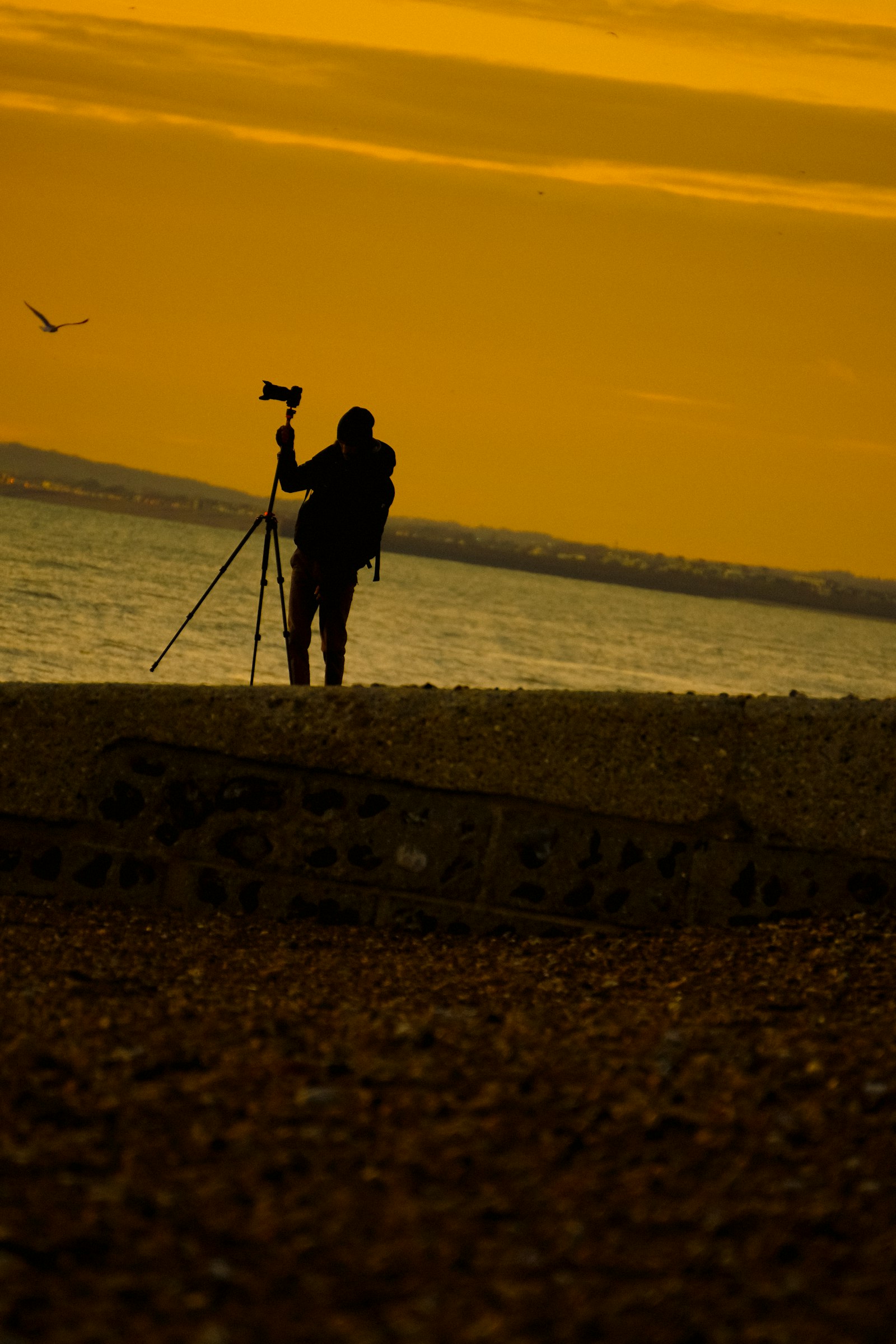
Earthshine photos are won before the shutter clicks. A clear horizon, a steady tripod, and arriving before the best light window matter more than chasing one perfect setting.
What “with any camera” really means
Any camera can attempt this shot, but not every camera produces the same kind of result.
Phone: best for a twilight scene that includes landscape, color, and a recognizable crescent. Do not expect crater detail.
Point-and-shoot or bridge camera: good for a framed crescent above rooftops, hills, or trees, especially if you can zoom a little and stabilize well.
Mirrorless or DSLR with a short telephoto: best balance for beginners. You can make the crescent large enough to matter while still keeping some sky and foreground.
Long telephoto or telescope setup: best if your goal is pulling out the crescent cleanly and blending exposures later, but this is not required.
The right question is not whether your camera is “pro enough.” The right question is whether you can keep it stable and control exposure deliberately for a bright sliver against a darker sky.
Composition and timing tips that make the shot easier
A few simple choices improve your odds fast:
- Put the Moon above a simple foreground like a roofline, hill, tree line, or open water horizon
- Avoid shooting too late; twilight color helps separate the Moon from a dead-black background
- Use a tripod or firm support, even with a phone
- Tap to focus on the crescent if you are using a phone, then reduce exposure slightly if your app allows it
- Take several frames as the sky darkens instead of trusting only one moment
- If your camera allows bracketing, use it; earthshine often looks better when you compare a few exposure levels later
This is also a good excuse to make the outing social. One person can spot the Moon while the other watches how the sky color changes. If your usual friends are not excited about thin crescents and exposure brackets, Cosmic Match is full of people who absolutely are.
Starting settings for phones, mirrorless cameras, and DSLRs
These are starting points, not universal truths. Humidity, haze, focal length, stabilization, and how bright your horizon stays after sunset all change the final answer.
For phones
Start with:
- Tripod or clamp
- 1x lens, not digital zoom
- Night mode or manual/pro mode if available
- 1/4 second to 1 second exposure for a wide twilight scene
- Lowest ISO your app allows while keeping the frame usable
- 2-second timer or remote trigger
If the crescent turns into a white blob, shorten exposure or pull exposure compensation down. If the whole frame turns mushy, the phone moved.
For mirrorless or DSLR landscape shots
Start with:
- 50mm to 135mm if you want the Moon to feel present but not isolated
- Aperture around f/4 to f/5.6
- ISO 200 to 800
- Shutter speed from 1/15 second to 1/2 second on a tripod, depending on focal length and sky brightness
Take one frame for the overall scene, then a slightly darker one to protect the crescent highlights.
For tighter moon shots
Start with:
- 200mm and up if available
- Aperture around f/5.6 to f/8
- ISO 100 to 400
- Shutter speed around 1/125 second to 1/500 second for the lit crescent
Then make a few slower bracketed frames if you want to see whether the dark side holds more glow. The bright crescent will clip quickly, so do not trust the LCD alone. Zoom in and check it.
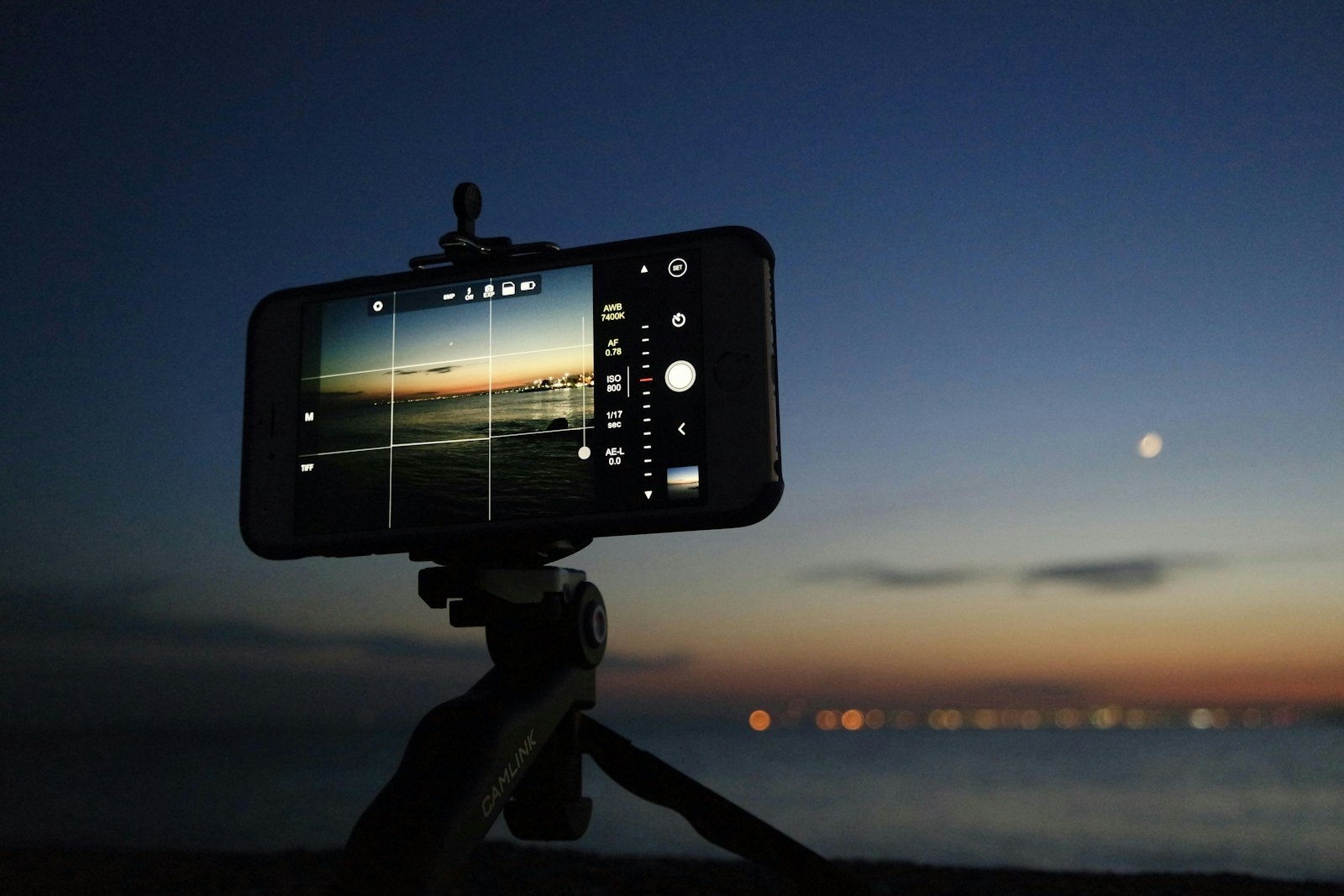
Phones work best when you treat earthshine as a twilight composition, not as a lunar close-up contest. A stable setup and a clean horizon can beat expensive gear used casually.
A simple editing approach
Earthshine images usually need restraint, not heavy processing.
- Lower highlights first so the crescent keeps shape
- Lift shadows carefully if the dark side is present but faint
- Add contrast gently; too much makes the earthshine look fake fast
- Cool or neutral white balance often looks more natural than a very warm sky
- If you blend exposures, keep the crescent edge believable and avoid a cut-out look
If your first result looks subtle, that is fine. Earthshine is supposed to feel subtle.
What success looks like
A successful earthshine photo is not always a sharp close-up of the whole lunar disk. Sometimes it is a small crescent hovering over a skyline with a faint gray circle you only notice after a second look. That is still a real win.
This is one of the best beginner assignments in sky photography because it teaches timing, stability, exposure control, and restraint in one short session. And because the window around May 17 and May 18, 2026 is so practical after the May 16, 2026 new moon, you do not need exotic gear to try it. You just need a clear western sky, a steady camera, and the patience to take a few versions before the Moon sinks out of the light.
If you want someone beside you who understands why a 1.7% crescent can be more exciting than a full moon, join the community at Cosmic Match.
And if you want the next Moon assignment after the thin-crescent window, our May 31 Blue Micromoon photography guide without a telescope picks up where this article leaves off with full-Moon framing and exposure tips. For a brighter-star challenge during late June twilight, our Summer Triangle astrophotography guide is the natural next step.
Sources checked
- United States Naval Observatory moon phases for 2026
- Time and Date moonrise/moonset and illumination calendar for Austin, May 2026
- NASA Moon Phases guide
- NASA Moon Viewing Tips
- NASA Earth Observatory: Earthshine