How to Choose a Red-Light Flashlight for Stargazing Without Ruining Night Vision
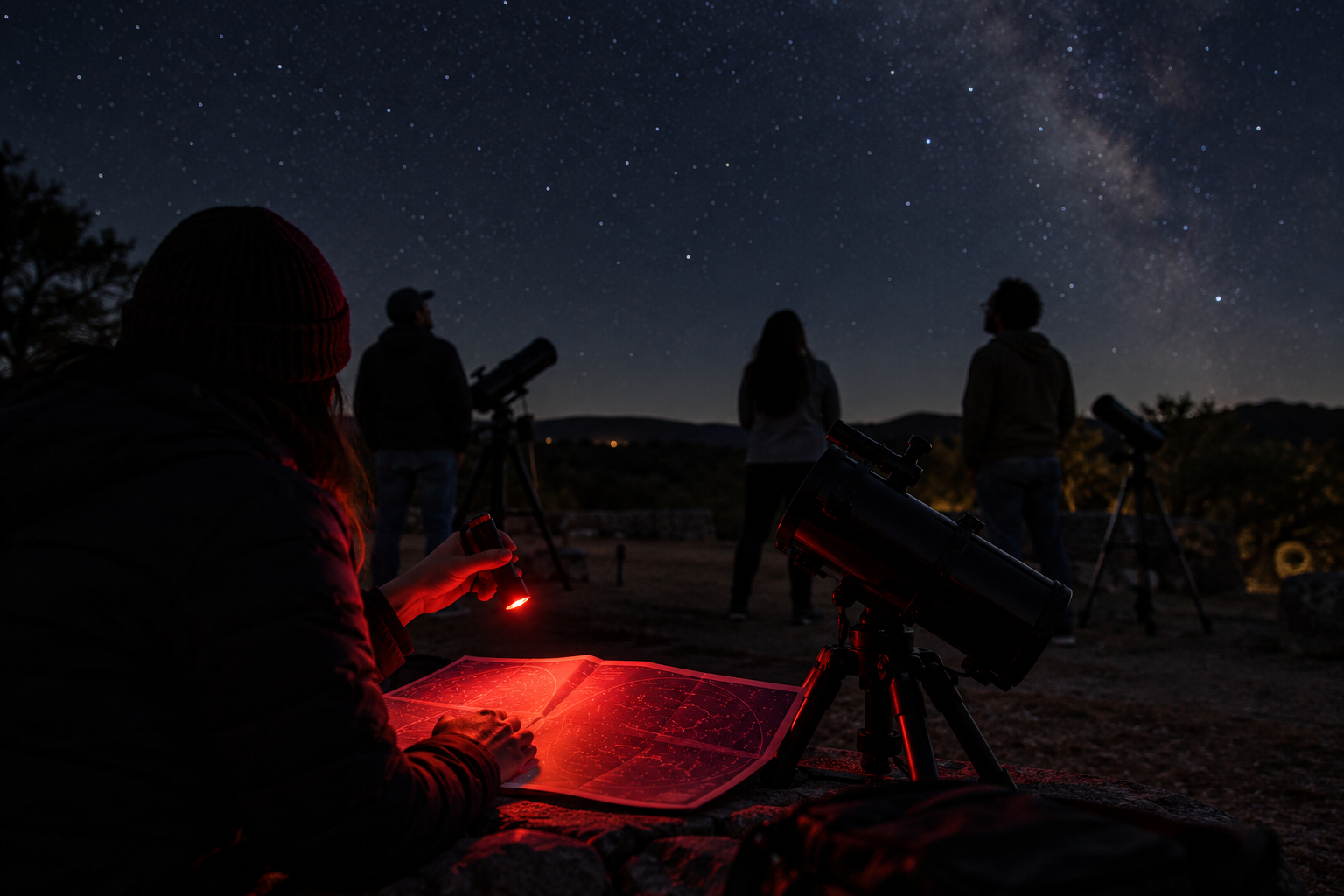
A red-light flashlight is the one piece of stargazing gear that helps before you own a telescope: choose one that can start very dim, stay red without surprise white modes, and cast a soft beam only where you need it. The goal is not a brighter flashlight—it is enough light to read a chart, find a zipper, or walk safely without making the whole observing group start its dark adaptation over again.
At a first star party, that distinction is immediately useful. The National Park Service notes that bright light can impair dark adaptation, while dim red light is less disruptive; the practical takeaway is simple: use the lowest useful setting and aim it at the ground or your page, never into faces, telescopes, or the sky. You can get started with a filtered household flashlight—no telescope required.
Why does a red flashlight help at a star party?
Your eyes need time in low light to become more useful for faint stars and deep-sky targets. National Park Service guidance explains why brightness matters even with red light: a bright red source can still be disruptive. That is why “red” alone is not a buying criterion.
For a beginner, think of a red flashlight as shared-sky etiquette. It lets you check a planisphere, adjust a chair, or find a dropped lens cap while keeping the scene pleasant for people who have been waiting for their eyes to adapt. If you are joining a local observing night through the Cosmic Match astronomy community, bring it out only when you need it.
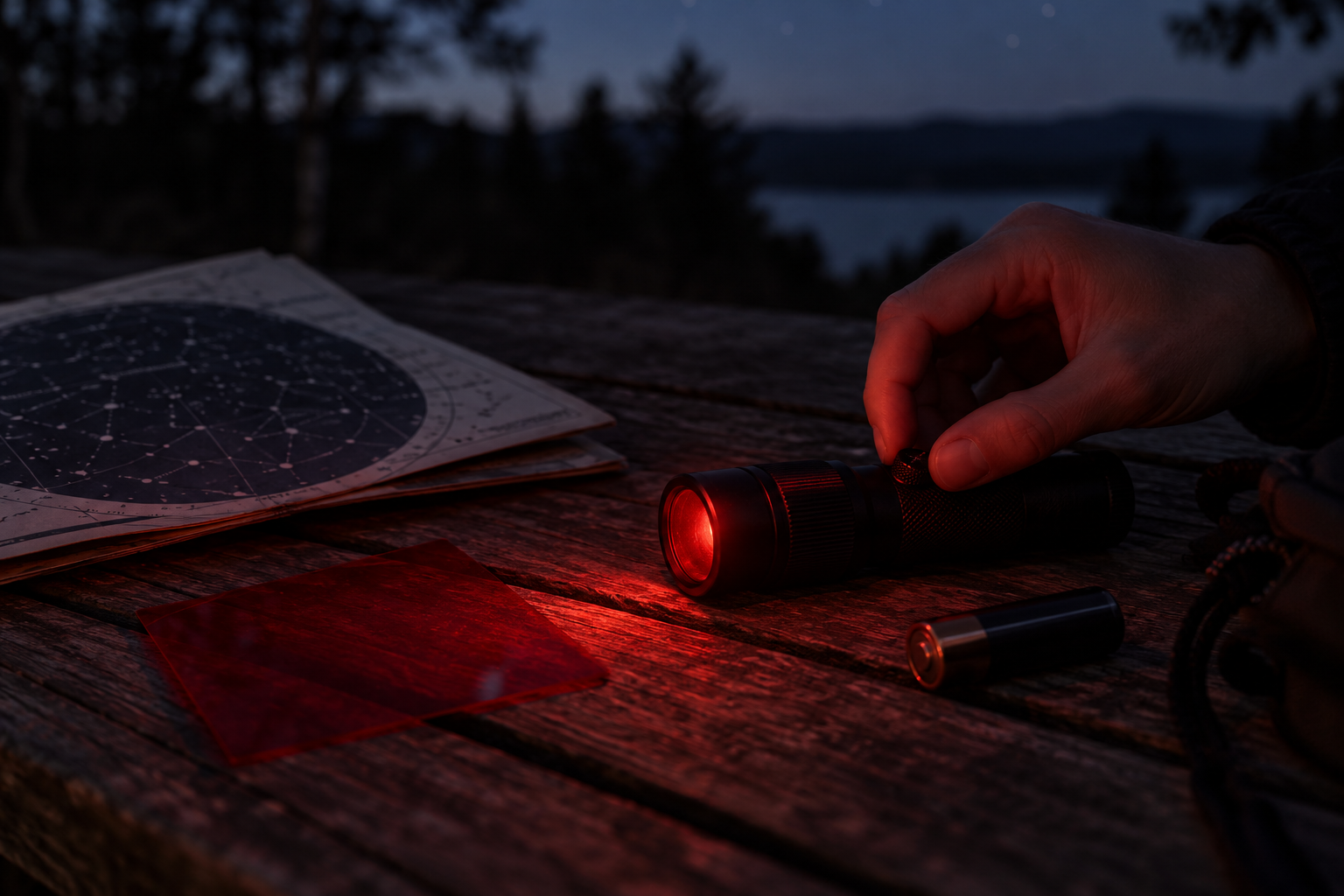
What features matter most in a red-light flashlight?
1. A genuinely low first mode
Look for a light whose first red setting is low—not a high output that needs several clicks to tame. Specs can be helpful, but your test is more useful: in a dark room, can you read a chart at arm’s length without lighting the walls? If it feels like a tiny red spotlight, it is probably more than you need for observing.
2. Predictable controls
A single, easy-to-find control beats a menu you must decipher in the dark. The best switch behavior is boring in the best way: it returns to low red, has a dedicated red control, or makes accidental white-light activation unlikely. Avoid models that cycle through a bright white mode before red, or remember a turbo setting from the last use.
3. A soft, useful beam
For charts and gear, a broad, even pool of light is kinder than a narrow throw beam. A diffused red beam makes it easier to illuminate a small workspace without sweeping light across your neighbors. A tilting head can be useful for walking, but point it down and cover or switch it off once you stop.
4. Comfortable, simple power
Choose a size you will actually carry. A compact flashlight is easy to aim precisely; a headlamp frees your hands but makes it easier to accidentally look at someone. Rechargeable is convenient, while common replaceable batteries are reassuring for a long public event. Either way, check it before leaving home and carry a spare only if you will need one.
5. A way to prevent accidents
A lockout, recessed switch, or simple cap can keep the light from turning on in a bag. Also test it with gloves if you observe in cold weather. The feature checklist is deliberately more important than a brand list: a light you can operate calmly and dimly will serve a first-time observer better than a powerful one with confusing modes.
How dim should a red flashlight be for stargazing?
Start at the lowest setting that lets you do the task, then lower it again if you can. The light should be close to the chart, trail, or equipment—not held out like a lantern. The NPS’s night-sky guidance likewise recommends red lights over white lights for stargazing, and DarkSky International advises dimmed lighting only when necessary around other observers and astrophotographers.
A useful first-night routine:
- Arrive with the light already set to its lowest red mode.
- Keep it off while you are simply looking up.
- When you need it, shield the beam with your hand and point it down.
- Turn it off before rejoining the view.
- Ask before using any light near someone’s camera setup.
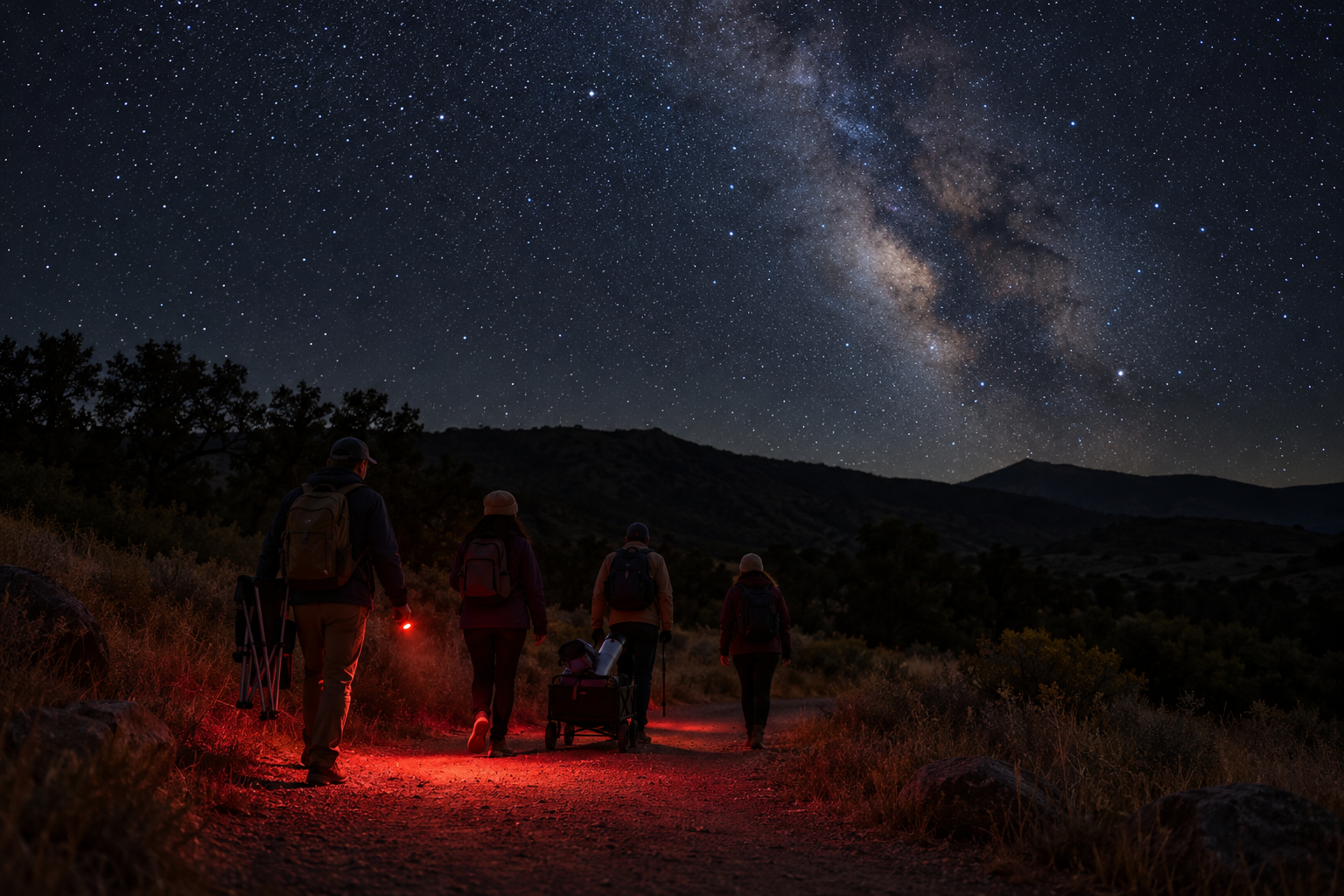
That final step matters. Astrophotographers may be working on long exposures, and a quick flash can affect an image even when it does not feel bright to you. A short “Mind if I use a red light here?” is excellent community astronomy etiquette.
Do I need to buy a special flashlight to start stargazing?
No. The no-purchase fallback is a regular flashlight covered with red cellophane or a red translucent filter, secured so it cannot slip into the beam. The National Park Service specifically suggests red cellophane as a pinch-hitter. Use two layers if one is still too bright, test it at home, and keep the beam pointed down. Do not tape material over a hot incandescent bulb or block ventilation; a small LED flashlight is the sensible choice for this simple workaround.
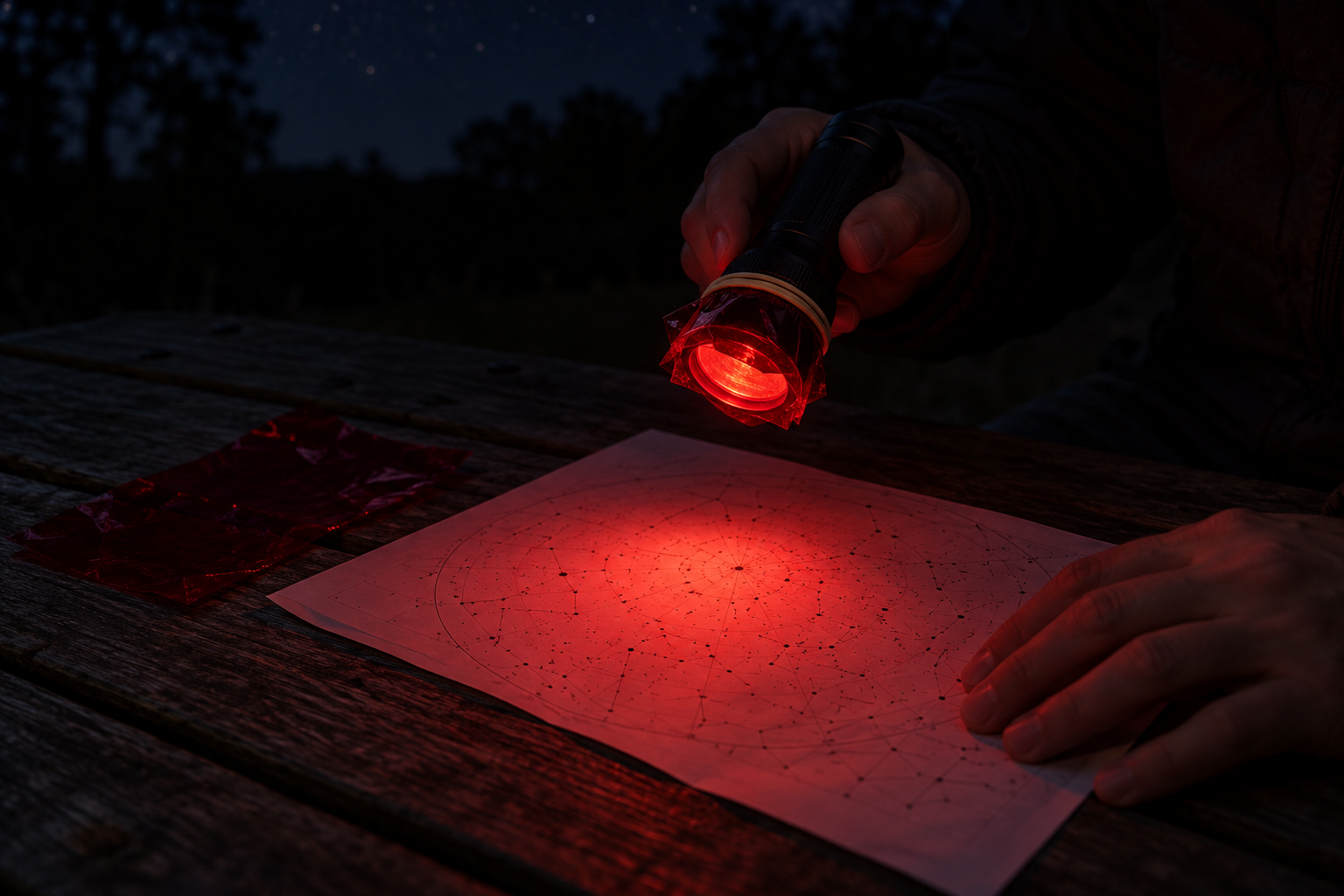
This workaround is not a perfect substitute for a purpose-built low-red mode—the original white light can still be stronger than you want—but it is enough to help you attend a star party, read a paper map, or try an evening with friends before spending anything. Pair it with the beginner planisphere guide for Austin, Houston, and LA and you have a genuinely useful first-night kit.
A quick checklist before you leave
- Lowest red setting tested in a dark room
- Switch behavior checked: no surprise white mode
- Beam aimed down and close to the task
- Battery or charge checked
- Red filter backup packed if needed
- Phone screen dimmed and placed away
- A little patience while your eyes settle into the dark
You do not need an elaborate setup to feel at home under the stars. Bring a chair, dress for the temperature, use your light thoughtfully, and meet other observers who are eager to share the sky. When you are ready, find your stargazing community at Cosmic Match.
FAQ
What is the best red light flashlight for stargazing?
The best choice is the one with a very low red first mode, predictable controls, a soft beam, and no easy path to an accidental bright-white setting. A compact handheld light is often easiest for beginners to aim at a chart or the ground.
Can I use a red headlamp at a star party?
Yes, if it has a low red setting and you keep it aimed down. Because a headlamp follows your face, switch it off before looking at people, telescopes, or cameras.
Can I make a red flashlight without buying one?
Yes. Cover an LED flashlight with red cellophane or a translucent red filter, secure it, and test it first. Keep it dim and pointed down; it is a practical fallback, not a reason to use a bright light.
Do I need a telescope to go stargazing?
No. A red light, a paper sky chart or planisphere, warm layers, and curious friends are enough for a rewarding first night.